How to Choose Outdoor Deck Tiles That Last
A beautiful outdoor surface can be undone by one practical detail: water sitting where it should be draining away. When considering how to choose outdoor deck tiles, start with performance rather than colour. The right tile should complement the architecture, feel considered underfoot and stand up to rain, temperature changes, garden debris and regular use without compromising the finish.
For a terrace, balcony, pool surround or alfresco space, tiles are not simply a decorative layer. They are part of a complete exterior system, with the substrate, falls, drainage, joints and edge details all contributing to the result. A premium outdoor area is achieved when these elements are specified together.
Start with the surface beneath the tiles
Before selecting a tile, establish what it will be laid over. This is the point at which a straightforward-looking project can become technically demanding.
A stable concrete slab with appropriate falls is often the best base for an adhered porcelain or natural stone installation. It allows the tiler to prepare the surface properly, correct minor inconsistencies and create a durable finish with suitable exterior adhesives and grout. If the slab is cracked, uneven or holds water, those issues need to be addressed before tiling begins. Covering them rarely makes them disappear.
A timber deck requires a different approach. Standard ceramic or porcelain tiles should not be fixed directly to conventional decking boards. Timber moves with moisture and temperature, while tile is comparatively rigid. That difference in movement can lead to cracked grout, loose tiles and water finding its way into the structure below.
For timber-framed decks, an engineered tile support system or adjustable pedestal system may be more appropriate, depending on the construction and load capacity. These systems can support purpose-made porcelain pavers while allowing water to drain beneath the surface. They also provide access to services where required. The correct choice depends on the deck structure, finished height, drainage route and how exposed the area is.
How to choose outdoor deck tiles by material
Material affects the appearance of the space, but it also determines maintenance, slip resistance, heat retention and long-term durability. There is no universal best option. The right finish depends on the way the area will be used.
Porcelain: precise, durable and low maintenance
Exterior-grade porcelain is often the most practical choice for refined outdoor living areas. Dense, low-porosity and available in a wide range of stone, concrete and timber-look finishes, it gives designers considerable freedom without demanding intensive sealing or upkeep.
For external use, look for tiles specifically rated for outdoor applications. Many projects use thicker 20 mm porcelain pavers, particularly where tiles are installed on pedestals or laid dry over a prepared base. Standard-thickness porcelain can also perform exceptionally well when properly bonded to a sound concrete substrate.
Porcelain’s consistency is a major advantage on large-format projects. It is easier to achieve clean lines, controlled joint widths and a polished transition from internal to external flooring. A textured finish is usually preferable outdoors, especially around wet zones.
Natural stone: character with a maintenance commitment
Natural stone delivers depth, variation and a distinctly architectural feel. Travertine, limestone, granite and bluestone can all create exceptional outdoor spaces, but each has different strengths and limitations.
The trade-off is maintenance and material variation. Some stones are more porous, may need sealing and can change in appearance over time. Light-coloured stone can show staining more readily, while certain softer stones may not suit heavily trafficked entertaining areas without careful specification. Samples should be viewed in natural light and, ideally, wet as well as dry. The colour and texture that look restrained indoors can appear entirely different beneath direct sun or after rainfall.
Interlocking deck tiles: useful in the right setting
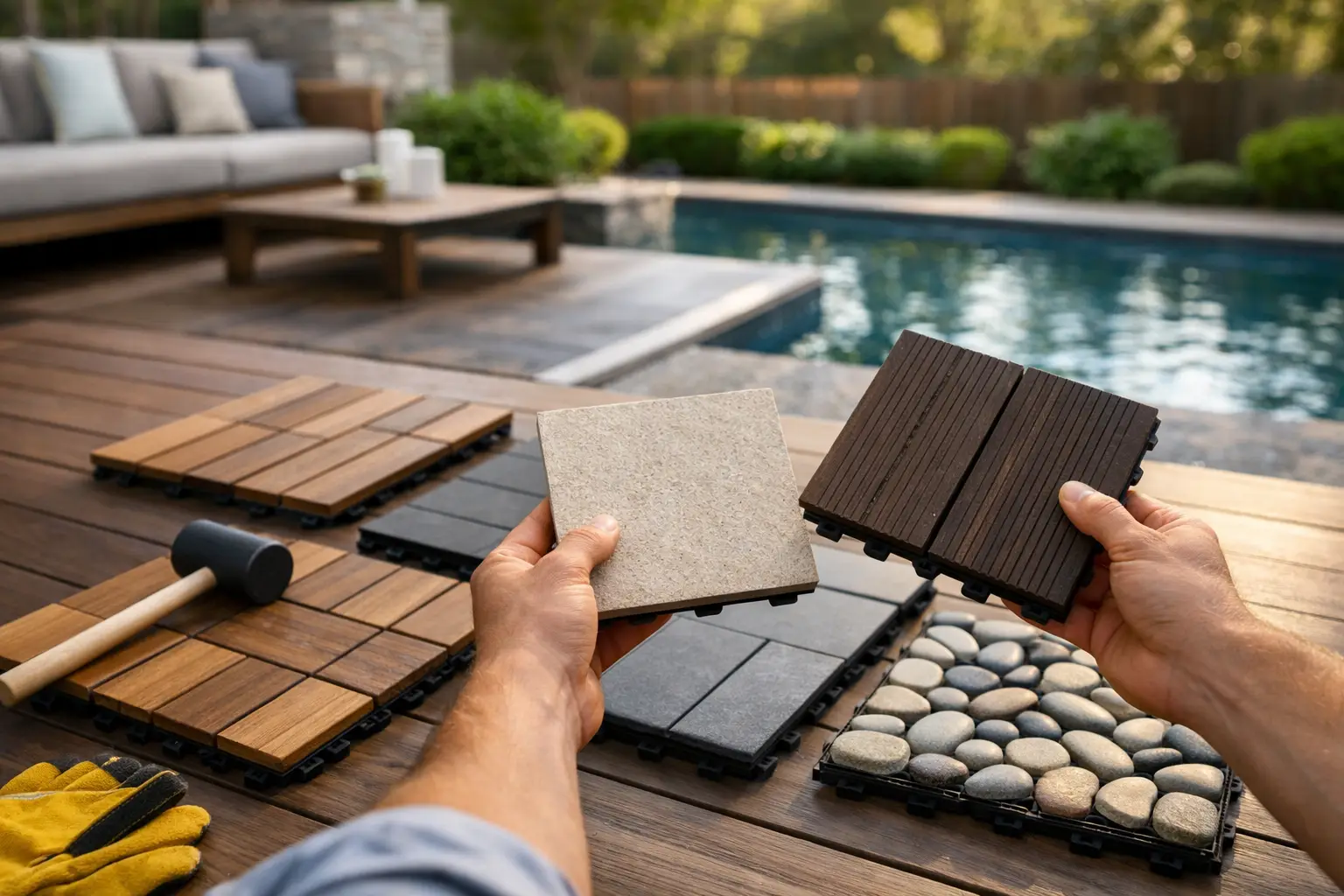
Click-together composite, timber or stone-look deck tiles can be a convenient option for temporary upgrades or small areas over a sound existing surface. They are usually faster to install than a fully tiled system and may suit renters or projects with limited scope.
They are not, however, a substitute for properly resolving drainage, movement or structural issues. Dirt and moisture can collect below them, edges can feel less refined, and their long-term stability depends heavily on the surface beneath. For a permanent, high-end result, they should be assessed with the same care as any other exterior flooring system.
Prioritise grip without choosing an overly harsh finish
Outdoor tiles need traction, particularly in the UK climate where rain, moss and fallen leaves can make surfaces slippery. Slip resistance should be considered in relation to the location, not selected as a blanket specification.
A covered alfresco area used mainly for dining may need a different surface from a pool surround, front entrance or exposed garden path. Heavily textured tiles can offer more grip, but can also be harder to clean and less comfortable on bare feet. A balanced exterior porcelain finish often provides the best combination of safety, comfort and ease of maintenance.
Ask for the manufacturer’s slip rating and discuss it in context. The angle of the surface, drainage performance and expected contaminants all matter. Even a high-grip tile will not perform as intended if water is allowed to pool or algae is left to build up.
Consider water management before tile size and pattern
Water should move away from the building and towards a suitable drainage point. This requires planned falls in the substrate, not improvised slopes created with adhesive during installation. On balconies and raised decks, drainage details are especially critical because water can affect adjacent structures and occupied spaces below.
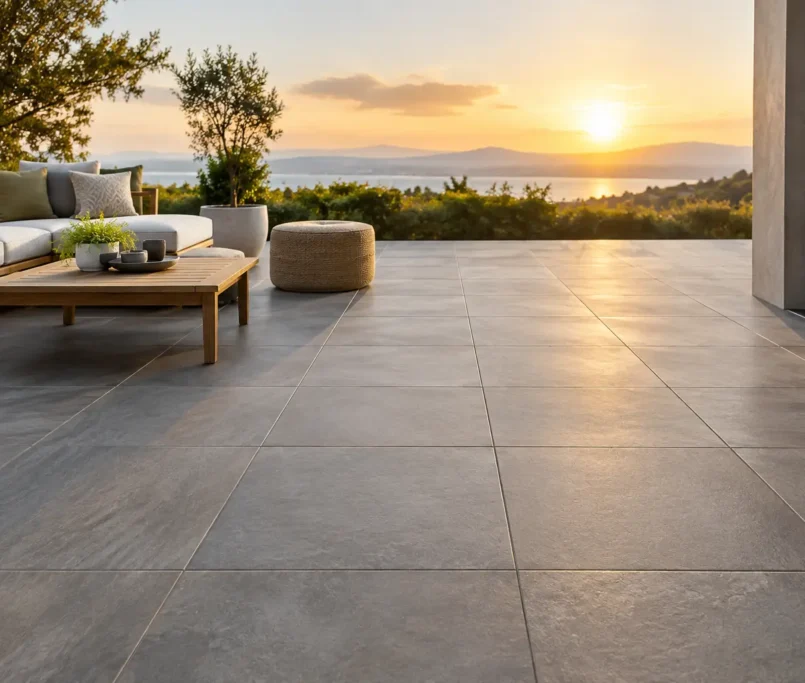
Large-format tiles create a contemporary, expansive look with fewer grout joints. They can be an excellent choice for patios and entertaining areas, but the base must be exceptionally flat and correctly graded. A large tile cannot hide an uneven substrate. It tends to reveal it.
Smaller tiles or pavers can be more forgiving around drains, curves and complex thresholds. They also offer more layout flexibility where the area has several changes in direction. The most elegant pattern is usually the one that respects the architecture, maintains balanced cuts and avoids narrow, awkward strips at visible edges.
Movement joints are equally important. External surfaces expand and contract with changing temperatures, so joints must be incorporated in the right locations and sealed with an appropriate flexible material. They are a technical requirement, but when planned carefully, they do not detract from the design.
Choose colours for the setting, not just the sample board
A pale stone-look tile can make a compact courtyard feel more open, while charcoal or deep grey porcelain can give a modern home a more grounded, dramatic edge. Yet colour affects more than visual mood.
Dark tiles generally become hotter in direct sunshine. Very light textured tiles may show leaf stains, soil or barbecue marks more readily. Mid-tones often provide the most forgiving option for active family spaces, particularly where children, pets and outdoor dining are part of everyday life.
Consider sightlines from inside the home as well. Where possible, selecting an external tile that relates to the internal floor colour or format creates visual continuity and makes the living space feel larger. The tiles do not need to match exactly. A coordinated tonal relationship is often more sophisticated than an identical material used everywhere.
Do not overlook edges, thresholds and finishing details
The difference between a serviceable patio and an exceptional one is often found at the perimeter. Steps, drainage channels, pool coping, door thresholds and exposed tile edges all need deliberate detailing.
A neat edge profile, mitred return or purpose-made trim can protect the tile while creating a clean finish. At doorways, finished levels must be carefully managed to preserve drainage and avoid creating a path for water into the property. Where a tiled area meets landscaping, the transition should allow for movement and prevent soil or mulch from sitting against the finished surface.
This is where experience matters. Perfectly Laid approaches external tiling as a complete construction detail, from substrate preparation and falls through to precision cuts, caulking and final presentation. The visible tile is only as good as the work supporting it.
Order samples and make the decision on site
A showroom sample is useful, but it cannot show how a tile will behave in your particular outdoor environment. Take samples outside. View them in morning light, direct sun, shade and after they have been wet. Place them beside exterior cladding, brickwork, joinery and planting colours.
Check the proposed tile’s dimensions, thickness, batch variation and suitability for the installation method. Confirm lead times before finalising the programme, particularly for imported stone or specialist pavers. For larger residential or commercial projects, ordering enough material from the same batch, plus a sensible allowance for cuts and future repairs, protects consistency across the finished area.
The best outdoor deck tile is one that suits the structure beneath it, drains correctly, feels right for the way you live and still looks composed years after installation. Choose the surface with the whole space in mind, and the final detail will feel effortless because the difficult decisions were made early.