Hotel Tiling Example for a Lasting Impression
A strong hotel tiling example is never just a collection of attractive surfaces. It is a coordinated finish strategy that must look exceptional under lobby lighting, withstand constant foot traffic, clean efficiently between check-ins, and remain dependable in wet areas long after opening day. The finest results feel effortless to the guest because the technical work beneath the tile has been handled with equal care.
For hotel owners, designers, builders and project managers, tiling is one of the few finishes guests will see, walk across and touch every day. It therefore carries the weight of both first impression and long-term operational performance. A poorly planned floor may show lippage in low afternoon light; weak waterproofing in a bathroom can become a costly disruption to occupied rooms. Precision at every stage protects the visual standard as well as the programme.
A hotel tiling example starts with the guest journey
Consider a boutique hotel where guests move from a busy entrance into a calm reception area, then travel through corridors to private rooms, bathrooms, a breakfast space and perhaps a spa or rooftop terrace. Each zone needs its own response, but the materials should still read as part of one considered interior.
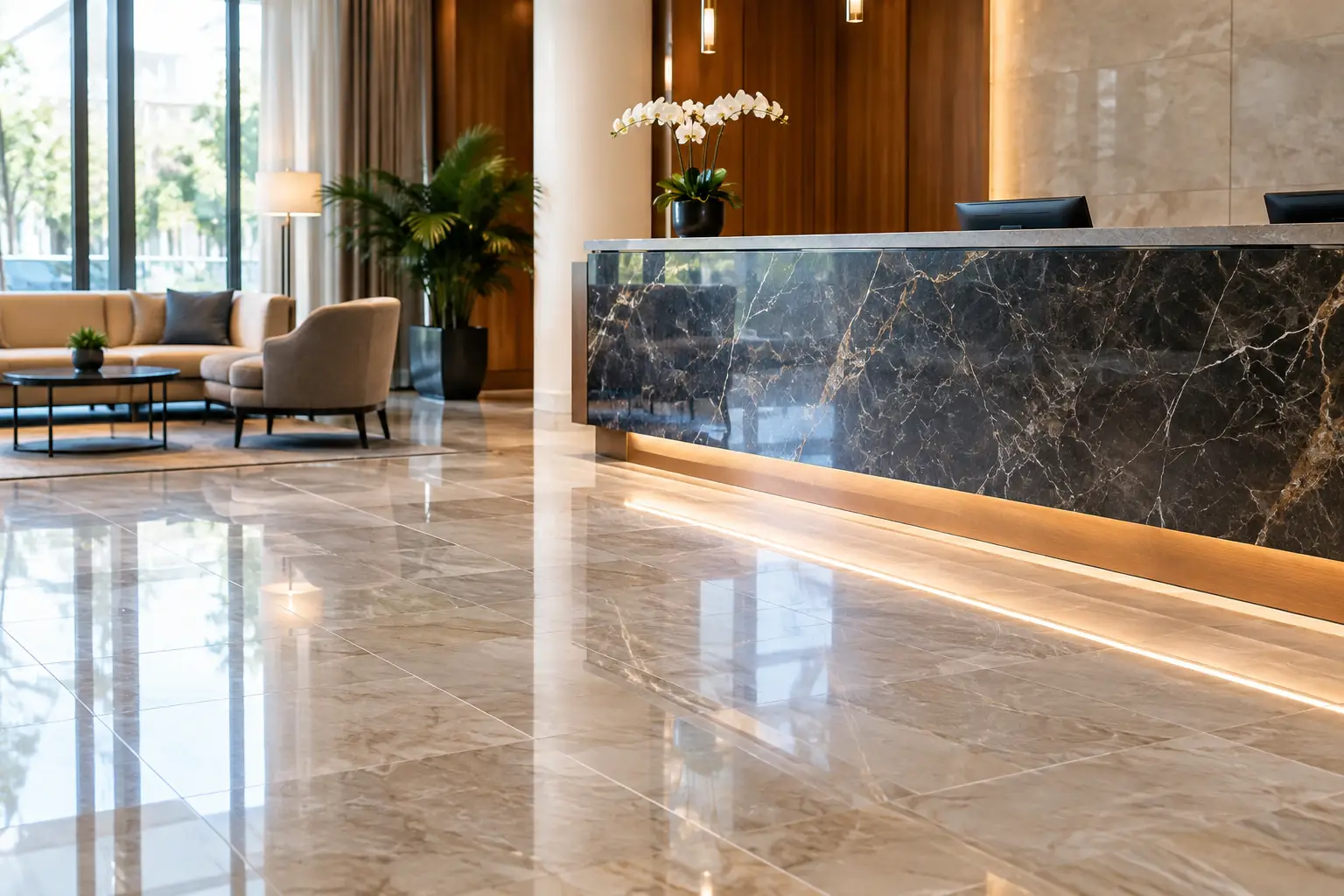
The entrance and reception floor often sets the visual language. A large-format porcelain tile in a warm limestone look can create an immediate sense of scale and refinement while offering better stain resistance and easier maintenance than many natural stones. Correct tile layout is what separates a polished arrival space from an ordinary one. Centring feature lines on doorways, reception desks and key sightlines avoids thin cuts at the perimeter and gives the room a deliberate rhythm.
The trade-off is that larger tiles demand a flatter substrate. If the slab is not assessed, repaired and re-levelled before installation, even a premium tile can reveal uneven edges and awkward transitions. A quality finish begins well before the first tile is laid.
Reception floors need beauty built for pressure
Hotel reception areas face rolling luggage, frequent cleaning, spills and relentless traffic. The selected finish must suit all of it without losing its character. Matt or lightly textured porcelain is often a practical choice where slip resistance matters, while polished finishes can be reserved for lower-risk decorative walls or controlled feature areas.
Grout selection also deserves more attention than it usually receives. A very pale grout may enhance a crisp, architectural scheme, but it can be unforgiving in an entrance exposed to weather and street debris. A carefully matched mid-tone grout often keeps the tile field looking cleaner for longer without compromising the design intent.
Movement joints cannot be treated as an afterthought. Large open spaces, changing temperatures and building movement all affect tiled finishes. Properly positioned movement provisions help prevent cracking and tenting, particularly across expansive lobby floors or where tiling meets different materials. The best detail is one guests never notice, yet it is central to a floor that stays composed over time.
Corridors require consistency at scale
Corridor tiling is where precision is tested by repetition. A slightly inconsistent set-out in one section may be barely visible, but it becomes obvious when repeated across multiple levels. Tile lines should run true through thresholds, lift lobbies and room entries, with clean transitions that make wayfinding feel intuitive.
For larger properties, this is also a programme issue. A contractor must be able to maintain the same standard across hundreds of rooms without creating bottlenecks for following trades. Clear staging, material management and quality checks are what turn a beautiful sample board into a consistent multi-level installation.
Hotel bathroom tiling is a waterproofing project first
A hotel bathroom may be compact, but it is among the most technically demanding spaces in the building. Behind its calm surface are shower falls, drainage positions, waterproofing membranes, wall preparation, penetrations, junctions and finishing details that must all work together.
A refined bathroom scheme might use a larger wall tile to create a spacious, low-joint look, combined with smaller mosaics on the shower floor for better grip and easier falls to waste. This pairing is not simply aesthetic. Smaller formats follow the required floor gradients more accurately, while the additional grout joints can improve traction underfoot.
The tile layout should be resolved around fittings rather than left to chance. Niches, mixers, shower screens, vanities and drains all need to be positioned with the tile grid in mind. Balanced cuts around a niche and a well-aligned tile line through a concealed cistern panel create the quiet order guests associate with high-end accommodation.
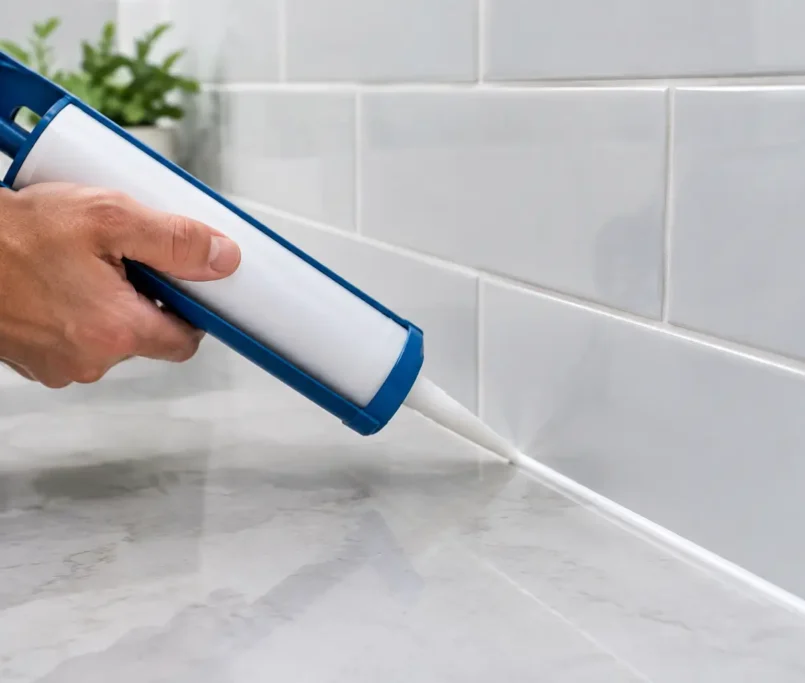
Waterproofing needs the same disciplined approach. Substrates must be prepared correctly, floor-to-wall junctions reinforced, and penetrations sealed before tiling begins. Caulking at changes of plane is equally important. Rigid grout in these areas can crack as surfaces move independently; a neat, colour-matched flexible sealant provides a cleaner and more durable finish.
A hotel tiling example for spa and dining spaces
Hospitality tiling changes again in leisure and food-service areas. A spa, poolside zone or gym changing room must feel restorative, but it also faces higher moisture levels, bare feet and intensive cleaning. Slip resistance, drainage and surface texture should lead the decision, then be integrated into the desired aesthetic.
Natural stone can be striking in these settings, especially in feature walls or dry lounge areas, but it comes with a maintenance commitment. Some stones require sealing and can be affected by certain cleaning products. Porcelain alternatives can reproduce stone, terrazzo or concrete with greater consistency and lower upkeep. The right choice depends on the hotel’s operational capacity, not just the visual concept.
In restaurant and breakfast spaces, tiled floors should support the atmosphere while standing up to chair movement, dropped food and regular cleaning. A tactile encaustic-style porcelain can define a breakfast buffet or bar area, while a quieter field tile allows furniture, lighting and joinery to take focus. Where kitchen or back-of-house tiling is required, the priority shifts further towards hygiene, falls, drainage and practical wall protection.
Details that distinguish premium installation
High-end hotel tiling is often judged in the small moments. Mitred external corners can give a feature wall or vanity return a crisp, monolithic appearance. Tile trims may be preferable in high-impact locations where an exposed edge needs additional protection. Neither option is automatically superior; the best choice balances design, tile type and the likelihood of impact in that location.
Lighting should be considered before installation, particularly with large-format tiles and polished surfaces. Raking light can amplify even minor irregularities, so substrate flatness and tile levelling require close control. Mock-ups are valuable for reception desks, bathrooms and feature walls because they allow the team to assess grout colour, edge details, patterns and reflections before the approach is repeated at scale.
Material batches also need to be managed carefully. Tiles with natural variation should be blended across boxes to prevent visible blocks of tone. Directional tiles, such as timber-look planks or veined marble-look porcelain, need a planned orientation. These decisions take time on site, but they are the difference between installation and craftsmanship.
Planning the work around an operating hotel
New-build hotels offer a clearer sequence, but refurbishment projects create a different challenge. Work may need to be staged around occupied rooms, guest circulation, noise restrictions and access limitations. Dust control, protection to completed finishes and dependable communication become as valuable as the tile-setting itself.
For a multi-room rollout, consistency relies on a documented approach to substrate preparation, waterproofing, set-out and final inspection. Builders and developers should look for a tiling partner that can resource the programme properly, respond to site changes quickly and maintain accountable workmanship from the first room to the last. Perfectly Laid approaches this work as an end-to-end finish, from demolition and levelling through to installation and meticulous caulking.
The most memorable hotel interiors do not rely on expensive tile alone. They earn their sense of luxury through surfaces that are flat, aligned, safe, durable and beautifully resolved at every junction. Start with the way guests will move through the space, then let the preparation and detailing carry that vision for years to come.