Premium Bathroom Wall Tiling Built to Last
A bathroom can have exceptional fittings, a carefully chosen vanity and beautiful lighting, yet still feel underwhelming if the walls are not laid with precision. Premium bathroom wall tiling is where visual ambition meets disciplined trade execution. The difference is visible in the lines, the corners and the way every cut sits, but its real value lies behind the finished surface.
For a homeowner, that means a bathroom that remains composed through daily steam, splashes and cleaning. For builders, developers and project managers, it means a finish that stands up to inspection, protects the programme and reflects the quality of the wider build. Beautiful tile is only one part of the result. The installation is what makes it last.
Premium bathroom wall tiling starts behind the tile
Walls in bathrooms are rarely ready to tile simply because they appear flat. Existing finishes may conceal movement, unevenness, loose sections or surfaces that are unsuitable for adhesive. In renovations, demolition must be controlled and thorough, with residues removed before the wall can be assessed properly. In new builds, even a sound substrate may need correction before large-format tiles or crisp feature details can be installed.
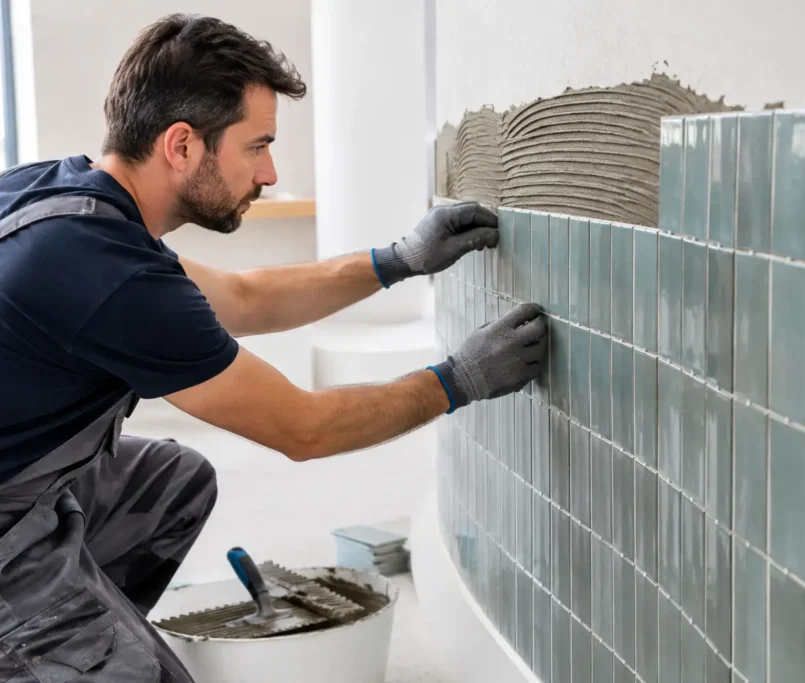
Preparation establishes the plane for the entire room. Walls are checked for plumb, flatness and stability, then re-levelled where necessary. This matters particularly around a shower, where uneven walls can turn a neat vertical stack into a series of widening joints and awkward cuts. A premium finish does not rely on grout to disguise poor preparation. It creates a true background so each tile can be placed accurately.
The practical benefit is just as significant. Correct surface preparation helps adhesive achieve a reliable bond and reduces the risk of tiles sounding hollow, cracking or coming loose over time. It may feel like an invisible part of the scope, but it is often the work that separates a short-lived cosmetic upgrade from a bathroom built for years of use.
Waterproofing is part of the design outcome
Waterproofing is often discussed as a compliance requirement. It is that, but it is also a direct safeguard for the investment being made in the room. Tiling and grout are not a waterproof barrier on their own. Water can pass through grout lines, perimeter junctions and service penetrations, particularly in showers and wet areas.
A well-planned waterproofing system is applied to the prepared substrate, with careful attention given to corners, wall-to-floor transitions, niches, hobs and plumbing points. These are the locations where water concentrates and where poor workmanship can lead to expensive failures behind an otherwise flawless wall.
The exact system depends on the room layout, substrate and local project requirements. A full-height shower enclosure, for example, calls for different planning from a bathroom with a freestanding bath away from the wet zone. The key is to decide the waterproofing approach before tile installation begins, rather than treating it as a rushed stage between trades.
The layout should be resolved before the first tile is fixed
The most convincing tiled bathrooms look calm because their geometry has been considered. A centred feature wall, a balanced shower niche and neat cuts at each edge make the space feel intentional. By contrast, a layout that begins at the most convenient corner can leave a narrow sliver of tile beside a vanity or a visibly off-centre pattern around a fixture.
Professional set-out begins with the room’s focal points. This may be the centre line of a basin, the shower screen, a recessed niche or a statement bath. Tile sizes, joint widths and trim details are then planned around those features. Sightlines matter too. The wall seen immediately from the doorway deserves particular attention, especially where a patterned tile, stacked format or natural stone look is involved.
Large-format tiles demand even more discipline. Their reduced grout lines create a refined, contemporary surface, but they also expose irregular walls and inaccurate levelling. They often require specialised handling, suitable adhesives and a methodical fixing process to achieve full support. The result can be striking, but it should not be selected without considering the condition of the walls and the complexity of the cuts required.
Choosing materials for both appearance and use
Porcelain is a popular choice for bathroom walls because it offers consistent colour, low porosity and broad design flexibility. It can deliver the visual depth of stone, concrete or timber while remaining straightforward to maintain. Ceramic wall tile can also be an excellent option, particularly where a lighter tile or handmade character is desired.
Natural stone brings individuality, tonal variation and a distinctly luxurious finish, but it requires greater consideration. Some stones need sealing, and their natural movement means careful selection and blending during installation. A stone bathroom can be exquisite, though it asks more of both the installer and the owner than a uniform porcelain scheme.
Finish matters as much as material. Gloss tiles reflect light and can make compact bathrooms feel brighter, while matt tiles lend softness and architectural restraint. Textured surfaces add interest but may need more regular cleaning in splash-prone locations. There is no single premium choice. The right tile balances the desired aesthetic with the practical demands of the household or development.
Details that signal craftsmanship
Premium bathroom wall tiling is recognised in the finishing details. Tile edges around niches, windows and returns need a deliberate treatment, whether that is a mitred edge, a finely selected trim or a complementary border. These decisions should suit the tile, not compete with it.
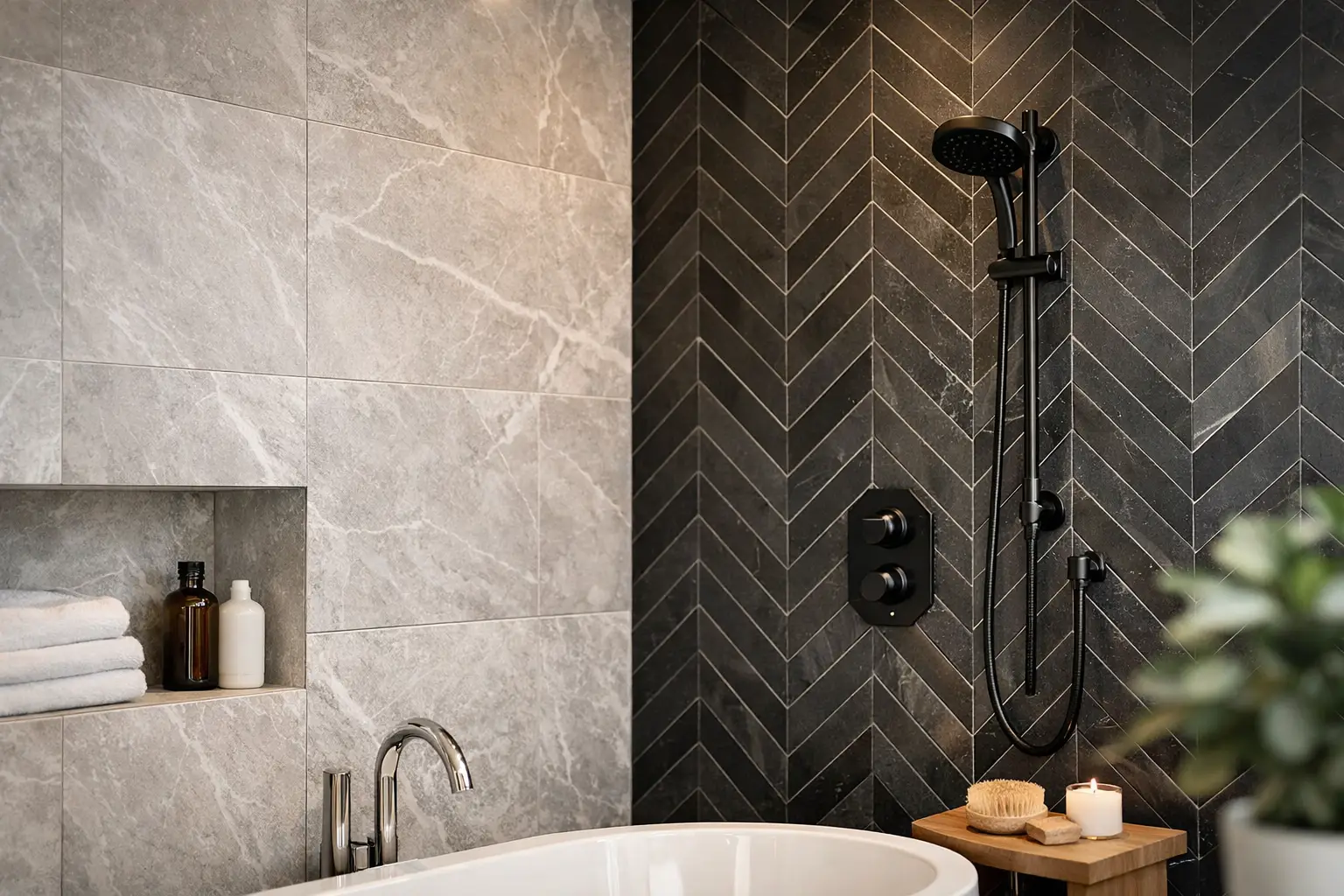
Grout selection also changes the character of the room. A closely matched grout produces a quieter, more continuous surface. A contrasting grout gives shape and rhythm to a stacked, herringbone or grid layout. Neither is automatically superior, but the choice needs to be made early because it affects how every joint reads across the wall.
Movement joints and quality silicone sealing are less glamorous, yet equally essential. Bathrooms expand and contract slightly, and junctions between different surfaces need the flexibility to accommodate that movement. Clean, consistent caulking at internal corners, around fittings and where tiles meet a bath or shower tray protects the substrate while preserving the crisp finish clients expect.
Planning for renovations, fit-outs and multi-unit projects
A single bathroom renovation benefits from clear sequencing between demolition, plumbing, waterproofing, tiling and final fit-off. Rushing one trade to recover time elsewhere is a common source of compromised finishes. A measured programme allows substrates and waterproofing systems to cure properly and keeps decisions about tile layout, niches and trims from being made at the last minute.
On commercial and high-rise residential work, the challenge is consistency at scale. A tiled bathroom must meet the same standard on the first unit and the hundredth. That requires organised material management, repeatable set-out procedures, responsive communication and an installation team capable of maintaining pace without sacrificing detail.
Perfectly Laid approaches the work as an end-to-end tiling scope, from surface correction and waterproofing through to precise installation and finishing. That accountability gives clients one quality-focused trade partner across the stages that most directly affect the final bathroom.
What to discuss before accepting a tiling quote
A detailed quote should make the proposed scope clear, rather than reducing the job to a rate per square metre. Ask how the existing walls will be assessed and prepared, what waterproofing is included, and how corners, niches, trims and caulking will be finished. If tiles are oversized, patterned or natural stone, confirm that the installation method reflects their requirements.
It is also worth discussing tile quantities, batch variation and spares before work begins. Ordering a sensible allowance helps protect the project from delays if additional cuts are needed or a replacement tile is required later. For feature tiles with strong variation, review the arrangement before fixing so the final wall has the intended balance of colour and movement.
A premium bathroom should never depend on hope hidden behind grout lines. Give the preparation, waterproofing and set-out the same attention as the tile itself, and the finished walls will carry their quality quietly for years to come.