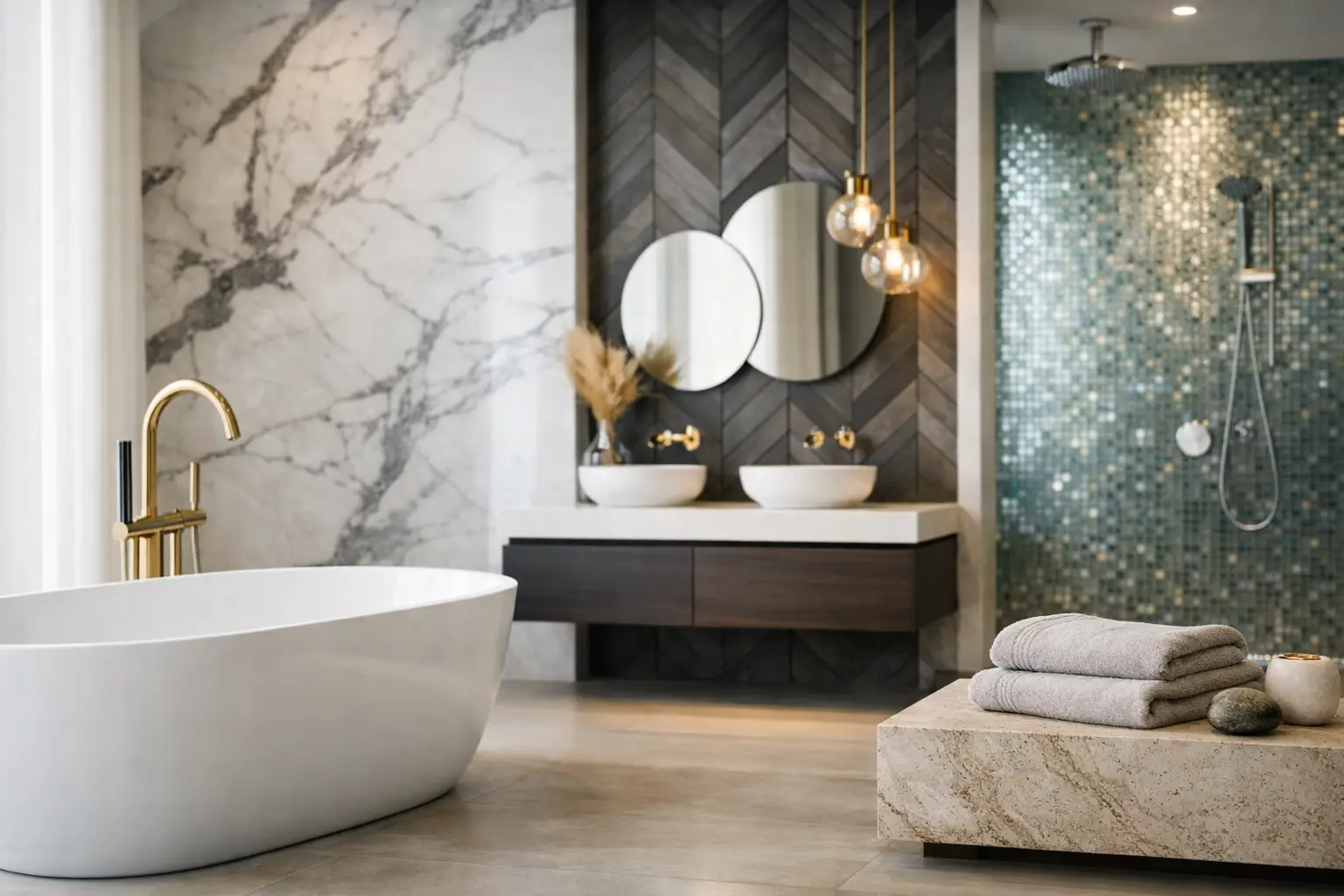
Luxury Bathroom Tile Trends for 2026
A luxury bathroom rarely feels expensive because of one dramatic choice alone. More often, it comes down to restraint, proportion and finish quality – the way tile lines land cleanly, the way light moves across a surface, and the way every detail looks considered rather than crowded. That is exactly why luxury bathroom tile trends are shifting away from short-lived statement pieces and towards materials and layouts that feel refined, enduring and expertly resolved.
For homeowners, designers and developers alike, the appeal is obvious. A premium bathroom has to do more than photograph well. It needs to stand up to daily use, moisture, cleaning products and changing tastes, while still delivering a strong architectural impression. The trend direction now reflects that balance: elevated surfaces, warmer palettes, tactile finishes and installation standards that leave nothing to chance.
Luxury bathroom tile trends are getting warmer
For years, the high-end bathroom market leaned heavily on cool greys, bright whites and stark contrast. That look can still work, particularly in sharper contemporary schemes, but the current move is noticeably warmer. Soft limestone tones, mushroom greys, taupe, sand and chalky beige are taking over because they make bathrooms feel calmer and more tailored.
This is not a retreat into blandness. Warm neutrals create depth when they are layered properly, especially across floor tiles, wall finishes and joinery. They also flatter natural and artificial light better than colder palettes, which can sometimes make a room feel clinical. In larger homes and premium developments, that warmth helps bathrooms feel connected to the rest of the interior rather than styled as a separate, overly polished zone.
The trade-off is that warmer tones demand more discipline in selection. If undertones fight each other, the room can quickly feel muddy. A luxury result depends on aligning the tile body, grout colour, stone veining and surrounding finishes so the space reads as deliberate from every angle.
Stone-look surfaces still lead, but with more subtlety
Stone remains central to luxury bathroom tile trends, though the preference is changing. Instead of heavily patterned marble effects with aggressive veining, many projects are moving towards quieter stone looks – travertine-inspired porcelain, soft limestone visuals and restrained marbles with more negative space.
There are good reasons for that shift. Strong veining can dominate a smaller bathroom and date more quickly if used wall-to-wall. A more subtle stone look gives the room longevity and lets other elements, such as tapware, lighting and vanity design, carry some of the character. It also tends to feel more expensive because it does not try too hard.
Porcelain is often the practical choice here, particularly where clients want the visual quality of natural stone with less maintenance. High-end porcelain collections now offer convincing depth, gentle variation and larger formats that reduce grout interruption. Natural stone still has its place, especially in bespoke residential work, but it requires the right sealing, ongoing care and an installation team that understands the material properly.
Travertine influence is everywhere
Travertine-inspired tiles are particularly strong at the moment. Their appeal lies in their softness – visually rich, but not busy. They work beautifully in spa-led bathrooms, Mediterranean-influenced interiors and contemporary spaces that need warmth without ornament.
What matters is scale and finish. A travertine look in an oversized polished format can feel forced. A honed or matt finish, paired with careful layout planning, usually delivers a more natural premium result.
Texture is replacing glossy showiness
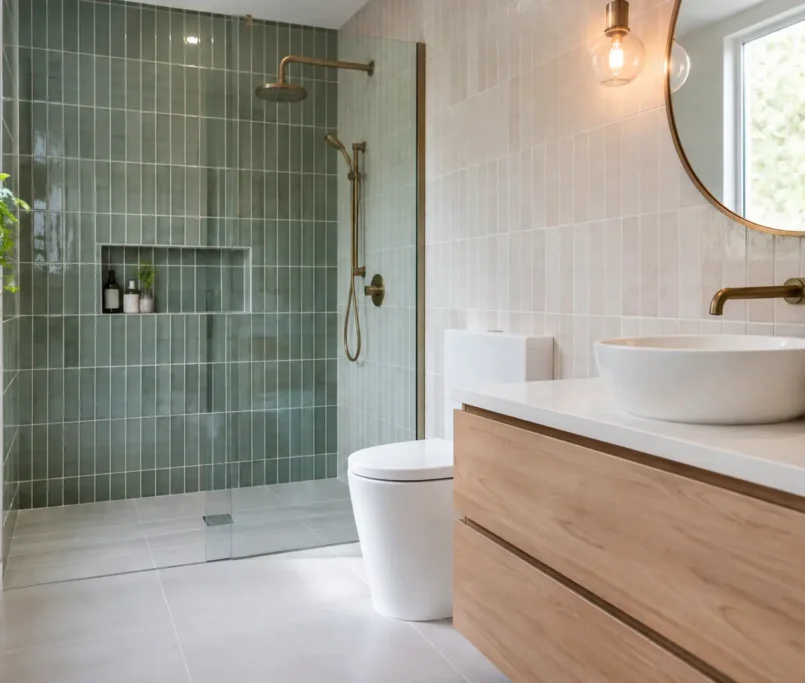
One of the clearest luxury bathroom tile trends is the move towards tactile surfaces. Fluted tiles, ribbed profiles, handmade-effect ceramics and gently undulating finishes are becoming more common, especially on feature walls, vanity splashbacks and shower niches.
Texture adds interest without relying on loud colour or pattern. It catches light, creates shadow and gives the room a more crafted quality. In premium bathrooms, that matters. A flat space can still be beautiful, but a textured element often gives it the depth that makes the finish feel complete.
That said, placement is everything. Overusing textured tile can make a bathroom feel restless, and some highly profiled products are less practical in areas exposed to constant soap residue or hard water. Used selectively, though, texture introduces detail in a way that feels architectural rather than decorative.
Larger formats continue to define premium spaces
Large-format tiles remain a strong marker of quality because they create visual calm. Fewer grout lines mean a cleaner read across walls and floors, and that uninterrupted surface is especially effective in master ensuites and generous wet areas.
The attraction is not just aesthetic. Larger tiles can help a bathroom feel bigger and more coherent, particularly when the same material runs from floor to wall. In luxury developments and high-end renovations, this continuity is often what gives the room its composed, hotel-like finish.
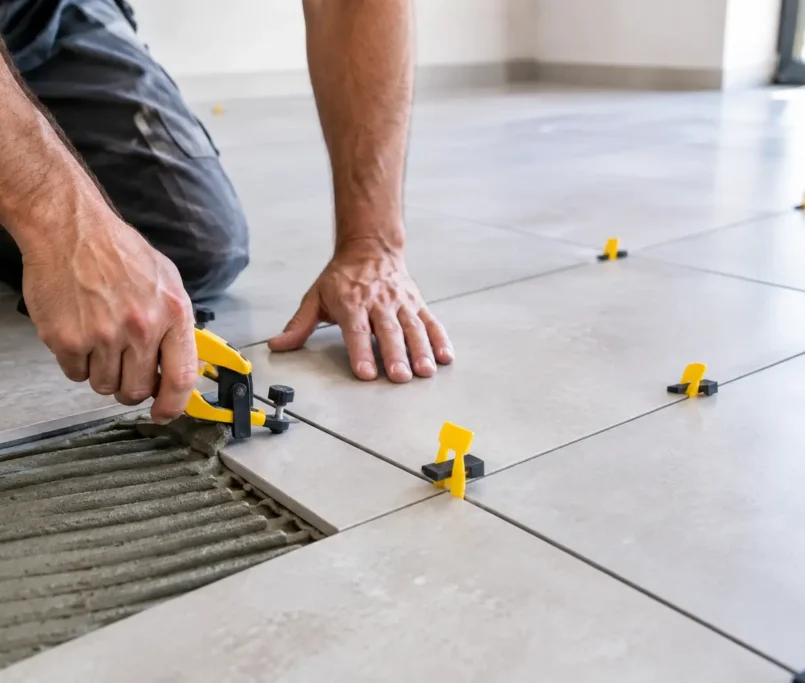
Installation, however, is where this trend either succeeds or falls apart. Bigger tiles are far less forgiving. Substrates need to be properly prepared, falls need to be accurate, and cuts around wastes, niches and fixtures need to be exact. If the base is off, the finished room will show it. Premium tile only looks premium when the execution is equally precise.
Slab-look bathrooms need careful planning
There is growing demand for slab-look installations and oversized porcelain panels. When done well, they are striking – sleek, minimal and highly architectural. But they are not the right answer for every project.
Access, budget, substrate condition and future maintenance all need to be weighed up. In some bathrooms, a well-chosen large-format tile delivers nearly the same visual effect with more flexibility and less cost pressure. The right specification depends on the room, not just the mood board.
Feature walls are becoming quieter and smarter
Luxury does not currently mean one loud hero wall and a collection of secondary finishes trying to keep up. The more sophisticated direction is tonal contrast, material variation and thoughtful zoning.
That might mean a subtle mosaic within a recessed niche, a vertically stacked feature behind the vanity, or a change in tile format to define the shower area. The effect is more integrated and less obvious, which is often what makes it feel expensive.
Mosaics still have a place, particularly in curved details, niche linings and slip-conscious shower floors. The difference is that they are being used with more control. Instead of high-contrast decorative patterns, current schemes favour stone mosaics, kit-kat profiles and tonal finger tiles that support the wider palette rather than compete with it.
Layout matters as much as the tile itself
One of the most overlooked luxury bathroom tile trends is not a product trend at all. It is the rising importance of layout. Straight stacking, refined grid patterns and symmetry around key fixtures are taking priority over complicated patterns used for effect alone.
This is where a bathroom either feels high-end or merely expensive. Even exceptional tile can lose its impact if set-out lines drift, cuts are awkward, or grout joints do not align with focal points. By contrast, a simpler tile installed with discipline can look outstanding.
Vertical stacking is particularly popular because it emphasises height and gives walls a crisp, tailored rhythm. Brick bond layouts are still used, but more often in spaces where a softer or more relaxed look is appropriate. For sharper contemporary bathrooms, clean stacked joints and balanced proportions tend to win.
Grout, edges and transitions are part of the design
True luxury lives in the finishing details. Grout colour is now being chosen with more intent, usually to blend rather than contrast. The aim is a more monolithic appearance, where the surface reads as one field instead of a grid.
Trim selections matter too. Slimline metal edging, mitred tile returns and neat junctions around niches, windows and linear drains all contribute to the final impression. These are small decisions on paper, but they are often what clients notice most once the bathroom is complete.
This is also where a quality-first installer protects the project. Waterproofing integrity, substrate preparation, screeding accuracy and clean finishing are not glamorous talking points, but they are what allow a luxury specification to perform as beautifully as it looks. In bathrooms, appearance and durability are inseparable.
What these trends mean for real projects
For homeowners, the message is to choose finishes that will still feel right in five or ten years, not just on handover day. For builders and developers, it is about selecting tile schemes that deliver a premium impression repeatedly across multiple bathrooms without creating unnecessary programme risk. And for designers, the current trend cycle offers something useful: more room for subtlety, better materials and fewer gimmicks.
At Perfectly Laid, we see the strongest results come from projects where design ambition is matched by disciplined execution. Luxury is not excess. It is clarity, craftsmanship and confidence in every surface.
If you are planning a bathroom, start with the feeling you want the room to hold, then choose tile that can carry that mood with precision. The most impressive spaces are usually the ones that never need to announce themselves.