Why Are My Tiles Cracking?
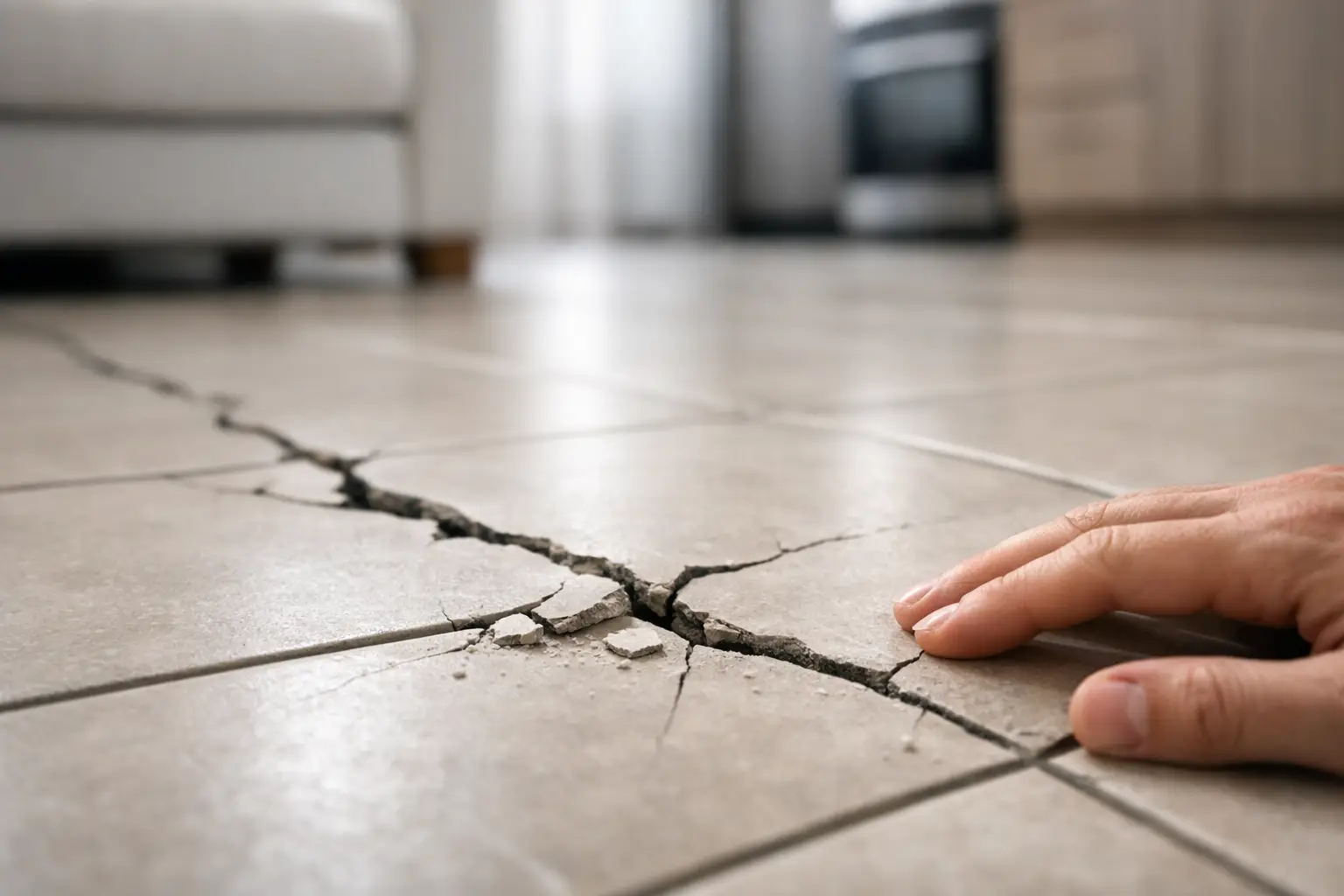
A hairline fracture across a new bathroom floor or a sharp crack running through an alfresco tile is never just a cosmetic annoyance. If you’re asking, why are my tiles cracking, the real issue is usually beneath the surface. Tiles are hardwearing, but they are not designed to compensate for movement, moisture problems, weak substrate preparation or poor installation detail.
Cracked tiles tend to be a symptom, not the root problem. Replacing one or two pieces may restore the look for a short while, but if the cause remains, the damage often returns. In premium residential and commercial spaces, that matters for more than appearance. It affects durability, waterproofing performance, maintenance costs and, ultimately, the quality of the finished environment.
Why are my tiles cracking? The most common causes
In most cases, tiles crack because pressure is being forced through a brittle surface that cannot flex. That pressure can come from structural movement, an unstable subfloor, adhesive failure, impact damage or expansion that has nowhere to go.
One of the most common causes is inadequate surface preparation. A tiled finish is only as sound as the substrate below it. If a floor is uneven, dusty, weak, poorly cured or not properly levelled before tiling begins, the bond can be compromised from day one. Voids beneath the tile create unsupported spots, and once weight passes over those points repeatedly, cracking becomes far more likely.
Movement in the building is another major factor. New builds settle. Upper levels in multi-unit developments can experience slight structural movement. Timber substrates expand and contract more than concrete. External areas are exposed to bigger temperature shifts. When movement joints are missing or poorly planned, that stress often shows up through the tile surface.
Moisture also plays a bigger role than many property owners realise. In wet areas, failed waterproofing or moisture ingress can affect the substrate, adhesives and surrounding materials. Over time, that can lead to loss of bond, swelling, movement and fractured tiles. In outdoor settings, trapped moisture combined with temperature changes can be especially damaging.
Then there is simple installation quality. Incorrect adhesive selection, poor coverage, rushed curing times and badly handled cuts around corners or penetrations can all weaken the system. A tiled surface may look straight and clean on handover, yet still contain hidden faults that reveal themselves months later.
The crack pattern often tells you what is happening
Not all tile cracks mean the same thing. The shape, location and timing of the damage can offer valuable clues.
A single cracked tile in a high-traffic zone may point to impact damage or a local void under the tile. If a heavy object was dropped, the cause may be straightforward. But if the crack appears without impact, the tile may not have been fully supported from below.
Several tiles cracking in a line usually suggests movement in the substrate. This is particularly common where there is a joint in the concrete slab beneath, or where the floor has shifted and that movement has transferred directly into the tiled finish.
Cracks near doorways, corners or transitions between materials often indicate stress concentration. These are points where surfaces move differently, and if they are not detailed correctly, the tilework absorbs that tension.
If tenting, lifting or hollow-sounding tiles appear before cracks form, expansion pressure may be building across the floor. That usually means the installation lacks adequate movement accommodation, or the tiled area has been locked in too tightly at the perimeter.
Floor tiles vs wall tiles
Floor tiles crack more often because they carry live loads, furniture weight and foot traffic. Wall tiles are less exposed to direct pressure, so when they crack, the problem is often linked to substrate movement, structural stress or moisture-related failure behind the wall.
In showers and bathrooms, cracked wall tiles should never be dismissed as minor. Even fine fractures can allow water to track into areas where it should not be, particularly if the system behind the tile has already been compromised.
Poor preparation is usually where trouble starts
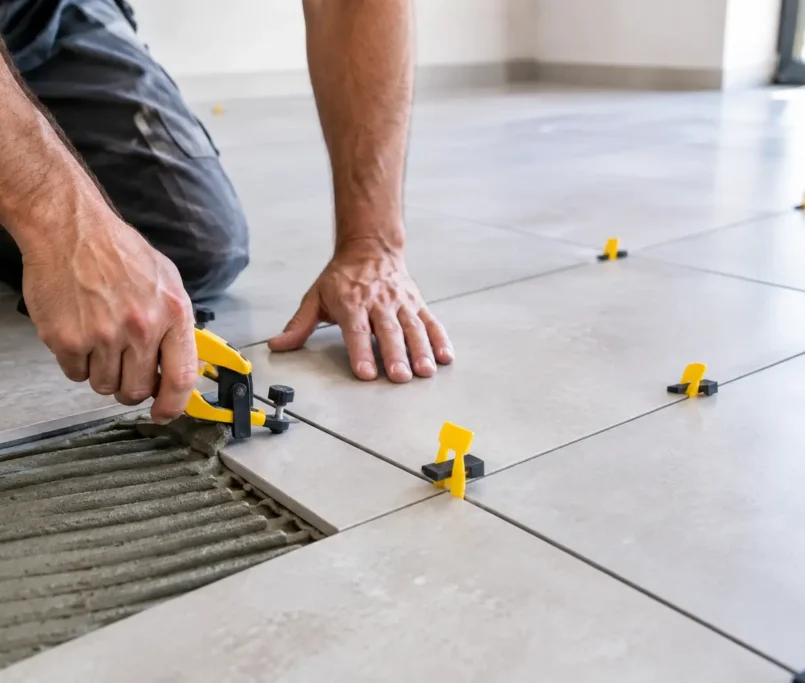
In high-quality tiling, preparation is not a background task. It is the work that protects the finish.
An uneven or unstable substrate puts constant stress on tiles. If the floor has not been properly re-levelled or screeded, tiles may bridge low spots rather than sit on a fully supported bed. That unsupported span becomes a weak point. With enough foot traffic or weight, the tile eventually gives way.
Contamination matters too. Dust, laitance, old adhesive residue and loose surface material can all interfere with bond strength. So can tiling over a substrate that has not cured properly. A polished final look can hide these shortcuts at first, but not for long.
This is one reason premium tiling work demands discipline before the first tile is laid. The visible result depends on the invisible process – substrate assessment, correction, moisture control and the right installation system for the setting.
Movement and expansion need to be planned, not ignored
Tiles are rigid. Buildings are not.
Concrete shrinks as it cures. Timber moves with humidity. External surfaces heat up and cool down. Large-format tiles can also magnify stress because there are fewer grout lines to absorb slight movement. If there are no movement joints in the right locations, the pressure has to release somewhere. Often, that somewhere is straight through the tile.
This is especially relevant in expansive open-plan areas, commercial fit-outs and outdoor entertaining zones where sun exposure and substrate variation are more pronounced. It also matters in flat and high-rise work, where deflection and structural tolerances need careful attention.
The right approach depends on the site. Sometimes it means installing movement joints at defined intervals. Sometimes it means using decoupling systems or selecting adhesives suited to the substrate and environment. There is no one-size-fits-all answer, which is exactly why diagnosis matters before repair.
Why are my tiles cracking in wet areas?
Bathrooms, laundries and other wet zones present a more complex risk profile because tile performance is tied to waterproofing performance.
If water penetrates behind the tile and into the substrate, the materials underneath can weaken, swell or shift. Over time, that may present as drummy tiles, loose grout, mould issues and cracked finishes. In some cases, the tile crack is simply the first visible sign that the waterproofing system has already failed.
That does not mean every cracked bathroom tile requires a full strip-out. But it does mean the area should be assessed carefully. A superficial repair in a wet area can be false economy if moisture is already moving where it should not.
Can cracked tiles be repaired, or do they need replacing?
It depends on the cause.
If a tile has cracked due to a one-off impact and the surrounding installation is sound, replacing the damaged piece may be enough. If the crack is the result of substrate movement, poor bonding or moisture failure, replacement alone rarely solves the problem.
This is where many repairs go wrong. The visible damage is treated, but the installation system is not. The new tile looks perfect for a while, then cracks again because the underlying pressure is still there.
A proper assessment should consider the tile condition, grout lines, substrate type, moisture exposure and the pattern of surrounding damage. In premium homes and commercial settings, it is worth getting that diagnosis right before committing to patchwork repairs or a wider replacement.
How to stop the problem getting worse
If you notice cracked tiles, avoid assuming it is purely cosmetic. Monitor whether nearby grout is breaking down, whether the tile sounds hollow, and whether more cracks are appearing in the same area. In wet spaces, look for signs of moisture migration such as staining, persistent damp smells or sealant breakdown.
It is also wise not to overload the affected area until the cause is understood. On floors, continued traffic over an unsupported or unstable section can enlarge the damage. On walls, moisture penetration can quietly worsen behind the finish.
The best next step is usually a site-specific inspection by a tiling professional who understands the full assembly – preparation, screeding, waterproofing, installation and finishing detail. That broader view matters because tiled surfaces fail as systems, not just as individual pieces.
At Perfectly Laid, that is exactly how we approach it: not as a quick cosmetic fix, but as a workmanship issue that deserves proper diagnosis and a precise solution.
When tile cracking is dealt with early and properly, you protect more than the surface. You protect the integrity of the room, the investment in the finish and the standard the space was meant to hold for years to come.