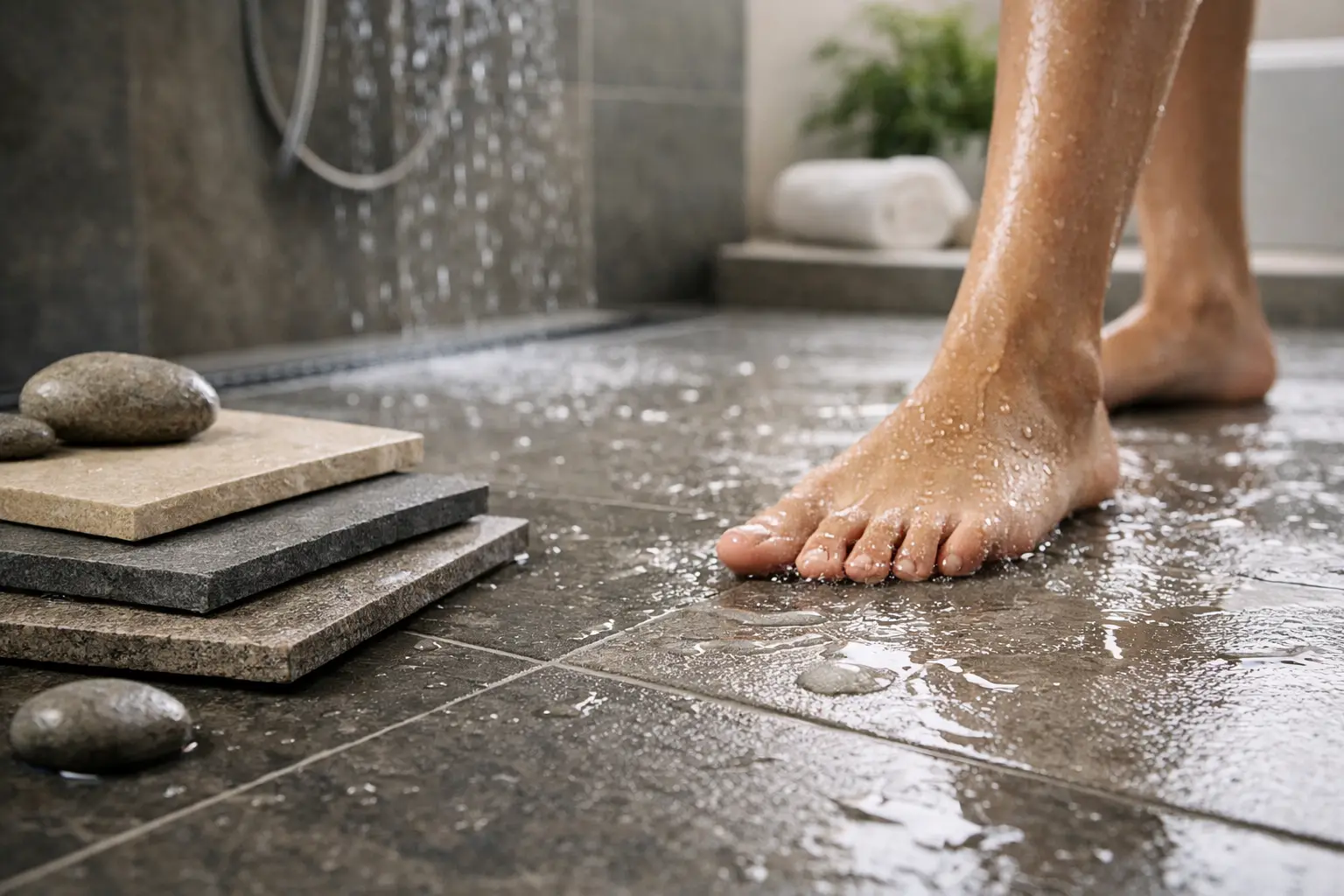
Best Non Slip Tiles for Wet Areas
A bathroom floor can look flawless on installation day and still become a problem the first time soap, steam and water collect underfoot. That is why choosing the best non slip tiles for wet areas is never just a style decision. It is a performance decision that affects safety, maintenance, durability and the overall quality of the finished space.
In premium residential and commercial work, slip resistance needs to be considered as early as the design stage. The right tile should support the visual intent of the project while standing up to daily use, cleaning routines and constant moisture. Get that balance right, and the result feels considered and secure. Get it wrong, and even the most expensive fit-out can feel compromised.
What makes the best non slip tiles for wet areas?
Non slip performance is not about one magic material. It comes down to the interaction between the tile surface, the amount of water present, the slope of the floor, the grout layout and how the area is used. A powder room has very different demands from a family shower, a pool surround or a commercial changing room.
In practical terms, tiles become more slip resistant when they have either a textured surface, a matt finish with enough grip, or a smaller format that creates more grout joints underfoot. Those grout lines add traction, which is one reason mosaic tiles remain a strong choice for shower floors. Larger format tiles can still work beautifully in wet zones, but they need careful product selection and precise installation to perform as intended.
This is where many projects go off course. Clients are often shown a tile board under showroom lighting, but the tile is never judged in the conditions it will actually face. Water, body products, cleaning residue and bare feet all change how a surface behaves.
Best tile types for wet areas
Porcelain is usually the strongest all-rounder for wet areas. It is dense, hard wearing, low in porosity and available in a wide range of finishes, from stone look surfaces to refined concrete tones. For bathrooms, laundries and many commercial interiors, a good quality matt or structured porcelain tile often gives the best balance of aesthetics and slip resistance.
Ceramic can work in some internal wet areas, particularly on walls or lower traffic floors, but it is generally less durable than porcelain. If the goal is longevity and a premium finish, porcelain is normally the more dependable choice.
Natural stone can be exceptional, but it needs more care. Some stones offer excellent grip when honed or textured, while others can become slippery when sealed or polished. Stone also brings maintenance responsibilities that not every household or operator wants to take on. In high-end settings, it can be a beautiful option, but it should be chosen with full awareness of sealing, cleaning and wear.
Mosaic tiles are especially effective in shower recesses and other compact wet zones. Because they are smaller, they follow falls more accurately and create more grout joints, both of which improve underfoot safety. They are not always the easiest surface to keep looking pristine, particularly if the grout specification is poor, but from a functional standpoint they remain one of the smartest choices.
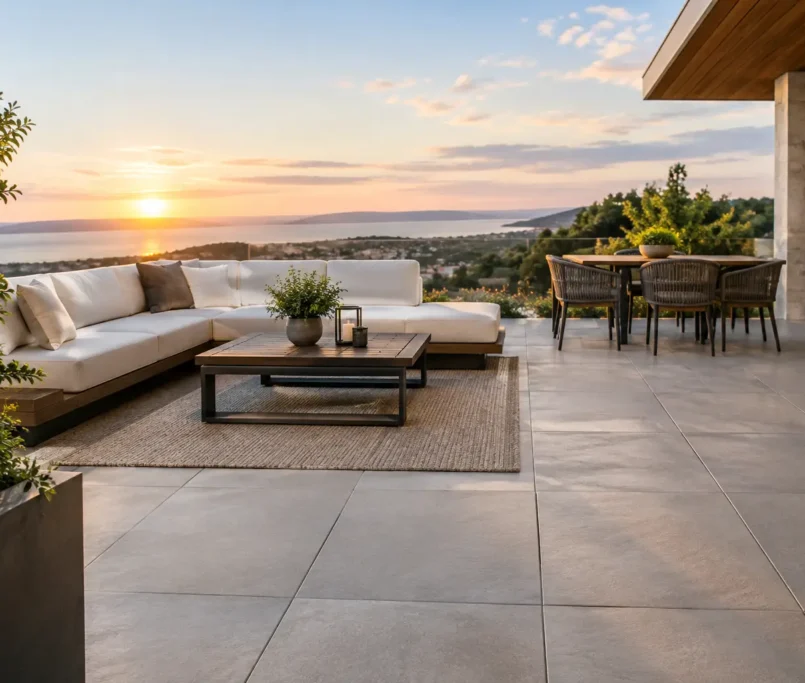
For external wet areas such as patios, pool surrounds and alfresco zones, exterior-grade porcelain is often the preferred solution. It offers consistency, frost and moisture resistance where needed, and a more controlled finish than many natural materials. The key is choosing a tile designed specifically for outdoor slip performance rather than assuming any exterior-looking tile will do the job.
Slip ratings matter, but so does context
If you are comparing products, slip ratings are an essential starting point. They provide a benchmark for how a tile performs under tested conditions. But ratings should not be read in isolation.
A tile with a strong slip rating may still disappoint if the substrate has not been properly prepared, the falls are inadequate or the wrong cleaning products leave a residue on the surface. Equally, a tile with a more moderate rating may perform very well in a low-risk domestic bathroom when paired with correct installation and drainage.
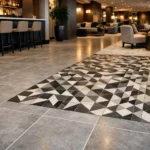
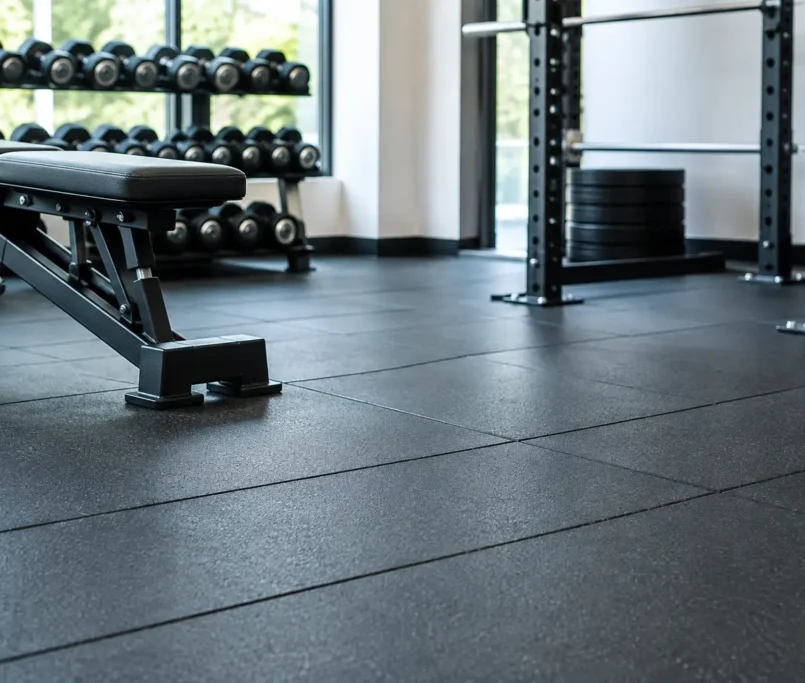
This is why specification should always consider the full environment. In a private en suite, comfort under bare feet and ease of cleaning may sit alongside slip resistance. In a hospitality venue or fitness facility, the threshold is much higher because foot traffic, cleaning frequency and liability all change the brief.
Choosing the right finish for each space
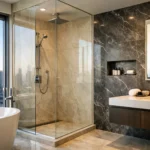
Bathrooms and shower floors
For bathroom floors, matt porcelain is often the safest and most visually versatile option. It gives a refined finish without the slickness of polished surfaces. In shower floors, mosaics or smaller format textured tiles tend to perform best because they allow accurate falls to waste and create additional traction.
Polished tiles are rarely the right choice on wet floors. They may look luxurious on display, but in working bathrooms they can become impractical very quickly. If a project calls for a sleek, high-end aesthetic, there are many modern porcelain ranges that achieve a sophisticated look without sacrificing grip.
Laundries and utility spaces
Laundries need durability more than drama. Water spills, detergents and heavy appliances make a practical porcelain tile the sensible answer. A slightly textured surface usually performs better than an ultra-smooth decorative finish, especially in busy family homes or multi-unit developments where long-term maintenance matters.
Wet rooms and accessible bathrooms
Wet rooms demand precision. The best tile in the world cannot compensate for poor falls, weak waterproofing or badly planned drainage. Smaller format tiles are often preferred here because they accommodate floor gradients cleanly. The visual result can still feel elegant and architectural, but the build-up beneath the surface has to be right.
Outdoor wet areas
External spaces introduce rain, surface contamination and changing temperatures. Tiles around pools, entryways and alfresco zones need a more assertive anti-slip finish than most internal rooms. That often means structured porcelain or purpose-selected natural stone with proven outdoor suitability. The finish should feel secure under bare feet without becoming so rough that it is unpleasant to walk on.
The trade-off between grip and maintenance
One of the most common mistakes in tile selection is assuming more texture is always better. It depends.
Highly textured tiles can improve slip resistance, but they may also hold dirt more readily and require more effort to clean. In domestic bathrooms, that can become frustrating over time. In commercial settings, cleaning teams may need specific products and methods to maintain both hygiene and appearance.
On the other hand, tiles that are too smooth are easier to wipe down but may not offer enough confidence in consistently wet conditions. The best specification usually sits in the middle – enough surface character to provide grip, without creating an unnecessarily harsh or high-maintenance finish.
Installation quality changes everything
Even the best non slip tiles for wet areas can fail if the installation is careless. Surface preparation, screeding, substrate correction, waterproofing and tile layout all influence the final result. A floor that ponds water, has inconsistent lippage or lacks proper falls will never perform as cleanly as it should.
This is especially relevant in premium homes, commercial fit-outs and multi-unit developments, where consistency matters across every room. A well-executed installation protects the design intent. It also protects the client from avoidable defects, rectification costs and safety complaints later on.
That is why the specification process should not stop at selecting a tile sample. It should include a clear plan for where each tile is used, how transitions are handled, what grout is suitable, and how the substrate will be prepared before the first tile is laid. At Perfectly Laid, that disciplined approach is what turns a tile choice into a finished surface that looks exceptional and performs properly.
How to choose well without overcomplicating it
If you are selecting tiles for a wet area, start with the room’s actual demands rather than the mood board. Ask how much water will be present, whether users will be barefoot or shod, how often the area will be cleaned, and how important ease of maintenance is over time.
Then look at material, finish and format together. A large porcelain tile may be ideal for a bathroom floor outside the shower. A mosaic may be the better answer inside the shower itself. An outdoor patio may need a different surface entirely, even if you want it to visually connect with the interior.
The strongest outcomes usually come from combining design confidence with practical restraint. Not every beautiful tile belongs in a wet area, and not every anti-slip tile delivers the refined finish a high-end project deserves. The right product is the one that satisfies both.
When wet area tiling is specified and installed with care, the finished space feels effortless. It looks sharp, performs under pressure and gives clients confidence every time they step onto it. That is the standard worth aiming for – not just a tile that photographs well, but one that earns its place every day.