Commercial Hospitality Tiling Project Example
A polished hospitality venue can be let down by one poor detail – drummy floor tiles at the bar line, uneven falls in a washroom, chipped edges where guests queue, or grout joints that already look tired before the opening weekend. That is why a strong commercial hospitality tiling project example matters. It shows what sits behind the finish clients see, and why preparation, sequencing and precision installation decide whether a space simply looks good on handover or still performs months into heavy foot traffic.
Hospitality projects are demanding in a way many other fit-outs are not. They need to look refined under close scrutiny, but they also need to withstand rolling trolleys, constant cleaning, spills, chair movement and a compressed build programme. In a restaurant, hotel, bar or café, tiling is rarely decorative alone. It is part of the daily operating surface. If the substrate is inconsistent, if waterproofing is rushed, or if movement is not properly considered, those problems usually appear fast and in public.
A commercial hospitality tiling project example in practice
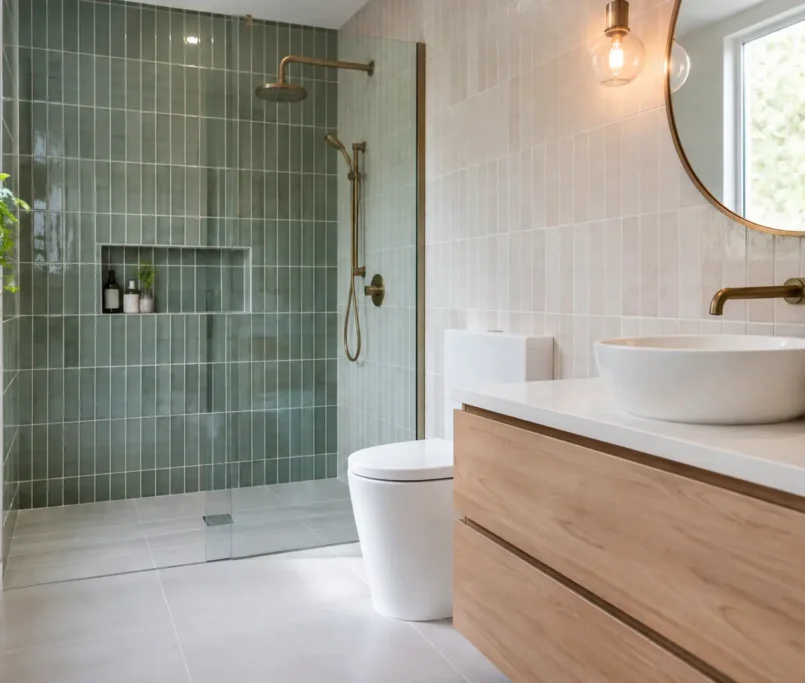
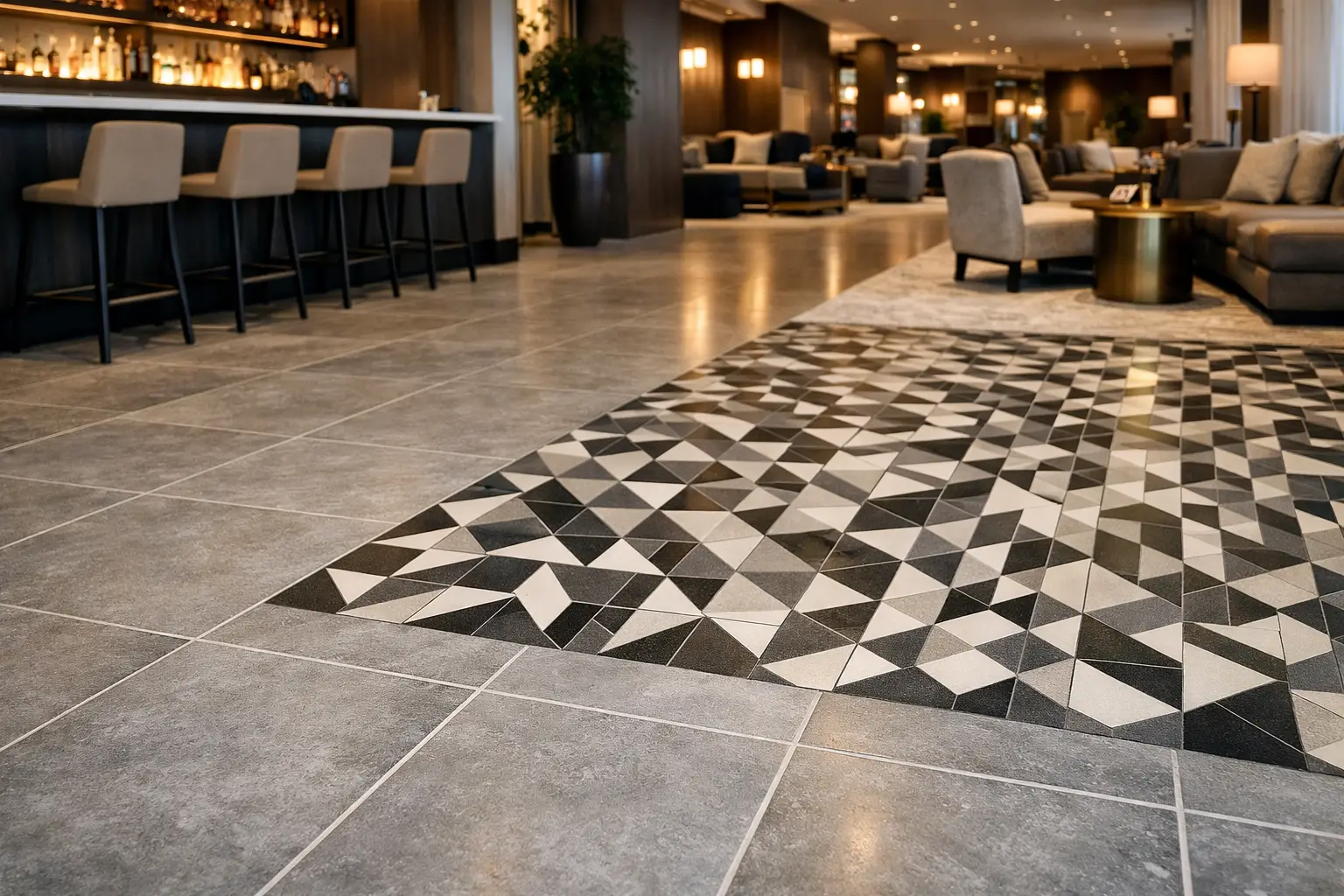
Imagine a mid-sized restaurant and bar fit-out in a busy urban location. The brief combines a tiled entrance, main dining floor, feature bar frontage, commercial washrooms and a back-of-house service corridor. The designer wants a premium look – large-format porcelain to the public floor, mosaic detailing in the washrooms, and vertically stacked wall tiles at the bar to create a clean architectural line.
On paper, it sounds straightforward. In practice, it is a coordination exercise where every trade affects the result. The joiner needs final set-out at the bar. The plumber needs levels and penetrations right in the washrooms. The shopfitter wants crisp interfaces. The operator needs confidence that the floor will not become a maintenance issue six weeks after opening.
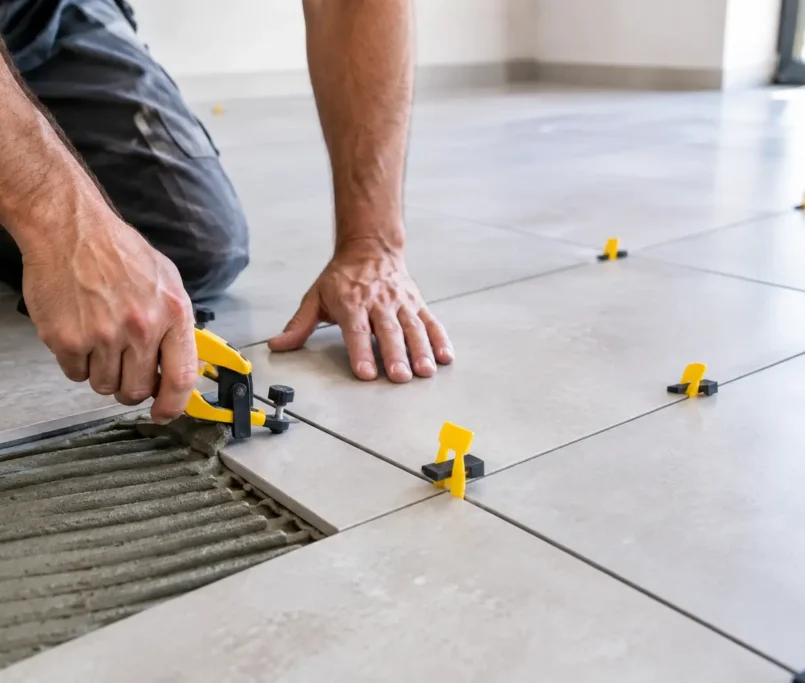
The first site inspection reveals a familiar problem. The slab is serviceable, but not ready for premium tile installation. There are level inconsistencies through the dining area, localised cracking, and a few transitions that would leave the large-format tiles vulnerable to lipping. This is where hospitality tiling projects are won or lost. If the installer works over a poor base to save a day, the finish carries that compromise forever.
The project starts long before tile installation
For a high-quality result, the visible tile is only one part of the scope. Surface preparation is what protects the finish. In this example, that means mechanical removal of contaminants, crack assessment, local repairs and re-levelling to create a consistent substrate. Falls in the washrooms need to be corrected before waterproofing begins, not disguised later with adhesive.
This stage is often undervalued because clients do not see it once the venue is complete. Yet in commercial hospitality work, it is the difference between a floor that feels exacting and one that feels slightly off. Guests may not identify the cause, but they notice when lines drift, puddles sit where they should not, or transitions feel abrupt underfoot.
Waterproofing then becomes a performance requirement, not a box-ticking exercise. Public amenities and back-of-house wet zones need proper detailing at junctions, penetrations and thresholds. A refined washroom can lose its appeal quickly if moisture migration begins affecting adjacent finishes. Premium spaces need hidden disciplines just as much as visible ones.
Material selection is aesthetic and operational
One of the more useful lessons from any commercial hospitality tiling project example is that the right tile is not always the most dramatic one. Hospitality venues sit at the intersection of design ambition and operational reality. A honed finish may suit the concept beautifully, but slip resistance, cleaning regimes and wear patterns must be weighed with care.
In the restaurant example, the public floor uses a durable porcelain with enough texture to perform without looking overtly industrial. The bar frontage takes a more expressive tile because it is largely vertical and less exposed to abrasive traffic. In the washrooms, mosaic flooring supports falls and drainage more effectively than a large-format tile would. That is not a compromise in quality. It is good specification.
This is where experienced tiling input adds real value. The best choice depends on traffic levels, maintenance expectations, substrate conditions and the visual language of the space. A boutique wine bar and a hotel breakfast area may both be hospitality environments, but they do not demand the same tile in the same way.
Set-out is where craftsmanship becomes visible
Once the substrate is ready, precision moves to layout. Hospitality interiors are unforgiving because guests experience them close-up and repeatedly. The eye catches misaligned joints, awkward cuts around joinery and inconsistent margins at thresholds. A clean set-out gives a space its calm, intentional feel.
In this project, the dining floor is centred to the room rather than simply started from one wall. That decision improves balance through the main guest zone and keeps cuts controlled at the perimeter. At the bar, vertical joints are aligned carefully with joinery elements so the tiling reads as part of the architecture rather than a separate trade package. In the washrooms, niche lines, partition locations and floor joints are coordinated so the whole room feels resolved.
These details take planning. They also take discipline on site. Premium tiling is not only about laying tiles straight. It is about understanding what the designer is trying to achieve, then protecting that intent through exact execution.
Programme pressure changes the way commercial tiling must be delivered
Hospitality programmes are often tight. Operators want doors open, revenue flowing and disruption contained. That pressure is real, but speed without sequence control usually creates rework. The smarter approach is responsiveness with discipline.
In our example, the tiled zones are staged around other trades so access is maintained where possible and completed work is protected immediately. Deliveries are timed to reduce clutter. The installation team coordinates with shopfitting and services trades to prevent last-minute penetrations or damage to fresh finishes. This kind of management rarely appears in glossy project photography, yet it is central to whether a project lands smoothly.
For builders and project managers, this is often the deciding factor in trade selection. They need a tiling contractor who can do more than install. They need one who can read a programme, communicate clearly when site conditions shift, and maintain workmanship under commercial pressure.
Where hospitality tiling projects commonly go wrong
A realistic commercial hospitality tiling project example should also show the risks. Most failures do not begin with the final tile. They begin with shortcuts earlier in the sequence. Poor substrate preparation leads to lipping or debonding. Inadequate movement allowance can produce cracking. Rushed waterproofing creates problems that spread beyond the tiled area. Weak edge detailing invites chips in high-contact zones.
There is also the issue of cleaning and maintenance. Some grout colours, surface textures and tile formats suit the design board but perform poorly once staff begin daily washdowns. Good tiling advice acknowledges that a venue has to operate after handover. The smartest finish is one that still looks composed after service, not just on photography day.
That is why accountability matters. Quality-first installers do not treat preparation, screeding, waterproofing and finishing as optional extras around the tile. They treat them as one connected scope, because each stage protects the next.
What clients should take from this example
For owners, developers and commercial fit-out teams, the real value of a hospitality tiling case study is clarity. It shows that the refined result they want depends on process as much as product. Elegant surfaces come from exact levelling, proper waterproofing, thoughtful material selection, disciplined set-out and careful finishing.
It also shows why the right trade partner reduces risk. A hospitality venue has too many moving parts for vague communication or inconsistent workmanship. When the tiling team is responsive, precise and fully engaged from preparation through caulking, the project runs with more certainty and the finished space carries the confidence it should.
For design-led commercial work, that combination matters. The tile finish must feel exquisite, but it also needs to perform under pressure. That is the standard Perfectly Laid works to – not just a beautiful handover, but a durable, dependable result shaped with craftsmanship from the first substrate check to the last finishing line.
When you review any hospitality fit-out, look past the surface first. The best tiled spaces do not simply catch the eye. They hold their quality where it counts – under traffic, under timelines and under scrutiny.