How to Choose Patio Tiles That Last
A patio can look exceptional on day one and still disappoint six months later if the tile choice was driven by appearance alone. When clients ask us how to choose patio tiles, the right answer always sits at the intersection of design, performance and installation. Outdoor tiling has far less room for compromise than an internal floor. It has to handle weather, movement underfoot, moisture, heat and the visual demands of the home around it.
The best patio tiles do more than match your façade or outdoor furniture. They need to stay safe when wet, hold their colour, cope with temperature changes and suit the way the area is actually used. A quiet courtyard, a poolside entertaining zone and a hard-working alfresco kitchen all ask different things of the surface.
How to choose patio tiles without regretting the finish
The quickest way to narrow the field is to stop thinking in terms of colour first and start with performance. A tile that looks refined in a showroom may be completely wrong outdoors if it is too porous, too smooth or too light for the conditions.
Begin with exposure. Is the patio fully open to rain and harsh sun, or partly covered? A covered alfresco gives you more flexibility with finish and tone, while an exposed patio needs a material and surface texture that can cope with constant weathering. If the area sits near a pool, planting or lawn, it will also pick up more water and organic debris, which affects slip risk and maintenance.
Usage matters just as much. For a family home with children moving in and out, durability and grip usually outrank delicate surface detail. For a high-end entertaining area, format, joint lines and tonal consistency often become more important. On commercial or multi-residential projects, volume, access, drainage and long-term wear all deserve early attention because replacing a poor choice later is far more disruptive than specifying well from the start.
Material matters more than most people expect
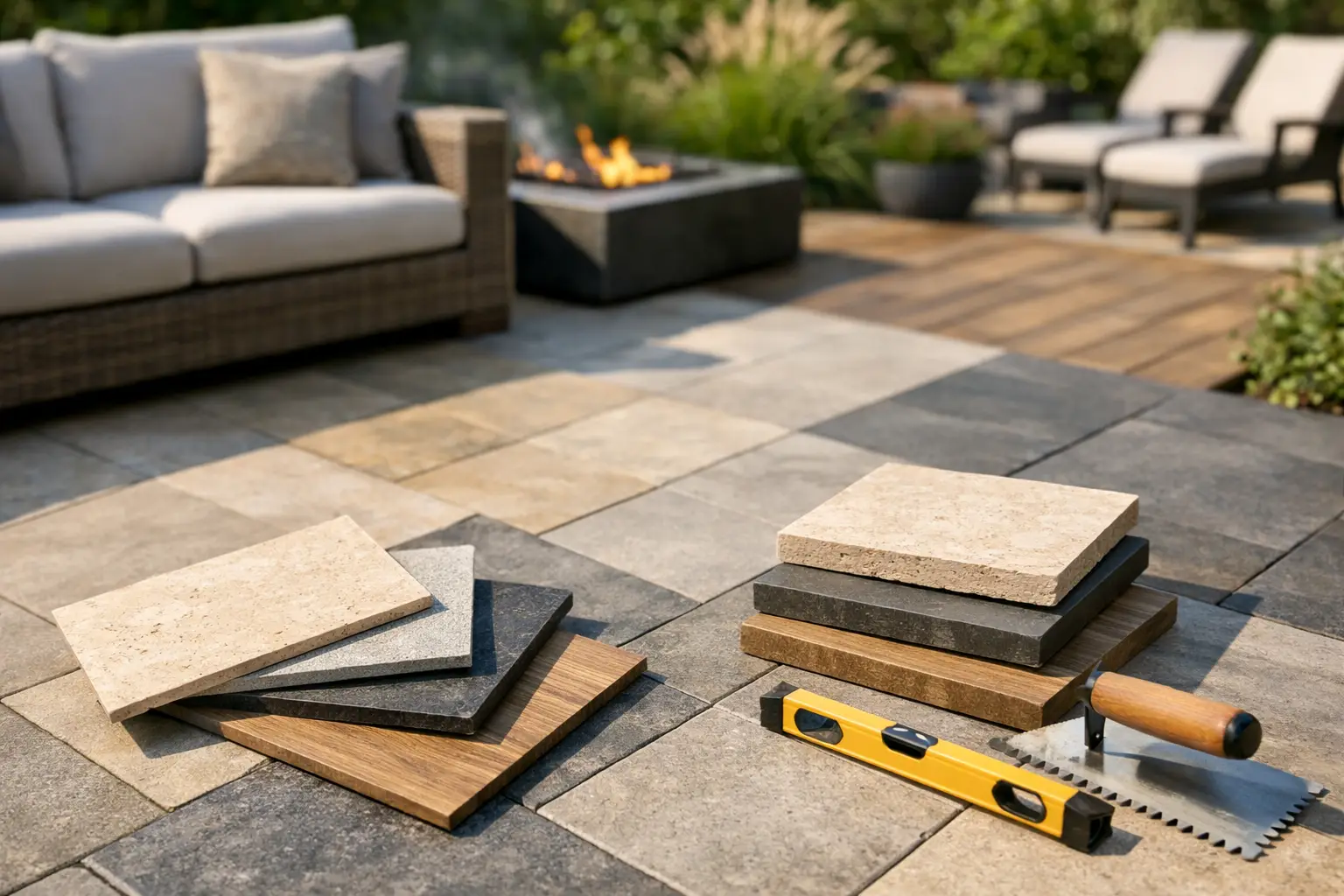
Porcelain is usually the strongest all-round choice for patios, and for good reason. It is dense, hard-wearing, relatively low maintenance and available in finishes that convincingly replicate natural stone, concrete and timber. For many projects, it delivers the cleanest balance of performance and design flexibility.
Natural stone can be stunning, especially where the brief calls for a more organic, architectural finish. But stone is not one category. Travertine, limestone, granite and bluestone all behave differently. Some require more sealing, some are more sensitive to staining, and some weather more visibly over time. That patina may be a benefit or a problem, depending on the client’s expectations.
Concrete-look tiles suit contemporary schemes particularly well, especially where the patio needs to connect visually with internal living spaces. They can create a calm, expansive finish, but they also show dirt, leaf tannins and installation inaccuracies more readily if the tone is very pale or the format is large.
If your priority is low maintenance with a premium look, porcelain is often the safer decision. If your priority is unique character and natural variation, stone may justify the extra care. Neither is automatically better. The better option is the one that fits the setting, the maintenance appetite and the finish standard you want to preserve.
Slip resistance is not a detail
Outdoor tiles should not be selected from an indoor sample board and simply moved outside. Slip resistance is a critical part of how to choose patio tiles, particularly in the UK climate where damp surfaces are common.
A lightly textured or purpose-made external finish will usually offer more reliable grip than a polished or overly smooth surface. That does not mean the tile has to feel coarse or look utilitarian. Many premium porcelain ranges now achieve a refined appearance while still providing appropriate underfoot traction.
There is always a trade-off here. More texture can improve safety, but it can also hold more dirt and require more attentive cleaning. The right balance depends on where the patio sits and who uses it. A sheltered dining terrace may allow a subtler finish than a pool surround or garden threshold that stays wet for long periods.
Size and layout change the feel of the space
Large-format patio tiles can make an outdoor area feel calmer and more expansive because they reduce visual interruption. They suit modern homes particularly well and can help create a continuous line from internal floor to external entertaining zone.
That said, bigger is not always better. Very large tiles demand excellent substrate preparation and precise falls. If the base is uneven or drainage has not been properly considered, large units can magnify lipping, rocking and water retention. Smaller formats can be more forgiving in complicated layouts and may suit traditional homes better.
Tile pattern also affects the result. A straight lay feels crisp and architectural. A staggered or modular layout introduces more movement. With natural stone looks, careful blending of variation is essential so the patio does not end up with heavy patches of one tone and sparse patches of another. This is where design intent and installation quality have to work together.
Colour should follow context
It is tempting to choose the lightest tile for an airy resort-style look or the darkest tile for drama. Both can work beautifully, but neither is consequence-free.
Lighter patio tiles often keep the space feeling open and can be more comfortable under strong sun. They also tend to show leaf marks, soil and barbecue spills more quickly. Darker tones add depth and sophistication, yet they can absorb more heat and may highlight dust, salts or residue depending on the finish.
A mid-tone usually gives the greatest forgiveness, particularly in family settings. It softens wear, hides everyday mess better and often connects more easily with brick, render, timber and garden planting. The surrounding materials should guide the choice. Patio tiles do not sit in isolation. They need to relate to thresholds, external walls, drainage elements and landscaping.
Think beyond the tile sample
A tile sample in your hand tells only part of the story. Outdoor surfaces are read in broad daylight, across larger expanses and against shifting shadows. Before making a final selection, it is worth assessing the tile outside if possible and looking at more than one piece. Repetition can flatten a design if the print range is limited, particularly with imitation stone or timber effects.
It is also wise to think about edge details and adjacent transitions. Bullnosed edges, step treads, pool copings and movement joints all influence whether the patio feels resolved or improvised. Premium outdoor tiling is rarely just about the field tile. The finishing details are what protect the visual standard.
The base beneath the tile decides a lot
Even the best tile will fail on a poor base. This is where many patio projects come unstuck. Clients often spend weeks choosing a tile and almost no time asking whether the substrate is properly prepared for external conditions.
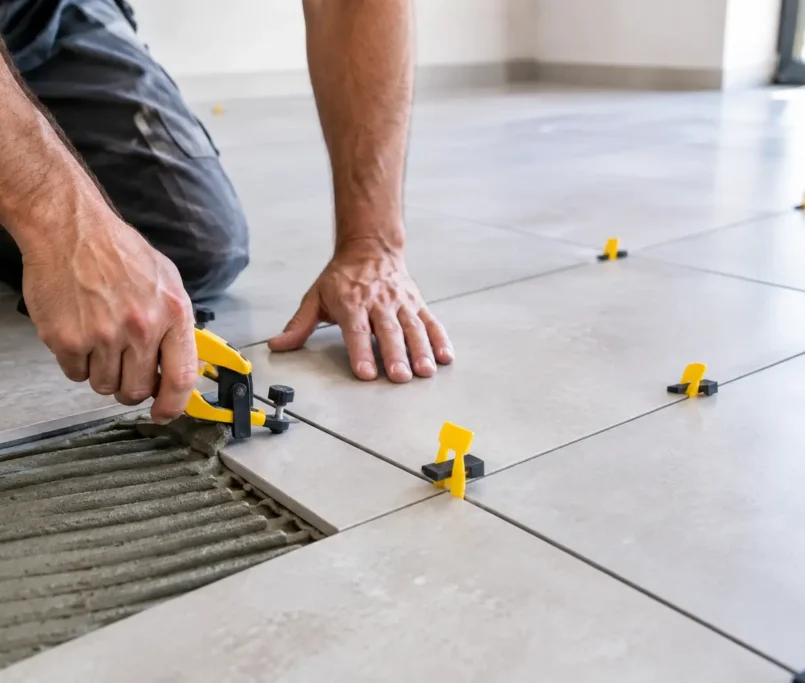
Outdoor tiling needs the right falls for drainage, stable and appropriate screeding where required, careful movement allowance and an installation method suited to exposure. If water sits beneath or around the tile assembly, you can end up with lifting, cracking, staining or persistent damp issues. On balconies, podiums or raised external areas, waterproofing and detailing become even more critical.
This is also why matching internal and external floor levels needs technical consideration, not just design enthusiasm. A flush transition can look exceptional, but only if drainage, build-up and weather protection have been planned properly.
How to choose patio tiles for long-term value
The most cost-effective patio tile is rarely the cheapest square metre rate. Long-term value comes from selecting a tile that performs well in the setting and installing it with discipline.
A cheaper tile that chips easily, stains quickly or dates fast can cost more over time than a premium product that holds its finish. Equally, an expensive tile is not automatically a good investment if it is unsuitable for the base, the exposure or the maintenance expectations. Good specification is less about spending more and more about making fewer wrong compromises.
For homeowners, that means being honest about lifestyle. If the patio will host frequent entertaining, pets, children and year-round traffic, choose resilience over delicacy. For builders and developers, it means considering repeatability, lead times, consistency between batches and whether the tile can be installed at scale without quality drift.
A well-chosen patio tile should still look considered years after completion. It should suit the architecture, perform safely and age with dignity rather than constant correction.
The final decision is usually clear once you weigh the setting, the slip resistance, the material, the format and the installation requirements together. If a tile only wins on one of those points, keep looking. The right patio surface does not just photograph well – it lives well, wears well and lets the craftsmanship show for years to come.