How to Prevent Cracked Grout in Tiled Floors
A fine crack running through fresh grout can make an otherwise exquisite tiled surface look unfinished. More importantly, it is rarely just a cosmetic issue. Learning how to prevent cracked grout starts with recognising that grout is the visible finish of a system beneath it. If the substrate moves, the tile bond is poorly supported, or the wrong joints are used, grout is often the first place that stress appears.
For homeowners, builders and project managers, the objective is not simply a neat grout line on handover day. It is a tiled installation that retains its precision, colour consistency and clean geometry through daily use, temperature changes and normal building movement.
Why grout cracks in the first place
Grout is designed to fill the space between tiles. It is not designed to hold a floor together, compensate for an uneven substrate or absorb structural movement. Cement-based grout is particularly rigid once cured, so when pressure travels through the tile assembly, it can split rather than flex.
The cause may be localised, such as a hollow tile that moves slightly underfoot. It may also be wider-reaching: timber floors can deflect, concrete can shrink as it cures, and long tiled expanses can expand and contract with heat. Bathrooms and wet areas add another consideration, as moisture entering an inadequately prepared assembly can compromise the layers below the tiles.
A cracked line does not always mean every tile needs to come up. However, repeatedly regrouting the same area without identifying the source of movement only masks the problem for a short time. A quality repair begins with diagnosis, not with a bag of grout.
How to prevent cracked grout before tiling begins
The most effective prevention work happens before the first tile is laid. This is where a premium installation earns its longevity: the surface is assessed, corrected and prepared to support the intended tile, adhesive and finish.
Start with a stable, flat substrate
Tiles need a substrate that is both sufficiently flat and structurally sound. Flatness matters because voids beneath large-format tiles create weak points. When weight is applied – from foot traffic, furniture or commercial equipment – an unsupported tile can flex minutely. That movement is enough to fracture the grout around its edges.
A floor does not need to be perfectly level to receive tile, particularly where falls are required for drainage. It does need to be prepared to the correct plane. Screeding, patching or re-levelling may be required before installation, rather than relying on adhesive to correct significant variation. Excessively thick or inconsistent adhesive beds can shrink, cure unevenly and reduce support beneath the tile.
On upper floors, timber substrates and renovation projects, structural deflection deserves particular attention. The tiling system must suit the construction below it. Depending on the project, this may involve strengthening the floor, installing an appropriate underlay or uncoupling membrane, or selecting a tile format better suited to the area. There is no universal fix: the right approach depends on span, substrate condition, expected loading and the specification of the products being used.
Allow concrete and screeds to cure properly
New concrete and sand-cement screeds continue to dry, shrink and settle after placement. Tiling too early can trap moisture and place a rigid finish over a moving base. This is a common source of cracks that appear weeks or months after a project seems complete.
Cure times should follow the relevant product guidance and site conditions, not an arbitrary programme date. Thickness, ventilation, humidity and temperature all affect drying. Where project timing is tight, a suitable moisture-management or rapid-setting system may be considered, but only when it has been specified as a complete compatible assembly.
Choose adhesive and grout as a system
Adhesive is not interchangeable from one project to the next. Tile size, material, substrate, interior or exterior exposure, and expected movement all influence the correct choice. A flexible adhesive can help manage minor movement, while a high-performance grout may offer improved flexibility, stain resistance and colour consistency.
That said, flexible products are not a substitute for sound preparation or movement joints. They support a well-designed installation; they do not rescue a failing base. For natural stone, large porcelain panels, wet areas and outdoor spaces, product selection should be especially considered because the consequences of a bond failure are far more disruptive than a simple grout repair.
Movement joints are not optional details
One of the most overlooked answers to how to prevent cracked grout is to give the tiled surface somewhere to move. Expansion and movement joints are intentional breaks in the tile field, filled with a flexible sealant rather than rigid grout. They allow adjoining surfaces to expand, contract or move independently without transferring that stress across the installation.
Movement joints are generally needed around the perimeter of a tiled floor, where tiles meet walls, columns, cabinetry and door frames. They are also required at changes of plane, such as wall-to-floor junctions and internal corners. In bathrooms, these junctions should be finished with a suitable sanitary-grade flexible sealant, not grout.
Larger areas require intermediate movement joints, with spacing determined by the tile system, exposure and manufacturer guidance. Sunlit rooms, conservatories, commercial entrances and exterior patios are particularly demanding. A dark porcelain tile exposed to direct sun can heat up considerably, and an expansive tiled area has little capacity to absorb that change without planned relief points.
These details should be designed into the layout rather than treated as an afterthought. A carefully positioned joint can align with a grout line and preserve the visual rhythm of the floor, while still protecting the installation.
Installation precision protects the grout lines
Once preparation is complete, workmanship determines whether the system performs as intended. Tiles should be installed with appropriate adhesive coverage and consistent support. Large-format floor tiles commonly require back-buttering as well as adhesive application to the substrate, helping to minimise voids beneath the finished surface.
The adhesive must be combed in a consistent direction and tiles properly bedded into it. Random blobs of adhesive or insufficient coverage can leave concealed gaps, even if the tile initially appears secure. Those gaps become pressure points under use, and cracked grout is often the first visible warning.
Joint widths should also suit the tile and the environment. Very narrow joints can create a refined contemporary appearance, but they demand exceptionally accurate tile calibration, substrate preparation and installation. Tiles are not always perfectly uniform, and attempting to force an overly tight joint can lead to lipping, poor alignment and restricted room for controlled movement. A slightly wider, well-executed joint often delivers the more polished result over time.
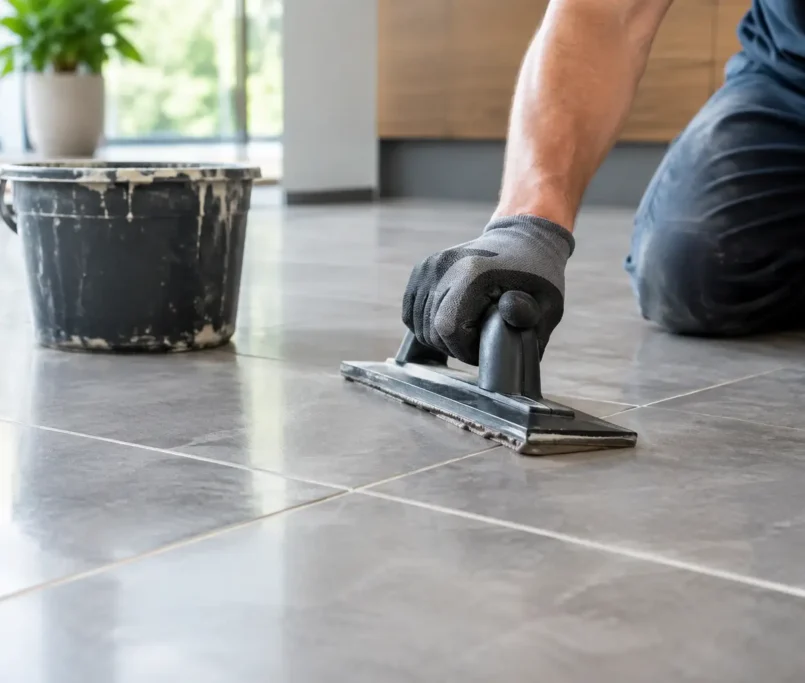
Grouting should only begin once the adhesive has cured in line with the system requirements. Joints need to be clean, uniform and free from adhesive squeeze-up, which can leave shallow grout sections prone to cracking. The grout should be mixed to the stated ratio, allowed to slake where required, and not weakened with extra water during application or cleaning.
Overwashing is another finishing risk. Excess water can draw pigment from the surface, leave patchy colour and weaken cementitious grout near the face of the joint. A disciplined cleaning process protects both the appearance and strength of the finished lines.
Wet areas and exterior spaces need added care
Bathrooms, laundries, balconies and alfresco areas combine moisture exposure with movement and temperature variation. These areas need a properly designed waterproofing or drainage strategy beneath the tile finish. Grout is not waterproof, even when a product is marketed as water-resistant. Water can pass through grout lines and must be managed by the system below.
In wet areas, flexible sealant at changes of plane is essential. It should be checked periodically and renewed when it separates, becomes mould-affected or loses adhesion. On external floors, correct falls and drainage prevent water from sitting on the tiled surface and working into joints over time. The right exterior-rated tile, adhesive, grout and movement-joint arrangement must work together.
Protect the installation after handover
Even a perfectly laid tiled floor benefits from sensible care. Avoid dragging heavy furniture across tiles, and use protective pads beneath movable items. In commercial settings, account for rolling loads, cleaning machinery and point loads from displays or equipment during specification, not after cracking appears.
Cleaning products matter too. Harsh acidic cleaners can erode cement-based grout and damage some natural stone finishes. Use a pH-neutral cleaner suited to the tile and grout, and address spills promptly. Sealing may be appropriate for certain porous grout and natural stone, but it is a maintenance measure, not a structural solution.
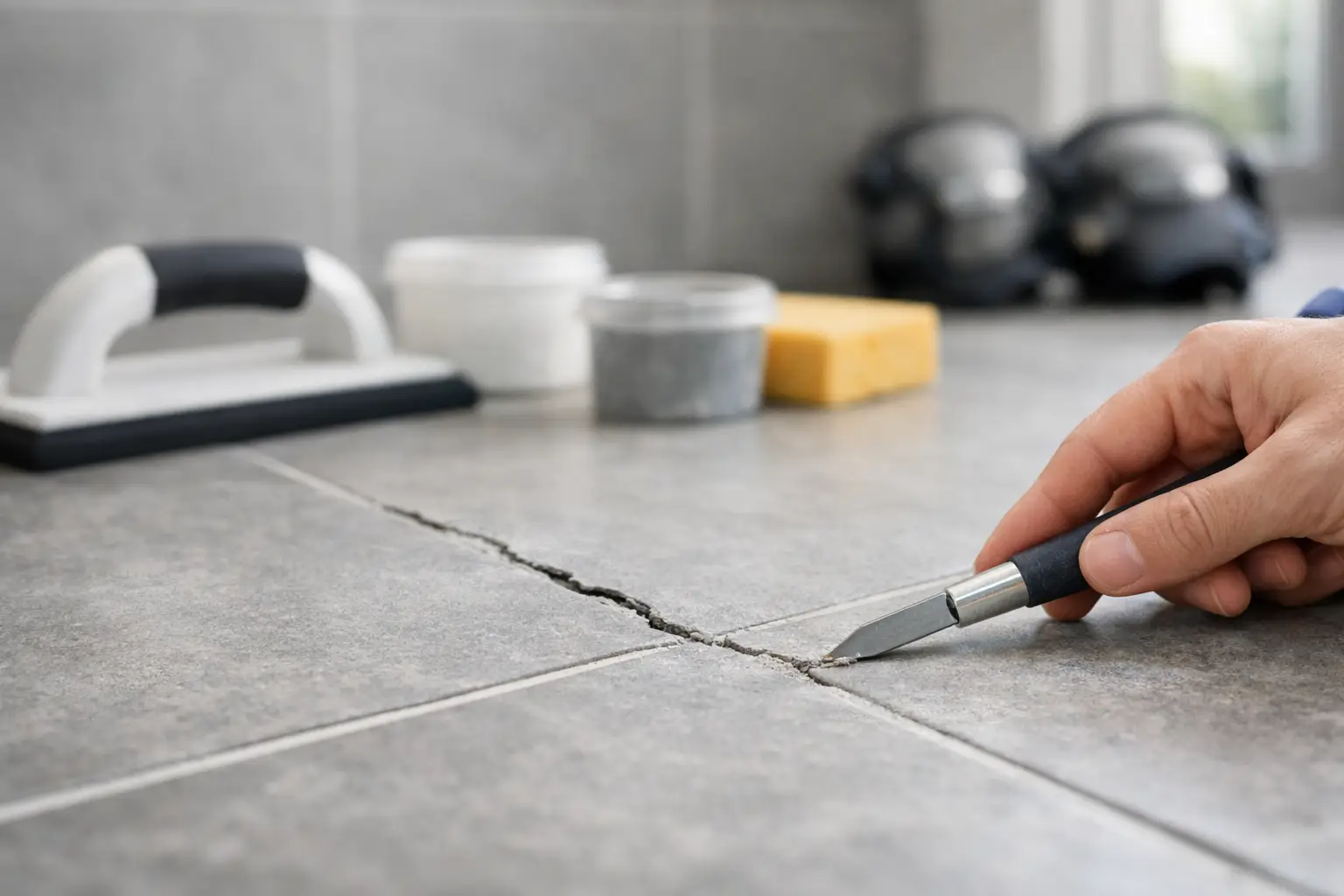
If a crack appears, inspect the surrounding tiles before arranging a cosmetic repair. A single hairline crack in an isolated joint may be linked to minor shrinkage. Cracks that recur, run in a pattern, occur beside loose-sounding tiles or appear at corners and doorways point to movement that should be assessed before regrouting.
A tiled surface should feel considered from the ground up: stable underfoot, crisp at every line and quietly capable of handling real life. When preparation, movement allowance and finishing are treated as one craft, grout remains what it should be – a refined detail that completes the design.