Best Tiles for Gym Floors That Perform Under Pressure
A gym floor has to look composed after the 500th class, not just on opening day. The best tiles for gym floors are selected around the way each zone is used: sweat, cleaning chemicals, moving equipment, bare feet, loaded barbells and constant foot traffic all place different demands on a surface.
For fitness operators, developers and project managers, the decision is not simply porcelain versus rubber. It is a specification exercise that begins with the floor beneath the finish. Get the substrate, falls, waterproofing and tile selection right, and the space feels refined, safer to use and far easier to maintain. Get any of them wrong, and even an expensive tile can become a liability.
Choosing the Best Tiles for Gym Floors
The strongest gym specifications are often mixed rather than uniform. A high-performance training floor should not necessarily receive the same finish as a reception, shower room or yoga studio. Each area has its own requirements for grip, acoustic comfort, impact resistance and visual character.
For reception areas, corridors, café counters and retail displays, commercial-grade porcelain is usually the leading choice. It provides a crisp, design-led finish while standing up to high traffic, rolling bags and frequent cleaning. Large-format porcelain can create an impressive, uninterrupted entrance, though it requires a particularly flat substrate and precise installation to keep lippage under control.
In wet amenities, textured or grip-rated porcelain is generally the most appropriate tile. It is dense, low-porosity and easy to clean, while the right surface profile improves confidence under wet bare feet. The aim is not to choose the roughest possible finish. Excessive texture can trap grime and make daily cleaning more difficult. The correct balance is a tile with proven slip resistance that remains practical for the cleaning regime.
For studios used for yoga, Pilates, dance or lower-impact exercise, porcelain can work beautifully where a hard, architectural surface suits the brief. It needs a carefully chosen finish: too polished and it may become unsafe with moisture; too aggressive and it can be uncomfortable for floorwork. Some operators prefer resilient flooring in these rooms for warmth and joint comfort, using tiles instead in adjacent circulation and changing spaces.
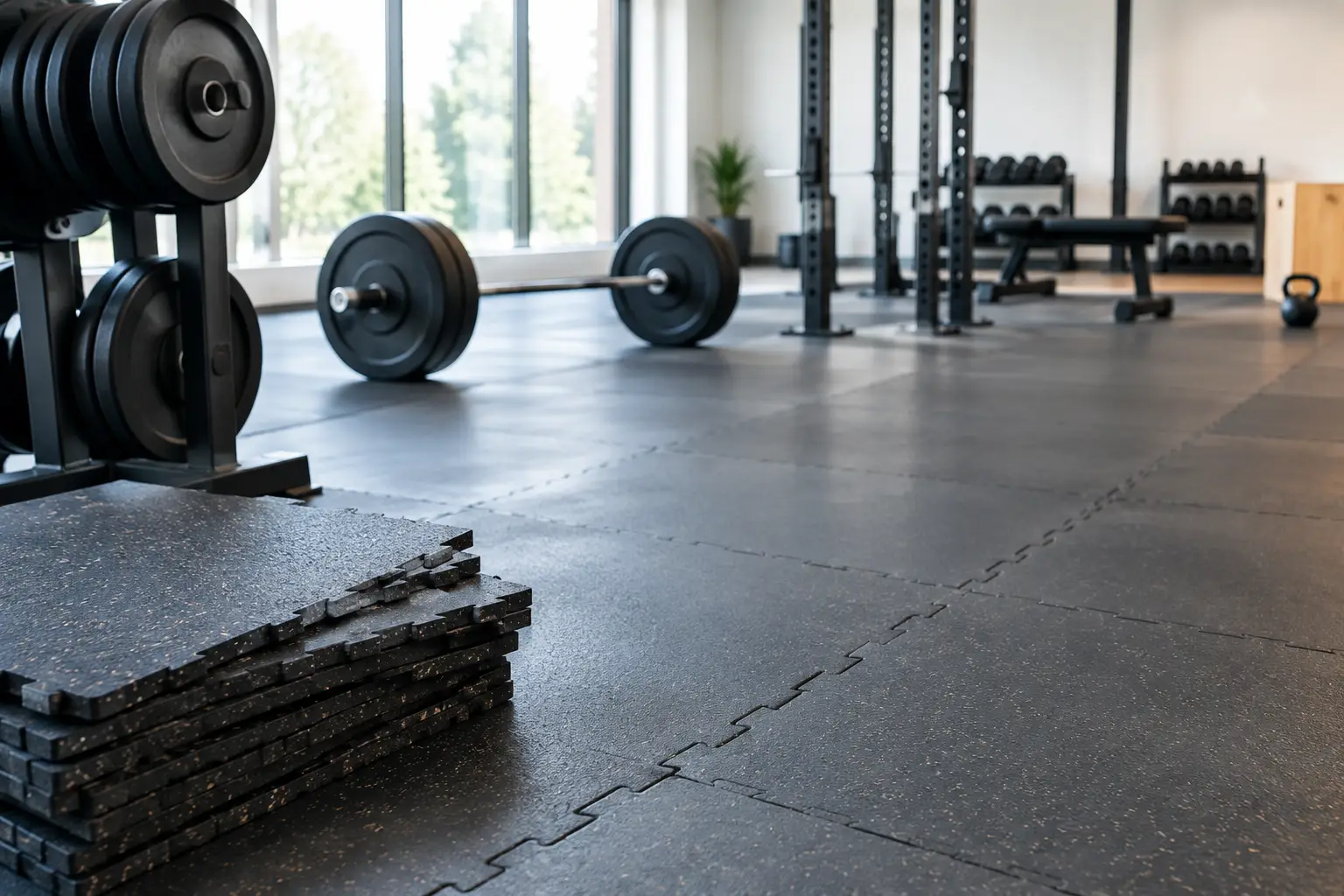
Free-weight areas are different. Tile is rarely the best standalone surface beneath dropped weights. Even premium porcelain can chip or crack under concentrated impact, and the noise transfer is significant. Here, heavy-duty rubber tiles or rolls are the more sensible performance layer, often combined with porcelain in surrounding areas. A considered transition detail prevents a trip edge and keeps the material change intentional rather than improvised.
Porcelain Tiles for High-Traffic Gym Areas
Porcelain earns its place in commercial fitness projects because it is hard-wearing, moisture-resistant and available in an extensive range of colours, formats and stone, concrete or terrazzo-inspired finishes. It can carry a premium visual identity from the front door through to amenities without demanding delicate maintenance.
Full-body or colour-bodied porcelain is particularly worth considering in busy public areas. Because the body of the tile has a similar colour to its face, minor wear is less visually obvious than it would be with a heavily glazed product. This is useful near turnstiles, lockers and main walkways, where grit and traffic are unavoidable.
Finish matters as much as material. Polished porcelain can be striking in a reception or low-risk retail zone, but it is usually a poor choice for entrances exposed to rain, changing-room thresholds or spaces where sweat is expected. Matt porcelain offers a more forgiving, contemporary appearance and generally better day-to-day traction. Structured finishes provide further grip for wet areas, subject to the project’s cleaning capability.
Tile size should support the room rather than follow fashion alone. Large formats reduce grout lines and can make a compact foyer appear more generous. In shower rooms and areas that fall to drains, smaller tiles are often more practical because they follow the required gradient more neatly. They also introduce more grout joints, which can add traction underfoot when specified and finished correctly.
Rubber Tiles Have a Place Too
When people ask about gym tiles, they are often referring to rubber gym tiles rather than ceramic or porcelain. They are not a substitute for porcelain throughout a facility, but they are indispensable in the right training zones.
Quality rubber tiles absorb impact, reduce noise and offer better protection for both subfloors and equipment. They are well suited to strength training spaces, functional fitness zones and areas where dumbbells, kettlebells or plates are routinely handled. Thickness depends on the activity, the existing floor build-up and whether platforms or lifting bays are planned.
There are trade-offs. Rubber can carry an initial odour, particularly in enclosed spaces, and some finishes may show chalk, dust or cleaning residue. Cheap products can curl at edges, gap over time or degrade under harsh chemicals. A commercial-grade product, properly acclimatised and installed on a suitable substrate, is a better investment than a quick-fit solution that soon looks tired.
The most successful fitness interiors often pair rubber and porcelain with purpose. Porcelain delivers clean, elevated surfaces in public and wet areas; rubber supports the work of training where shock absorption matters most. The junction between them deserves as much attention as the materials themselves.
Slip Resistance, Wet Areas and Cleaning
A beautiful gym floor that becomes hazardous after a busy class is not a premium finish. Slip resistance should be assessed in context, particularly in entrance lobbies, pools, changing rooms, shower areas and spaces that move directly from training to amenities.
The tile’s manufacturer rating is a useful starting point, but it is not the full answer. Water, sweat, body-care products, cleaning solutions and foot traffic all affect real-world performance. So do grout selection, drainage design and the level of the floor. Water will always find the low point, which is why falls must be formed accurately before tiling begins rather than forced with inconsistent adhesive beds.
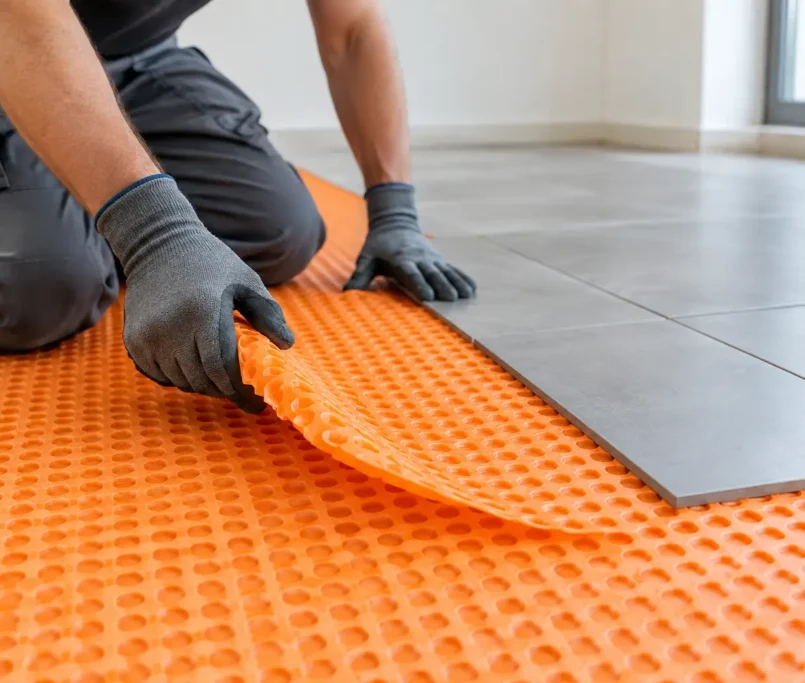
In showers and changing rooms, waterproofing is a concealed but decisive part of the installation. A correctly prepared substrate, compatible waterproofing system and carefully sealed penetrations protect the structure from moisture damage long after the visible finish is complete. Tile and grout are not waterproof on their own.
Cleaning also needs to be considered before selection. Highly textured tiles, pale grout and deep relief patterns can look exceptional in a sample board, yet demand more labour in a facility that is cleaned several times a day. A tile should support the operational reality of the gym, not create an avoidable maintenance burden.
Installation Quality Determines Long-Term Performance
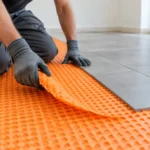
Gym tiles are only as reliable as the surface beneath them. Before any finish is laid, the floor needs to be inspected for moisture, cracking, unevenness and movement. Existing coatings, old adhesives and weak screeds may need to be removed. Re-levelling or screeding may be required to achieve the flatness demanded by large-format porcelain or the consistent support needed beneath rubber tiles.
Movement joints cannot be ignored in broad commercial spaces. Buildings move, substrates expand and contract, and different materials behave differently. Properly planned movement joints and perimeter details help prevent tenting and cracking, while neat transitions protect exposed tile edges where equipment and people pass between zones.
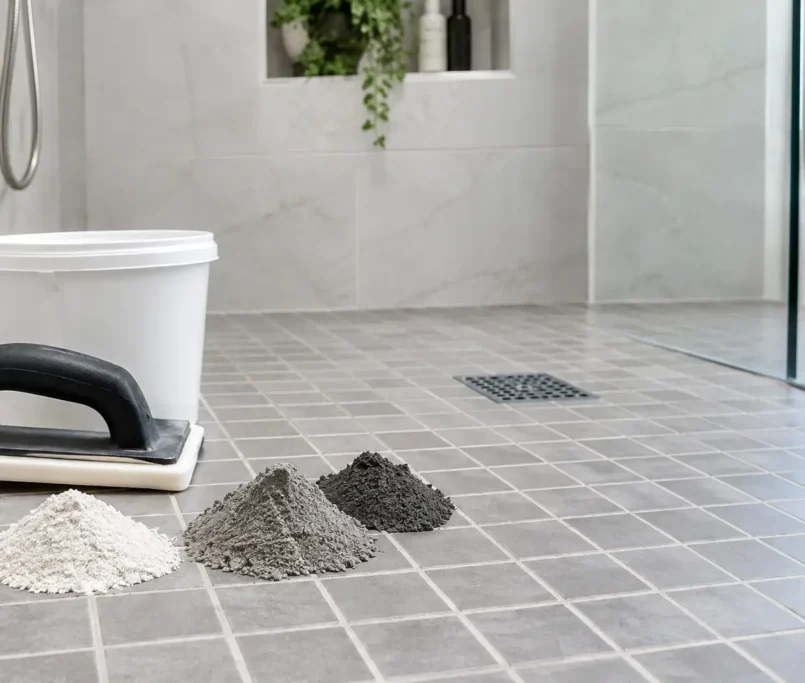
Grout and silicone finishing are equally visible markers of workmanship. A grout colour can either calm a large floor or make every joint dominant. In wet or movement-prone junctions, flexible sealant is specified where it belongs rather than treated as an afterthought. These details are small individually, but together they determine whether the project reads as considered and professionally delivered.
For complex fit-outs, a staged programme is often the safest route. Preparation, waterproofing, tiling, curing and final protection need to be coordinated around other trades, deliveries and equipment installation. Perfectly Laid approaches this as a complete floor system, with the precision required to protect both programme and finish quality.
Specify for the Gym You Are Actually Building
The right tile is tied to the business model of the space. A boutique wellness studio may prioritise warm stone-look porcelain, understated grout lines and a calm reception experience. A 24-hour strength gym may need durable, dark-toned porcelain in circulation areas and dense rubber throughout lifting zones. A hotel fitness suite may place greater emphasis on refined amenities, acoustic comfort and easy cleaning between guests.
Ask how every room will be used at peak time, what gets wet, what gets dropped, how it is cleaned and where wear will first appear. Those answers will guide the material choice more reliably than a trend board alone.
A well-specified gym floor should let members focus on their training, not on a slippery threshold, a cracked tile or a finish that already looks worn. Start with the conditions beneath the surface, choose materials by zone, and give the installation the level of precision the space will demand every day.