Do Bathroom Tiles Need Sealing? What to Know
A newly tiled bathroom should look immaculate, but its long-term performance is decided by more than the tile choice. Do bathroom tiles need sealing? Sometimes – but applying sealer to every tiled surface is not a mark of quality. The right approach depends on the material, the grout, the location and, crucially, the waterproofing system behind the finish.
At Perfectly Laid, we treat sealing as one considered part of a complete installation. It can protect a beautiful surface from staining and simplify cleaning, but it cannot correct poor preparation, inadequate falls, failed silicone or missing waterproofing. Knowing where it helps – and where it does not – protects both the look and the lifespan of your bathroom.
Do Bathroom Tiles Need Sealing in Every Bathroom?
No. Many modern bathroom tiles, particularly glazed ceramic and glazed porcelain, do not need to be sealed. Their factory-fired glazed face is dense, non-porous and already designed to resist everyday moisture, soap residue and staining. Adding a topical sealer to this surface can leave haze, create an uneven sheen or make cleaning more difficult if the product is not compatible.
The answer changes with unglazed, natural or highly textured materials. These surfaces may have open pores that absorb moisture, cosmetics, body oils and coloured products. A suitable penetrating sealer helps limit absorption without creating a visible film on the face of the tile.
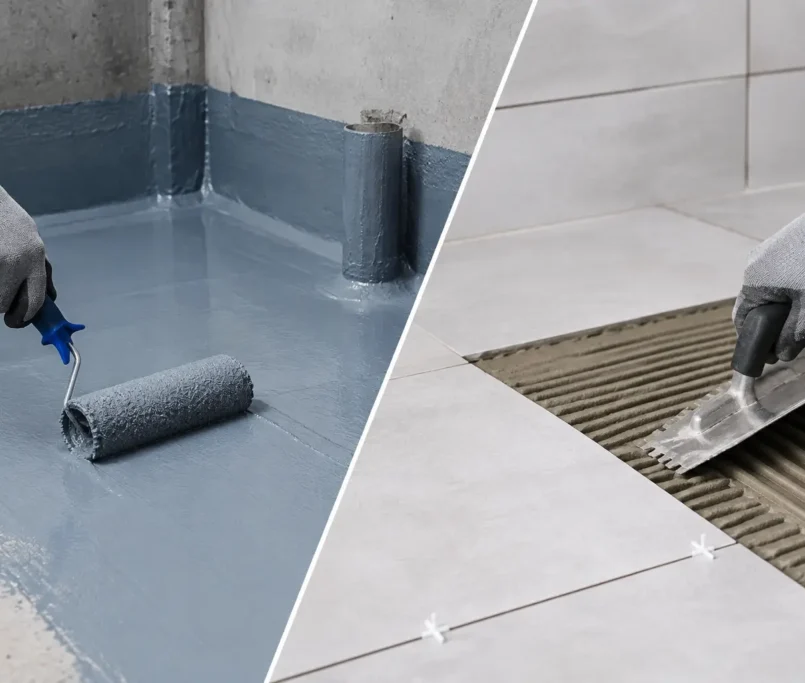
Even with sealed materials, the goal is not to make a bathroom waterproof from the surface. Water resistance at the tile face and waterproofing behind the tile are different jobs. A professionally installed membrane, correctly detailed around shower walls, floors, penetrations and junctions, is what protects the structure beneath.
Tiles that usually do not require sealing
Glazed ceramic wall tiles and standard glazed porcelain tiles are generally low-maintenance choices for bathrooms. They are popular for good reason: they offer a refined finish, broad design flexibility and excellent resistance to water on the finished surface.
Polished porcelain is also commonly non-porous enough not to need sealing, although the manufacturer’s guidance should always lead the decision. Some polished or lappato finishes can be more susceptible to marks during installation, so pre-grouting protection may be recommended by the tile supplier. That is a product-specific instruction, not a universal rule.
Tiles that commonly benefit from sealing
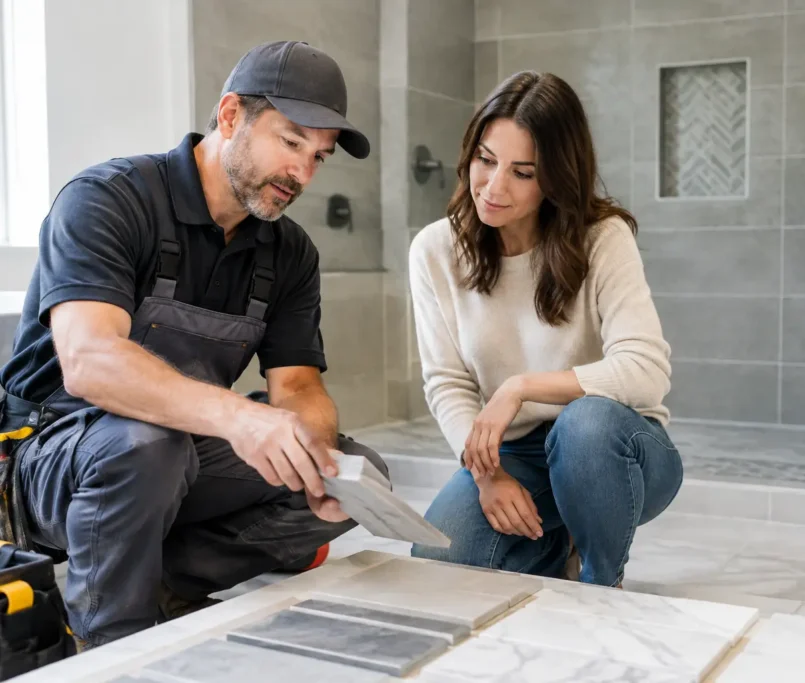
Natural stone is where sealing becomes more significant. Marble, limestone, travertine, slate and some granite products vary considerably in density and absorption. A pale marble vanity splashback, for example, can be vulnerable to cosmetics, hair colour, oils and acidic products. A quality impregnating sealer can reduce staining risk while preserving the stone’s natural character.
Terracotta, encaustic cement tiles and unglazed ceramic tiles are also often absorbent. In a bathroom, they need a sealing system selected for their finish and use. Some materials require sealing before grouting to prevent pigment from lodging in the surface, followed by a further application after installation. Others need specialist products to retain their intended matte appearance.
Textured porcelain deserves a closer look too. It may not be porous in the same way as natural stone, yet its texture can hold grout residue or cleaning deposits. The manufacturer may recommend a grout-release treatment or particular cleaning method. Precision here avoids turning a practical slip-resistant floor into a surface that is unnecessarily hard to maintain.
Grout Is Often the Part That Needs Attention
When people ask whether bathroom tiles need sealing, they are often really asking about grout. Standard cement-based grout is porous. In wet, frequently used areas, it can absorb moisture and pick up soap scum, oils and colour from toiletries. Sealing can make routine cleaning easier and slow down staining, particularly on light-coloured grout.
This does not mean every grout joint should be sealed immediately after tiling. Grout must cure fully before sealer is applied. Sealing too soon can interfere with curing or trap moisture, creating a patchy result. The exact waiting period depends on the grout and sealer specified, so the product data should be followed rather than relying on a one-size-fits-all timeframe.
Epoxy grout is different. Its dense, resin-based composition is highly resistant to water and stains, and it does not normally need a separate sealer. It is an excellent option for demanding shower areas, commercial washrooms and bathrooms where minimal maintenance is a priority. The trade-off is that epoxy grout is more exacting to install and clean during application, which makes experienced workmanship especially valuable.
A premium bathroom also relies on correctly finished movement joints. Silicone or another suitable flexible sealant is used where walls meet floors, at internal corners and around fixtures where movement can occur. Grout is rigid and will eventually crack if used in these locations. Surface sealer will not solve that problem; carefully matched, professionally applied flexible sealant will.
Sealing Is Not a Substitute for Waterproofing
This distinction is worth making plainly. Tiles, grout and sealer form the visible finish of a bathroom. They are not the waterproof barrier for the building.
A shower can look flawless while allowing water to reach the substrate if waterproofing has been poorly installed. Over time, that can lead to loose tiles, swollen linings, mould, damaged framing and expensive remedial work. Sealing grout may reduce surface absorption, but it cannot bridge failures around waste outlets, wall-to-floor junctions, niches, taps or shower screens.
Quality bathroom tiling starts well before the first tile is laid. Substrates need to be sound, level where required and prepared for the chosen format. Floors must have correct falls to drains. Waterproofing must be continuous and properly detailed. Only then can tile layout, grout lines and finishing details deliver the crisp, enduring result clients expect.
How to Know Whether Your Bathroom Needs Resealing
Sealer is not always permanent. Its lifespan depends on the product, material, cleaning routine and level of use. A family shower used several times a day will place different demands on grout and stone than a lightly used en-suite.
Rather than resealing on a fixed annual schedule, inspect the surface. On natural stone or cementitious grout, a simple water-drop check can be useful: place a small amount of clean water on an inconspicuous, dry area. If it darkens the material quickly rather than beading for a short period, the sealer may be losing effectiveness. This is an indication to investigate, not a reason to apply a new product without checking what was used previously.
Persistent darkening, staining that no longer cleans away easily, or water soaking into grout joints can also suggest maintenance is due. First rule out trapped moisture, leaks and ventilation issues. Applying sealer over contamination, soap film or damp grout only locks in the problem and compromises the finish.
Care That Preserves the Finish
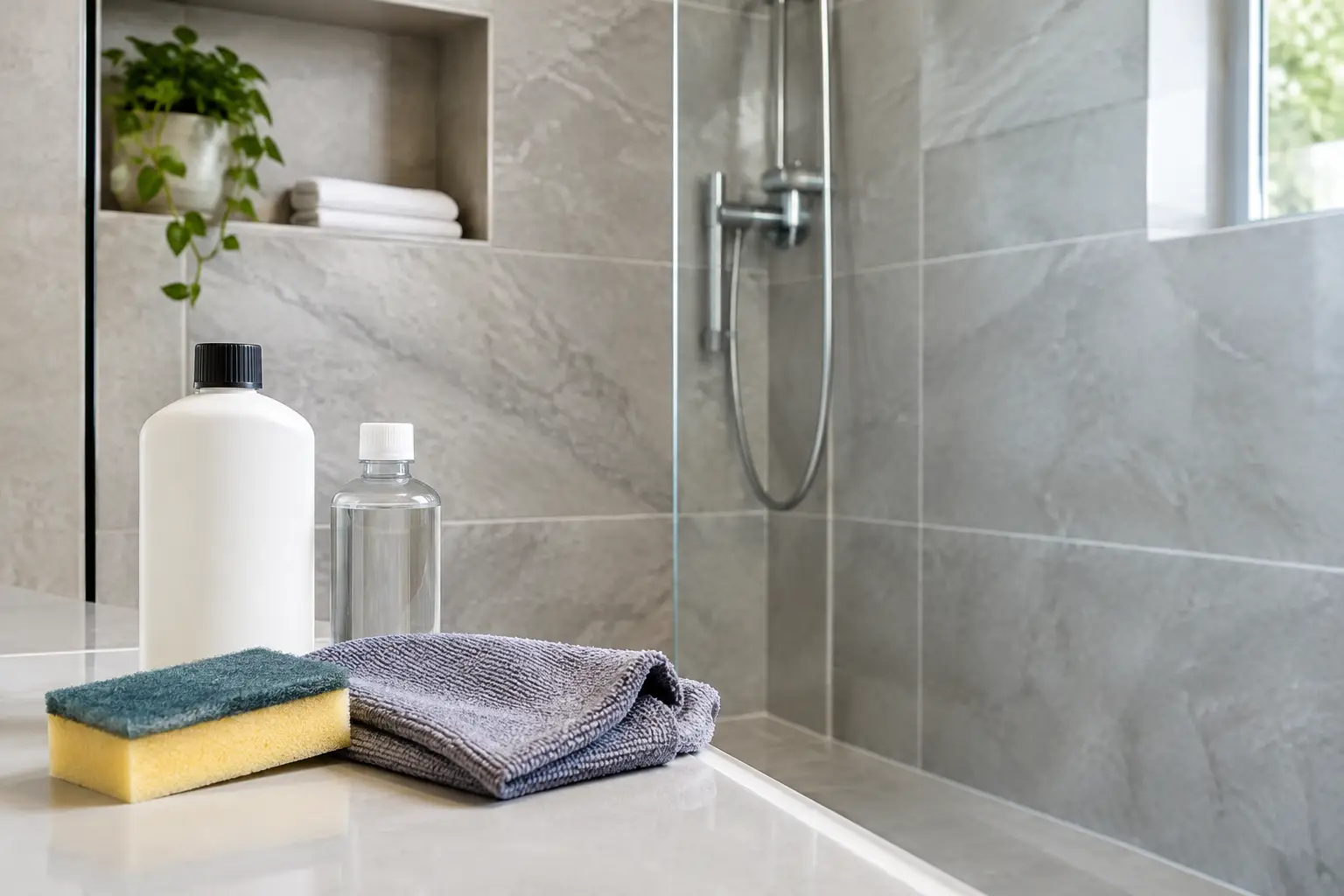
The most effective maintenance routine is straightforward: use a pH-neutral cleaner suited to the tile and grout, rinse away residue, and maintain good ventilation after showers. Avoid harsh acidic cleaners on natural stone, as they can etch the surface. Abrasive pads and aggressive chemicals can dull glazes, damage sealers and erode grout over time.
For shower glass, fittings and tile faces, frequent light cleaning is preferable to occasional heavy scrubbing. It keeps soap and mineral deposits from building into a stubborn layer, while protecting the clarity of pale grout and the depth of natural materials.
If you are planning a renovation, choose the tile and grout system as a whole rather than treating sealer as an afterthought. A beautiful bathroom should be designed for the way it will actually be used – from a low-maintenance porcelain family bathroom to a richly detailed natural-stone en-suite. The right material, installed over disciplined preparation and finished with care, is what keeps perfection visible long after handover.
Before sealing anything, identify the tile, grout and existing treatments accurately. A measured decision at this stage preserves the finish you selected and gives your bathroom the durable, composed quality it deserves.