Best Grout for High Traffic Floors Explained
A tiled floor can look immaculate on handover day and tired six months later if the grout has been treated as an afterthought. In entrances, busy kitchens, retail spaces, hospitality venues and family homes, joints take the daily punishment: grit under shoes, wheeled equipment, spills, repeated cleaning and constant footfall. Choosing the best grout for high traffic floors is therefore not simply about selecting a colour. It is about protecting the precision of the installation beneath it.
The right grout should complement the tile, suit the joint width and tolerate the demands of the space without compromising the finish. Just as importantly, it must be installed over a properly prepared, stable substrate. Premium tile and premium grout cannot compensate for movement in the floor, inadequate screeding or rushed preparation.
What makes grout suitable for a busy floor?
Floor grout needs to resist abrasion, staining and moisture while remaining visually consistent across a large area. These priorities can pull in different directions. A very hard grout may be less forgiving where there is substrate movement, while a more flexible cementitious grout may need better maintenance in a spill-prone commercial setting.
The specification should begin with how the space will actually be used. A domestic hallway with muddy shoes has different demands from a café floor washed several times a day. A high-rise common area may need colour consistency and repeatable application across many units, while an outdoor alfresco floor needs to cope with wet weather, temperature changes and effective drainage.
Tile choice matters too. Textured porcelain, polished stone and large-format tiles all create different cleaning and grouting considerations. Narrow joints can make a floor feel more monolithic, but they demand disciplined installation and accurate tile calibration. Wider joints make the grout more visible, so colour selection and a clean finish become even more critical.
Best grout for high traffic floors: the main options
For many demanding projects, epoxy grout is the highest-performing option. It is exceptionally resistant to stains, water and many common cleaning products, and its dense surface makes it far less likely to absorb spills than conventional cement grout. This makes it particularly well suited to commercial kitchens, hospitality settings, retail environments, busy bathrooms and entrance areas where presentation must hold up under regular cleaning.
Epoxy is not automatically the right answer for every floor. It costs more, has a shorter working time and requires experienced application. If it is not washed and tooled correctly during installation, residue can be difficult to remove from tile faces, particularly on textured surfaces. It is a premium system that rewards careful planning, skilled workmanship and realistic programme allowances.
High-performance cementitious grout is often the most balanced choice for residential floors and many commercial fit-outs. Quality polymer-modified formulations offer improved flexibility, colour consistency and water resistance compared with basic cement grout. They are generally easier to install and repair than epoxy, and can deliver an elegant, durable result when paired with suitable sealing and a sensible cleaning regime.
For a busy family kitchen, living space or hallway, a premium cementitious grout can be an excellent specification. It is especially practical where the project includes extensive floor areas, large-format porcelain or a design-led grout colour that may need future localised repairs. The key is to choose a product rated for floor use and the anticipated exposure, rather than selecting on colour chart alone.
Ready-mixed or acrylic grouts can suit selected wall applications and smaller areas, but they are rarely the first choice for genuinely high-traffic floors. Their convenience does not necessarily translate into the abrasion resistance, moisture tolerance or long-term performance needed in a hard-working tiled surface.
The floor below the tile is part of the grout decision
Grout cracks are often blamed on the grout itself. In reality, cracking is frequently a signal that something beneath the tile is moving. Uneven substrates, insufficient curing time, inadequate floor preparation or missing movement joints can all transfer stress through the tile assembly and into the grout lines.
Before tiling begins, the floor should be assessed for level, soundness, moisture and movement. Re-levelling or screeding may be required to create a stable plane, particularly with large-format tiles where even minor inconsistencies become visible. In wet areas, waterproofing must be integrated correctly before tile installation. This disciplined groundwork is what allows the visible finish to perform as intended.
Movement joints are equally important. Grout is not a structural filler and should not be expected to bridge expansion joints, perimeter gaps or changes in substrate. These locations need an appropriate flexible sealant, selected to coordinate with the grout and detailed neatly. It is a small visual element with a major role in preventing avoidable damage.
Choose colour with maintenance in mind
Pale grout against a pale tile can create a refined, continuous appearance, but it will reveal dark debris and stains sooner in a busy entrance or commercial setting. Very dark grout can conceal some day-to-day marks, though dust, mineral deposits and soap residue may become more apparent. Mid-tones often provide the most forgiving balance for high-use floors.
Colour should also suit the scale of the tiled area. Strongly contrasting grout turns every joint into a graphic grid, which can look striking when the tile layout is exact. On a large floor, however, it makes any inconsistency in joint width, tile alignment or lipping far more noticeable. A sympathetic grout colour gives the tile room to lead while preserving a polished, design-conscious finish.
Always review samples in the actual space where possible. Daylight, warm interior lighting and the texture of the tile can all change how grout appears once it has cured. This is particularly worthwhile for expansive open-plan floors, boutique retail spaces and high-end developments where consistency is non-negotiable.
Installation quality determines the final result
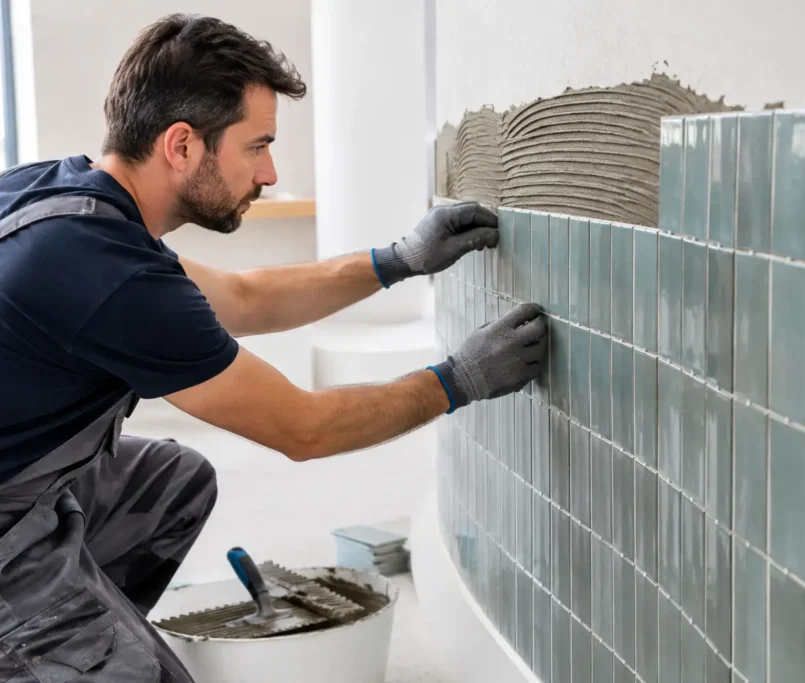
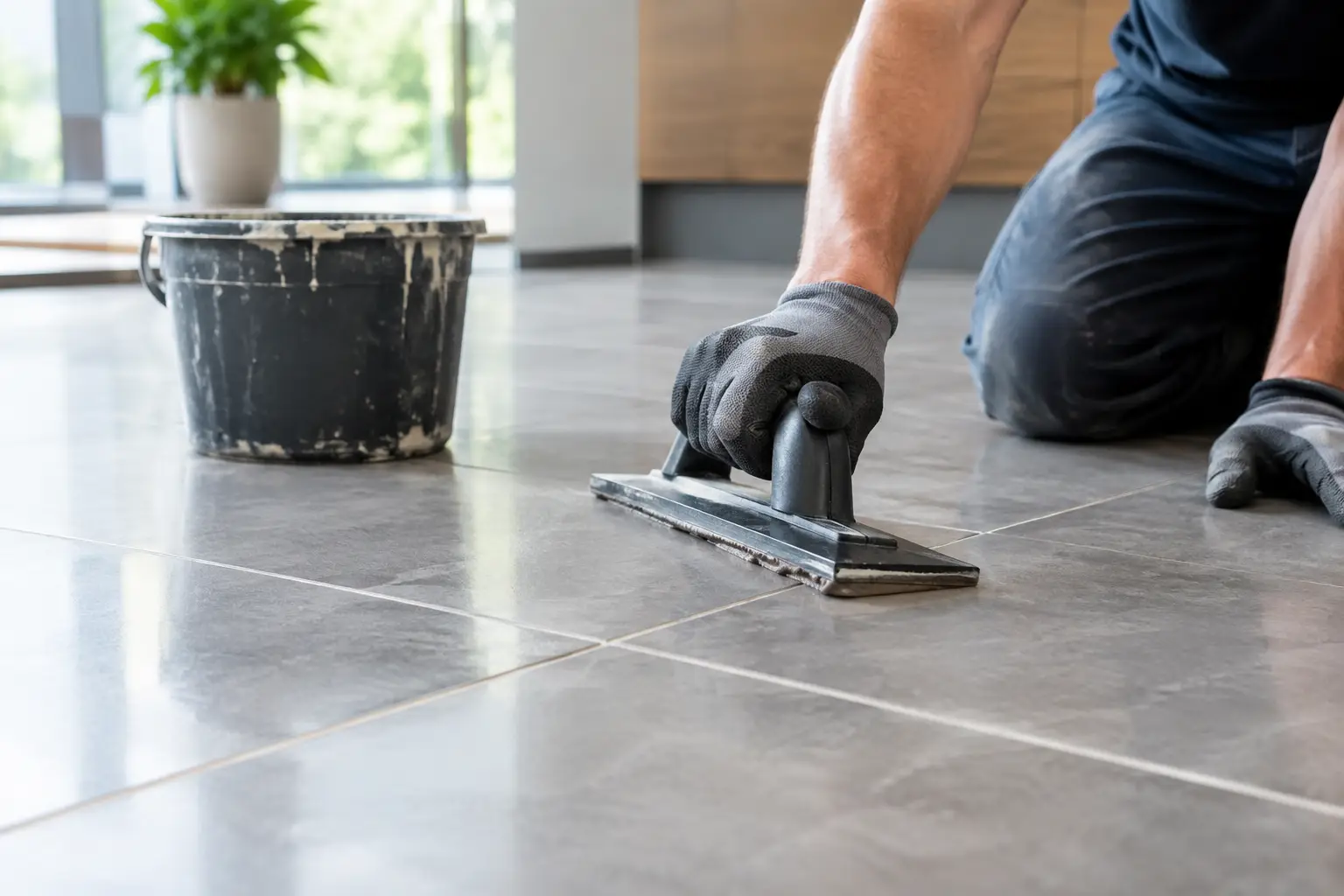
Even the best grout cannot deliver a premium finish if joints are poorly prepared. Tile joints must be clean, consistent and deep enough for proper grout placement. Adhesive squeeze-out should be removed before grouting, not forced beneath the surface and disguised later. Grout must then be mixed accurately, packed firmly into the joints and cleaned at the correct stage of the curing process.
Timing matters. Wash too early and the grout can be pulled from the joint; wash too late and haze can remain on the tile. With epoxy systems, this margin is particularly tight. Across larger projects, experienced teams manage batches, working areas and cleaning sequences so the completed floor reads as one considered surface rather than a patchwork of rushed sections.
The tile finish should guide the method as well. Highly textured porcelain may hold grout residue in its surface texture, while natural stone can require specialised sealing and grout selection to avoid staining or edge damage. A mock-up is often a wise investment when materials are expensive, the pattern is complex or the floor will be subjected to heavy public use.
Cleaning and maintenance without damaging the joints
A high-traffic floor performs best with frequent, gentle cleaning rather than occasional aggressive treatment. Grit is abrasive, so regular sweeping or vacuuming protects both tile and grout. Use cleaning products suited to the tile and grout type, following the manufacturer’s dilution guidance. Harsh acidic or highly alkaline cleaners can damage cement-based grout and may affect certain natural stones.
Cementitious grout may benefit from resealing where the product and location call for it, particularly in spill-prone residential areas. Sealer is not a substitute for proper cleaning, nor does it make a floor maintenance-free. It simply gives the joint added protection against absorption. Epoxy grout generally does not require sealing, but it still needs routine care to prevent surface films from cleaning products and hard water.
When a joint chips, cracks or discolours, address the cause before carrying out a cosmetic repair. Regrouting one small area without resolving movement, water ingress or cleaning damage will only postpone the same problem.
Specify for the real-world use, not just the showroom look
The best choice is rarely the cheapest grout or the hardest grout in isolation. It is the system that suits the traffic level, tile type, cleaning routine, joint design and condition of the substrate. Epoxy grout is often the standout for demanding, stain-prone commercial floors. Premium polymer-modified cementitious grout is a highly capable and more adaptable option for many homes and design-led fit-outs. Both depend on precise preparation and installation.
For floors that need to look exceptional long after practical completion, the grout deserves the same level of consideration as the tile. At Perfectly Laid, that attention to preparation, joint detail and finish is where a tiled floor moves beyond functional and becomes genuinely enduring.