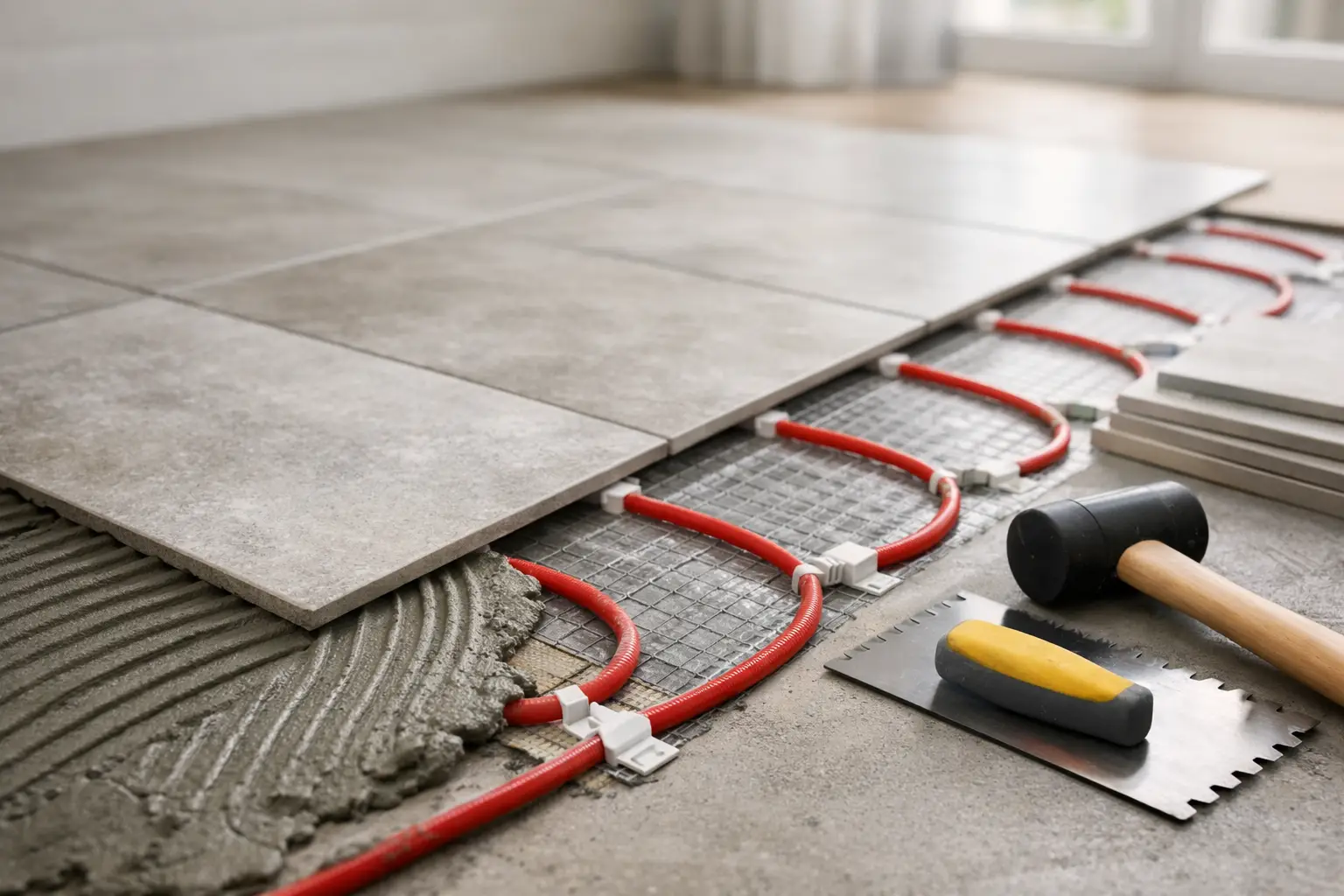
Can You Tile on Underfloor Heating Systems?
A beautiful tiled floor can be one of the best partners for radiant heat, but only when the build-up beneath it is treated with the same care as the finish above. So, can you tile on underfloor heating systems? Yes – and in many projects, tile is one of the smartest and most durable floor finishes you can choose. The catch is that success depends less on the tile itself and more on preparation, substrate stability, heating layout, and disciplined installation.
This is where many projects are won or lost. Underfloor heating adds comfort and design freedom, but it also introduces movement, thermal cycling and moisture considerations that a standard floor may never face. If the floor build-up is rushed, or the wrong materials are used, even an expensive tile selection can end up compromised by cracking, drummy spots or grout failure.
Can you tile on underfloor heating systems without problems?
You can, provided the system is correctly installed and the tiling assembly is designed to accommodate heat and movement. Tile and stone are excellent conductors of heat, which means they work exceptionally well over both electric and hydronic underfloor heating. They warm evenly, hold temperature well and suit premium bathrooms, kitchens, living zones and commercial spaces where finish quality matters.
What causes problems is not the presence of heating, but poor sequencing. The substrate must be sound, level and fully cured. The heating system needs to be compatible with the floor build-up. Adhesives, primers, levelling compounds and grout must all be suitable for heated substrates. Movement joints cannot be treated as optional finishing details. They are part of the performance of the floor.
For homeowners, this means comfort without sacrificing aesthetics. For builders and developers, it means fewer defects and a cleaner handover. For commercial projects, it means a floor that looks refined and performs under daily use.
Why tile is often the best finish over heated floors
Tiles are frequently the preferred finish over underfloor heating because they transfer heat efficiently and cope well with day-to-day wear. Porcelain in particular is a strong choice due to its density, durability and low water absorption. Natural stone can also perform beautifully, though it requires more careful product selection and a stronger understanding of substrate movement.
There is also a design advantage. Underfloor heating removes the need to work around visible radiators, allowing cleaner lines and a more considered layout. In premium interiors, that matters. The floor can become both a performance surface and a design statement.
That said, not every tile performs the same way. Very large-format tiles may need especially flat preparation to avoid lipping or hollow spots. Some stones are more sensitive to moisture and thermal changes. Thick materials can slightly slow heat transfer. None of these are deal-breakers, but they do affect specification.
The real question: what sits beneath the tile?
If you want a tiled floor over heating to last, the unseen layers deserve as much attention as the visible finish. The substrate must be stable and appropriate for the system being installed. Concrete slabs, screeds, tile backer boards and timber substrates all behave differently under heat.
On a concrete or screeded base, curing times matter. Tiling onto a slab or screed that still holds excess moisture can create problems before the heating is even switched on. On timber floors, movement and deflection need to be managed carefully, often with suitable boards or uncoupling systems, because timber expands and contracts differently from cement-based substrates.
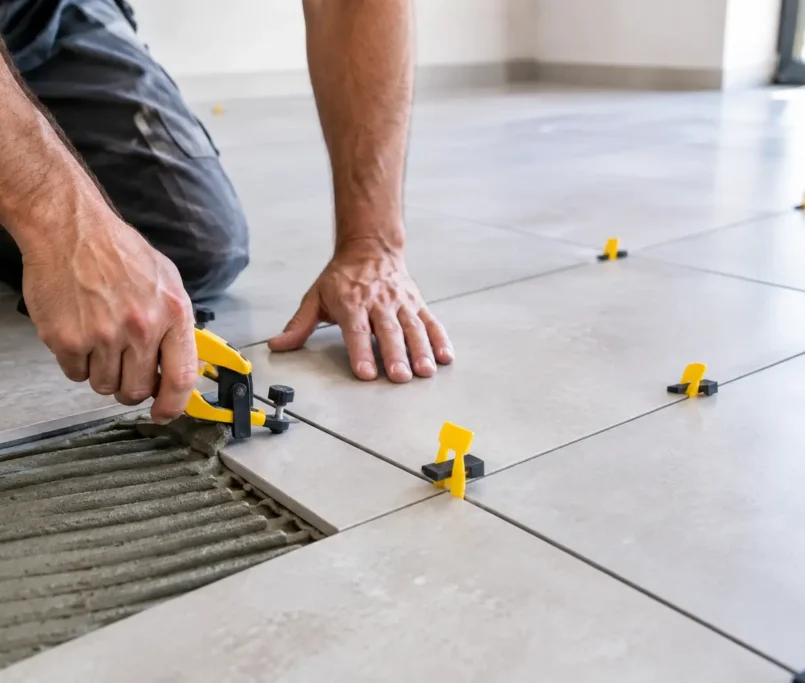
Flatness is equally important. Underfloor heating systems often involve cables, mats, pipes or overlay boards that can create slight irregularities. These need to be corrected with the right levelling products before tiling begins. A premium result is built on precision long before the first tile is laid.
Electric vs hydronic systems
Electric systems usually involve heating mats or loose cables and are common in renovations, especially in bathrooms and smaller zones. They can be quicker to install but still require the correct encapsulation and levelling to create a suitable tiling surface.
Hydronic systems circulate warm water through pipes and are often used in larger homes, luxury developments and broader commercial applications. These systems typically sit within or beneath a screed and require careful coordination between trades. Because the build-up is more substantial, planning becomes even more important – particularly around finished floor heights and curing schedules.
Neither system is automatically better for tiling. The right choice depends on the project, the programme, the substrate and the performance goals.
Installation details that make the difference
The most successful tiled floors over underfloor heating are not simply installed – they are engineered through careful trade decisions. Primers must suit the substrate. Adhesives should be flexible and rated for heated floors. Grouts need to tolerate movement and temperature changes. In wet areas, waterproofing must work in harmony with the rest of the floor build-up rather than being treated as a separate exercise.
Movement joints are one of the most overlooked details. Heated floors expand and contract as temperatures rise and fall. Without proper movement accommodation at perimeters, transitions and designated field areas, stress can build up and express itself through the tile finish. Cracking is often blamed on the tile when the real failure sits in the absence of movement planning.
Commissioning also matters. Underfloor heating should not be turned on too early after installation. Adhesives, screeds, levelling compounds and grout all require proper curing. Once that period has passed, the system should usually be brought up to temperature gradually rather than blasted to full heat. Controlled commissioning helps the floor settle into service conditions without shock.
Can you tile on underfloor heating systems in bathrooms and wet areas?
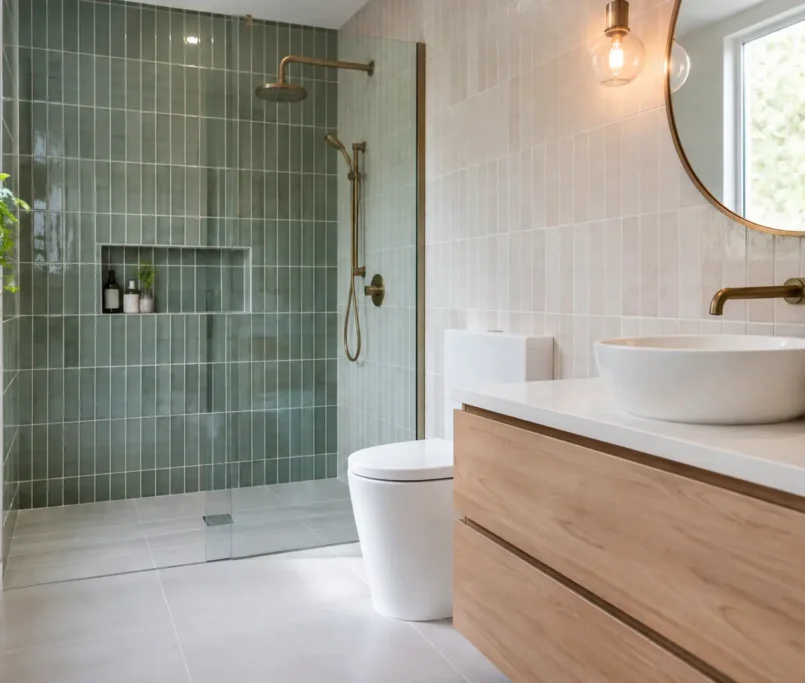
Yes, and bathrooms are one of the most popular places to do it. Warm tiles underfoot bring a clear comfort upgrade, and tiled wet areas already demand disciplined substrate preparation, falls and waterproofing. When executed properly, underfloor heating can be integrated into that process without compromising the finish.
Bathrooms simply demand tighter coordination. Heating elements must never interfere with drainage design or waterproofing integrity. Floor wastes, shower gradients, membrane detailing and tile layout all need to be considered together. This is especially true in high-end bathrooms where large-format tiles, niches, linear drains and minimal transitions leave little room for error.
In these spaces, workmanship shows. A floor can look effortless only when the installation sequence has been anything but casual.
Common mistakes that shorten the life of the floor
Most failures come from haste, not from the heating system itself. Tiling over an uncured screed, using an inflexible adhesive, skipping movement joints, or ignoring substrate deflection can all create avoidable issues. So can poor heat commissioning.
Another common mistake is assuming one product suits every build-up. A renovation over timber joists does not behave like a ground-floor slab in a new build. A boutique residential bathroom does not carry the same traffic as a retail tenancy or hospitality fit-out. The specification should respond to the project, not the other way round.
Cheap shortcuts are particularly costly here because defects are hard to rectify once the floor is complete and operational. Replacing a failed heated tiled floor is not a simple cosmetic touch-up. It often means disruption, demolition and rework across multiple trades.
When extra caution is needed
Some projects need closer scrutiny. Large-format porcelain over a heated timber substrate, natural stone in a wet area, external covered spaces with temperature swings, and multi-unit developments with repeated wet area layouts all require a more considered approach.
On larger projects, consistency is just as important as quality. Builders and developers need every unit to be prepared, waterproofed, tiled and finished to the same standard. Underfloor heating adds another layer of coordination, which is why experienced tiling contractors matter. Precision is not only about one beautiful room. It is about repeatable workmanship across the whole programme.
At Perfectly Laid, that philosophy sits at the centre of every installation decision – protecting the finished look by controlling the work beneath it.
What a good outcome looks like
A well-executed tiled floor over underfloor heating should feel almost uneventful once complete. Heat should be even. Tiles should sound solid underfoot. Grout lines should remain crisp. Transitions should be clean, and the floor should sit comfortably within the wider design of the space.
Most importantly, the floor should stay beautiful under use. That is the standard worth aiming for – not simply getting tiles down, but delivering a finish that performs with quiet confidence year after year.
If you are planning tiled floors over heating, treat the assembly as a full system rather than a collection of separate trades. The warmth is the luxury people feel first. The precision beneath it is what makes that luxury last.