Best Tiles for Alfresco Areas in Any Weather
An alfresco floor has to do far more than look exceptional from the kitchen door. It must stay safe after rain, tolerate direct sun and temperature changes, carry outdoor furniture, and hold its finish through years of foot traffic. The best tiles for alfresco areas bring those practical demands together with a surface that makes the whole outdoor living space feel considered, generous and complete.
For a premium result, the decision should never begin and end with colour or tile size. The tile itself matters, but so do its slip resistance, water absorption, installation method, drainage falls, movement joints and finishing details. A beautiful tile laid onto an inadequately prepared base is not a long-term outdoor solution. Precision beneath the surface is what protects the finish above it.
What Makes a Tile Right for an Alfresco Area?
Outdoor tiles live in harsher conditions than internal floors. Rainwater can sit on the surface, dirt and leaves can create a slippery film, and heat can make some finishes uncomfortable underfoot. The right selection needs to suit both the climate and the way the space will be used.
Start with slip resistance. A tile that feels refined indoors may become hazardous when wet outdoors, particularly beside a pool, barbecue area or uncovered patio. Look for a purpose-made exterior finish with a suitable slip rating for the site. The exact rating should be chosen in context: a covered entertaining area has different requirements from an exposed pool surround or a commercial entry. More grip is not always better if the surface becomes difficult to clean, so the objective is a safe, practical balance.
Water absorption is equally important. Dense tiles absorb very little moisture, making them less prone to staining, cracking and weather-related damage. This is one reason porcelain remains the first choice for many high-quality alfresco projects. It offers dependable performance without asking homeowners to compromise on design.
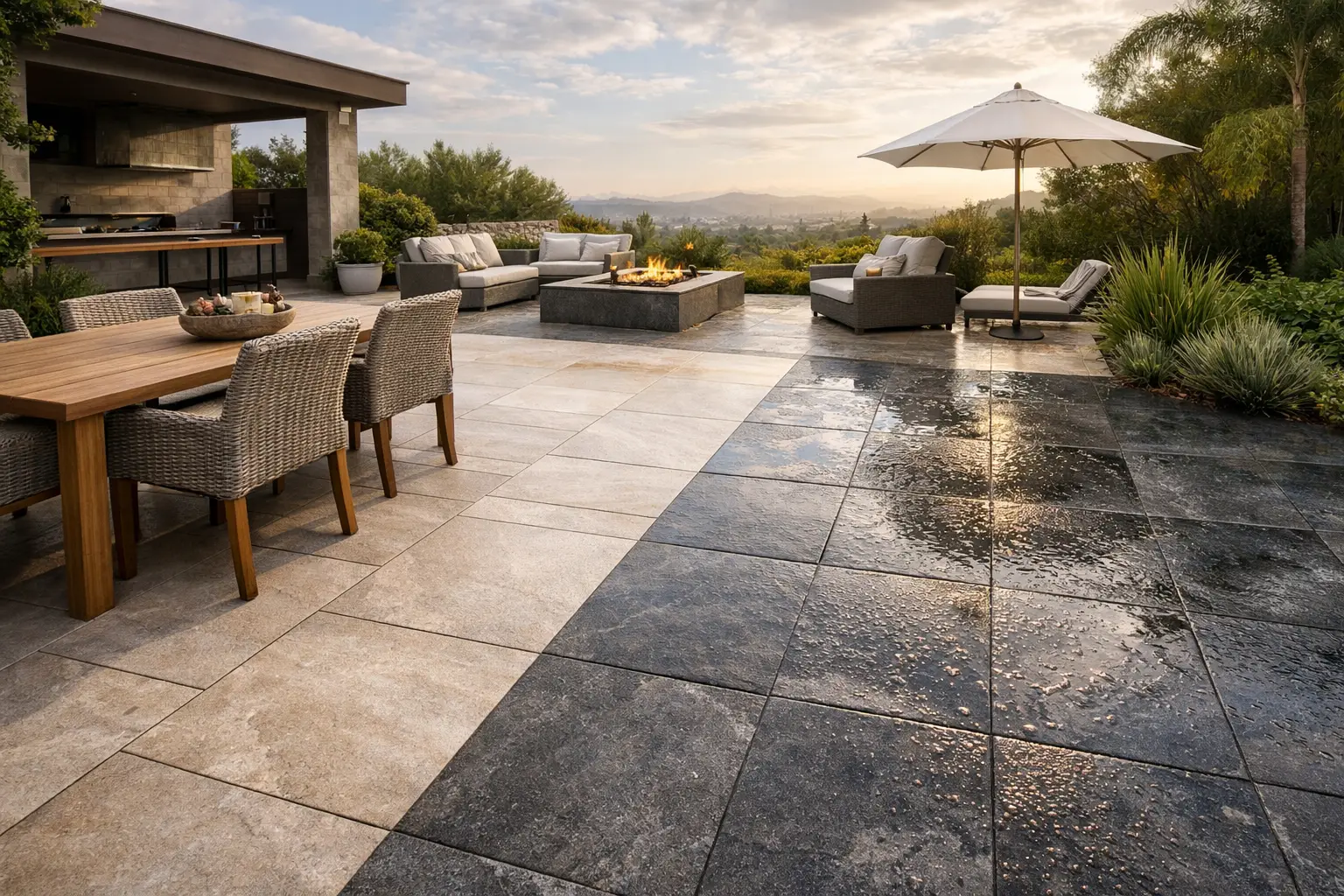
Finally, consider solar exposure and comfort. Deep charcoal tiles can create a dramatic contemporary setting, but they may become hot in full sun. Lighter stone, sand and soft grey tones often feel cooler and are more forgiving of dust, pollen and everyday marks. The best choice is one that works with the orientation of the home, not simply the moodboard.
Porcelain Tiles: The Leading Choice for Outdoor Living
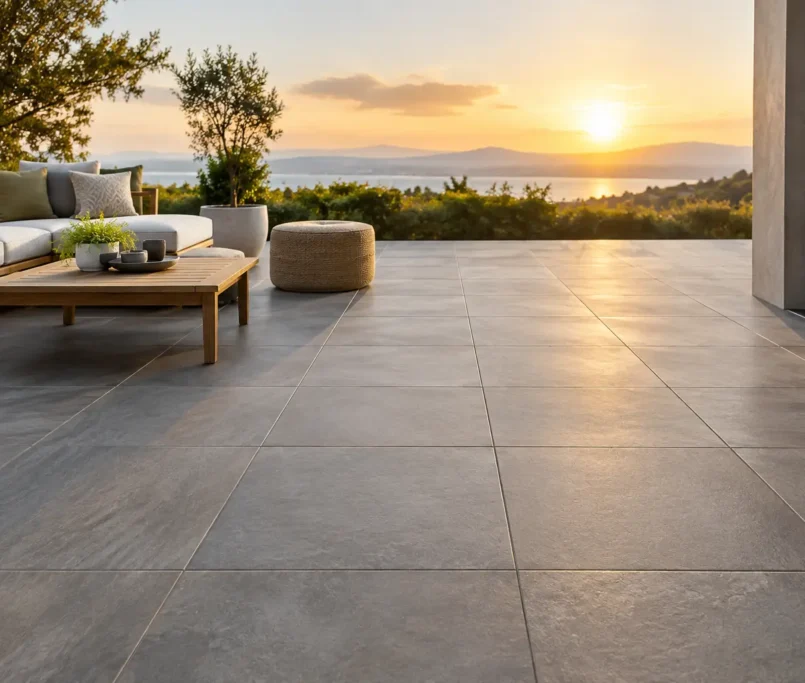
For most residential alfresco areas, exterior-rated porcelain is the strongest all-round option. It is hardwearing, low-porosity and available in an extensive range of stone, concrete, timber and terrazzo-inspired finishes. That flexibility allows an outdoor floor to feel tailored to the architecture rather than chosen from a narrow practical range.
Porcelain is particularly effective where homeowners want visual continuity between internal and external spaces. Using a coordinated indoor tile and an outdoor version with greater grip can visually extend the living area beyond the threshold. This is a powerful design move in open-plan homes, especially where large sliding or stacking doors create a direct connection to the terrace.
Large-format porcelain can make an alfresco feel calmer and more expansive because there are fewer grout lines interrupting the surface. However, large tiles demand a flatter, better-prepared substrate and highly accurate installation. Even minor inconsistencies in the base can lead to lipping, poor drainage or hollow spots. In outdoor work, precision is not a luxury detail. It is central to performance.
Textured porcelain is a sensible choice for uncovered areas, but texture should be selected carefully. An aggressively rough surface may trap grease near a barbecue or make regular cleaning unnecessarily difficult. A refined structured finish usually provides the grip an entertaining area needs while retaining the polished look expected in a premium home.
When 20 mm Porcelain Is Worth Considering
Thicker 20 mm porcelain pavers are designed for outdoor applications and can be an excellent option for garden paths, terraces and areas where a more substantial paving feel is desired. Depending on the design, they may be installed over a prepared mortar bed or supported on pedestal systems.
They are not automatically the best answer for every alfresco. Pedestal systems require careful detailing at edges, door thresholds and drainage points, while bonded installation depends on correct substrate preparation and adhesive coverage. The method should be specified around the site conditions, levels and intended use, rather than selected as a shortcut.
Natural Stone Delivers Character, With More Care
Natural stone brings depth and variation that manufactured materials cannot exactly replicate. Travertine, limestone, granite and slate can create a beautiful alfresco setting, from soft Mediterranean character to a more architectural, contemporary finish. Each piece carries subtle variation, which gives a large outdoor floor genuine visual movement.
The trade-off is maintenance and material selection. Most natural stones are more porous than porcelain and may need sealing to protect against food spills, weathering and staining. Some varieties can also change in appearance over time, which is part of their appeal for some clients but not for every project.
Travertine is valued for its warm, relaxed appearance and can work beautifully around pools and informal entertaining zones. Its natural voids and finish need to be assessed carefully, particularly where furniture legs, high heels or frequent cleaning are factors. Granite offers excellent density and durability, while some limestones provide a softer, elegant palette but require more considered sealing and cleaning.
A quality stone installation also relies on selecting the correct stone thickness, surface finish and adhesive system. Outdoor stone is not simply an internal product carried outside. The substrate, falls and perimeter movement all need to accommodate the material’s behaviour in changing conditions.
Tiles That Usually Fall Short Outdoors
Standard glazed ceramic tiles are often better reserved for sheltered walls or interior spaces. They can look appealing in a showroom but may not offer the density, strength or slip resistance required for an exposed floor. A glossy surface is especially unsuitable where water, bare feet and outdoor entertaining meet.
Timber-look porcelain is a more reliable alternative to real timber where clients want warmth without ongoing oiling, splintering or weather-related movement. It can soften modern architecture and transition naturally into gardens, while still providing the durability expected of a tiled surface.
Polished porcelain also deserves caution. Its reflective finish can be striking inside, but it is generally too slippery and unforgiving for an exterior floor. If a sleek, luxurious look is the goal, choose a matt or honed-look exterior porcelain instead. It will give the space visual restraint without sacrificing safety.
Colour, Format and Grout Shape the Final Result
A successful alfresco floor should relate to the home rather than compete with it. Warm beige porcelain can complement timber joinery and natural landscaping. Mid-grey concrete-look tiles suit clean-lined contemporary homes. Soft off-white and pale stone tones can brighten shaded courtyards, although they may need more frequent cleaning in high-traffic areas.
Tile size should follow the scale of the space. Large-format tiles can make broad patios feel composed and premium, while smaller formats may work better around curved spaces, drains or complex thresholds. The desire for minimal grout lines should never override correct drainage. Outdoor floors need sufficient fall to direct water away from the building, and the tile layout should support that movement rather than fight it.
Grout colour is a finishing decision with practical consequences. A close colour match creates a quiet, monolithic surface, while a contrast grout makes the layout more graphic. For most alfresco areas, a mid-tone grout offers the best balance between visual refinement and everyday practicality. It is also vital to use exterior-suitable grout and flexible sealant at changes of plane and perimeter junctions.
The Installation Details That Protect Outdoor Tilework
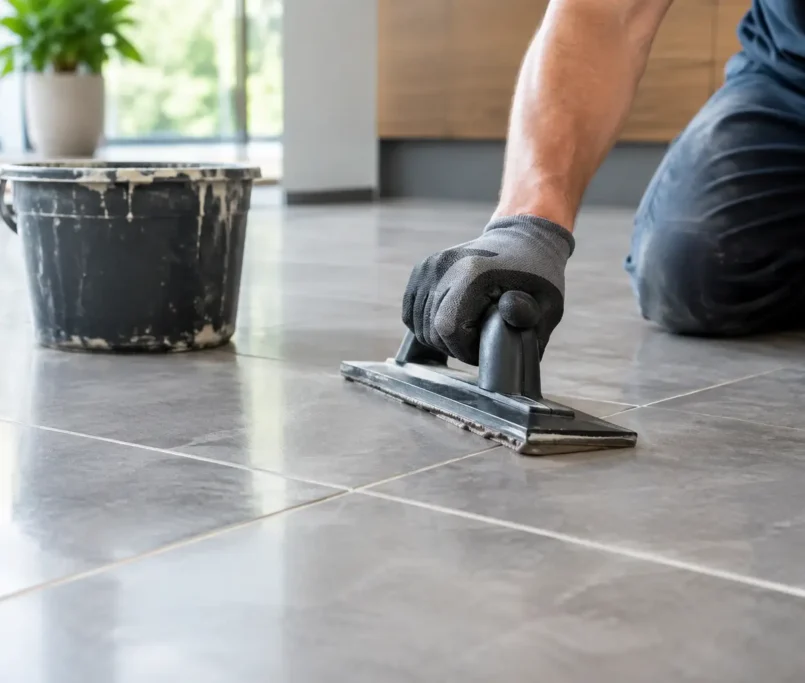
The finest tile selection can still fail if water is allowed to sit beneath it or move towards the home. Before installation begins, the base should be assessed for soundness, levels, cracks and moisture issues. Demolition, re-levelling or screeding may be required to create a stable substrate with accurate falls.
Waterproofing is often essential where the alfresco sits over a habitable room, balcony structure or raised slab. On ground-level patios, drainage design and substrate preparation remain equally critical. Water should be directed away from doorways and building edges, with drainage points positioned and detailed before tiles are set out.
Movement joints are another detail that should be planned, not treated as an afterthought. Outdoor surfaces expand and contract with temperature changes. Correctly placed movement joints help prevent tenting, cracking and loss of bond, while clean silicone caulking provides a finished transition at walls, columns and thresholds.
At Perfectly Laid, this is where craftsmanship becomes visible over time. The finished floor should read as effortless, but that appearance is earned through disciplined preparation, accurate set-out, full adhesive coverage and meticulous finishing.
Choosing the Best Tiles for Alfresco Areas With Confidence
If low maintenance, design flexibility and reliable performance are priorities, exterior-rated textured porcelain is usually the best place to start. If natural variation and organic character are central to the brief, a carefully selected and properly sealed natural stone may be the better investment. In either case, choose the material alongside the installation strategy, not before it.
Bring samples outside, view them in morning and afternoon light, and consider them beside the home’s cladding, landscaping and furniture. A tile that looks perfect under showroom lighting can feel entirely different in direct sun or after rainfall. The right alfresco floor should feel as good underfoot on an ordinary Tuesday as it looks when the table is set for a long evening outdoors.