Waterproofing Membrane System Review for Bathrooms
A beautiful tiled bathroom can conceal a serious failure for months. The grout may look clean, the silicone may appear intact and the tiles may feel perfectly solid – while water is slowly travelling behind the finish into walls, floors or adjoining rooms. This waterproofing membrane system review looks beyond product claims to the details that determine whether a tiled wet area remains protected for years.
Waterproofing is not a decorative layer and it is not an optional extra beneath premium tiles. It is the protective system that allows the finished space to perform as well as it looks. For homeowners, builders and project managers, reviewing that system properly is one of the clearest ways to protect the investment in a renovation, fit-out or multi-unit development.
Waterproofing Membrane System Review: What Is Being Assessed?
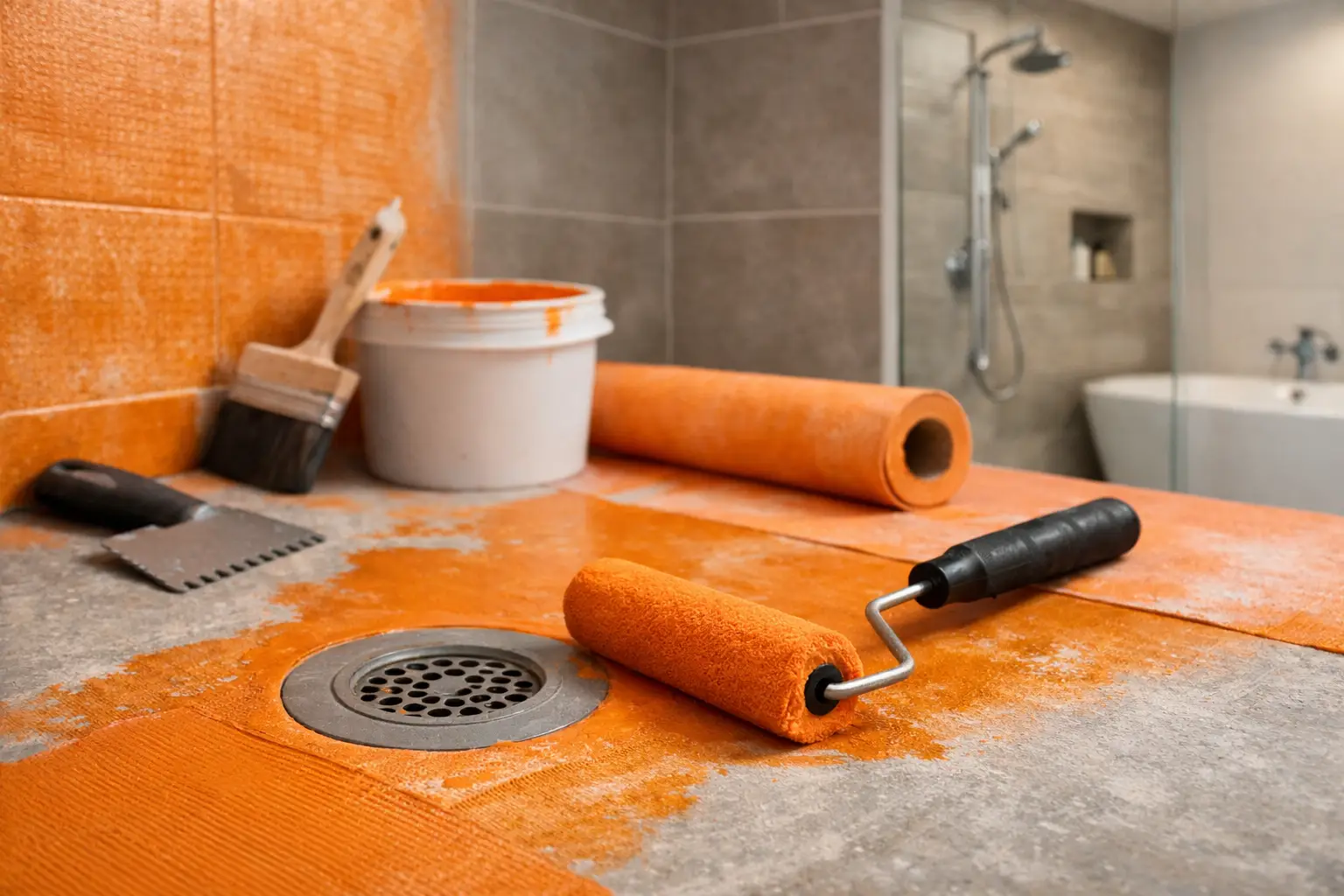
A membrane system is more than a tub of liquid coating. It is a coordinated assembly of substrate preparation, primers where required, compatible membranes, reinforcement fabric or banding, bond breakers, puddle flanges, drainage details and careful application. The tile adhesive and finish sit above it, but they cannot replace it.
A worthwhile review asks whether every part of that assembly suits the space. A shower recess, laundry, commercial amenity room and external balcony face different levels of water exposure, movement, drainage demand and foot traffic. The right answer is rarely simply the most expensive membrane or the quickest product to apply. It is the system specified and installed for the actual conditions on site.
The central question is straightforward: if water reaches the tiled surface, where does it go? In a properly detailed wet area, it is directed to the drain without finding a path into the building fabric. That outcome depends on levels, junctions and continuity as much as the membrane itself.
The Details That Separate a System From a Coating
The substrate comes first
Membranes need a sound, clean and stable base. Dust, loose material, residue, moisture issues and poor screed preparation can compromise adhesion before waterproofing has even begun. A wall or floor that moves excessively, contains untreated cracks or falls away from the drain creates risks that no top-quality coating can neatly solve.
This is why preparation deserves the same scrutiny as tile selection. Floors must be appropriately graded in wet zones, shower bases need reliable falls towards drainage, and transitions between materials require considered treatment. In high-end work, the invisible groundwork is where perfection is earned.
Junctions are the pressure points
Most failures do not occur in the middle of a broad, flat floor. They appear at changes of plane, wall-to-floor junctions, internal corners, penetrations, hobs, doorways, drains and movement joints. These locations are prone to movement and receive concentrated water exposure.
A complete system addresses them deliberately, usually with compatible bond breakers, reinforcing tape or fabric and shaped drainage components. The membrane must remain continuous through these areas without becoming too thin, tearing or bridging gaps. Attention around pipe penetrations is particularly important: a small unsealed opening can allow significant moisture into concealed framing over time.
Coverage and film thickness matter
Liquid membranes are often specified in multiple coats to achieve a required dry-film thickness. Applying them too thinly, leaving pinholes or rushing a second coat before the first has cured can produce a surface that looks coated but does not perform as intended.
There is a balance here. Excessively heavy application can also create curing problems or weak areas, especially around corners and details. Skilled applicators work to the manufacturer’s system requirements, use the correct tools and allow each stage the time it needs. Fast programmes still need disciplined sequencing.
Compatibility is not a minor technicality
Primers, membranes, sealants, tile adhesives, screeds and drainage accessories should be compatible within the specified system. Mixing products without checking suitability can affect adhesion, flexibility or warranty support. This is especially relevant where large-format porcelain, natural stone, heated floors or external conditions add further performance demands.
A reliable installer can explain what is being used, why it suits the substrate and how the system will be carried through at vulnerable junctions. Clear answers before tiling begins are far preferable to assumptions after a leak appears.
Liquid, Sheet and Hybrid Membranes
A balanced review should recognise that there is no universal winner. Liquid-applied membranes are common in residential bathrooms and laundries because they can be formed around complex shapes, corners and penetrations. When applied to the correct thickness, they provide a practical, continuous waterproof layer beneath tile finishes.
Sheet membranes offer controlled factory thickness and can be particularly useful where consistency, crack isolation or rapid detailing is required. Their performance depends heavily on well-executed laps, seams and penetrations. A sheet product can be excellent, but it is not automatically safer if its joins are poorly prepared.
Hybrid approaches may combine products or detailing methods to address particular substrates and junctions. The important distinction is not liquid versus sheet in isolation. It is whether the selected system manages water, movement and installation conditions without creating weak transitions.
For large developments, consistency becomes a major consideration. Repeating a proven specification, backed by documented preparation and quality checks, helps maintain the same standard across every bathroom rather than leaving performance to individual interpretation.
What a Client Should Expect Before Tiles Go Down
Clients should not have to become waterproofing specialists, but they should expect a visible, accountable process. Before tiling starts, the waterproofed area should be clean, continuous and fully cured in accordance with the system requirements. Corners, drainage points and penetrations should look deliberately detailed, not casually brushed over.
Photographic records are valuable, particularly once high-value finishes conceal the work. They provide a clear record of coverage and detail locations for homeowners, builders and facilities teams. On commercial or multi-unit projects, inspection hold points can prevent one overlooked area from becoming a costly programme-wide rectification issue.
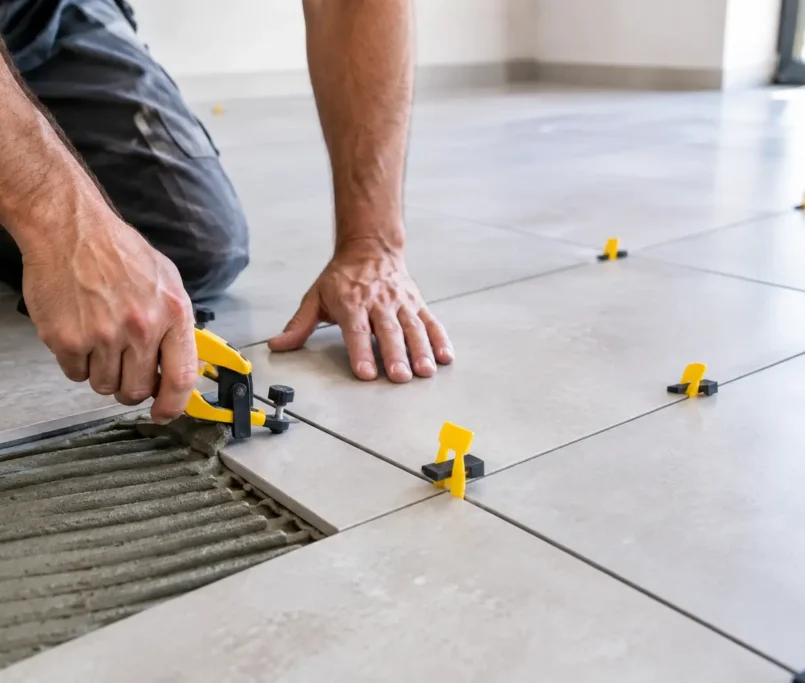
It is also sensible to discuss the sequence early. Demolition, substrate correction, screeding, waterproofing, curing, tiling, grouting and final caulking are connected stages. Compressing the programme by ignoring cure times may feel efficient in the moment, but it shifts risk into the finished build. Quality work respects the order of operations.
Common Warning Signs in a Waterproofing Review
There are several signs that warrant further questions. These include poorly formed falls around a drain, missing or inconsistent reinforcement at corners, a membrane that stops short of critical transitions, visible pinholes, uncovered penetrations and tiled surfaces installed before the membrane has had suitable time to cure.
Another warning sign is vague scope language. “Waterproof bathroom” does not explain the extents, the selected system, the treatment of the shower recess or the responsibility for drainage and substrate readiness. A premium result begins with a scope that is as precise as the tile layout.
Price alone can obscure these differences. A lower quote may exclude levelling, screed corrections, drainage adjustments, reinforcement or proper preparation. Comparing proposals line by line is more useful than comparing a single total. The cost of getting waterproofing right is modest beside the disruption of removing tiles, repairing damaged substrates and reinstating a finished room.
Waterproofing for Bathrooms, Balconies and Commercial Spaces
Bathrooms and laundries require careful waterproofing because water is used frequently in confined spaces. Balconies and alfresco areas introduce additional variables: weather exposure, thermal movement, drainage capacity and threshold detailing. Their systems must manage water under more demanding conditions while supporting a refined outdoor finish.
Commercial spaces can bring another layer of complexity. Higher footfall, repeated cleaning, service penetrations and tight delivery programmes all affect the solution. In hospitality, retail, fitness and institutional settings, a failure can interrupt operations as well as damage finishes. The specification should therefore be based on use, not simply on the room name.
At Perfectly Laid, waterproofing is treated as a precision stage within the full installation process, not an isolated task completed between trades. That approach helps protect the tilework, the programme and the client’s confidence in the finished space.
Choosing the Right Partner
The best waterproofing membrane system is only as dependable as its installation. Choose a contractor who asks about the substrate, drainage, room use, tile format and surrounding finishes before recommending a solution. They should be comfortable identifying risks early, setting out what is included and coordinating the waterproofing stage with the wider build.
Look for evidence of control rather than grand promises: clean preparation, disciplined detailing, sensible cure times, clear communication and work that is ready for inspection before tiles conceal it. These are the habits that support exquisite finishes and long-term performance.
A tiled space should feel effortless once complete. That confidence is built underneath the surface, one carefully prepared junction, fall and membrane layer at a time.