Best Tiles for Outdoor Entertaining Areas
A beautiful alfresco area can lose its appeal quickly when the floor becomes slippery after rain, painfully hot underfoot or marked by stains after a busy weekend barbecue. Choosing the best tiles for outdoor entertaining areas is therefore about much more than finding a colour or pattern you like. The right tile must perform through changing weather, frequent foot traffic, spills, furniture movement and the everyday demands of outdoor living, while still giving the space a considered, high-end finish.
For patios, courtyards, pool surrounds and covered entertaining zones, the most successful result begins with a tile selected for its location, then installed over a properly prepared base with the correct falls, drainage and finishing details. That is where an outdoor space moves from simply attractive to genuinely built to last.
What the Best Tiles for Outdoor Entertaining Areas Need to Do
Outdoor tiles work harder than tiles inside the home. They are exposed to rain, UV, dirt, leaves, temperature changes and often a constant stream of guests moving between the kitchen, garden and seating area. A polished finish that looks exquisite in a showroom may be completely unsuitable beside a pool. Likewise, a pale porous stone may be beautiful, but need more maintenance than a busy household wants to take on.
Start with performance. The tile should have a suitable slip-resistance rating for the site, low water absorption and enough durability to handle the expected use. In practical terms, textured porcelain is often the leading choice because it combines a refined appearance with excellent everyday resilience.
The layout and installation matter just as much. Water must be encouraged away from the building and not allowed to collect beneath furniture, at thresholds or along the edge of the entertaining space. Correct substrate preparation, falls and movement joints protect the tiled surface from cracking, drumming and premature failure.
Porcelain: The Leading Choice for Modern Outdoor Living
For many homeowners, designers and builders, outdoor-rated porcelain is the strongest all-round option. It is dense, low-absorption and highly resistant to staining, fading and moisture. It can also convincingly recreate the character of natural stone, timber or concrete without the same level of upkeep.
A matt or structured porcelain tile is particularly effective for alfresco dining areas and patios. It offers practical grip while retaining the clean, architectural look that suits contemporary homes. Large-format porcelain can create a calm, expansive feel with fewer grout lines, while smaller formats introduce more grout joints and can offer additional traction around wet zones.
Choose the Right Surface Texture
Not every porcelain tile is suitable outside. A smooth indoor tile, even one marketed in the same collection as an exterior option, may become hazardous when wet. For entertaining areas exposed to weather, select an outdoor-rated finish with appropriate slip resistance.
The required level of grip depends on the location. A fully covered courtyard generally has different needs from an exposed pool surround or a path that receives regular rain. More texture improves traction, but very rough surfaces can be less comfortable under bare feet and more demanding to clean. The best choice balances safety with the way the area will actually be used.
Consider Tile Thickness and Format
Standard outdoor porcelain is often suitable where there is a correctly prepared, stable screeded base. Thicker 20 mm porcelain pavers are another excellent option for certain garden, terrace and pedestal-system applications. Their substantial profile gives a premium sense of solidity and can be particularly useful where access to services or drainage beneath the surface is required.
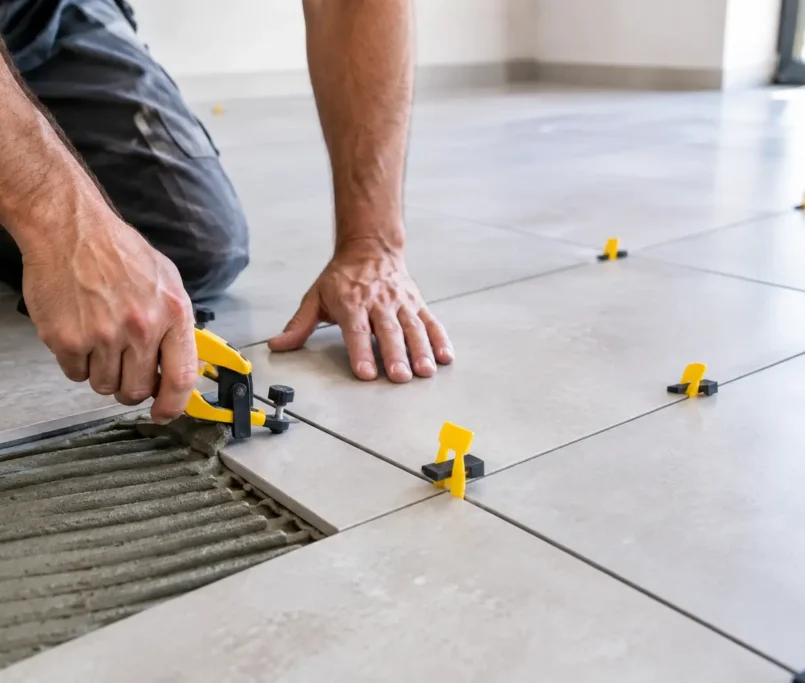
Large tiles make a small patio feel more generous, but they demand accurate preparation. A slight variation in the base can become obvious across a wide tile, and poor drainage is harder to disguise. Precision setting-out, consistent adhesive coverage and careful levelling are essential to achieving the crisp finish large-format tiles promise.
Natural Stone Brings Character, With More Commitment
Natural stone has an unmistakable depth and variation that manufactured materials can imitate but not entirely replicate. Travertine, sandstone, granite and bluestone can all create an elegant outdoor entertaining setting, particularly in homes where the architecture calls for a more organic, established look.
However, stone is not a one-size-fits-all choice. Its porosity, surface texture and maintenance requirements vary considerably. Some stones need sealing to help resist food, drink and oil stains. Others may weather unevenly, which can be part of their charm but may not suit a client seeking a uniform finish.
Travertine, for example, has a relaxed, luxurious feel underfoot and remains a popular poolside choice when correctly selected and installed. It needs careful attention to filling, sealing and ongoing care. Dense stones such as granite generally offer excellent durability, although their finish still needs to be assessed for slip resistance rather than assumed safe because it is natural.
Stone also requires an installer who understands its variation. Thicknesses may differ from piece to piece, and natural movement in colour and veining must be planned across the space. The objective is not a mechanically identical surface. It is a balanced composition where the material looks intentional from every viewpoint.
Concrete-Look Tiles for a Clean Architectural Finish
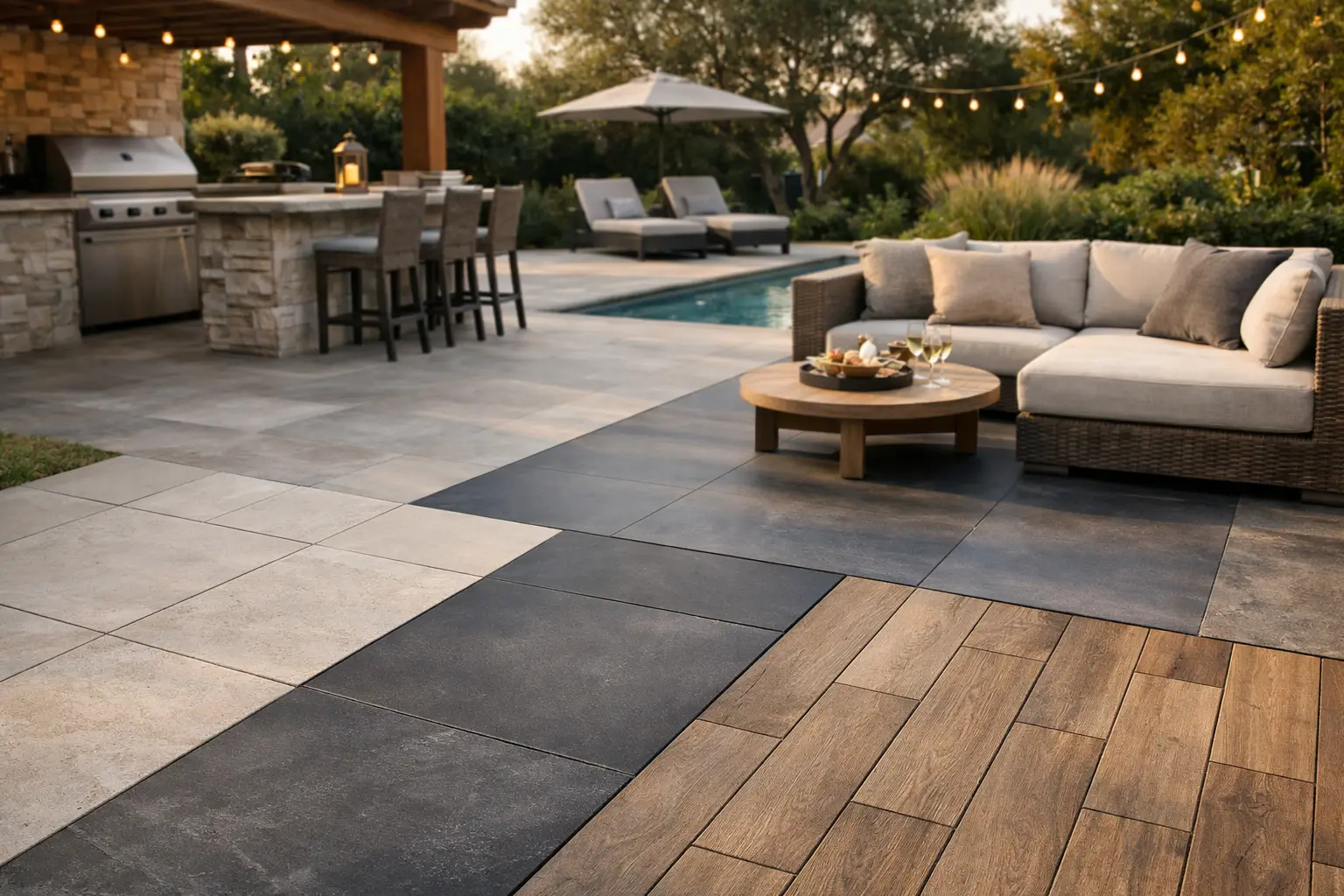
Concrete-look porcelain suits contemporary outdoor entertaining areas exceptionally well. Its muted tones work with black-framed doors, timber battens, rendered walls and landscaped planting without competing for attention. Grey, warm beige, soft taupe and pale stone shades provide a sophisticated base for outdoor furniture, lighting and greenery.
This style is also practical. A lightly variegated concrete-look tile is more forgiving of dust, footprints and the occasional spill than a flat, very dark surface. It can carry from an internal living zone to the patio for a visually connected indoor-outdoor transition, provided the internal and external tiles are selected with their different slip requirements in mind.
Do not assume matching tiles mean matching finishes. Many ranges offer a smoother interior tile and a more textured exterior companion in the same colourway. This can preserve design continuity while giving the outdoor area the grip it needs.
Pool Areas Need Their Own Level of Care
A pool surround is not simply another patio. Bare feet, splashing water, sunscreen and frequent movement make safety and comfort central to the specification. Tiles should remain comfortable in direct sun where possible, provide reliable grip when wet and resist chemical exposure.
Colour matters here. Deep charcoal and black tiles can become extremely hot in strong sunlight, while very pale finishes may show marks more readily. Mid-tone stone shades often provide a practical middle ground, though the local orientation, shade and surface finish should guide the final decision.
Drainage is equally important. Water should move efficiently towards drainage points without creating abrupt falls that feel awkward beneath bare feet. Edge details, coping, grates and transitions to adjacent landscaping all need to be resolved early. These are small visual lines, but they have a major effect on both safety and the finished appearance.
Do Not Overlook the Details Beneath the Tile
Premium outdoor tiling is won or lost before the first tile is laid. Existing concrete may need demolition, repairs, re-levelling or screeding before it is ready to receive a tiled finish. If the base does not have adequate falls, simply laying tiles over it will not correct the underlying drainage issue.
The adhesive system must suit the tile, substrate and exposure conditions. Full adhesive coverage is especially important outdoors, where voids beneath tiles can allow water ingress and create weak points. Movement joints must be included in the right locations to accommodate natural expansion and contraction across the surface.
Finishing details deserve the same attention. Clean cuts around posts and door frames, straight grout lines, neatly resolved edges and flexible caulking at junctions are what make an entertaining area feel composed rather than merely completed. A high-end tile can only look as good as the preparation and workmanship beneath it.
Selecting Colour and Style That Will Age Well
Outdoor entertaining areas should feel connected to the house, but they do not have to be an exact copy of the interior. A warm stone-look porcelain can soften a modern extension. A dramatic large-format tile can give a compact courtyard a more tailored, hotel-inspired quality. Timber-look porcelain may bring warmth where real timber would require ongoing maintenance.
Think beyond the first impression. Highly patterned tiles can be striking in a small feature zone, but may overwhelm a large patio. Very pale grout can look crisp initially yet show outdoor grime quickly. A grout tone close to the tile usually creates a more forgiving, refined result, while contrasting grout makes the grid of the installation a deliberate design feature.
For projects where the floor continues through wide sliding doors, plan the transition carefully. A flush visual line is desirable, but the exterior surface still needs suitable falls away from the building. Good design resolves both requirements rather than sacrificing performance for a photograph.
A Better Starting Point for Your Outdoor Tile Project
Before choosing samples, define how the space will be used: relaxed family meals, large gatherings, poolside lounging or commercial hospitality traffic. Then consider exposure to rain and sun, the condition of the existing base, drainage requirements, furniture weight and the level of maintenance you are willing to undertake. These decisions narrow the field far more effectively than colour alone.
At Perfectly Laid, we approach outdoor tiling as a complete finish system, from surface preparation and screeding through to precision installation and final caulking. The aim is simple: an outdoor entertaining area that feels exceptional on opening day and continues to perform long after the last guest has gone home.
The tile you choose should invite people outside, but the quality beneath it is what gives you the confidence to enjoy the space in every season.