Top Signs of Tile Waterproofing Failure
A bathroom can still look polished on the surface while moisture is quietly working its way into the structure behind it. That is what makes the top signs of tile waterproofing failure so costly – the visible issue is often only a late symptom of a deeper problem. For homeowners, builders, and project managers alike, spotting those early warnings can mean the difference between a contained repair and a full strip-out.
Waterproofing is not a decorative extra. It is one of the most critical layers in any tiled bathroom, laundry, balcony, or wet area. When it is poorly applied, interrupted during installation, or allowed to fail over time, water does what it always does – it migrates, swells substrates, weakens adhesives, stains finishes, and compromises the lifespan of an otherwise beautiful fit-out.
Why tile waterproofing failure is rarely just a tile problem
One of the biggest misconceptions in tiled spaces is that cracked grout or a loose tile is the whole issue. In reality, tile and grout are surface finishes. They are not the primary waterproof barrier. The real protection sits underneath, in the membrane and the way that membrane has been detailed around joints, corners, drains, penetrations, and transitions.
That distinction matters. A tiled shower can appear sound for months, even years, while moisture is bypassing the system underneath. By the time the problem becomes obvious, the damage may already include swollen plasterboard, mould growth, deteriorated screeds, or leaking into adjacent rooms and lower levels.
In premium residential and commercial work, this is exactly why disciplined preparation and precise installation matter so much. A high-end finish is only as durable as the layers beneath it.
Top signs of tile waterproofing failure to watch for
Persistent damp or musty odours
A tiled space should not smell damp once it has dried out after use. If a bathroom, ensuite, laundry, or balcony holds onto a musty smell day after day, trapped moisture is often the first suspect. That odour usually points to water sitting where it should not – behind tiles, beneath screed, inside wall linings, or around timber framing.
The smell itself is not the failure. It is the clue. Moisture trapped behind a tiled surface creates ideal conditions for mould and mildew, even if visible growth has not yet appeared.
Loose, drummy, or lifting tiles
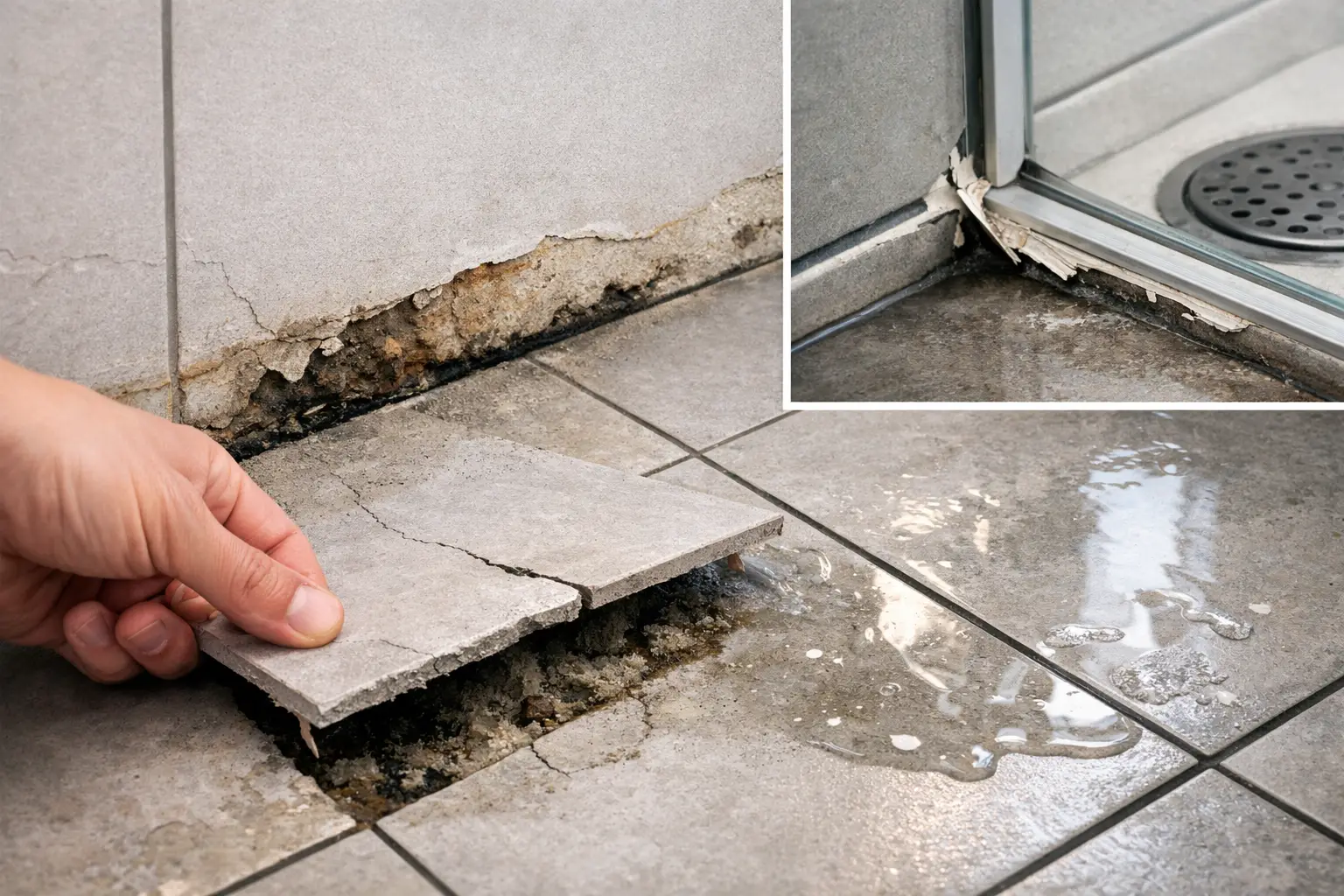
Tiles that sound hollow underfoot or begin to shift are often telling you the bond beneath has been compromised. Sometimes this is adhesive failure. Sometimes the substrate has moved or deteriorated because of long-term moisture exposure. Either way, water is frequently part of the story.
This is especially concerning in showers and floors around wastes, where repeated wetting should have been managed by falls, drainage, and the waterproofing system below. A few isolated drummy tiles do not always confirm membrane failure, but when they appear in wet zones, they deserve proper investigation.
Cracked grout that keeps returning
Grout can crack for several reasons, including movement, poor installation, or structural settling. But when grout is repeatedly patched and keeps reopening in the same area, it often suggests the layers below are unstable.
Water ingress can soften substrates, weaken bedding, and allow small movements that show up at the surface first. The key issue is repetition. Cosmetic repairs that fail again quickly usually point to something more than surface wear.
Bubbling paint or swollen skirting in adjoining rooms
One of the clearest signs of waterproofing failure often appears outside the tiled zone. If paint starts blistering on the wall next to a shower, or skirting boards begin swelling near a bathroom or laundry, moisture may be escaping the wet area and entering surrounding finishes.
This is common where wall-floor junctions, shower niches, plumbing penetrations, or door thresholds have not been properly waterproofed. In upper-level properties, the signs may appear on the ceiling below rather than in the room itself.
Efflorescence and staining
White, chalky deposits on grout lines or tile joints are known as efflorescence. They occur when water moves through cement-based materials and brings salts to the surface as it evaporates. While efflorescence does not always mean total waterproofing failure, it does signal unwanted moisture movement.
Discolouration around grout joints, dark patches that stay wet, or staining near drains can also indicate water is not draining or drying as intended. In outdoor tiled areas, this can be linked to inadequate falls as much as membrane issues, so a proper diagnosis matters.
Mould that returns after cleaning
Surface mould in wet areas is not unusual, particularly where ventilation is poor. But mould that returns quickly after thorough cleaning, especially along silicone joints, corners, and lower wall sections, can suggest moisture is being fed from behind the surface rather than from simple condensation alone.
That distinction is important. If the waterproofing system has been breached, cleaning products will not solve the root cause.
The less obvious signs on floors, balconies, and commercial spaces
Bathrooms get the most attention, but waterproofing failures are just as relevant in laundries, commercial amenities, balconies, terraces, and alfresco zones. In fact, external tiled areas often fail for more complex reasons because they deal with rainfall, UV exposure, movement, and larger thermal swings.
Ponding water that lingers long after rain, cracked movement joints, or leaks appearing below a balcony slab can all point to a failing waterproofing system or poor drainage design. In commercial projects and multi-unit developments, these problems carry more than repair costs. They can disrupt tenancies, delay handover, and trigger defects across multiple lots.
That is why scale raises the stakes. On larger projects, consistency in substrate preparation, membrane application, curing times, and detailing is not just best practice – it is what protects the programme and the finish quality across every unit.
What causes waterproofing to fail
In most cases, waterproofing failure is not caused by one dramatic event. It is usually the result of missed details or process shortcuts. The membrane may have been applied too thinly, not cured properly, bridged poorly at corners, or damaged by following trades. Falls may have been inadequate, allowing water to sit where it should drain. Movement joints may have been omitted. The wrong substrate may have been tiled over. Sometimes the issue is age, but just as often it is workmanship.
This is where trade-offs matter. A bathroom can be made to look impressive quickly, but speed without process control is expensive later. Premium tiling is not only about sharp lines and elegant material selection. It is about what happens before the first tile is laid and how each layer is protected all the way through to completion.
What to do if you notice the top signs of tile waterproofing failure
If you suspect a waterproofing issue, resist the temptation to keep patching the surface. Regrouting one section or replacing a few silicone beads may tidy the appearance, but if water is already tracking behind the finish, those fixes are temporary.
Start by documenting what you can see – when the issue appears, whether it worsens after showers or rain, and whether adjacent rooms are affected. Then have the area assessed by an experienced tiling and waterproofing professional who understands both finish quality and substrate performance. The right contractor will look beyond the visible tile and consider drainage, movement, detailing, and the likely path of moisture.
Not every issue means a complete rebuild. In some cases, the problem is localised and can be repaired with targeted remedial work. In others, especially where the substrate has deteriorated, a full replacement is the only way to restore long-term performance. The important part is accuracy. A polished repair means very little if the cause has been misread.
At Perfectly Laid, that is the standard the work is built around – precision in preparation, precision in waterproofing, and precision in the finished surface.
Protecting the finish means protecting what sits beneath it
The most expensive waterproofing failure is the one that goes unnoticed because the room still looks acceptable from the doorway. By the time the damage becomes obvious, the repair scope is often wider, messier, and more disruptive than it needed to be.
If a tiled area is giving off warning signs, trust them. A premium result should feel solid, dry, and dependable for years, not just on completion day. The sooner a moisture issue is identified, the easier it is to protect the space, the structure, and the standard of finish you expected in the first place.