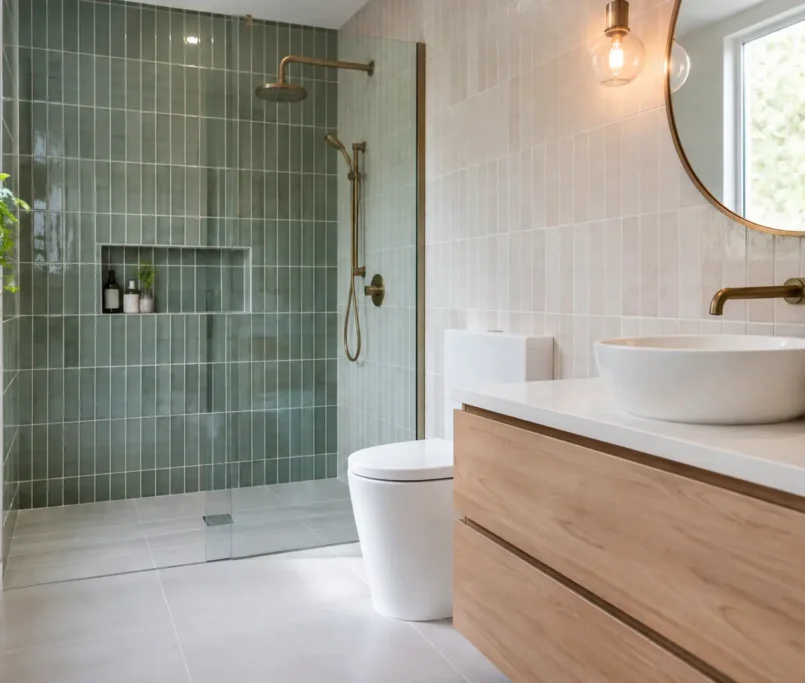
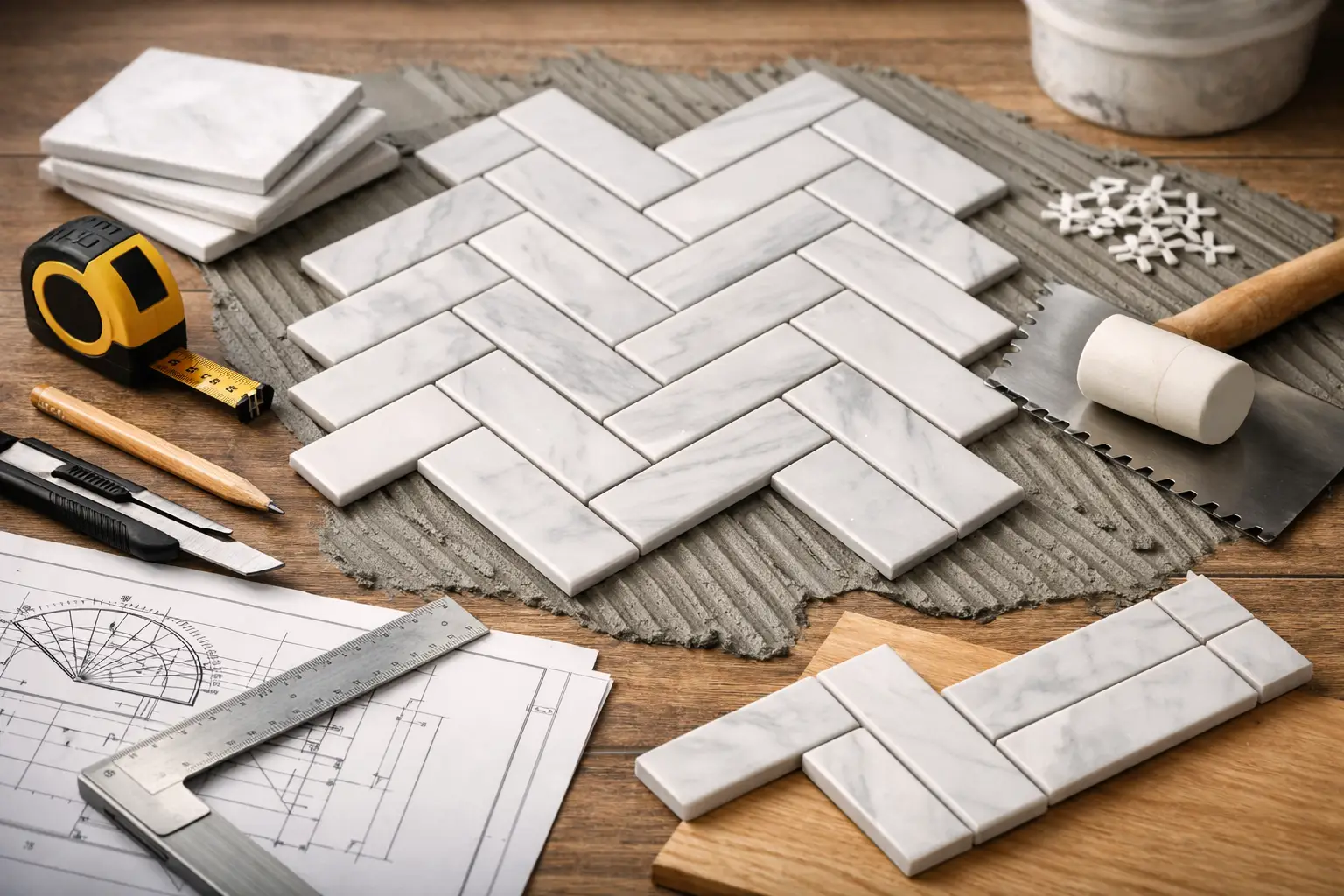
Herringbone Tile Installation Planning Guide
A herringbone layout can make an ordinary surface feel architecturally considered, but it is rarely forgiving. The pattern draws the eye to every line, every cut and every transition, which is exactly why a proper herringbone tile installation planning guide matters before the first tile is set. If the planning is right, the result looks sharp, balanced and expensive. If it is rushed, even premium tile can read as uneven.
For homeowners, designers, builders and project managers, the real question is not whether herringbone looks impressive. It does. The question is whether the space, tile format and programme can support the level of precision the pattern demands. That answer depends on more than taste.
Why herringbone demands more planning
Straight lay and stack bond patterns allow a little visual quiet. Herringbone does the opposite. It creates movement, rhythm and a very obvious directional flow, so small inconsistencies become much easier to spot. A floor that is a few millimetres out of square, a wall with a slight bow, or a drain set without regard to the pattern can all interrupt the finish.
This is why planning starts well before tile selection is finalised. The pattern needs to be considered alongside substrate condition, room geometry, thresholds, fixtures and the intended focal point. In a compact bathroom, for example, the pattern may need to lead the eye towards a feature wall or vanity. In a commercial fit-out, it may need to sit cleanly against glazing lines, joinery and high footfall transitions.
Herringbone also brings a labour and time premium. There are more cuts, more dry layout checks and less room for improvisation on site. That does not make it the wrong choice. It simply means the installation should be treated as a precision exercise rather than a decorative afterthought.
Start the herringbone tile installation planning guide with the room
Every successful herringbone installation begins with the shape and purpose of the space. A long galley kitchen, a square ensuite, an alfresco entertaining area and a retail entry all ask different things of the same pattern.
The first decision is orientation. Running the pattern lengthwise can visually extend a room. Setting it on a diagonal can create a more dramatic effect, but it also increases cut complexity at the perimeter. On walls, the choice becomes even more design-sensitive. A full-height splashback may benefit from a centred, symmetrical layout, while a shower wall may need the pattern to resolve neatly around niches, tapware and frameless screens.
Scale matters just as much. In a smaller room, oversized herringbone tiles can feel heavy if there is not enough uninterrupted surface to let the pattern read properly. In larger open areas, very small tiles can look busy and create excessive grout lines. There is no universal best size. The right format depends on the room dimensions, natural light, viewing angles and how refined or bold the design brief needs to feel.
Tile choice affects the finish more than most people expect
Not every rectangular tile is suitable for herringbone. Dimensional consistency is critical. If tile lengths and widths vary too much from piece to piece, the pattern can begin to drift, and maintaining even joints becomes harder. That is especially noticeable with rectified porcelain and other premium finishes where the expectation is crisp alignment.
Surface finish also influences planning. Matt porcelain often gives a calm, contemporary result and handles wear well in busy residential and commercial settings. Natural stone can be exceptional, but it usually demands more care in sealing, setting and finishing. Gloss tiles can lift a wall beautifully, although light reflection may accentuate any unevenness in the substrate.
Then there is grout. In herringbone, grout does not disappear. It becomes part of the graphic effect. A close colour match produces a more continuous look, while contrast highlights every angle in the pattern. Neither is wrong, but the choice should be deliberate and tested against the tile in the actual lighting conditions where possible.
Set-out is where quality is won or lost
The most important stage in any herringbone tile installation planning guide is the set-out. A strong set-out controls how the pattern starts, where it finishes and how balanced the cuts feel at edges and junctions.
Centred layouts are often the right answer, but not always. In some rooms, it is more important to land the pattern cleanly at a doorway, bath edge or island bench than to centre it in the middle of the floor. In others, especially feature walls, central symmetry is exactly what gives the installation its polished look.
This is where dry laying and detailed measurement earn their value. Before adhesive is mixed, the installer should understand how the pattern will resolve at all visible boundaries. That includes corners, trims, thresholds, drains, niches and any changes in level. Tiny slivers at the perimeter rarely look premium. A slightly adjusted starting point that creates stronger edge cuts usually delivers a far better visual result.
Sequencing matters too. On larger projects, particularly multi-unit or staged commercial works, consistency across spaces is part of the brief. If one bathroom starts from centre and another starts off a fixture line without a clear reason, the finished standard can feel inconsistent even if each room is technically sound.
Preparation is not optional
A refined pattern cannot hide a poor substrate. In fact, it tends to expose it.
Floors need to be level enough to support the pattern without lippage or wandering joints. Walls need to be plumb and true, particularly where polished or rectified tiles are specified. If demolition, re-levelling or screeding is needed, that should be addressed early, not squeezed in once the programme is already tight.
Wet areas bring another layer of discipline. Waterproofing has to be complete and compliant before setting out begins, and falls need to work with the tile format and pattern direction. This is one of the more common tension points in bathroom design. A client may want a continuous herringbone floor running into a shower, but the drain location, tile size and required falls may make another approach more practical. Good planning does not ignore the design intent. It protects it by resolving these issues before they become visible compromises.
Allow for waste, time and site realities
Herringbone generally requires more material allowance than simpler layouts because of the number of cuts involved. Ordering too tightly can create delays, dye lot mismatches or awkward substitutions. Ordering too generously can inflate the budget unnecessarily. The right allowance depends on tile size, room complexity and whether the installation includes external corners, niches or multiple small returns.
Programme planning also needs realism. Herringbone takes longer to mark out and lay, and the finishing standard depends on not forcing speed where accuracy is needed. In high-end residential work, that may influence access sequencing with cabinetmakers, painters or stone installers. In commercial and development projects, it can affect handover timing if tiling sits on the critical path.
A reliable installer will flag these realities early. That is not caution for its own sake. It is how quality is protected on site.
Herringbone tile installation planning guide for walls vs floors
Walls and floors share the same pattern language, but the planning priorities are different. On walls, the eye usually reads symmetry first. People notice how the pattern aligns with basins, mirrors, niches and tapware. On floors, people notice flow, perimeter cuts and whether the pattern feels anchored within the room.
Wall installations often benefit from a strong visual datum line and careful planning around feature elements. Floor installations demand equal attention to doorways, movement joints and level transitions. Exterior herringbone adds another consideration again, because slip resistance, drainage performance and weather exposure all influence tile and grout selection.
This is why the best results come from treating each application on its own merits rather than assuming one herringbone detail can simply be repeated everywhere.
When herringbone is the right choice
Herringbone suits projects where the tile finish is meant to do more than cover a surface. It works especially well in bathrooms, kitchens, entries, hospitality spaces and feature walls where movement and detail are part of the design language. It can elevate a modest room and give a large room more structure.
That said, it is not always the smartest specification. If the substrate is poor, the budget is tight and the programme leaves no room for careful set-out, a simpler pattern may produce a cleaner overall outcome. Precision is what makes herringbone impressive. Without that, the pattern can feel busy rather than refined.
For clients who care about finish quality, the planning stage is where confidence should be built. The best installations do not happen by chance. They come from measured decisions about layout, materials, preparation and sequencing, backed by workmanship that respects the detail.
If you are considering herringbone, treat the pattern as part of the construction strategy as much as the design concept. That is usually the difference between a tiled surface that looks fashionable for a moment and one that feels beautifully resolved for years.