Can You Tile Over Existing Tiles?
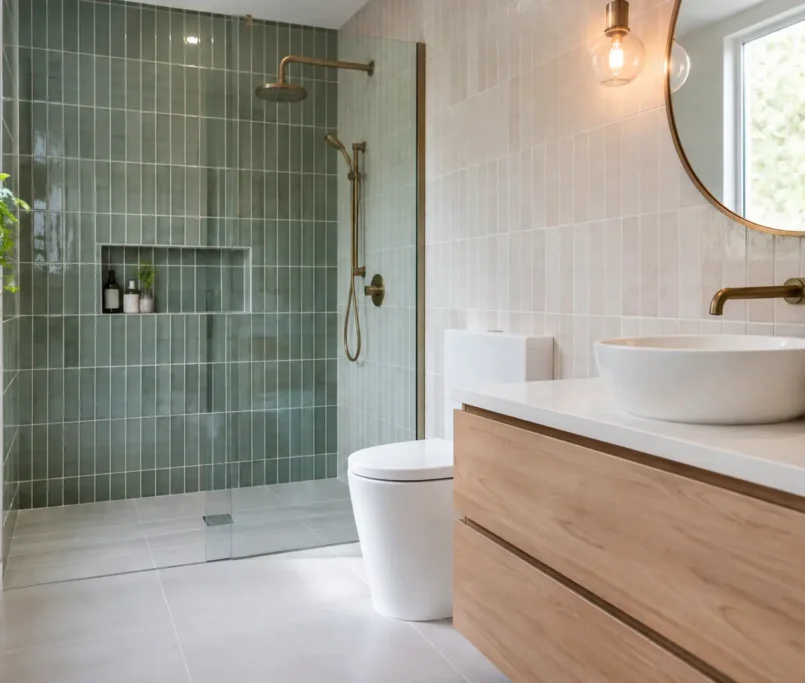
A bathroom that looks tired but still feels structurally sound creates a very specific renovation question: can you tile over existing tiles, or are you simply hiding a problem that should be stripped back properly?
The honest answer is yes, you can tile over existing tiles in some situations. But this is not a shortcut to be taken lightly. The success of the finished surface depends almost entirely on what sits underneath – how well the original tiles were laid, whether the substrate is stable, and whether moisture, movement or poor levels are already present. When the existing surface is sound, over-tiling can save time, reduce demolition mess and preserve parts of the structure. When it is not, it often leads to hollow spots, cracking, drainage issues and a finish that never quite feels right.
At the premium end of tiling, the question is rarely just whether something can be done. It is whether it should be done if the goal is a refined, durable finish.
Can you tile over existing tiles in every room?
Not every room presents the same level of risk. A dry internal wall with firmly bonded ceramic tiles is very different from a shower floor, an outdoor patio or a commercial wet area under heavy use.
In kitchens, laundries and some feature walls, over-tiling can be a practical option if the original tiles are secure and the added build-up will not create awkward edges around benchtops, skirtings, power points or cabinetry. In living areas, it may also work well where floor levels can tolerate the extra height and doors can still clear the finished surface.
Bathrooms are where more discipline is needed. If water has already compromised the substrate, or if the original waterproofing is unknown, laying new tiles on top may produce a crisp look for a while without solving the real issue. Shower floors are especially sensitive because falls to waste, drainage performance and waterproof integrity matter far more than saving a day or two on demolition.
Externally, the bar is higher again. Outdoor tiling deals with weather exposure, movement, expansion and drainage. Over-tiling outside can be possible, but only where the base is stable, the falls are correct and the system is designed for that environment. Otherwise, the finish may fail long before it should.
When tiling over tiles makes sense
Over-tiling works best when the existing installation is fundamentally excellent, even if it looks dated. That means the original tiles are firmly bonded, there are no drummy or loose sections, no visible movement cracks, and the substrate beneath has not been affected by moisture.
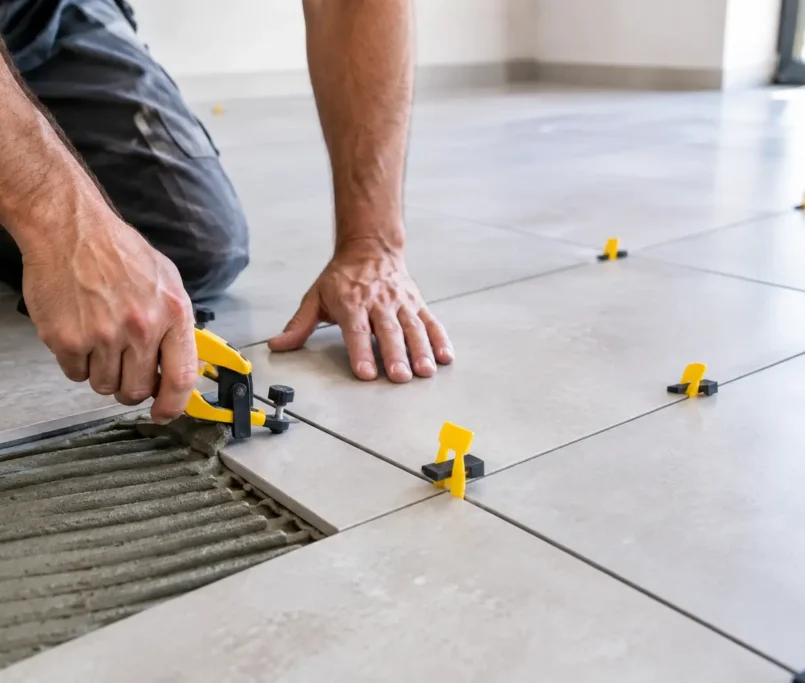
The surface also needs to be reasonably flat. A new tiled finish only looks as precise as the base allows. If the old floor has lipping, uneven transitions or poor falls, every one of those imperfections tends to telegraph through unless the surface is corrected first. For clients who care about symmetry, crisp lines and a high-end result, this matters a great deal.
There is also the practical value. Avoiding demolition can reduce dust, noise and disposal costs. In occupied homes or trading commercial sites, that can help keep disruption under control. For larger multi-unit work, where programme pressure is real, it may also support a tighter construction sequence – but only if quality is not being traded away for speed.
When you should not tile over existing tiles
If the old tiling is failing, over-tiling is simply dressing over a defect. Any sign of debonding, cracked grout from movement, water damage, mould behind joints or softness in the substrate is a warning that removal is the safer path.
Height is another common reason to avoid it. Adding a new tile system changes thresholds, doorway clearances, floor transitions and fixture set-outs. A few extra millimetres may not sound significant, but on a detailed renovation they can create visible compromises around shower screens, toilets, vanities and joinery.
There is also a design consideration. Premium spaces rely on proportion and finishing detail. If over-tiling leaves bulky edges, awkward step-ups or trims that look like an afterthought, the room loses some of its polish. The installation may be technically sound yet still fall short aesthetically.
Then there is waterproofing. In wet areas, especially showers, the inability to properly inspect or renew the system underneath can be a decisive issue. If confidence in the existing waterproofing is low, starting from the substrate is often the more responsible choice.
What proper preparation looks like
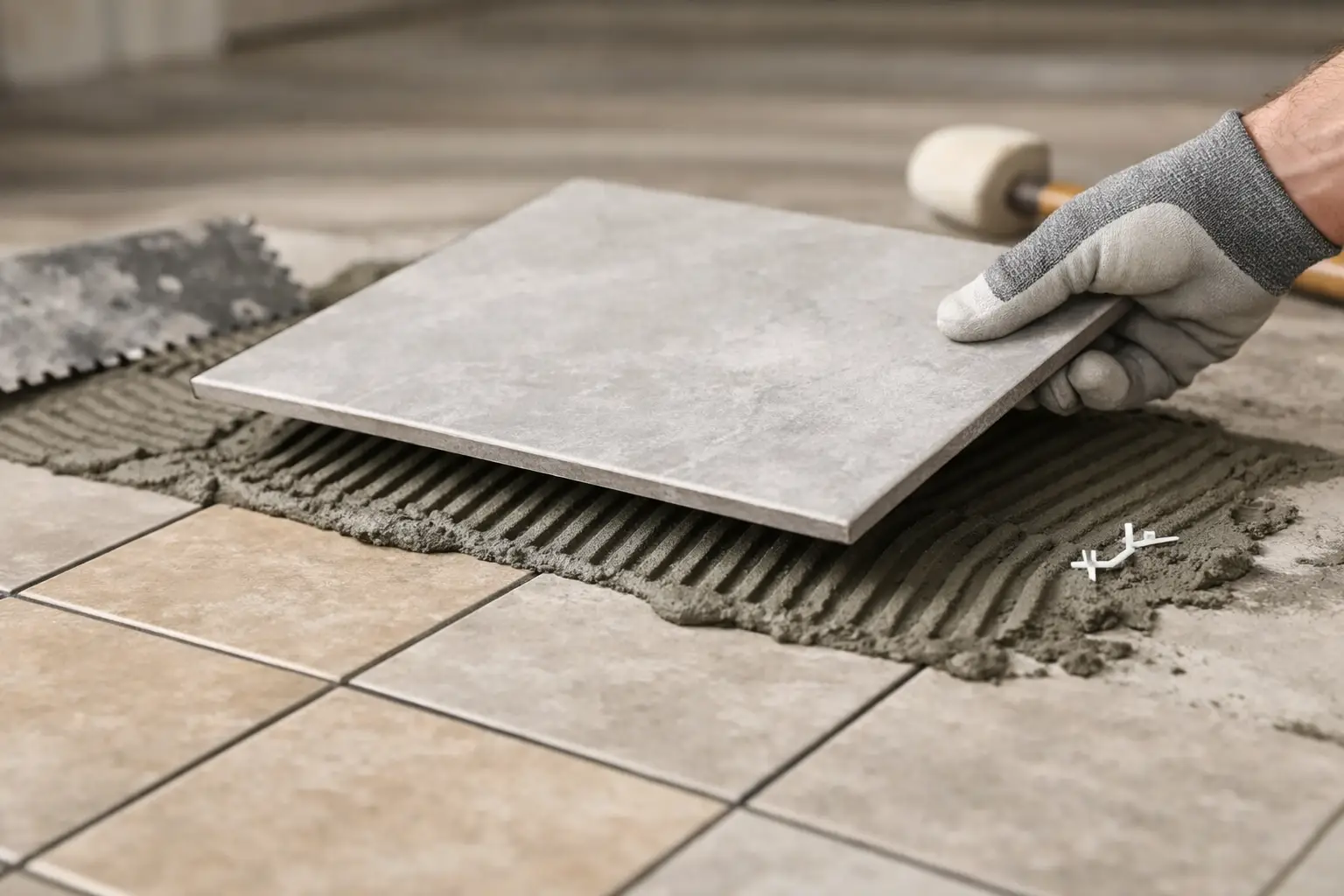
The difference between over-tiling that lasts and over-tiling that fails usually comes down to preparation. Existing tiles are non-porous, glossy and often contaminated with soap residue, grease, silicone or cleaning products. Adhesive will not perform properly unless that surface is prepared with care.
First, the existing installation needs to be assessed. Sounding for hollow tiles, checking levels, reviewing movement joints and looking for cracks or moisture concerns are all part of that process. Any loose or damaged sections must be addressed before new work begins.
The surface then needs thorough cleaning and mechanical or chemical preparation appropriate to the tile type and system being used. In many cases, this includes abrasion and the application of a specialist primer designed to promote adhesion to dense, low-absorption surfaces.
Only after that should levelling or patching be considered. If a floor is uneven or walls are out, the installer may need to use suitable compounds to create a true plane before laying begins. Skipping this step is one of the quickest ways to end up with a finish that looks acceptable from a distance and disappointing at close range.
Floors, walls and wet areas need different judgement
Wall over wall tiling is often the most straightforward scenario, particularly outside direct wet zones. Gravity places less demand on the substrate than foot traffic does, and drainage falls are not part of the equation. Even so, weight loading and bond integrity still matter.
Floor over floor tiling requires more caution. Existing floors must be stable enough to take the added load, and the extra height must work with adjoining finishes. More importantly, the floor must remain level where it should be level, and sloped where it should be sloped.
Wet areas require the strictest judgement of all. Showers need correct falls, reliable drainage and confidence in the waterproofing strategy. If the existing shower has ponding, poor runoff or any suspicion of membrane failure, over-tiling is usually the wrong move. A beautiful tile finish cannot compensate for water escaping where it should not.
The hidden cost of choosing the easy option
There is a reason experienced tilers do not give blanket yes answers to this question. Over-tiling can save money upfront, but if the old system is questionable, the repair cost later can be far greater than doing the work properly at the start.
That does not mean removal is always the premium option. Sometimes preserving a sound tiled base is entirely sensible. The real value comes from correct diagnosis. A workmanship-led contractor will assess whether over-tiling protects the final outcome or compromises it. That distinction matters more than the appeal of a faster quote.
For homeowners, that means asking not just about price, but about falls, substrate condition, waterproofing and finishing details. For builders and project managers, it means understanding whether the proposed method supports programme efficiency without introducing latent defects across multiple units.
A polished result is not accidental. It is built on disciplined preparation, technical judgement and a willingness to say no when the base is not good enough.
So, can you tile over existing tiles?
Yes – if the existing tiles are sound, the surface is properly prepared, moisture risk is understood, and the added height will not compromise the room. No – if there is movement, poor adhesion, damaged substrate, suspect waterproofing or levels that cannot deliver a clean finish.
That is why this decision should never be made by appearance alone. Old tiles can look acceptable while hiding failures beneath, and they can look dated while remaining an excellent base for a new installation. The difference only becomes clear through careful inspection and precise planning.
At Perfectly Laid, that is where the craft begins: not with the tile itself, but with protecting the result before the first piece is set. If you are weighing up over-tiling versus full removal, the right choice is the one that gives the space lasting integrity, not just a quicker facelift.