How Long Does Tile Adhesive Cure Before Grouting?
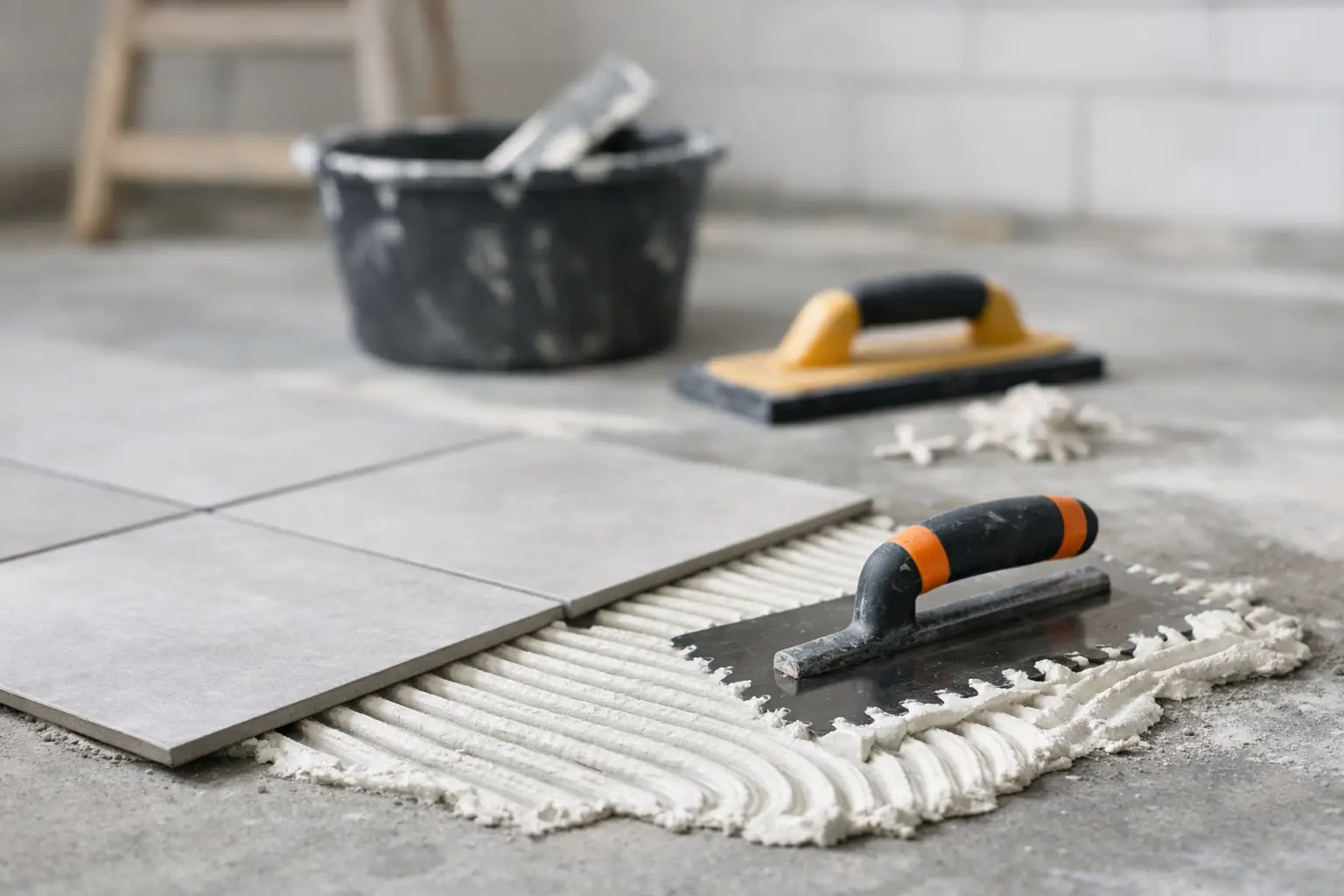
A newly tiled room can look finished within hours, but the work beneath the surface is still developing strength. So, how long does tile adhesive cure? For most cement-based adhesives, allow at least 24 hours before grouting and light foot traffic, then around 7 to 14 days before the tiled area is exposed to heavy use. The precise answer, however, depends on the adhesive, tile, substrate and conditions on site.
Rushing this stage can compromise an otherwise exceptional installation. Tiles may shift while being grouted, adhesive can remain soft beneath dense porcelain, and movement can later show up as cracked grout, hollow spots or failed tiles. A considered curing period protects the crisp lines, level finish and long-term performance that premium tiling demands.
How Long Does Tile Adhesive Cure in Typical Conditions?
A standard cementitious tile adhesive generally needs 24 hours to set sufficiently for grouting. On a floor, that same 24-hour period is often the minimum before cautious foot traffic. This is a working benchmark, not a universal rule. The technical data sheet for the specified adhesive always takes priority.
Full cure takes longer. While a tiled surface can often be used carefully after grouting, the adhesive below continues to harden as moisture leaves the bed. In a dry, well-ventilated space with a properly prepared substrate, this commonly takes between 7 and 14 days.
Rapid-setting adhesive changes the programme considerably. Depending on the product and ambient temperature, it may be ready for grouting in as little as 2 to 4 hours and accept foot traffic shortly afterwards. This can be valuable on commercial fit-outs, bathroom renovations and tightly programmed developments, but speed is only useful when the adhesive is mixed, applied and installed with complete control.
Ready-mixed adhesives often require more patience, particularly behind large-format or low-porosity tiles. Because these products dry rather than cure through a cement hydration process, moisture has fewer routes to escape. A 24-hour wait may be insufficient, with 48 to 72 hours – or longer – needed before grouting in some wall applications.
The difference between setting and full cure
These terms are often used interchangeably, but they describe different stages. Setting means the adhesive has firmed enough that tiles are less likely to move under careful handling. It does not mean the adhesive has reached its designed strength.
Full cure is the point at which the adhesive has developed the strength expected for the installation. That matters most for tiled floors, wet areas, external spaces and walls carrying heavy stone or large porcelain slabs. Grouting too early risks disturbing the tiles; loading the surface too early can stress an adhesive bed that is still maturing.
What Changes Tile Adhesive Curing Time?
The label may state a curing time, but site conditions determine whether that timing is realistic. Professional installation is not simply about selecting an adhesive with the right stated performance. It is about creating the conditions in which that performance can be achieved.
Tile size, material and thickness
Large-format porcelain, natural stone and thick tiles slow the process because they allow very little moisture to pass through. A small ceramic wall tile is more forgiving; a 600 x 1200 mm porcelain floor tile requires a much more disciplined approach.
Large tiles also typically need a deeper, more consistent adhesive bed. That means more material has to cure beneath an impermeable surface. Correct trowel selection, directional trowelling and, where required, back-buttering are essential for coverage and for avoiding air pockets that can interfere with support and drying.
The substrate beneath the tile
A dry, stable, absorbent screed can support predictable adhesive performance. A newly laid screed, damp concrete slab, freshly waterproofed area or uneven floor requires closer assessment. Moisture moving from below, or a surface that has not fully stabilised, can extend curing times and create wider risks for the finish.
Surface preparation is therefore not a background task. It is the foundation of the tiled assembly. Re-levelling, screeding and waterproofing must be completed to the correct standard and allowed their own curing time before tile installation begins.
Temperature, humidity and ventilation
Adhesive cures best within the temperature range specified by its manufacturer. Cold rooms slow cement hydration, while excessive heat can cause adhesive to skin over before tiles are properly bedded. High humidity and poor air movement delay moisture loss, particularly with ready-mixed products.
In practical terms, avoid forcing the programme with aggressive heaters, fans aimed directly at fresh tilework or underfloor heating switched on too soon. Gentle, consistent ventilation is preferable. If a bathroom has no natural airflow, its curing allowance may need to be extended.
Adhesive type and application depth
Cement-based, flexible, rapid-set and ready-mixed adhesives do not follow one timetable. Nor do thin and thick adhesive beds. A floor installed over a minor level correction may have substantially more adhesive beneath it than a straightforward wall installation, so a generic 24-hour rule can be misleading.
The adhesive must also be mixed to the stated water ratio and used within its working time. Adding extra water to improve workability or remixing material after it has begun to stiffen affects performance. Precision at this stage protects the finish long after the installer has left site.
When Can You Grout, Walk On and Use Tiled Surfaces?
For a standard interior installation, grouting after 24 hours is commonly appropriate. Where the room is cool, the tiles are dense porcelain, or the adhesive bed is deeper than usual, allow longer. The aim is not simply to prevent visible tile movement. It is to avoid introducing pressure and moisture into a system that has not yet stabilised.
Light foot traffic on a tiled floor is usually possible after 24 hours with standard-set adhesive, provided it is limited and careful. Avoid ladders, appliance deliveries, heavy furniture, wheeled loads and concentrated point loads until the adhesive has had more time to gain strength.
A useful programme guide is:
- Standard-set cement adhesive: grout and light foot traffic after approximately 24 hours.
- Rapid-set adhesive: grout and traffic may be possible after 2 to 4 hours, subject to the product specification.
- Ready-mixed wall adhesive: allow 24 to 72 hours or longer, especially behind porcelain or large tiles.
- Full service, heavy furniture and wet-area use: allow roughly 7 to 14 days unless the adhesive system states otherwise.
Wet areas deserve additional care. Even after the tiles are grouted, silicone or other flexible sealants around baths, showers, basins and movement joints need their own curing period. Do not assume that a bathroom is ready for showering simply because the grout has dried in colour. Follow the curing instructions for every product in the system.
Signs the Adhesive May Need More Time
A sound installation should not be tested by lifting tiles or striking them heavily. Instead, assess the conditions and the programme. If the room has been cold, humid or closed up, if tiles are unusually large, or if a slow-drying adhesive was used, more time is sensible.
Tiles that visibly move, grout joints that compress under light pressure, or adhesive appearing soft at exposed edges are clear reasons to stop and reassess. In a high-end project, this is not a minor delay. It is quality control. Correcting rushed tilework is far more disruptive than protecting an extra day in the programme.
Why a Professional Curing Plan Protects the Finish
Curing is often treated as dead time, yet it is one of the most valuable parts of a tiling schedule. It is where careful substrate preparation, compatible materials and precise installation are allowed to perform as designed.
At Perfectly Laid, the focus is not simply on placing tiles quickly. Each stage, from levelling and waterproofing through to adhesive selection, grouting and caulking, is considered as part of one finished surface. That is especially relevant in bathrooms, alfresco areas, commercial settings and multi-unit developments, where repeated workmanship standards and dependable sequencing matter.
If the room must be handed back quickly, plan for that requirement before tile installation starts. A suitable rapid-setting system may be the right choice, but only when matched to the substrate, tile format and environmental conditions. The finest tiled finish is never just about the day it is installed. It is about giving every layer the time and care to become permanent.