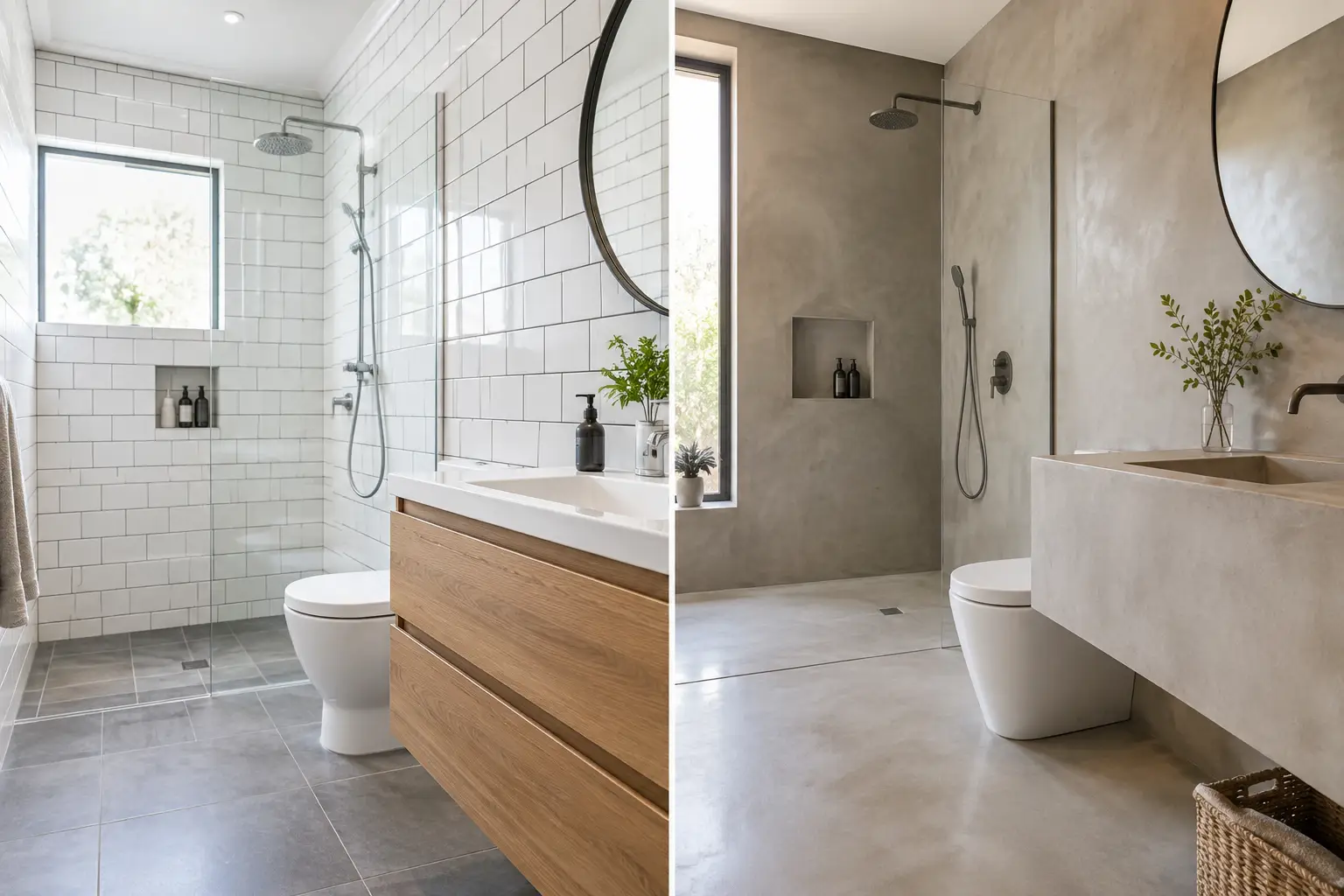
Bathroom Tiling vs Microcement Walls: Which Lasts?
A bathroom wall can look exceptional in a showroom and still disappoint once daily showers, steam, cleaning products and changing temperatures take hold. In the decision between bathroom tiling vs microcement walls, the best choice is rarely about appearance alone. It comes down to the condition of the substrate, the shower design, the level of maintenance you will accept and the standard of installation behind the finished surface.
Both materials can create a high-end bathroom. Tiles offer detail, depth and proven longevity. Microcement delivers a calm, continuous finish with very few visual interruptions. The right answer depends on how you want the room to look, feel and perform for years after handover.
The visual difference is immediate
Tiling gives a bathroom structure. Whether the specification calls for large-format porcelain, handmade-look ceramic, natural stone or a detailed mosaic, grout lines create rhythm and allow colour, pattern and texture to become part of the design. A well-set tile layout can make a compact ensuite feel taller, wider or more considered, particularly when tile cuts, niches and fixtures are all aligned with precision.
Microcement creates the opposite effect. It is a thin, hand-applied decorative coating with a lightly textured, monolithic appearance. With no conventional tile grid, walls can appear softer and more architectural. It suits minimalist schemes, wet rooms and bathrooms where a continuous surface is the central design intention.
That visual simplicity is also its limitation. Microcement is not a completely uniform factory finish. Movement in the trowel, tonal variation and subtle mottling are part of its character. Clients expecting a perfectly flat, single-colour wall may find the finish more expressive than anticipated. Tiles, on the other hand, offer a more predictable result because the selected sample is broadly representative of the installed surface.
Bathroom tiling vs microcement walls: performance in wet areas
A bathroom is only as reliable as the system beneath its finish. Neither tile nor microcement should be treated as a substitute for proper waterproofing.
In a tiled shower, the wall is prepared, falls and junctions are addressed where required, and a compliant waterproofing membrane is applied before tiling begins. The tile and grout form the visible, cleanable surface, while the membrane protects the building fabric behind it. Silicone or equivalent flexible sealant at changes of plane, around penetrations and at key junctions is not a cosmetic afterthought. It accommodates movement where rigid grout cannot.
Microcement requires the same disciplined approach. It is applied in multiple layers over a carefully prepared base, then sealed to resist moisture and staining. The coating itself is thin, so substrate movement, poor preparation or an unsuitable existing surface can show through as cracks or imperfections. In a shower enclosure, the waterproofing below it and the compatibility of the complete microcement system are critical.
For either option, a beautiful surface installed over an unstable wall, inadequate membrane or poorly formed shower base is not premium work. It is a future repair waiting to happen. This is why preparation, waterproofing and finishing need to be managed as one coordinated scope rather than disconnected trades.
Where tiles have the practical advantage
Porcelain tiles are exceptionally hard-wearing, water-resistant and well suited to busy family bathrooms, rental properties and commercial amenities. If a tile is damaged, it can usually be replaced locally, provided spare tiles have been retained. Grout may require periodic cleaning, sealing or renewal depending on the product specified, but the overall assembly has a long, established service history.
Tiles also give greater control over slip resistance when the same finish continues from wall to floor. This matters in accessible bathrooms, wet rooms and projects where safety requirements need to sit comfortably alongside a refined aesthetic.
Where microcement can be the better fit
Microcement comes into its own when visual continuity matters most. It can run across walls, floors, shower areas, vanity surrounds and built-in benches, helping a bathroom read as one composed space. Its low build-up can also be useful in some renovation settings, where removing every existing finish may not be necessary, subject to a thorough substrate assessment.
There are no grout lines to interrupt the surface or collect soap residue. For homeowners who dislike the maintenance of grout, that is a genuine advantage. However, the sealed surface still needs appropriate care. Abrasive products, harsh chemicals and neglect can dull the protective finish over time. Depending on the system and use, resealing may eventually be required.
Durability is not simply about the material
It is tempting to describe tiles as durable and microcement as delicate. The reality is more precise. A high-quality microcement system applied by an experienced specialist can perform very well. A poorly tiled bathroom can fail just as quickly through inadequate adhesive coverage, cracked grout, hollow tiles, weak waterproofing or careless detailing around fixtures.
The difference is in how each surface responds to damage and movement. A porcelain tile is hard but can chip if struck sharply. Microcement is more continuous, but a crack in the substrate may telegraph through the coating. Tile grout can discolour, yet it can generally be cleaned, repaired or renewed in targeted sections. A damaged microcement wall may need a skilled repair and blending process, particularly where colour variation is part of the finish.
For high-use bathrooms, durability should be assessed against the people using the room. A calm, low-traffic principal ensuite may suit microcement beautifully. A family bathroom with children, hard water, frequent cleaning and constant use may favour porcelain tiles for their resilience and straightforward repairability.
Maintenance: grout lines versus protective sealers
Tiled walls need regular cleaning, with particular attention to grout joints and silicone. A pH-neutral cleaner and a soft brush are usually enough for routine upkeep. Avoid aggressive acids and harsh scouring products, especially on natural stone or coloured grout. Good ventilation also matters, as it reduces persistent condensation and helps limit mould growth at joints.
Microcement should be cleaned gently with products approved for the specific sealer. The goal is to protect the surface rather than scrub it back. Soap, shampoo and limescale should not be allowed to build up, particularly in shower zones. While the absence of grout is appealing, it does not mean the bathroom is maintenance-free.
If low-maintenance means a surface that can tolerate a broad range of cleaning habits, porcelain tiling is usually the more forgiving choice. If low-maintenance means fewer joints and a simpler visual field, microcement may be more appealing, provided its care requirements are respected.
Cost and programme considerations
Costs vary significantly according to tile selection, wall condition, access, waterproofing requirements and the complexity of the design. Large-format tiles may have fewer grout joints, but they demand flatter walls, careful handling, precise levelling and disciplined cuts around niches and fittings. Feature layouts, mitred edges and natural stone increase labour as well as material cost.
Microcement pricing should account for the complete system, not only the final coat. Surface repair, priming, reinforcement, layered application, curing periods and sealing all form part of the work. It is not a quick shortcut simply because the finished surface looks minimal.
Programme is equally important. Tiling can progress efficiently once preparation and waterproofing are complete, although curing times still need to be respected. Microcement is applied in stages, and each layer needs suitable drying conditions. On a tightly managed renovation or multi-unit development, the sequence of trades should be planned early so a design decision does not create avoidable delays later.
How to choose with confidence
Choose tiling if you want broad design choice, proven performance, straightforward local repairs and a surface that can withstand demanding daily use. It is particularly strong for family bathrooms, detailed feature walls and projects where exact material consistency matters.
Choose microcement if you are drawn to a restrained, continuous finish and are comfortable with a hand-crafted surface that will show subtle variation. It can be an exquisite choice for design-led ensuites and wet rooms, but only when the substrate, waterproofing and coating system are specified and installed with care.
The strongest bathrooms are not defined by a trend or a material sample alone. They are shaped by the unseen work: sound substrate preparation, correct waterproofing, precise set-out and finishing details that remain crisp long after the room is first revealed. Before committing, ask to see physical samples in your bathroom lighting, discuss maintenance honestly, and make the surface choice part of a properly considered installation plan.