Bathroom Trends That Put Craft Before Fads
A beautiful bathroom rarely announces itself through one dramatic feature. It is felt in the calm alignment of the tiles, the way light moves across a textured wall, and the confidence of a shower floor that drains exactly as it should. The most compelling bathroom trends are therefore less about chasing a look and more about creating spaces with material depth, practical longevity and precise finishing.
For homeowners, designers and project teams, that distinction matters. A bathroom may be compact, but it asks more of its surfaces than almost any other room: daily moisture, cleaning, temperature changes and close-up scrutiny. The design must be expressive, while the installation beneath it must be exact.
Bathroom trends are becoming more considered
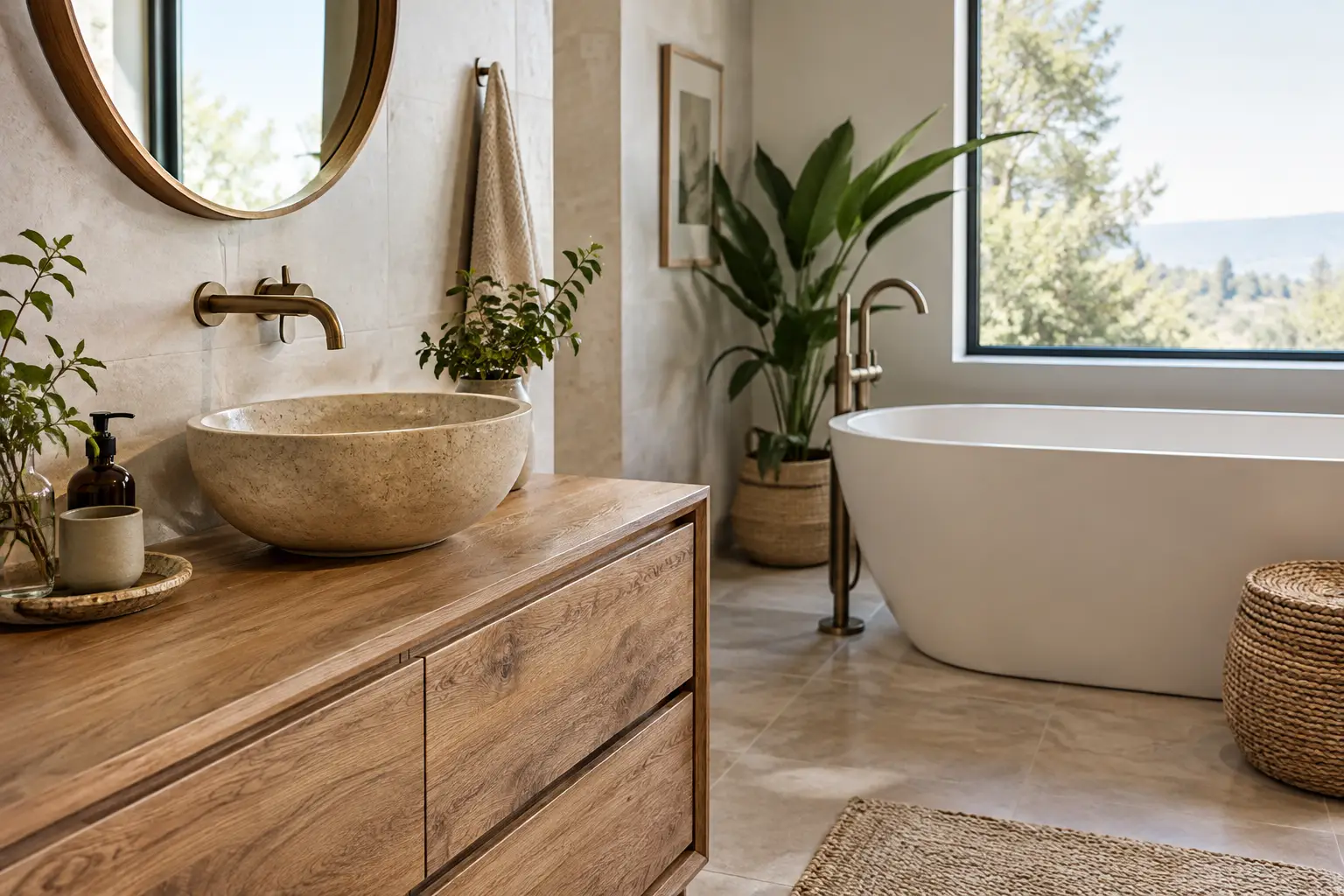
The move away from cold, overly styled bathrooms is clear. Current schemes favour warmth, texture and an atmosphere that feels collected rather than clinical. Soft stone colours, timber-look elements, aged-metal tapware and tactile tiles are replacing the all-white, high-gloss formula.
This does not mean every bathroom needs to be beige or heavily rustic. Deep greens, mineral blues, oxblood and earthy terracottas are being used with greater confidence, particularly in powder rooms and feature shower areas. The best result comes from restraint: let one finish carry the visual weight, then support it with quieter materials and considered lighting.
There is also a growing preference for rooms that will still feel relevant years from now. A strong tile selection should not rely solely on what is popular this season. Natural-looking porcelain, subtle handmade variation and timeless stone-inspired finishes offer character without tying a renovation to a short-lived trend.
Warm neutrals with real depth
Warm neutrals remain central, but they are more nuanced than flat grey or plain cream. Think mushroom, sand, putty, tobacco, chalk and soft clay. These colours work particularly well across floors and full-height walls because they make the room feel settled and generous.
The key is to assess samples in the actual space. A tile that reads as warm in a showroom can appear pink, yellow or cool under a bathroom’s lighting. Natural light, artificial lighting, surrounding joinery and grout colour all influence the final result. Selecting finishes under realistic conditions protects the design from expensive surprises.
Texture over visual noise
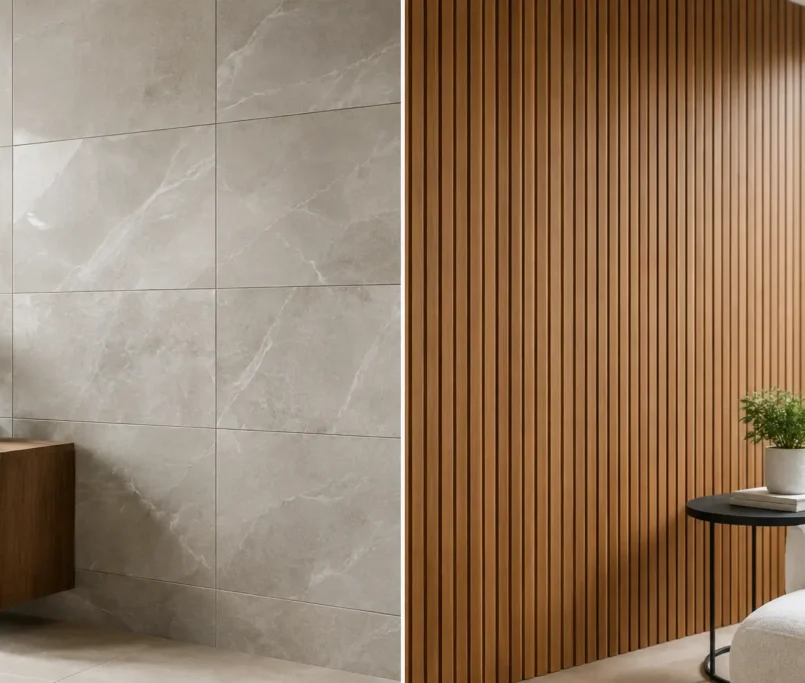
Texture is increasingly doing the work that busy patterns once did. Fluted surfaces, lightly rippled ceramics, finger tiles, honed stone looks and matt glazes introduce movement without overwhelming a room. They are especially effective behind a vanity, within a shower niche or on a single wall where changing light can reveal their detail.
Textured tiles do have a trade-off. Deep grooves and highly irregular profiles can demand more careful cleaning, while some handmade finishes have variation that needs thoughtful layout before fixing. They are excellent materials when specified in the right location and installed with the expectation that their character is intentional, not a defect.
Large-format tiles, properly planned
Large-format porcelain continues to define premium bathroom design. Fewer grout joints can make a smaller room feel broader and more composed, while stone-look slabs create a confident, architectural finish across walls and floors. Veining can be bookmatched or deliberately continued from one surface to another for a more tailored effect.
However, larger tiles are not automatically the right answer. Their success depends on a flat, sound substrate, accurate set-out and careful handling. A wall that is out of plane, or a floor with uneven levels, will show through far more readily with a large format. Correct preparation may involve removal, re-levelling, screeding or wall rectification before tiling begins.
In shower areas, format must also work with falls. A large tile can suit a linear drain where the floor falls in one direction. For a centre waste requiring falls from multiple sides, smaller formats or purpose-cut sections may provide a cleaner, safer result. The design should respond to drainage, not force drainage to accommodate a tile choice.
Grout is part of the design
Grout is no longer an afterthought. Tonal grout creates a quiet, expansive surface, while a contrasting grout can bring rhythm to a small-format layout. Neither approach is inherently better. It depends on whether the objective is calm continuity or a more graphic composition.
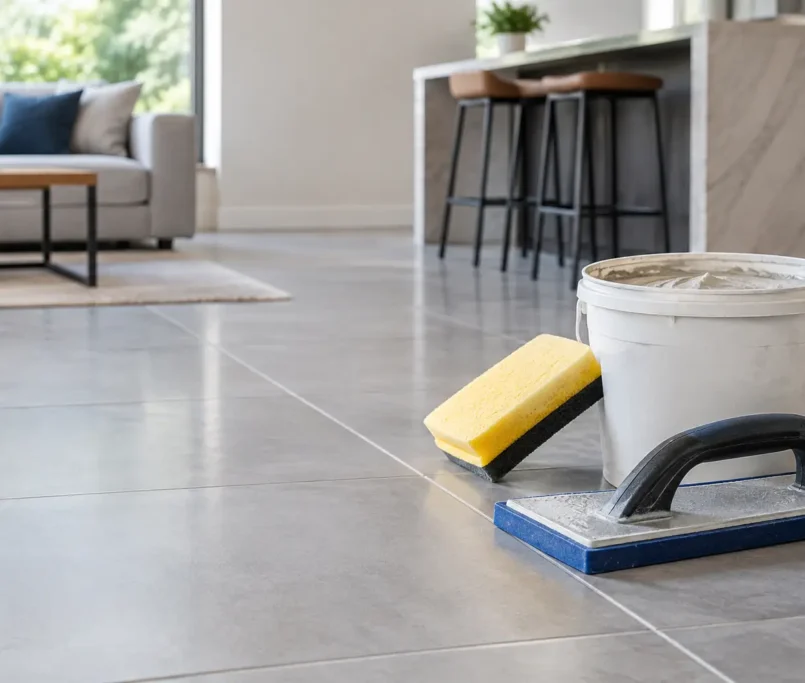
For most high-end bathrooms, a grout colour close to the tile provides a refined foundation and lets the material lead. Joint size must still be appropriate for the product and its variation. Trying to minimise every joint at the expense of coverage, alignment or movement allowance is false economy. Precision means respecting the technical requirements as well as the visual brief.
Curves, niches and details worth looking at
Bathrooms are becoming more architectural. Curved shower screens, arched recesses, rounded vanities and soft-edged mirrors bring relief to rooms dominated by straight lines. Tiling can reinforce those gestures through radius cuts, mosaics, smaller formats or carefully selected feature pieces.
A tiled niche remains one of the most useful details in a shower, but it needs more than a neat outline. Its position should suit the user, its dimensions should coordinate with the tile set-out, and it needs adequate fall so water does not sit on the base. Mitred edges, trim profiles and matching returns all produce different visual outcomes. The right detail is the one that complements the tile and can be executed reliably.
Likewise, finishes around tapware, windows, ledges and floor wastes reveal the quality of the entire room. These are the areas where rushed work becomes visible. Clean cuts, consistent joints, correctly formed falls and neat flexible sealant joints turn a good scheme into an exquisite one.
Spa-inspired bathrooms need performance behind the surface
The desire for a private retreat is shaping bathroom layouts. Walk-in showers, freestanding baths, generous benches and low-glare lighting are creating a more restorative experience at home. In commercial and multi-residential projects, the same principle appears through durable, calm material palettes that make frequent-use spaces feel considered.
Yet a spa-like bathroom cannot be built on aesthetic decisions alone. Waterproofing is the concealed system that protects the finishes, adjoining rooms and structure. It must be compatible with the substrate and drainage arrangement, applied with disciplined attention to corners and penetrations, and allowed to cure correctly before tiling proceeds.
This is particularly important where a bathroom has a curbless shower or wet-room-style floor. The visual simplicity is appealing, but levels, falls and waterproofing transitions must be planned early. Retrofitting the desired look after rough-in work is complete can limit what is achievable or add unnecessary cost.
Choosing trends that suit the project
The right bathroom is not a catalogue of every current idea. In a period home, a richly coloured wall tile and traditional pattern may feel entirely appropriate. In a contemporary flat, large-format porcelain and understated joinery may create the stronger result. A family bathroom may prioritise slip resistance and easy maintenance, while an ensuite can take a more expressive material risk.
Budget should be considered across the complete installation, not just the tile price. Premium finishes often require additional preparation, more complex cuts, specialist adhesives or additional time for set-out and finishing. Spending well on the surfaces that are touched and seen every day can be worthwhile, provided the supporting work is not compromised.
For builders and developers, consistency is equally important. Repeating a well-resolved palette across multiple residences can achieve a high-end standard without creating avoidable programme pressure. Clear documentation, coordinated tile quantities and early decisions around wastes, niches and trim details help maintain quality at scale.
At Perfectly Laid, the objective is never simply to fix tiles to a surface. It is to protect the full outcome – from preparation and waterproofing through to the final caulking line – so the finished bathroom feels as good in daily use as it does on handover.
Choose the trends that genuinely suit how the room will be used, then give them the level of planning and craftsmanship they deserve. That is how a bathroom remains a pleasure to live with long after the newest look has passed.