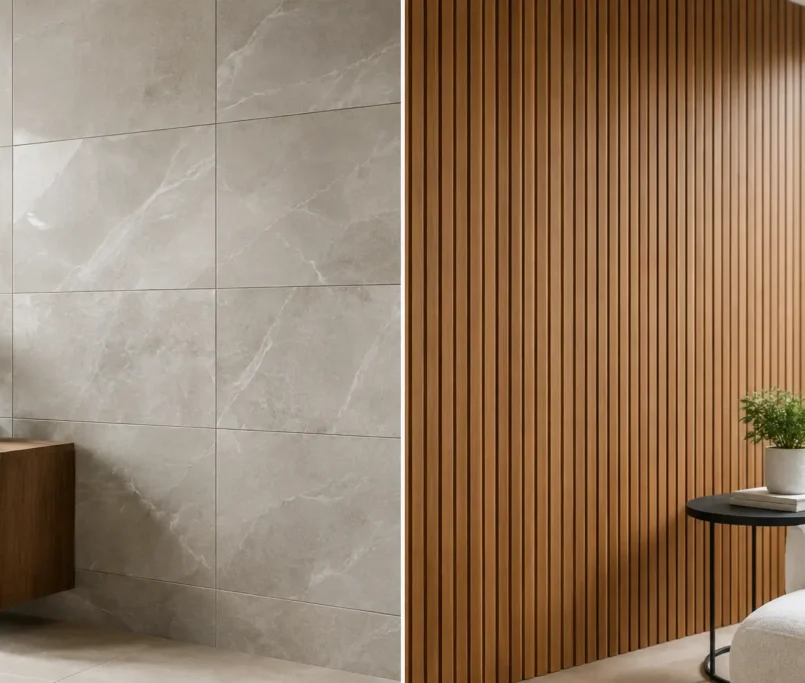

Commercial Tiling Specification Compliance Guide
A tile finish can look immaculate on handover day and still fail six months later if the specification was treated as a box-ticking exercise. That is why a commercial tiling specification compliance guide matters long before the first tile is laid. For builders, developers and project managers, compliance is not just about satisfying paperwork. It is what protects programme, finish quality, defect exposure and the long-term performance of the space.
In commercial work, the pressure points are rarely visible in the final photograph. They sit underneath the tile build-up – substrate movement, poor falls, rushed waterproofing, incompatible adhesives, missed movement joints and unrealistic sequencing. A polished result only holds its standard when the underlying process is disciplined from demolition and preparation through to final sealant lines.
What commercial tiling specification compliance really means
Specification compliance is often misunderstood as simply following a tile schedule. In practice, it is broader. It means the installed system matches the documented performance requirements, the site conditions, the substrate type, the intended traffic level and the wet or dry use of the space.
On a retail fit-out, that may centre on flatness, slip resistance and trading deadlines. In hospitality, the finish must carry a stronger aesthetic burden while coping with cleaning regimes, moisture and heavy foot traffic. In multi-unit residential developments, consistency across dozens or even hundreds of bathrooms becomes the real test. The challenge is not laying one beautiful room. It is delivering the same standard repeatedly, without shortcuts creeping in as the programme tightens.
A strong specification provides the framework, but compliance depends on how carefully that framework is interpreted on site. Drawings can tell you what is required. Experienced execution tells you what needs attention before that requirement can be achieved.
The early-stage risks that cause most compliance failures
Most tiling defects begin before tiling. That sounds obvious, yet it is still where many projects lose control. If a substrate is contaminated, uneven, green, cracked or moving beyond tolerance, the best tile and adhesive selection in the world will not compensate for it.
Surface preparation is often compressed because it is not visually impressive and because downstream trades are waiting. But this is where quality is either protected or compromised. Re-levelling, screeding, moisture checks and demolition cleanliness are not side tasks. They are part of compliance.
Waterproofing is another common fault line. Commercial and high-end residential wet areas do not forgive vague workmanship. Membrane selection, curing times, detailing at penetrations and junctions, and compatibility with the adhesive system all matter. When waterproofing is rushed to recover lost time, the project may appear to gain a day and lose years of performance.
There is also the issue of sequencing. A specification may be perfectly written, but if other trades damage prepared surfaces, flood areas, alter levels or leave behind debris, compliance can drift quickly. Good tiling contractors do not just install. They identify risks early, communicate clearly and hold the line on prerequisites.
Substrate tolerances are never a small detail
Large-format tiles, rectified edges and premium finishes have made substrate accuracy more critical than ever. The tighter the visual standard, the less room there is for unevenness underneath. Lippage, hollow spots and drainage issues are often symptoms of a substrate that should have been corrected before installation began.
This is where a commercial tiling specification compliance guide needs practical judgement. Not every substrate issue demands the same response. Some need localised patching. Others require full re-screeding or a revised installation sequence. The right answer depends on tile size, pattern, use case and programme pressure, but ignoring the issue is never the economical option.
Reading the specification against the real site
A specification is written in controlled conditions. Sites are not. There may be structural movement where none was expected, service penetrations added late, level changes introduced by other trades or product substitutions made under procurement pressure.
Compliance, then, is not passive. It requires active review. Before installation starts, the tiling scope should be checked against actual site conditions, the selected materials, the intended finish and any relevant tolerances. This stage is where experienced contractors protect the client’s outcome. It is better to raise a technical concern early than to bury it beneath finished tilework.
Builders and developers should also be wary of assuming all tile products behave the same way. Porcelain, natural stone, mosaics and textured external tiles each place different demands on preparation, adhesives, movement control and finishing. A specification that works beautifully for one setting may be weak for another if the usage profile changes.
Movement joints and transitions deserve more attention
Few details are treated more casually and regretted more often than movement joints. They are sometimes seen as interruptions to a clean design line, particularly in premium commercial interiors. Yet omitting or poorly locating them can lead to tenting, cracking and edge stress.
The same applies to transitions between materials, thresholds and changes in substrate. These areas carry movement and traffic stress, so they need to be resolved with both performance and appearance in mind. High-end work demands that technical details disappear visually, not that they disappear altogether.
Finish quality is part of compliance, not separate from it
There is a tendency to split performance and appearance, as if one sits with consultants and the other with designers. In quality tiling, they are inseparable. Alignment, joint consistency, cuts around fixtures, drainage falls, caulking lines and edge detailing all speak to whether the installation has been executed with control.
Commercial clients feel this strongly. In a hotel bathroom, gym change area, office foyer or retail tenancy, people read the quality of the whole fit-out through these details. An uneven grout line or poor termination can make an otherwise expensive project feel careless. More importantly, visible finishing faults often hint at concealed technical shortcuts.
That is why precision matters. A premium finish is not an indulgence. It is evidence of disciplined installation.
How to use a commercial tiling specification compliance guide on live projects
The most useful approach is to treat compliance as a running process rather than a pre-start check and a handover sign-off. On live projects, that means reviewing each stage against the required outcome: substrate condition, moisture suitability, waterproofing completion, tile batch and layout confirmation, installation method, movement allowance and finishing details.
For project managers, the practical benefit is clarity. Problems can be identified while they are still relatively inexpensive to solve. For developers, it protects consistency across multiple units or tenancy areas. For commercial operators, it reduces the risk of disruptive remedial works after opening.
It also helps to work with a contractor who owns the full tiling scope rather than focusing narrowly on laying only. When demolition, preparation, screeding, waterproofing, installation and finishing are managed with one quality standard in mind, gaps between responsibilities shrink. That tends to produce better accountability and fewer surprises.
Perfectly Laid sees this first-hand on design-led residential projects and larger commercial programmes alike. The spaces that perform best are not necessarily the simplest. They are the ones where process discipline matched the design ambition from the beginning.
When value engineering threatens compliance
Budget pressure is real on almost every project. Sometimes a product substitution is perfectly reasonable. Sometimes it quietly undermines the entire tile assembly. The danger lies in treating all savings as equal.
A lower-cost tile may still satisfy the visual brief but demand a different installation approach. A cheaper adhesive may be unsuitable for the substrate or tile size. Reduced preparation allowances may leave level issues unresolved. Even minor changes can have knock-on effects across movement, curing, durability and appearance.
This does not mean every value-engineering exercise is misguided. It means changes need proper technical review, not just commercial approval. The cheapest option at tender stage can become the most expensive line item in defects and downtime.
Why good compliance still allows for judgement
The best specifications are precise, but not every site condition has a neat, prewritten answer. This is where experienced workmanship matters. Compliance is not about blindly following a document when the on-site reality says a better technical response is needed. It is about recognising when clarification, adjustment or escalation is required to preserve the intent of the project.
That balance matters especially on premium and high-volume work. In a one-off feature space, aesthetics may drive a more tailored installation strategy. In a 200-unit programme, repeatability and programme control become just as important. Both require skill. Both benefit from contractors who understand that true compliance is equal parts technical rigour, communication and finish discipline.
If you are reviewing a commercial tiling package, look past the tile itself. The lasting result will come from how carefully the full system is prepared, interpreted and executed – because the standard you specify is only as strong as the care taken on site.