Kitchen Splashback Tiling Service Guide
A kitchen splashback rarely gets much forgiveness. It sits at eye level, catches every shift in light, frames your benchtops and cabinetry, and has to stand up to heat, steam, grease and constant cleaning. That is why a kitchen splashback tiling service is not just about fixing tiles to a wall. It is about precision – in layout, substrate preparation, cuts, alignment, grout lines and finishing – because even small errors become obvious in the heart of the home.
For homeowners, renovators and builders alike, the splashback is one of those details that can quietly elevate a kitchen or let it down. A beautifully selected tile still needs disciplined installation to look expensive. The right service protects both the design intent and the long-term performance of the space.
What a kitchen splashback tiling service should actually include
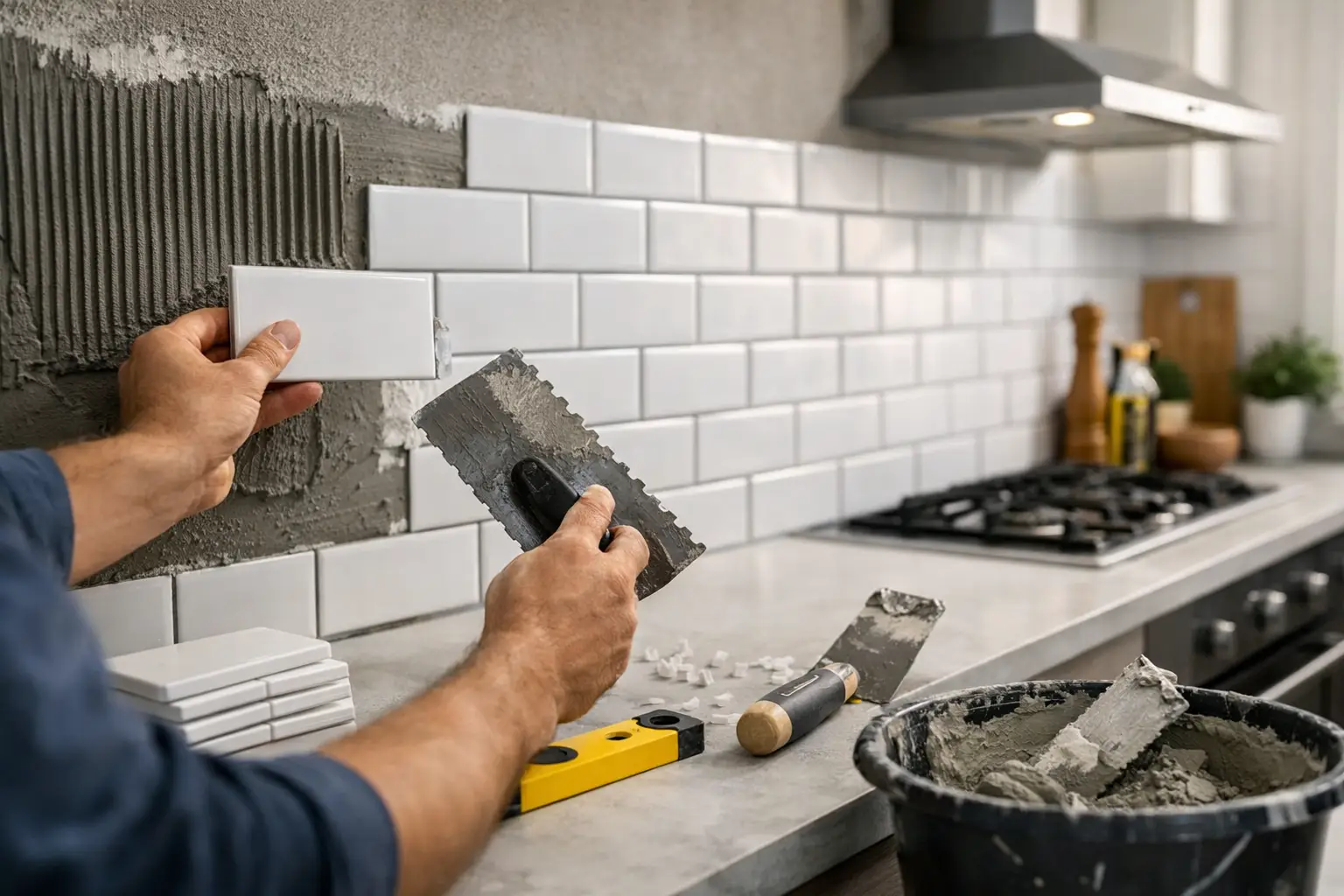
A high-quality kitchen splashback tiling service begins well before the first tile is laid. The wall condition matters. If the substrate is uneven, damaged or poorly prepared, no amount of careful tiling will fully disguise it. Hollow spots, lipping, misaligned joints and premature cracking often start with shortcuts in preparation rather than the tile itself.
A proper service should cover assessment of the wall, removal of any failed finishes if required, rectification of uneven areas, careful set-out and clean finishing around power points, cabinetry, rangehoods and window reveals. In some kitchens, that also means coordinating with other trades so the timing is right. Tiling too early or too late can create compromises around joinery, stone installation and appliance fit-off.
This is where experience matters. A splashback may be a relatively compact area, but it often involves more visible cuts and tighter tolerances than larger floor spaces. There is nowhere to hide an inconsistent line behind furniture. Every edge, return and silicone joint needs to feel considered.
Why kitchen splashback tiling is more technical than it looks
From a distance, splashback tiling can seem straightforward. The reality is more exacting. Kitchens combine reflective surfaces, strong task lighting and fixed horizontal reference points such as benchtops and overhead cupboards. If the tile set-out is even slightly off, the eye picks it up immediately.
Tile selection changes the level of difficulty. Handmade-look tiles, for example, have charm and variation, but they need a tiler who knows how to manage inconsistency without making the finished wall look chaotic. Large-format porcelain can deliver a clean architectural result, but it demands accurate cutting, flat substrate preparation and careful handling to avoid uneven faces. Mosaic sheets bring detail and texture, yet they can expose poor sheet alignment and irregular grout joints if they are rushed.
Then there are the junctions. Around GPOs, under cabinetry, behind taps and at external corners, the quality of workmanship becomes very clear. Precision installation is not just a visual preference here. It affects cleaning, durability and the overall standard the kitchen communicates.
Set-out is where premium results are won or lost
Good set-out is one of the least visible parts of the process, but it shapes everything. A skilled tiler will consider where full tiles should land, how cuts are distributed, whether the pattern should centre on a feature such as a cooktop, and how the splashback aligns with joinery lines.
That judgement is especially important in high-end kitchens, where materials are chosen for balance and proportion. An awkward sliver cut at one end of the run or a pattern that dies badly into a corner can make the whole installation feel unresolved. The best outcome usually looks effortless precisely because the planning was not.
Choosing the right tile for the space
Not every beautiful tile is the right splashback tile. Kitchens ask for a balance of visual appeal and practicality. Gloss finishes can reflect light and make a smaller kitchen feel brighter, but they will also show smears more readily. Matt finishes can feel softer and more contemporary, though some textured surfaces require more effort to keep clean near cooking zones.
Grout choice matters just as much. Very light grout can look crisp and refined, but in a hardworking family kitchen it may need more maintenance. A darker grout may be more forgiving, though if it is poorly matched it can dominate the look. Joint width, tile variation and cleaning expectations should all be discussed before installation begins.
For clients aiming for a premium finish, it is worth thinking beyond the tile sample alone. Ask how the tile behaves across a full wall, how the edges will be finished, and whether the chosen format suits the kitchen proportions. A quality tiling contractor will guide those decisions with the final result in mind, not just the installation day.
Where poor workmanship usually shows up
Most people can recognise a bad splashback once they see it, even if they cannot name the problem straight away. Uneven grout joints, chipped cuts, poor alignment at corners, messy silicone and tiles that sit proud of each other all pull down the finish. The wall may still be technically tiled, but it does not feel resolved.
There are also issues that appear later. Cracked grout, movement at junctions, debonding and staining can point to incorrect adhesives, poor preparation or rushed finishing. In busy kitchens, those defects become more than cosmetic.
A premium tiling service reduces these risks through process discipline. That means using the correct materials for the substrate and tile type, maintaining clean lines, allowing for movement where needed, and finishing with the same care given to the main tiled field. It is this consistency that protects the investment in the wider renovation.
What homeowners, builders and developers should look for
The right contractor is not simply someone who can tile. You want a trade partner who understands that the splashback sits inside a larger delivery programme and a larger design outcome. For homeowners, that means clear communication, respect for the space and confidence that details will be handled properly. For builders and developers, it means reliable programming, responsive site coordination and standards that hold across multiple kitchens.
A good sign is end-to-end capability. When a contractor can manage preparation, rectification, installation and finishing, there is greater control over quality. Accountability is clearer too. Problems are less likely to be passed from one trade to another.
You should also look for evidence of consistency. One impressive kitchen is not enough. The real test is whether the workmanship can be repeated across different tile types, layouts and project scales. That matters in a bespoke home, and it matters even more in multi-unit delivery where repeatability and programme certainty are essential.
The value of a service-led approach
The strongest outcomes usually come from contractors who treat tiling as both craft and responsibility. That means arriving prepared, protecting surrounding finishes, working neatly, communicating early if issues arise, and understanding that timing affects every trade around them.
For a client, this lowers risk. For a project manager, it makes coordination easier. For the finished kitchen, it means the details are not left to chance.
Cost matters, but value matters more
Splashback tiling quotes can vary, and there is usually a reason. Tile size, pattern complexity, access, wall condition and the number of cuts all affect labour. A simple stacked layout over a clean substrate is a different scope from a herringbone pattern with numerous penetrations and uneven walls.
The cheapest quote can become the most expensive if defects need correcting after cabinetry, stone or painting are complete. Rework in a finished kitchen is disruptive and rarely tidy. By contrast, a well-executed installation tends to hold its appearance and performance for years with ordinary care.
That is why the conversation should not stop at price per square metre. Ask what preparation is included, how edges will be finished, whether silicone and final detailing are part of the scope, and how the contractor approaches alignment and set-out. Those answers often tell you more than the number at the bottom of the quote.
A splashback should feel considered, not merely completed
In a premium kitchen, the splashback does more than protect the wall. It ties materials together, sharpens the joinery, and gives the room a finished rhythm. That only happens when workmanship is treated as part of the design, not as an afterthought.
At Perfectly Laid, that is the standard the work is built around – preparation that supports longevity, installation that respects the design, and finishing that looks precise from every angle. Whether the brief is a refined residential renovation or a multi-unit kitchen programme, the principle stays the same: details define the result.
If you are planning a new kitchen or upgrading an existing one, give the splashback the attention it deserves. It is a small area with an outsized effect, and when it is tiled properly, the whole kitchen feels sharper, calmer and more complete.