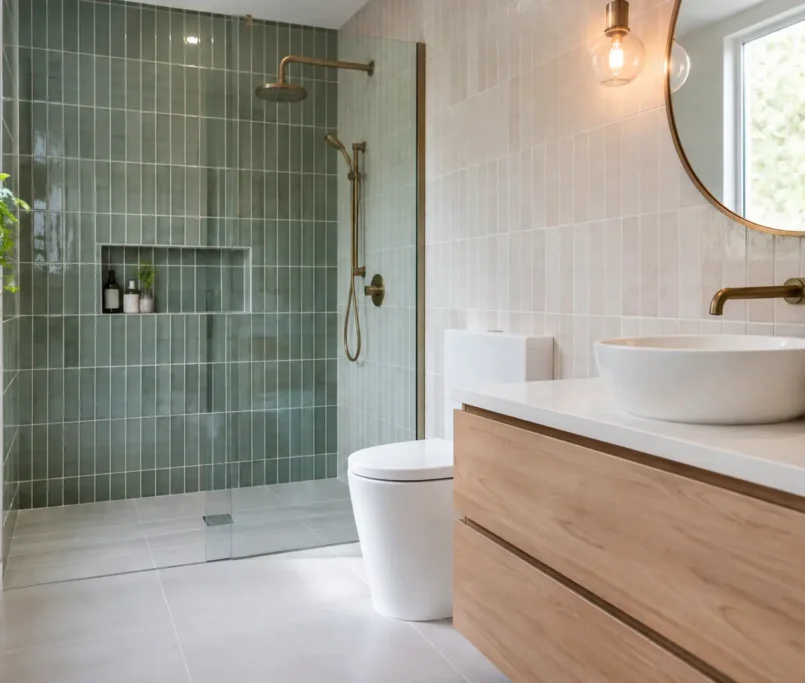

Choosing a Multi Unit Tiling Contractor
When a development moves from drawings to live construction, tiling quickly becomes one of the trades that exposes every weakness in the programme. A multi unit tiling contractor is not simply there to lay tiles. They are responsible for surface integrity, waterproofing performance, visual consistency, sequencing across dozens of spaces, and the kind of finishing detail that buyers notice the moment they walk through the door.
On a single home, a minor variation in set-out might be an inconvenience. Across 20, 80 or 200 units, that same variation becomes a pattern – repeated, visible and expensive to rectify. That is why multi-unit tiling demands a different level of planning, supervision and workmanship than standard domestic work.
What a multi unit tiling contractor actually manages
The visible finish is only one part of the scope. In quality-led projects, the contractor is often managing demolition where required, substrate preparation, re-levelling, screeding, waterproofing, tile installation, movement joints, mitred edges, trims, caulking and final detailing. If any one of those steps is rushed, the result may still look acceptable on handover day, but it rarely holds that standard over time.
Developers and builders know the risk. Hollow tiles, inconsistent falls, uneven lippage, poor waterproofing transitions and messy silicone lines do not just affect presentation. They create defects, delay settlements, strain site relationships and erode margin. A capable contractor protects the project before the first tile is fixed, not after the defect list arrives.
In multi-unit work, repetition is both the challenge and the opportunity. Repetition allows efficiencies, but only if systems are disciplined. The best contractors build repeatable quality, not repeatable shortcuts.
Why scale changes everything in multi-unit tiling
A bathroom renovation and a 120-unit residential development may use similar materials, but they are operationally very different jobs. Multi-unit delivery requires labour planning, floor-by-floor coordination, material staging, programme tracking and quality control that can withstand pressure as the site accelerates.
This is where many tilers struggle. Strong tradespeople are not always strong project operators. A team may produce beautiful work in a bespoke space, then lose control when multiple crews are spread across several levels with different completion dates, varying wet area conditions and other trades moving in at the same time.
A proper multi unit tiling contractor understands sequencing. Waterproofing inspections have to align with the programme. Screeds need cure time. Set-outs must be standardised where required, but still adjusted to suit real site conditions. Common areas, lift lobbies, amenities and individual units all carry different visual and practical demands. Treating them as if they are one identical scope is where standards begin to slip.
Consistency matters more than speed alone
Every builder wants pace, but speed without control is a false economy. The real benchmark is consistent delivery at pace. That means one unit should not look excellent while the next is merely acceptable. It means the finish in the display suite should match the finish on level fourteen. It means details like grout joints, cuts around fixtures, tile alignment and caulking standards remain steady from first handover to final completion.
Consistency is what protects a premium development. Buyers may not know the technical language of tiling, but they notice when lines are sharp, surfaces are level and the room feels resolved. They notice just as quickly when corners are awkward, edges are rough or patterns drift.
How to assess a multi unit tiling contractor
The first question is not whether a contractor can tile. It is whether they can deliver your volume, complexity and finish standard without losing control of the programme.
Look closely at the scopes they genuinely handle. A contractor who only installs tile but leaves prep, levelling or waterproofing to others may still be useful in some projects, but the coordination risk increases. When one specialist takes accountability from substrate preparation through to final caulking, there is less room for disputes and fewer gaps between trades.
Experience with occupied deadlines matters too. Multi-unit jobs are rarely calm. Programmes compress, access changes, and design amendments arrive late. You need a partner who communicates early, flags issues clearly and responds with solutions rather than excuses.
Past project type is another useful test. High-end homes demonstrate finish quality. Commercial fit-outs show pace and coordination. Large residential developments show scalability. The strongest contractors can evidence all three because they combine craftsmanship with delivery discipline.
Signs of a contractor who will protect the finish
A quality-focused contractor talks as much about preparation as they do about tile selection. That is a good sign. Surface prep, falls, substrate condition and waterproofing details are where long-term performance is won.
They should also be able to explain their approach to set-out. Precision tiling is not just neat cutting. It is planning the room so visual balance is achieved, awkward slivers are avoided where possible, and feature tiles or large-format products sit correctly within the architecture.
The finishing details matter just as much. Mitres, movement joints, trim selections and silicone work are often the difference between an ordinary result and a refined one. In premium developments, these details are not optional extras. They are part of the standard.
The trade-off between cost and long-term value
There is always pressure on budget in multi-unit construction. Tiling packages are no exception. But the cheapest price often assumes a thinner scope, leaner supervision or lower finishing expectations. That can look attractive at tender stage and costly later.
It depends, of course, on the project positioning. An investor-led build with basic finishes may have different priorities from a design-led development marketed on quality and presentation. Even so, certain standards should never be compromised. Waterproofing integrity, proper preparation and competent installation are not luxury upgrades. They are essential risk controls.
Where premium outcomes matter, value comes from fewer defects, less rework, stronger buyer perception and a cleaner handover. A contractor who gets it right first time often saves far more than they cost.
Why end-to-end scope creates better control
One of the clearest advantages in appointing a specialist tiling partner is continuity of responsibility. When demolition, re-levelling, screeding, waterproofing, installation and finishing are managed within one disciplined scope, the quality line is easier to maintain.
There is no confusion over whether a substrate issue belongs to one subcontractor or another. There is no passing of blame when a finish fails to meet the brief. Instead, there is a single team accountable for the result from preparation to presentation.
For builders and developers, that means clearer communication and tighter programme management. For homeowners and commercial clients, it means confidence that the visible beauty of the space is supported by the hidden technical work beneath it.
A specialist contractor such as Perfectly Laid brings particular value here because premium finishes rely on more than installation labour. They rely on disciplined process, responsive communication and workmanship that stays sharp whether the project is one luxury bathroom or a high-rise development with up to 200 units.
Multi-unit tiling in design-sensitive spaces
Not every multi-unit project is purely functional. Many now sit firmly in the premium market, where bathrooms, kitchens and shared areas are part of the sales story. In these projects, tiling is both a technical trade and a design finish.
Large-format porcelain, feature stone, textured surfaces and complex layouts all raise the standard required on site. They also narrow the margin for error. Large tiles make substrate variation more obvious. Patterned layouts punish poor set-out. Luxury finishes expose untidy cuts and weak edge detailing.
That does not mean ambitious specifications should be avoided. It means they should be paired with a contractor equipped to execute them properly. Good design deserves disciplined installation.
The contractor relationship that keeps projects moving
The best tiling contractors are calm under pressure because they work from process, not improvisation. They know when to push, when to hold back for curing or inspection, and when to raise an issue before it becomes a programme problem.
That reliability is difficult to quantify in a tender, but easy to recognise during delivery. Calls are returned. Site issues are documented. Expectations are clear. The team arrives prepared, works cleanly and treats each area as a finished environment, not just another box to complete.
For project managers, that kind of responsiveness reduces friction. For developers, it protects brand perception. For homeowners and commercial clients, it creates the rare feeling that the trade on site genuinely cares about the final outcome.
Choosing a multi unit tiling contractor is ultimately about trust in execution. The right team brings order to complexity, precision to repetition and a finish quality that holds its own long after handover. When the standard matters, the quiet details behind the tile are every bit as important as the tile itself.