Screed vs Self Levelling Compound
If a floor looks flat but the tiles still fail, the problem usually started below the surface. That is why the choice between screed vs self levelling compound matters more than many clients expect. The right base does not just help tiles sit neatly – it protects the finish, controls movement, supports drainage where needed, and sets the standard for the whole installation.
For homeowners planning a bathroom renovation, or developers managing repeated wet area packages across multiple units, this decision affects programme, finish quality, and long-term performance. The two materials are not interchangeable. They solve different problems, work at different depths, and suit different substrates and project conditions.
Screed vs self levelling compound: the core difference
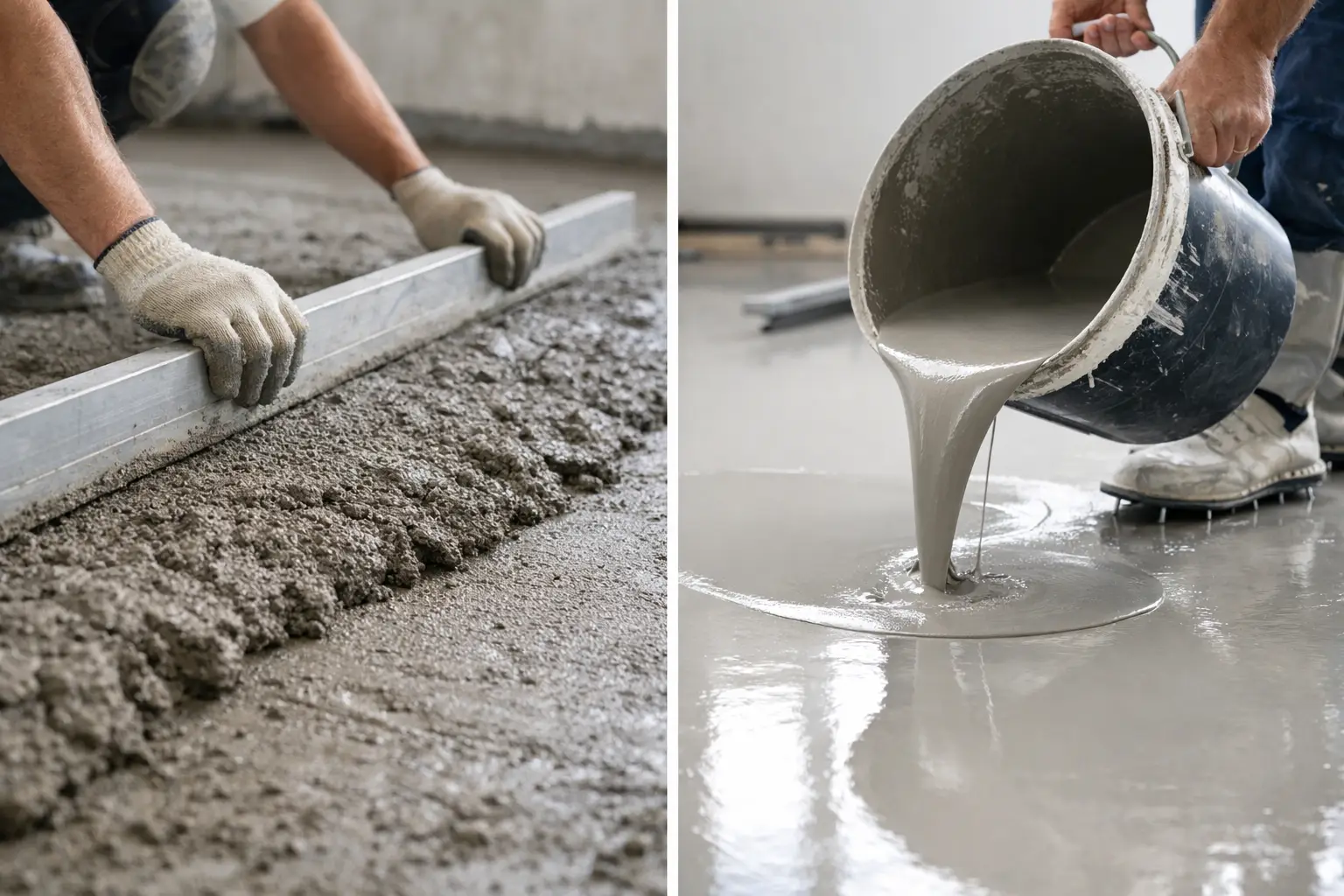
At the simplest level, screed is used to build, shape or re-form a floor. Self levelling compound is used to refine and correct it. Both can create a suitable surface for tiling, but they do so in very different ways.
Screed is generally a sand and cement based layer, sometimes modified depending on the specification. It is installed at greater thicknesses and can be used to form falls, raise levels, and create a new plane over concrete or other prepared substrates. In bathrooms, balconies, laundries and alfresco areas, screed is often the material that establishes the geometry of the floor itself.
Self levelling compound, by contrast, is a flowable product designed to smooth out minor undulations and produce a more even finish over an existing substrate. Despite the name, it does not fix every problem by itself. It still requires correct preparation, priming, and depth control. Its strength is finesse rather than structural build-up.
That distinction matters. If the floor is significantly out of level, needs drainage falls, or requires a thicker build to meet adjoining finishes, screed is usually the right approach. If the slab is broadly sound but has small imperfections, trowel marks, shallow dips or surface inconsistency, a levelling compound may be the cleaner solution.
When screed is the better choice
Screed earns its place when the floor needs correction, not just cosmetics. In practical terms, that includes bathrooms where water must run to a waste, external tiled areas where falls are critical, and renovations where existing floors are uneven enough to affect both tile set-out and finished appearance.
Because it can be laid thicker, screed gives the installer control over height, pitch and plane. That makes it ideal where thresholds need to be managed carefully, or where different rooms must transition cleanly. On higher-end projects, this matters as much aesthetically as it does technically. A premium tile finish always depends on disciplined groundwork.
There is, however, a trade-off. Screed is more labour intensive, and the quality of the result depends heavily on workmanship. Poorly mixed, incorrectly compacted or rushed screed can crack, debond or leave an inconsistent surface that creates problems later. Drying time can also affect programme sequencing, especially on larger sites where multiple trades are moving in parallel.
That does not make screed slower in every case. On a floor that genuinely needs reshaping, it is often the most efficient route because it solves the main issue in one system rather than layering quick fixes.
Screed and falls for wet areas
One of the biggest points in the screed vs self levelling compound discussion is falls. In showers, laundries and balconies, the floor should not simply be flat. It should direct water exactly where it needs to go.
Self levelling products are not designed to create controlled falls in the way a screed bed can. If you need water movement, screed is usually the correct substrate solution. This is one of those moments where choosing the wrong product might still look acceptable on day one but create maintenance, drainage or waterproofing issues later.
When self levelling compound is the smarter option
Self levelling compound comes into its own when the substrate is mostly right, but not precise enough for a high-quality tile installation. It is especially useful over concrete slabs with slight unevenness, internal floors that need a smoother finish before tiling, and refurbishment work where time and access are tighter.
Used correctly, it can speed up preparation and deliver a very consistent finish. That is attractive on commercial fit-outs and multi-unit projects where programme pressure is real and repeatability matters. A well-selected compound can also help when working over underfloor heating systems or substrates requiring a compatible flexible levelling layer, though specification is critical.
Still, there are limits. Self levelling compound is not a substitute for major floor correction. Deep hollows, substantial level changes, weak substrates or areas requiring falls will usually push the job back towards screed or a more involved preparation system. It is also less forgiving of poor prep. If the substrate is dusty, contaminated, unprimed or moving, the compound may fail regardless of how premium the product is.
The myth of “self levelling”
Clients often hear the name and assume the product does all the thinking. In reality, it flows – but within the conditions created by the installer. Thickness, edge detailing, primer choice, mixing ratio and application speed all influence the outcome.
That is why precision matters. On a design-led floor with large format tiles, polished finishes or tight sightlines, even minor inconsistencies can become obvious once the light hits the surface.
Thickness, drying time and cost
For most projects, the real decision comes down to three factors: how much correction is needed, how fast the area must be handed over, and what standard of finish the final tile package demands.
Screed is typically applied thicker than self levelling compound. That makes it suitable for more substantial floor build-ups, but it can extend drying and curing time depending on the product, thickness and site conditions. Traditional screeds are rarely the answer if the programme is already compressed and the floor only needs minor refinement.
Self levelling compounds are often thinner and can be faster to cover, with many products offering shorter waiting times before tiling. That can make them cost-effective in labour and programme terms, even if the material cost per bag appears higher. Looking only at material price can be misleading. The right comparison is total installed value – preparation, labour, drying time, performance, and risk.
For premium residential work and commercial projects alike, the cheapest substrate option is often the one that costs more once defects, delays or tile lippage appear.
Which gives the better finish for tiling?
Neither product is automatically superior. The better finish comes from using the right product for the actual floor condition, then installing it properly.
Screed is excellent when a floor needs true rebuilding. It creates the foundation for accurate tiling, especially where lines, falls and transitions must be controlled with care. Self levelling compound is excellent when the floor is already structurally sound and only needs fine correction to achieve a cleaner, more uniform plane.
For large format porcelain, stone look tiles, rectified edges and high-spec interiors, tolerances become tighter. Small substrate flaws that might pass unnoticed under smaller or more forgiving finishes can stand out immediately under premium tilework. That is why floor preparation should never be treated as a generic preliminary trade. It is part of the finished result.
How to choose on a real project
A bathroom renovation, a hospitality fit-out and a multi-residential development will not all need the same answer. The right choice depends on substrate condition, intended finish level, waterproofing requirements, drainage design, build-up height, programme and the tile format being installed.
If the floor needs shaping, raising or falls, screed is usually the correct starting point. If the floor is close to acceptable but needs a more precise surface, self levelling compound is often the sharper tool. In some projects, both are used in sequence – screed to establish the levels, then a levelling product where the specification calls for tighter refinement.
That layered thinking is often what separates average trade execution from a finish that looks effortless. At Perfectly Laid, preparation is never treated as a background task. It is where the quality promise begins.
The best tiled floors rarely announce what sits underneath them. They simply feel right underfoot, read cleanly across the room, and continue performing long after handover. If you are weighing up screed vs self levelling compound, the smartest move is to choose the system that serves the floor you actually have, not the shortcut you hoped would do the job.