Large Format Versus Mosaic Tiles: Which Wins?
A tile choice can make a compact bathroom feel composed and generous, or turn a large alfresco area into a surface that is difficult to keep clean. When weighing up large format versus mosaic tiles, the right answer is rarely about what is currently fashionable. It is about proportion, performance, substrate condition and the level of detail the space demands.
Large tiles bring calm, scale and fewer grout lines. Mosaics introduce texture, movement and exceptional flexibility around falls and curves. Both can create an exquisite finish, but each places different demands on the design and installation process. Getting that decision right early protects the look of the project and the durability beneath it.
Large format versus mosaic tiles: the visual effect
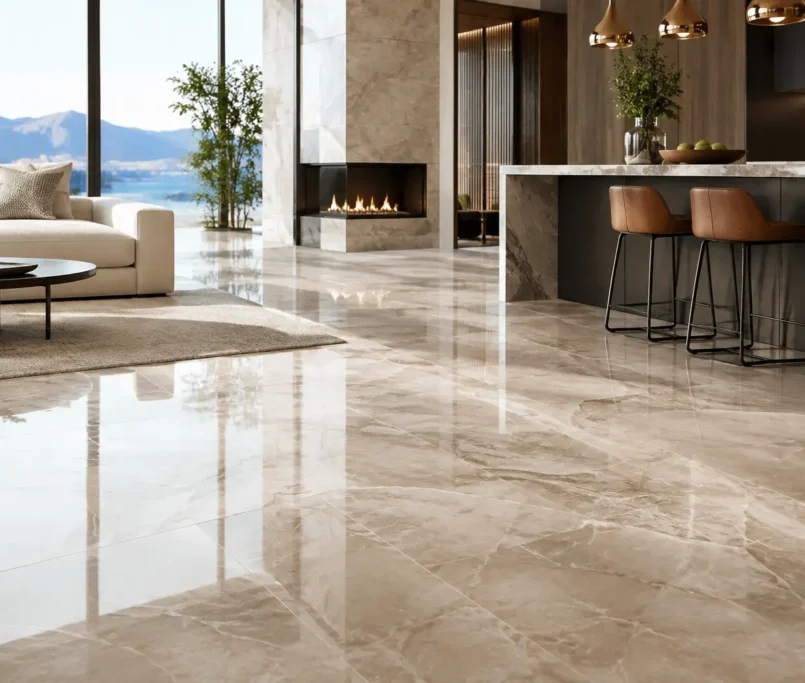
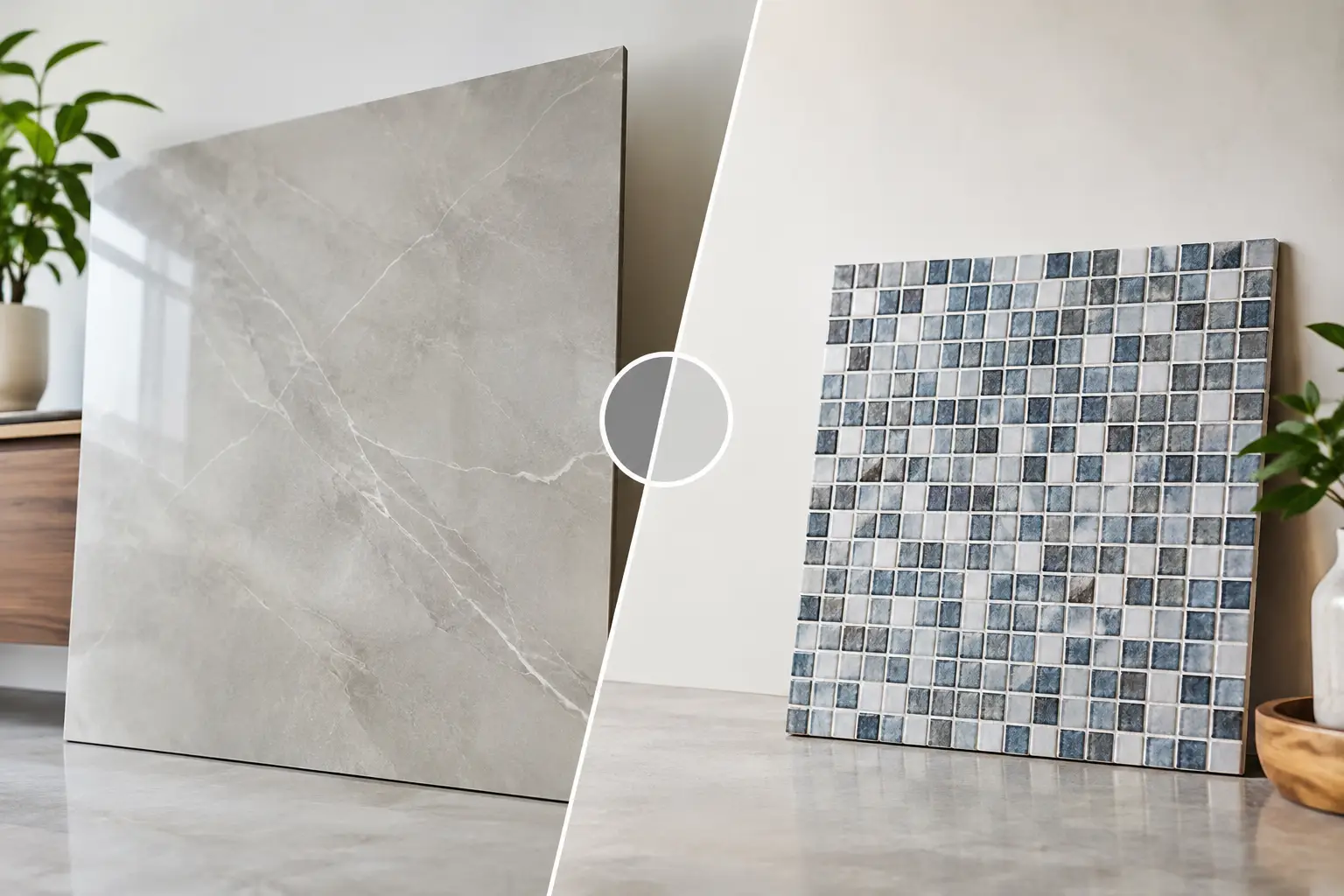
Large format tiles are defined less by one fixed size than by their visual impact. Whether specified as 600 x 1200 mm, 750 x 1500 mm or larger porcelain slabs, they create broad, uninterrupted planes. In a bathroom, that can make walls feel taller and floors more expansive. In kitchens, lobbies and open-plan living spaces, large tiles support a refined, architectural look with less visual interruption.
Fewer grout joints are a major part of that appeal. The tile surface becomes the feature, particularly with stone-look porcelain, concrete finishes or subtle veining. This makes large format tiles a strong choice where the aim is quiet luxury rather than decorative pattern.
Mosaic tiles do the opposite, deliberately and beautifully. Their smaller modules create rhythm, texture and detail. A penny-round floor can soften a contemporary bathroom; a kit-kat splashback can add vertical movement; a natural stone mosaic can bring character to a fireplace surround or bar front. They offer a more tactile finish, especially when used as a feature rather than across every surface.
The decision often comes down to where the eye should rest. If the room needs a calm backdrop, large format tiles usually lead. If the project needs a crafted focal point or a change in texture, mosaics can deliver far more personality.
Performance starts below the tile
Tile selection should never be separated from substrate preparation. Large format tiles are unforgiving of uneven walls and floors. A slight high point can create lipping between tile edges, compromise adhesive coverage or make a carefully planned layout look inconsistent. The larger the tile, the more visible any variation becomes.
This is why surface assessment, levelling and correct adhesive selection matter so much. Walls may require straightening before tiling. Floors may need re-levelling or screeding to achieve the flatness required for a premium result. On larger projects, disciplined preparation also protects programme certainty by reducing surprises once installation begins.
Mosaics are more accommodating on curved surfaces and can follow subtle changes in plane more readily than a large tile. That does not mean preparation can be overlooked. Sheet mosaics can reveal inconsistencies in a wall, and an uneven bed may show through as waviness across the finished surface. Good preparation remains the foundation of perfection, whatever the tile size.
In wet areas, waterproofing is equally critical. The finished tile is only one layer of a complete system. Properly prepared substrates, waterproof membranes, appropriate drainage falls and careful sealing at junctions all work together to protect the building fabric. A beautiful bathroom floor is not a successful bathroom floor unless it also directs water where it needs to go.
Wet-room floors and drainage falls
This is where mosaics often have a practical advantage. Shower floors need falls towards the waste, and smaller tiles can follow those changes in direction with greater ease. Their increased number of grout joints can also provide additional underfoot grip, depending on the tile finish and grout specification.
Large format tiles can still work on shower floors, but the design needs more consideration. A linear drain may allow a single, consistent fall in one direction, making larger pieces more achievable. With a central point drain, however, multiple falls often make large tiles awkward to cut and less elegant at the junctions. In some cases, the tile may be technically possible but not the most convincing design solution.
A considered approach is to use large format tiles across the bathroom floor and walls, then introduce a complementary mosaic within the shower zone. This maintains visual continuity while allowing the floor to perform properly. It is also an opportunity to create subtle contrast through tone, texture or format without making the room feel busy.
For outdoor areas, slip resistance, drainage and exposure matter more than scale alone. Large porcelain pavers can create a sleek alfresco or poolside surface with minimal joints, while mosaics may suit a waterline, feature wall or curved detail. The final selection should suit the expected foot traffic, weather exposure and cleaning regime, not just the mood board.
Installation detail: where the difference is felt
Large format tiling demands precision at every stage. Tiles must be carefully handled, cut accurately and installed with suitable adhesive coverage to avoid voids beneath the surface. Layout planning is also essential. A beautiful 1200 mm tile can be undermined by a narrow, awkward cut at the entry point or an unbalanced pattern around a vanity.
The installer should establish key sightlines before fixing begins: the centre of a feature wall, the relationship to niches and fixtures, the position of doorways and the location of movement joints. Tile orientation matters too. A directional stone-look pattern may need careful sequencing so the finished surface feels intentional rather than repetitive.
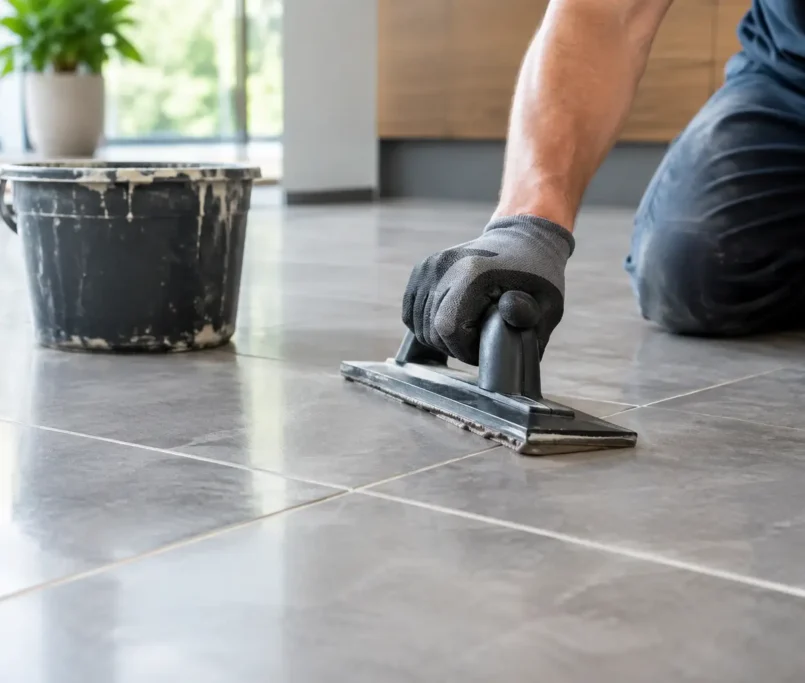
Mosaics require a different kind of discipline. Sheets must be aligned so the joins disappear into the pattern, spacing remains consistent and individual pieces do not drift. Some mosaic materials vary in thickness, requiring considered adhesive control to keep the face level. Grout choice becomes highly visible because there is much more of it, and the wrong colour can flatten a design or make it look overly busy.
Neither option is inherently easier. Large format tiles require exacting substrate work and handling. Mosaics require patience, alignment and finishing control. Both reward a contractor who treats tiling as a precision trade rather than a final cosmetic layer.
Cleaning, maintenance and daily use
Large format tiles are often chosen for their lower grout-to-tile ratio. Less grout generally means fewer lines to clean, which suits busy family bathrooms, kitchen floors and commercial spaces where presentation matters. A quality grout and properly finished silicone joints still need maintenance, but the day-to-day surface is straightforward.
Mosaics have more joints, so they need more attention over time, particularly on floors and in shower areas. This is not a reason to avoid them. It is simply a practical trade-off. Selecting a suitable grout colour, using quality materials and maintaining ventilation in wet rooms will help preserve the original finish.
The tile material itself also matters. Glazed porcelain is highly practical for many settings, while natural stone may need sealing and a more tailored care routine. A premium outcome considers the owner’s appetite for maintenance alongside the design intent.
Choosing the right format for the room
Large format tiles are usually the stronger choice for open floors, main bathroom walls, living areas, kitchen splashbacks and commercial fit-outs where a clean, contemporary surface is the goal. They can make modest spaces feel less fragmented and give larger spaces a sense of order.
Mosaics excel in shower floors, curved walls, small feature zones, niches, pool details and areas where texture or grip is valuable. They are particularly effective when used with restraint. A mosaic feature can elevate a room precisely because it contrasts with quieter surrounding surfaces.
For high-end homes and multi-unit developments, the strongest scheme is often not a choice between one or the other. It is a considered combination. Large format tiles establish the primary visual language; mosaics solve technical details and introduce moments of craftsmanship. The colours, grout tones, edges and transitions should all feel connected.
At Perfectly Laid, the focus is on making those decisions work on site, from preparation and waterproofing through to cuts, caulking and final presentation. The most successful tile specification is one that looks exceptional on handover day and continues to perform long after the project is complete.
Choose the format that respects the room, the way it will be used and the standard you want to see every time you walk in. That is where a tiled surface becomes more than a finish – it becomes part of the architecture.