Tile Trends That Bring Lasting Luxury Home
A tile can look exceptional in a showroom and still disappoint once it meets the realities of a finished room: changing light, shower steam, furniture, bare feet and daily cleaning. The most considered tile trends are not simply about a fashionable surface. They are about choosing colour, scale, texture and layout that suit the architecture, then installing every detail with enough precision for the finish to feel effortless.
For homeowners, designers and project teams, the strongest direction is clear. Tiles are becoming more expressive, but the best spaces remain disciplined. The aim is not to fill every wall with a statement. It is to create a calm, resolved backdrop that will continue to feel refined long after the renovation is complete.
Tile Trends Shaping High-End Spaces
Warm stone looks with real depth
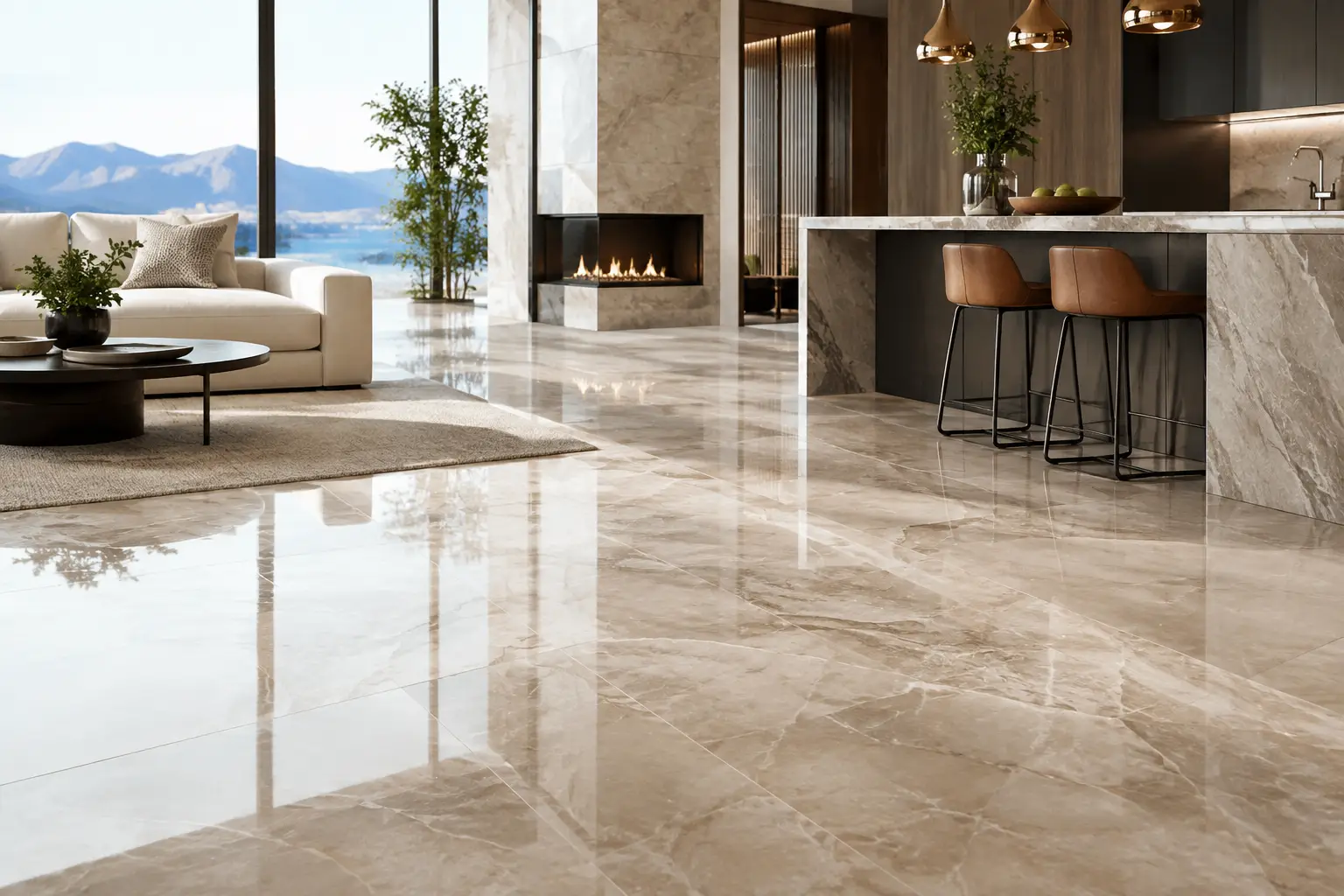
Cool grey has given way to warmer mineral tones: limestone, travertine, soft sandstone, clay and chalk. These finishes bring an easy sense of permanence to bathrooms, kitchens and living areas, especially when paired with timber, brushed metals and off-white joinery.
Porcelain stone-look tiles are a practical choice where natural stone may demand more maintenance. Good-quality porcelain can deliver convincing movement and tonal variation while offering consistent sizing, lower porosity and easier day-to-day care. Natural stone, however, has a depth and individuality that porcelain cannot fully replicate. The right choice depends on how the room will be used and how much maintenance the owner is prepared to accept.
The key is variation with control. A tile with too little movement can appear flat over a large area; too much contrast can make a floor feel busy. Reviewing several boxes, not one display sample, helps establish how the overall field will read.
Large-format tiles, carefully handled
Large-format porcelain remains one of the most requested tile trends for contemporary interiors. Fewer grout lines can make a compact bathroom feel more generous, while oversized slabs create a composed, architectural look in entryways, open-plan living spaces and premium commercial fit-outs.
Scale brings responsibility. Bigger tiles demand flatter substrates, careful handling and exact setting-out. A tile cannot disguise an uneven floor. Without proper levelling or screeding, lipping between edges becomes more visible, drainage can be compromised in wet areas, and a beautiful selection can lose its impact.
Large format is not always the answer. In a small shower floor, smaller tiles often provide better falls to the waste and more grip underfoot. A well-proportioned mosaic or kit-kat tile can be the technically smarter choice without compromising the design.
Texture that earns its place
There is renewed interest in tactile surfaces: fluted profiles, handmade-look ceramics, finger tiles and softly rippled glazes. These tiles introduce shadow, movement and a crafted quality that flat finishes cannot achieve. They work particularly well as a kitchen splashback, vanity backdrop or feature wall where light can draw out their detail.
Texture should be specified with its location in mind. Deeply textured tiles can hold dust, soap residue and cooking splashes, making them less suitable for every surface. In a shower, consider cleaning access as carefully as appearance. A refined design is one that remains practical on an ordinary Tuesday morning, not only in the first project photographs.
Quiet colour, layered well
The move towards warm neutrals does not mean every room must be beige. Muted greens, mineral blues, tobacco, burgundy and earthy terracotta are appearing in more considered schemes, usually as a controlled accent rather than an all-over statement.
One approach is to keep the principal wall and floor tile calm, then introduce colour through a niche, splashback, powder room wall or tiled hearth. This gives a room personality while allowing larger, more expensive surfaces to stay versatile. Tonal layering also matters: a warm white wall tile beside a cool grey floor can feel accidental, whereas related undertones make a scheme feel intentionally composed.
Layout Is Where the Design Becomes Personal
The tile itself is only half of the visual outcome. Direction, joints and perimeter cuts determine whether a tiled surface feels tailored or merely covered.
Linear tiles laid vertically can increase the sense of ceiling height and add a more formal rhythm. Horizontal laying can widen a narrow room. Herringbone, basketweave and stack bond each create a distinct character, but patterned layouts require additional planning, cutting and material allowance. They also call for a substrate that is prepared to a high standard, as inconsistent joints are far more noticeable in a geometric pattern.
Before installation begins, setting out should establish where full tiles will sit, how cuts will fall at edges, and how the tiling relates to doors, vanities, niches and drains. Avoiding narrow slivers at a prominent wall or shower entry is not a minor detail. It is often the difference between a competent installation and a premium finish.
Grout Is Now Part of the Palette
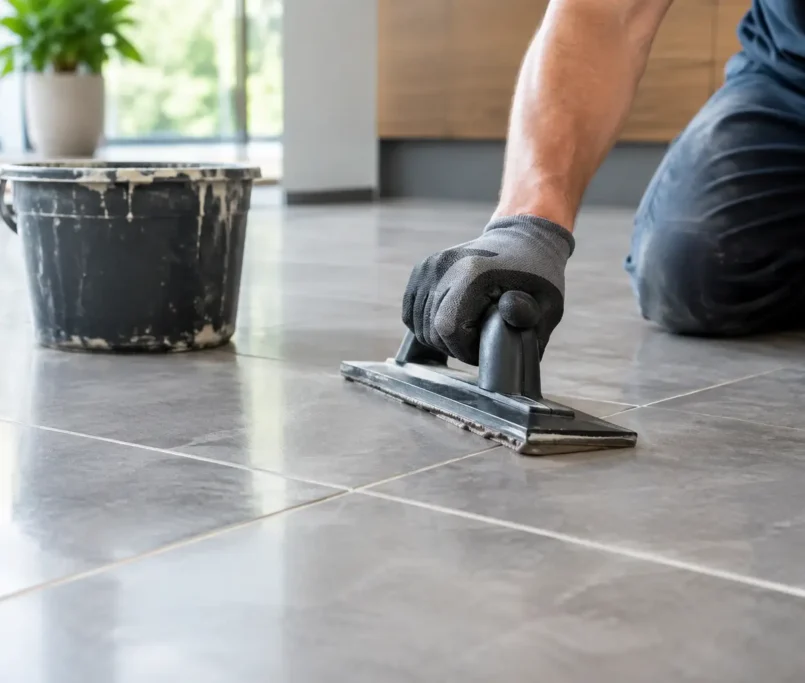
Grout is no longer an afterthought. Colour-matched grout creates a quieter, more monolithic surface, particularly with large-format tiles and stone looks. A contrasting grout can celebrate the grid and give a simple tile greater graphic energy. Neither is automatically better.
For a serene, hotel-style bathroom, grout close to the tile tone is usually the right direction. For handmade-look wall tiles, a slightly contrasting joint can reveal each tile’s shape and glaze variation. Samples should be reviewed in the room, because grout often dries differently from its appearance on a colour chart.
Joint width also deserves attention. Rectified porcelain can accommodate a narrow joint, but it does not eliminate the need for one. Tiles expand and contract, buildings move, and joints allow the tiled surface to perform as intended. Equally, silicone or other flexible sealant at changes of plane is essential. Rigid grout in these locations is more likely to crack over time.
Outdoor Tile Trends Need a Performance Check
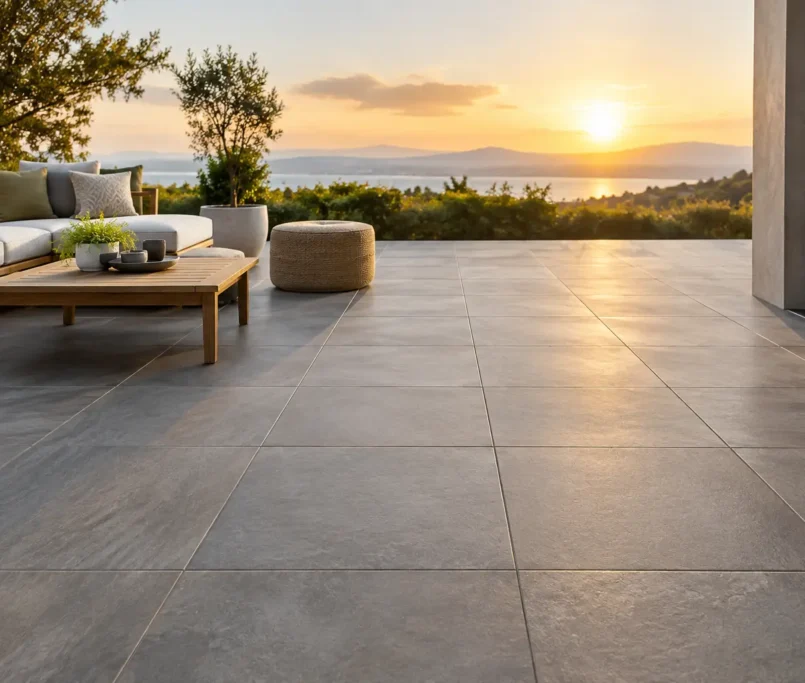
Indoor-outdoor continuity remains popular, with the same or complementary tile extending from a kitchen or living space onto a patio or alfresco area. Done well, it lengthens sightlines and makes the home feel more connected to its outdoor setting.
But an outdoor tile must be selected for more than its colour. Slip resistance, water absorption, drainage, solar exposure and the condition of the base all matter. A polished surface that looks beautiful indoors may be unsuitable around a pool or on a rain-exposed terrace. Dark tiles can become uncomfortably hot in direct sun, while pale finishes may show leaf staining or dirt more readily.
External preparation is especially critical. Falls need to direct water away effectively, movement joints must be allowed for, and the adhesive system must suit the substrate and conditions. This is where the visual promise of a continuous surface meets the discipline required to make it durable.
Trend-Proof Choices for Homes and Developments
The most resilient projects tend to combine a timeless main finish with one memorable detail. That may be a veined porcelain floor, a hand-glazed splashback, a tactile powder-room wall or a precisely framed shower niche. This balance gives a space character without tying the entire investment to a short-lived look.
For multi-unit developments, consistency matters as much as style. A tile package should be available in sufficient quantity, have realistic lead times and be practical to install repeatedly without sacrificing finish quality. Complex patterns and delicate materials can be appropriate in key spaces, but project teams should weigh the aesthetic gain against programme, waste, replacement stock and long-term maintenance.
The same principle applies to private renovations. A striking tile is worth choosing when it suits the room and the way you live. It is less compelling when the installation requirements, cleaning demands or replacement risk have been overlooked. Perfectly Laid approaches every selection as part of a complete system: substrate preparation, waterproofing, setting out, installation, grout and finishing details all protect the final result.
A trend should give your space a stronger sense of identity, not create a future compromise. Choose surfaces that feel right under natural light, specify details that can be installed with precision, and let the workmanship carry the design from first impression to everyday use.