Epoxy Grout Reviews: Is It Worth the Extra Work?
A white grout line around a statement splashback can make a kitchen feel considered for years – or look tired after its first serious cooking session. That is why epoxy grout reviews deserve more than a quick star-rating comparison. Epoxy grout is often presented as the premium answer to stains, moisture and maintenance, but its performance relies heavily on the tile selection, the location and, above all, the quality of installation.
For bathrooms, kitchens, commercial washrooms and high-use floors, it can be an exceptional material. It is not, however, a universal upgrade that belongs in every tiled space. The right decision starts with an honest look at what epoxy grout does differently and where its extra cost is justified.
What epoxy grout reviews often get right
The strongest feedback on epoxy grout tends to focus on its resistance to staining. Unlike traditional cementitious grout, epoxy grout is made from resins and fillers rather than Portland cement. It has very low porosity once cured, which means common household spills, soap residue and cooking splashes are far less likely to soak into the joint.
This is particularly valuable in pale grout colours. A crisp white or light grey joint can beautifully frame handmade-look wall tiles, large-format porcelain or stone-effect surfaces. With standard grout, keeping that original colour may require regular cleaning and occasional restoration. With a properly installed epoxy system, the day-to-day burden is considerably lower.
Reviews also commonly praise its performance in wet areas. In a shower, epoxy grout does not absorb water in the same way as cement grout, helping joints resist discolouration and mould growth. That said, it is not a substitute for waterproofing. A beautiful grout finish cannot correct a poorly prepared substrate, inadequate falls or a compromised waterproof membrane behind the tiles.
For commercial environments, the appeal is equally practical. Cafés, gyms, retail amenities and multi-residential common areas see more foot traffic, more frequent cleaning and less forgiving maintenance routines. A dense, stain-resistant grout can preserve a cleaner visual standard between professional cleans and reduce the need for aggressive chemical treatment.
The trade-off behind epoxy grout reviews
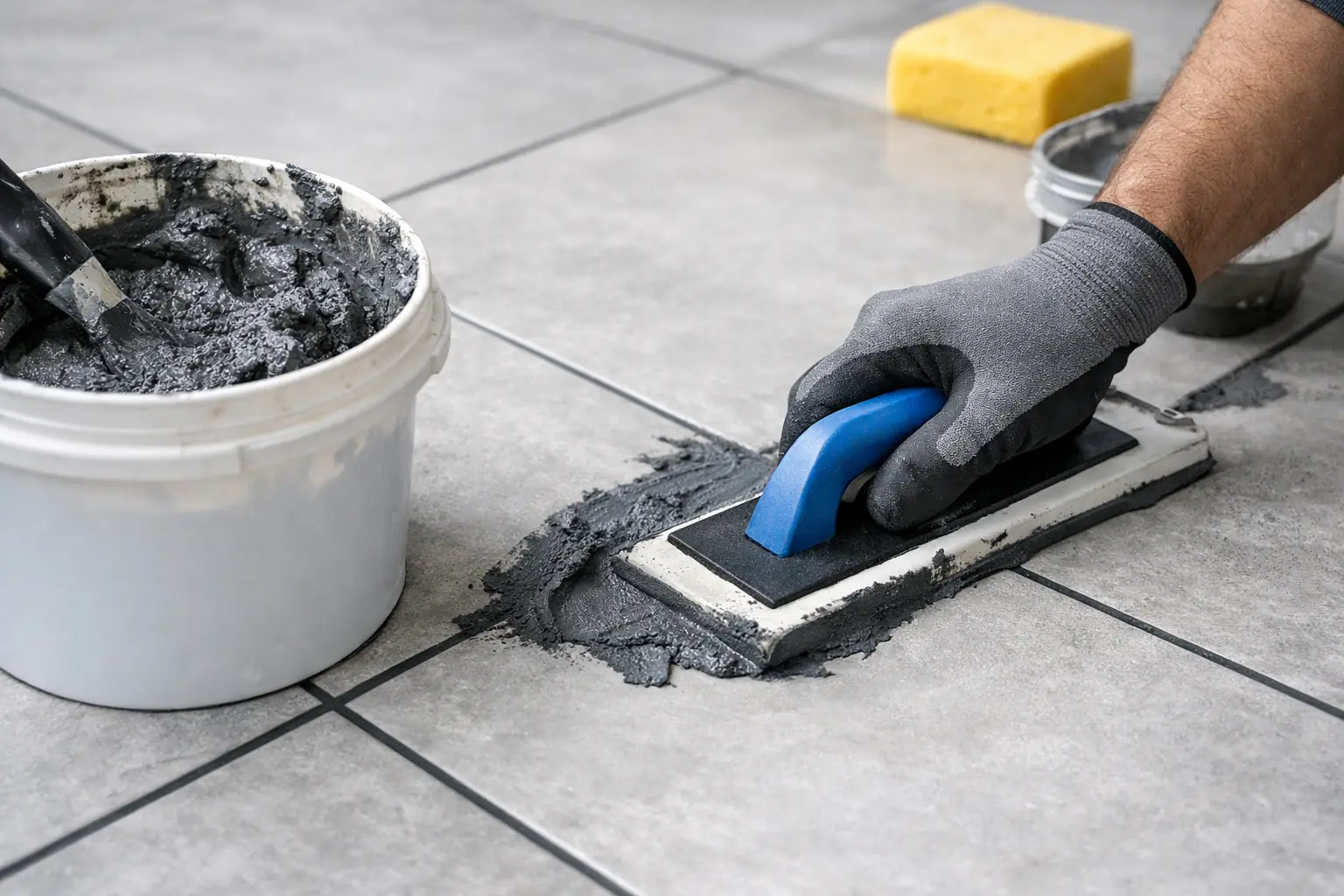
The same properties that make epoxy grout durable also make it less forgiving to install. It has a shorter working time than many standard grouts, is stickier to spread and must be washed from the tile face with discipline. Leave residue too long, and it can cure into a haze that is difficult to remove without specialist products or, in worst cases, damage to the finish.
This is why the lowest-priced installation is rarely the right benchmark. Epoxy grouting calls for planned mixing quantities, controlled application areas, suitable cleaning pads and solutions, and a tiler who understands the specific product rather than treating it like ordinary grout. On a feature wall with textured, matt or natural stone tiles, that experience matters even more.
Material cost is higher as well. The exact uplift varies with the grout system, joint size and project scale, but epoxy should be assessed as part of a finish-quality investment rather than a simple bag-for-bag comparison. On a compact splashback, the added cost may be modest relative to the value of protecting a highly visible detail. Across a large tiled floor, the budget difference can be more meaningful.
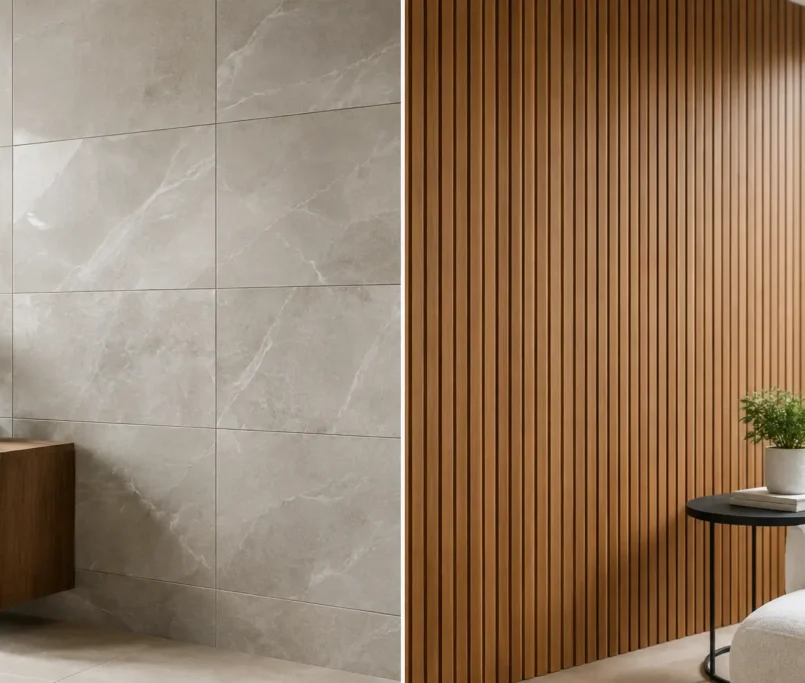
There is also an aesthetic point to consider. Epoxy grout can produce a very clean, dense-looking joint, which suits contemporary porcelain, mosaics and architectural interiors. Some clients prefer the slightly softer, more mineral character of a premium cement grout for natural stone, heritage-inspired tile or a deliberately relaxed finish. Durability matters, but the grout should still serve the design.
Where epoxy grout earns its place
Epoxy grout is most compelling where staining, water exposure or cleaning frequency will challenge the surface. Shower walls and floors, kitchen splashbacks, laundry rooms, bar areas and communal facilities are all strong candidates. It is also an excellent option for mosaic sheets, where the high number of joints can otherwise create a substantial maintenance commitment.
A high-end bathroom is a particularly good example. Large-format tiles may create a calm, minimal surface, yet the shower niche, floor junctions and feature mosaics still have joints that receive constant water, shampoo, body products and cleaning agents. Using epoxy in those high-exposure areas protects the visual standard clients have invested in.
It can also be a prudent choice for light grout on a kitchen splashback. Tomato-based sauces, oils, coffee and everyday cooking splashes are not unusual events – they are part of how a kitchen is used. If the goal is a bright, sharply detailed tiled finish without constant grout scrubbing, epoxy offers a practical advantage.
Outdoor applications require more judgement. Epoxy grout can be useful on certain external tiled surfaces, but it does not override the fundamentals of exterior construction. Tile adhesive, substrate movement, drainage, falls, expansion joints and the suitability of the selected tile all need to be resolved first. A patio with standing water or insufficient movement provision will not become reliable simply because an epoxy grout has been used.
When a quality cement grout may be the better choice
Not every project needs epoxy. A premium cementitious grout can provide an excellent result in a low-exposure wall area, such as a decorative fireplace surround or a guest bathroom wall that sees limited use. It is typically easier to apply, more economical and available in a wide range of colours and finishes.
It may also be the more appropriate material where future repairs are likely. Although all tile repairs require care, epoxy’s hardness and bond can make local removal more labour-intensive. In properties where movement, access panels or future alterations are anticipated, the whole tile assembly should be considered before specifying the grout.
Natural stone deserves a tailored recommendation rather than a blanket rule. Some stones, finishes and joint profiles benefit from particular grout products or installation methods. A sample board is worthwhile where there is any concern about residue, colour interaction or the desired visual character. The best outcome comes from testing the actual tile, not relying only on a showroom sample.
A note on movement joints and silicone
One of the most persistent misunderstandings in epoxy grout reviews is the idea that a harder grout removes the need for flexible joints. It does not. Changes of plane – such as wall-to-floor corners, internal corners, shower perimeters and junctions with benchtops – generally require a compatible flexible sealant, not rigid grout.
This detail is small but critical. Tile surfaces expand and contract, buildings settle, and different materials move at different rates. Correctly finished movement joints help prevent cracking and protect the clean, precise lines of the installation.
How to read epoxy grout reviews like a project professional
A five-star review is useful only if it tells you how and where the product was used. Look beyond statements such as “easy to clean” and seek context. Was it installed in a shower, on a busy kitchen splashback or on a floor? Was the tile polished porcelain, textured ceramic or natural stone? How long has the grout been in service?
Pay close attention to comments about installation. Positive long-term feedback has greater weight when it mentions clean joints, no lingering haze, uniform colour and carefully finished corners. These are signs that the installer managed the material well, rather than simply that the product was good on paper.
It is also worth separating product complaints from specification issues. Reports of cracking may point to movement in the substrate, missing expansion joints or poor preparation. Complaints about residue may reflect rushed washing or an unsuitable tile surface. A grout product is only one part of a tiled system that begins with substrate assessment and ends with precise finishing.
For larger developments, consistency is the key question. One successful ensuite does not prove that a system can be delivered across dozens or hundreds of units to the same standard. Builders and project managers should ask how grout selection, batch control, cleaning procedures and quality checks will be managed from the first bathroom to the final handover.
The installation details that protect the finish
Before grout is even mixed, tiles should be properly bonded, joints should be clean and consistent, and the substrate should have been prepared for the intended environment. In wet areas, waterproofing and drainage must be complete and verified. Good grouting cannot disguise poor falls or unstable tile work.
During application, an experienced tiler works in manageable sections, packs joints fully and cleans at the correct stage of the cure. The goal is not merely to fill the gaps. It is to achieve evenly shaped joints, controlled colour and a tile face free from residue.
After installation, epoxy grout still benefits from sensible care. Use a pH-neutral cleaner for routine cleaning, avoid unnecessarily abrasive pads and keep shower areas ventilated. Its stain resistance reduces maintenance, but it does not remove the need to clean a bathroom or kitchen properly.
At Perfectly Laid, grout is treated as a finishing decision with structural consequences, not an afterthought chosen at the end of a tile installation. The right material, preparation and workmanship work together to keep the finished surface looking as intentional as the original design.
If you are weighing up epoxy grout, start with the space you are creating and how it will actually be used. A carefully specified grout line may be one of the smallest elements in the room, but it is often what keeps the whole tiled surface looking exceptional long after handover.