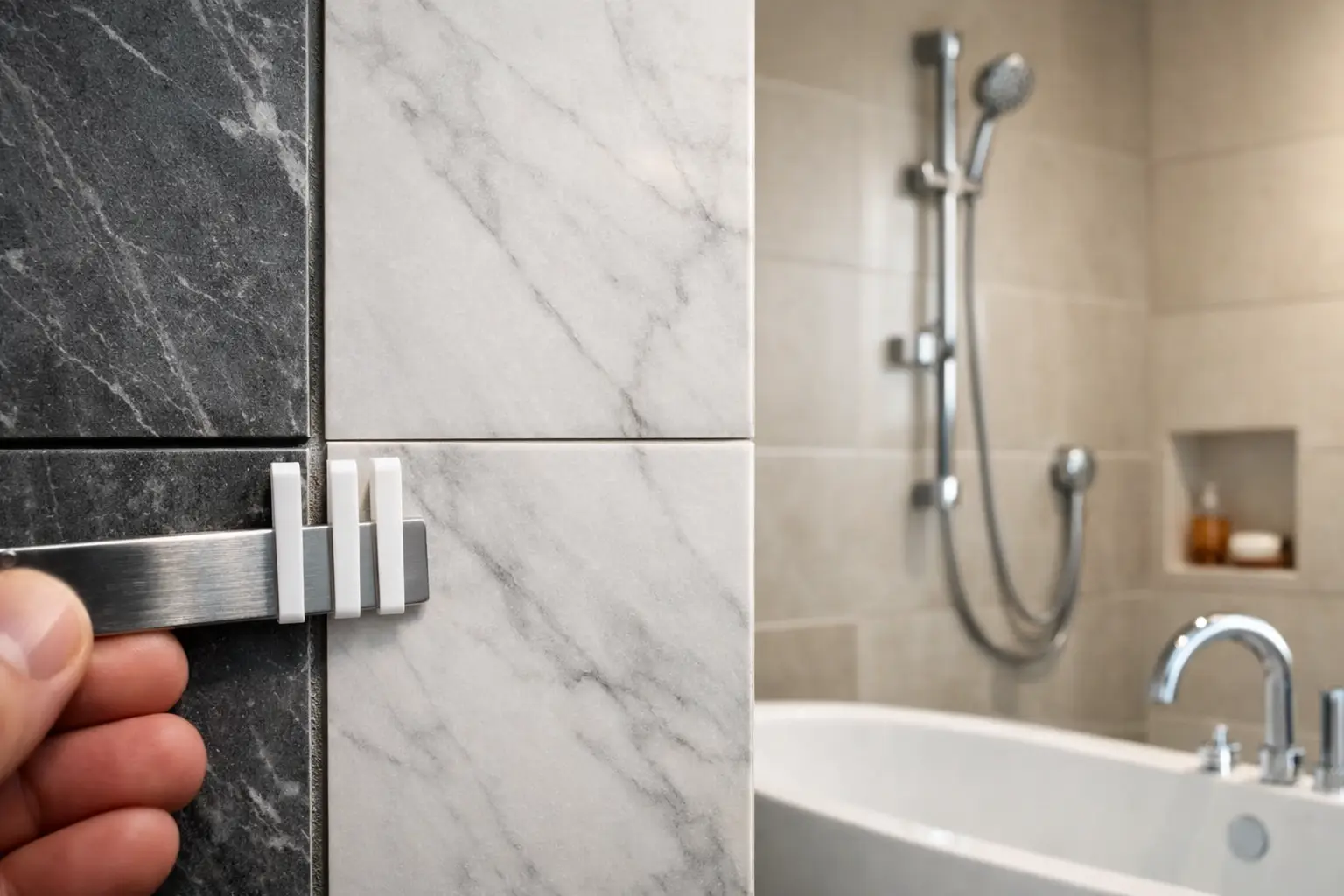
High End Bathroom Grout Line Size Guide
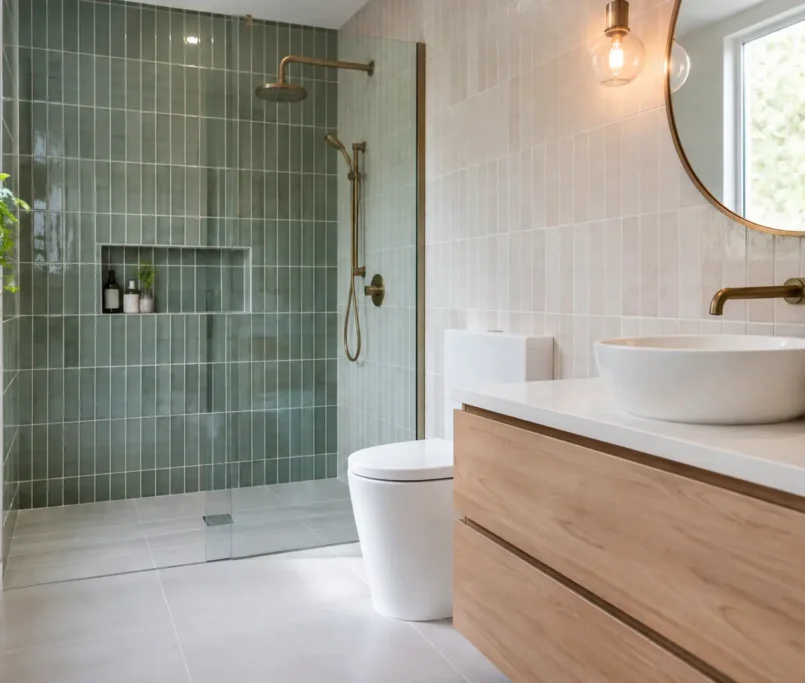
A bathroom can have exquisite stone, beautifully specified tapware and flawless lighting, then be let down by grout lines that feel too wide, too tight or simply inconsistent. In high-spec spaces, proportion matters. That is why high end bathroom grout line size is never just a technical decision – it shapes the whole visual rhythm of the room and affects how well the installation performs over time.
For premium bathrooms, the right grout joint is the one that suits the tile, the substrate, the layout and the design intent all at once. There is no single luxury standard. What reads crisp and refined with rectified porcelain can look forced on handmade ceramic, and what works on a feature wall may not be right for a shower floor. Getting that judgement right is where craftsmanship shows.
What high end bathroom grout line size really means
When clients talk about a high-end finish, they are usually responding to restraint and precision. Grout lines should feel intentional. They should support the tile rather than compete with it, and they should stay consistent through corners, niches, trims and transitions.
In practical terms, high end bathroom grout line size often sits in a narrower range than standard installations, particularly with calibrated or rectified tiles. For many premium bathroom walls and floors, joints around 1.5mm to 3mm are common. That said, luxury does not automatically mean the smallest possible line. A grout joint that is too tight for the material or setting can create more problems than it solves.
The best result comes from balancing aesthetics with tolerance. Tiles vary. Substrates move. Wet areas demand reliability. A beautifully installed bathroom accounts for all of that before the first tile is fixed.
The sizes most often used in premium bathrooms
1.5mm to 2mm for rectified wall tiles
This is often the sweet spot for large-format rectified porcelain on bathroom walls. It gives the installation a clean, tailored look without pretending the tiles are perfectly seamless. The lines are fine enough to feel modern and architectural, but still allow for practical setting and alignment.
This range works particularly well in design-led bathrooms where the brief calls for visual calm – think soft stone-look porcelain, slab-style formats and restrained palettes. It can look exceptional, provided the wall preparation is exact and the tile batch is genuinely consistent.
2mm to 3mm for many floor applications
Bathroom floors usually ask more of the installation. There is foot traffic, drainage to consider and often more movement than on a wall. A slightly wider joint can improve tolerance and help maintain a stable, even finish, particularly with larger floor tiles.
For premium projects, 2mm to 3mm is often where appearance and performance meet comfortably. The floor still reads refined, but the installation has enough allowance to deal with real-world conditions.
3mm or more for textured, handmade or irregular tiles
Not every high-end bathroom is minimal. Some of the most striking spaces use zellige, handmade ceramic or heavily textured natural stone. These materials have variation built into their appeal, and trying to force a pin-thin grout line usually works against them.
With artisanal tiles, a wider joint can look more honest and more luxurious because it respects the character of the material. In those cases, the finish feels elevated not because it is tight, but because it is appropriate.
Why smaller is not always better
There is a common assumption that the narrowest possible grout line equals the most expensive-looking result. On site, it is rarely that simple.
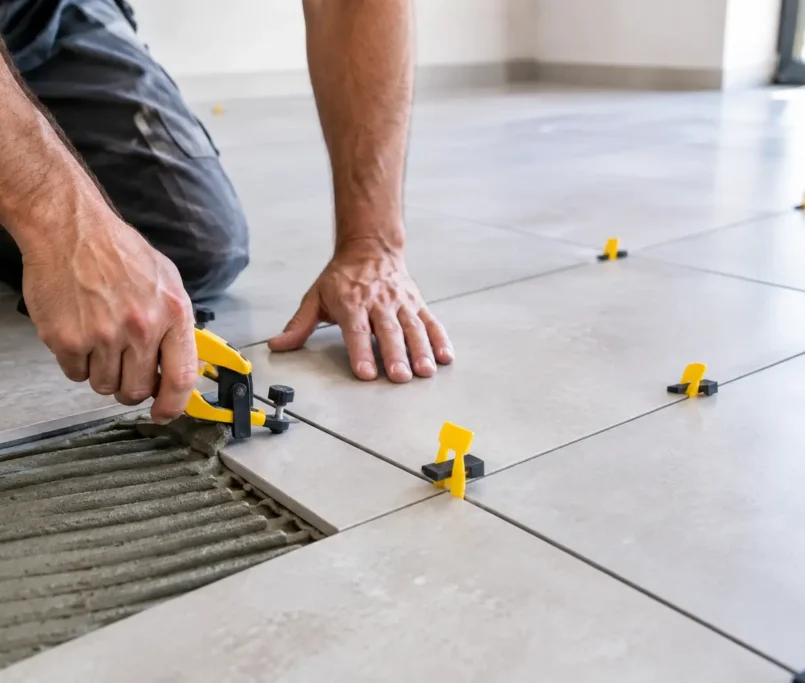
Very tight joints demand extremely flat substrates, precise tile calibration and disciplined installation. If any one of those elements is lacking, the defects become more visible, not less. Lippage stands out. Alignment issues stand out. Minor tile size variation stands out. The result can feel tense rather than refined.
There is also the question of movement. Bathrooms are wet areas, and all tiled assemblies experience slight expansion and contraction. Grout joints help manage that reality. They are part of a system that includes substrate preparation, waterproofing, tile selection, adhesive choice and movement joints in the right places. Focusing only on a micro-joint aesthetic while ignoring the build-up beneath it is the wrong priority.
In truly premium work, the goal is not to make the grout disappear at any cost. The goal is to achieve a controlled, elegant installation that will still look right years later.
How tile type changes the ideal grout joint
Rectified porcelain
Rectified porcelain is the material most people associate with narrow joints. Because the edges are mechanically finished, the tiles are more uniform and can usually be laid with tighter spacing. This is often the best candidate for a sleek, contemporary bathroom.
Even so, not every rectified tile performs identically. Large-format pieces, patterned products and certain finishes may still need a little more room to maintain consistency across the space.
Natural stone
Stone introduces more variables. Some products are calibrated beautifully, while others have slight size and edge variation. The finish also matters. Honed limestone, travertine and marble each have their own tolerances and visual behaviour once installed.
A premium stone bathroom usually benefits from a joint selected after the actual material is reviewed, not from a generic rule. The right line should complement the veining, edge detail and room proportions.
Mosaic and small-format tiles
On shower floors and curved surfaces, smaller tiles are often the better technical choice because they can follow falls and contours. Here, grout is more present by nature. That is not a flaw. It is part of the texture and function of the surface.
The standard for luxury in these areas is not invisibility. It is sharp set-out, clean sheet alignment and well-finished junctions.
Layout matters as much as grout size
A beautifully judged grout line can still be undermined by a poor layout. In high-end bathrooms, set-out is where design intent becomes visible. Symmetry around a vanity, balanced cuts at corners, clean alignment through niches and careful continuation between wall and floor all influence how refined the finished room feels.
This is why grout joint decisions should be made alongside the layout plan, not after. A 2mm joint across a full room can slightly change where cuts land. It can affect centring. It can influence how a feature tile lines through with fittings. On premium projects, these decisions are coordinated early so the bathroom feels composed rather than improvised.
The role of grout colour in a high-end finish
Joint width never works in isolation. Grout colour changes the visual impact immediately.
A close tonal match creates a quieter, more monolithic look and can make even a 3mm joint feel discreet. A contrast grout emphasises pattern, grid and geometry, which can be powerful in the right scheme but less forgiving if the installation lacks precision.
In luxury bathrooms, matching or near-matching grout is often preferred because it supports a calm, cohesive finish. That said, there are exceptions. Some design schemes want definition. The right answer depends on whether the tile itself or the pattern between tiles is meant to lead the room.
Where performance should override preference
There are moments when technical requirements should take priority over a purely aesthetic preference for tighter joints.
Shower floors are a clear example. Slip resistance, drainage and conformity to falls matter more than chasing the narrowest line. Likewise, if the substrate needs correction, if the tile has noticeable size variation or if the area is subject to more movement, a modestly wider joint may be the smarter specification.
That is not a compromise in quality. It is quality. A premium outcome is one where visual restraint is backed by sound judgement.
Getting the finish right on larger or multi-unit projects
For developers, builders and project managers, consistency becomes just as important as appearance. On boutique developments and high-rise bathrooms, grout joint size needs to be repeatable across multiple units without drift in standards.
That requires more than a number on a drawing. It needs disciplined substrate preparation, clear setting-out procedures, batch checking, supervision and finishing control. A contractor with strong systems can maintain that visual standard at scale, which is often the difference between a bathroom that looks premium in one display suite and one that delivers across an entire project. It is an area where specialist teams such as Perfectly Laid add real value, because precision has to be operational as well as aesthetic.
So what should you choose?
If you are specifying a contemporary, high-spec bathroom with rectified porcelain, 1.5mm to 2mm on walls and around 2mm to 3mm on floors is often a strong starting point. If you are working with natural stone, handmade tile or mosaic, the right answer may be wider. And if a design insists on ultra-fine joints, the substrate and tile quality have to justify that ambition.
The most expensive-looking grout line is not the smallest one. It is the one that feels calm, consistent and fully considered within the room.
A premium bathroom always reveals the same thing on close inspection: not just good materials, but good judgement behind every millimetre.