Tile Edge Finishing Options Guide
A tiled surface can be laid perfectly across the field and still look unfinished if the edges are handled poorly. That is why a proper tile edge finishing options guide matters. The edge is where workmanship becomes visible at a glance – around a shower niche, along a splashback return, at the end of a feature wall, or where a floor tile meets another material. Get it right and the installation looks intentional, refined and durable. Get it wrong and even an expensive tile can feel second-rate.
For homeowners, designers, builders and project managers, edge detailing is not a minor afterthought. It affects safety, longevity, maintenance and the overall visual standard of the space. In high-end bathrooms and kitchens especially, the edge treatment often separates a basic tile job from a truly resolved finish.
Tile edge finishing options guide: what are you choosing between?
Most projects come down to a handful of proven solutions, but the right one depends on the tile itself, the setting and the design intent. The main options are trim profiles, mitred edges, bullnose tiles and, in some cases, exposed natural tile edges where the material is suitable.
Each option has strengths. Each also has constraints. A polished result comes from matching the finish method to the tile body, the exposure level and the standard of detail the project requires.
Tile trim profiles
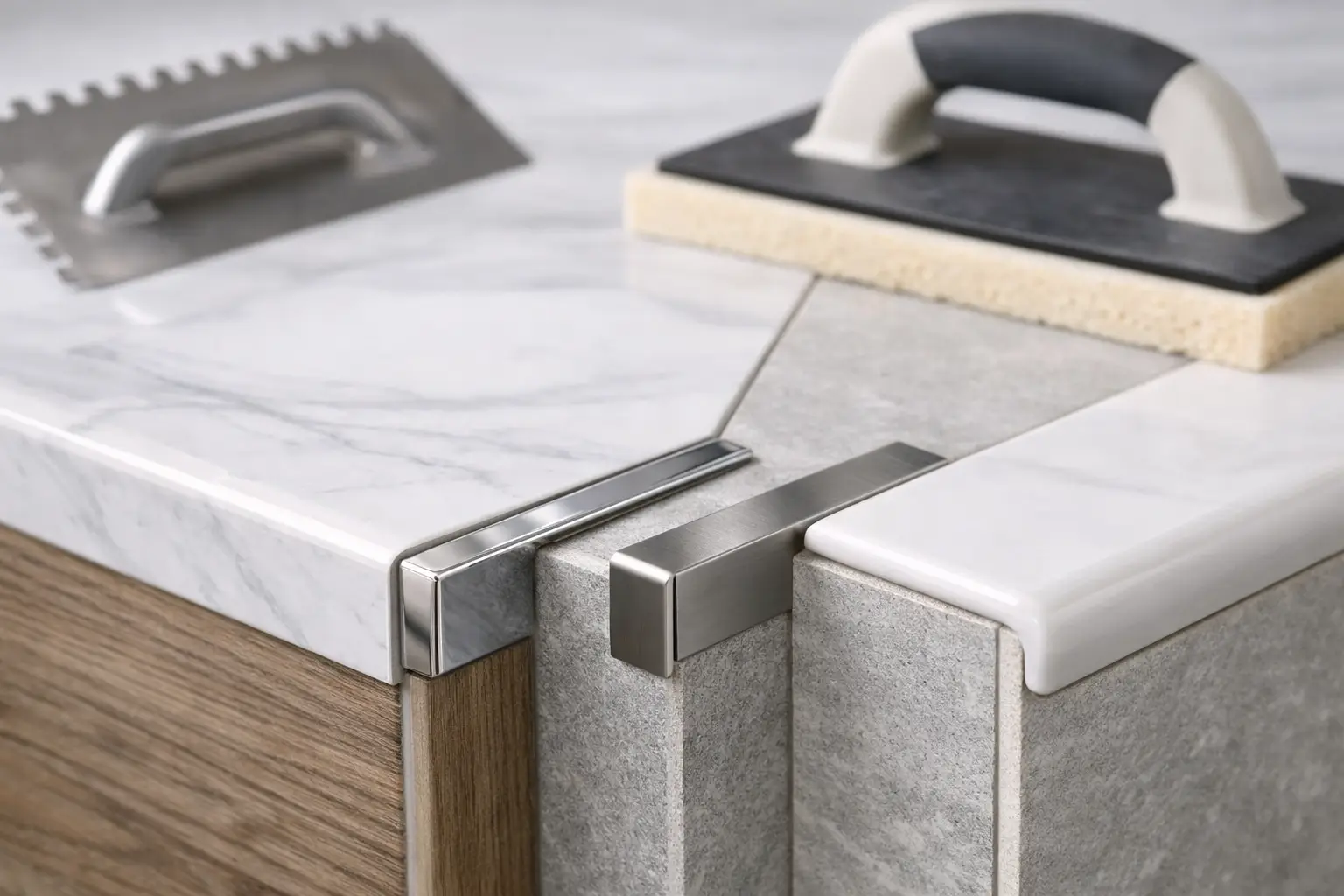
Trim is one of the most common and dependable ways to finish a tile edge. These profiles are typically made from aluminium, stainless steel, PVC or brass, and they create a neat protective boundary where tile stops.
In practical terms, trims work exceptionally well in bathrooms, kitchens, laundries and commercial fit-outs because they protect vulnerable tile edges from knocks and chipping. They also help create consistency across long runs, external corners and threshold transitions. For builders and developers managing repeatability across multiple units, trim can be a smart specification because it delivers a controlled, uniform finish.
That said, not all trims suit every aesthetic. A bright metal profile can look sharp and contemporary with rectified porcelain, but it may feel out of place beside handmade-look tiles or natural stone. The profile depth must also match the tile thickness precisely. A trim that sits proud or too low can undermine the whole effect.
Mitred tile edges
A mitred edge is often the premium choice when the goal is a clean, monolithic look. Instead of using a visible trim, the tile edges are cut to 45 degrees so two pieces meet neatly at an external corner. This is a favoured detail in luxury bathrooms, shower niches, hob walls, feature walls and island returns because it lets the tile itself remain the hero.
When executed properly, a mitre looks crisp, understated and architectural. It is especially effective with large-format porcelain where clients want uninterrupted lines and minimal visual clutter.
The trade-off is that mitres demand precision at every stage. Substrates need to be true, cuts need to be exact and installation needs to account for movement, alignment and edge fragility. On some tiles, particularly those with a brittle glaze or heavily patterned surface, a mitre can be more vulnerable to impact than a protected trim edge. It is not a shortcut detail. It is a craftsmanship detail.
Bullnose tiles
Bullnose tiles have a factory-finished rounded edge. They were once the default answer for exposed edges, especially in bathrooms, skirtings and window reveals, and they still have a place in certain designs.
Their main advantage is softness. They feel safe, resolved and easy to clean, which can be useful in family settings or commercial areas where corners may get more contact. They can also suit more traditional interiors where a rounded profile feels more natural than a sharp contemporary line.
The limitation is availability. Many modern porcelain ranges do not include matching bullnose pieces, particularly in designer formats and large sizes. Even when they do, the profile may not suit the sharper aesthetic many clients now prefer. In premium contemporary work, bullnose is usually a style-led decision rather than the default option.
Exposed natural edges
Some materials can be left exposed if the tile body is attractive and the cut edge can be finished neatly. Certain porcelain tiles with through-body colour, and some natural stones, can handle this approach better than glazed ceramics where the raw edge reveals a contrasting core.
This can work beautifully in restrained, minimal spaces, but it depends heavily on the material. If the edge looks chalky, rough or visibly different from the face, it will not read as refined. This is where product selection and sample review matter.
How to choose the right tile edge finishing option
The best edge detail is not just about preference. It needs to suit the tile, the space and the level of wear the surface will take.
Start with the tile type. Rectified porcelain is often an excellent candidate for trims or mitres because it has crisp edges and a more precise format. Glazed ceramic can be less forgiving, especially if the body colour contrasts strongly with the face. Natural stone opens up more custom finishing opportunities, but it also requires proper sealing and material knowledge.
Then consider location. A shower niche inside a master ensuite may justify a mitred finish because the visual impact is high and the wear is moderate. A busy commercial corner, by contrast, might benefit from a stainless steel trim that offers stronger protection. Outdoor areas bring another layer of consideration. Sun exposure, moisture and foot traffic can all influence which edge materials will perform well over time.
Design style matters too. If the brief is sleek and minimal, trims should be selected carefully or avoided in favour of mitres where suitable. If the scheme includes warmer finishes, textured tiles or a more classic palette, a softer edge treatment may sit better visually.
Budget and programme also play a role. Mitred detailing usually requires more labour, more care and more time. On a bespoke residential renovation, that can be worthwhile. On a larger multi-unit project, the chosen finish may need to balance visual quality with repeatability and delivery efficiency.
Where edge finishing makes the biggest difference
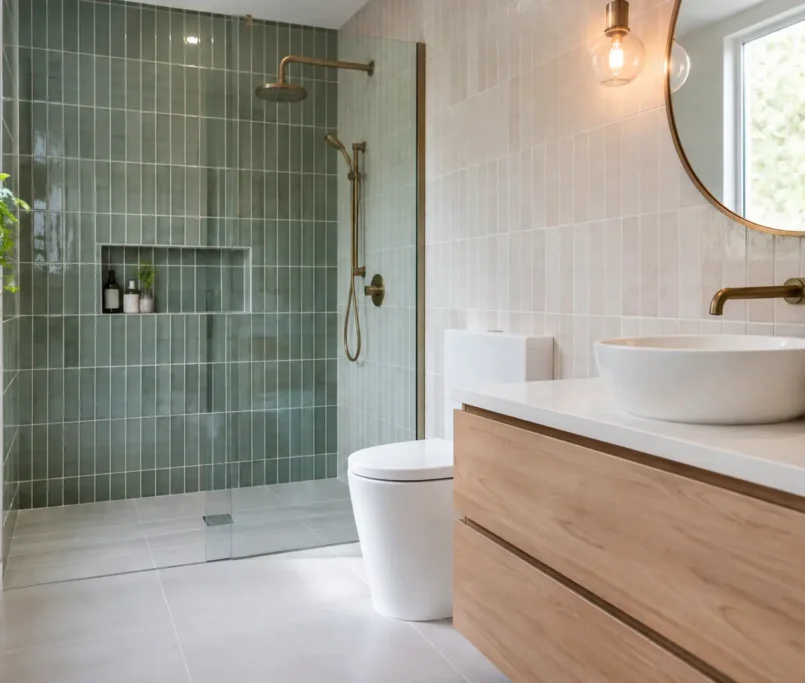
Some areas draw the eye immediately, so edge quality becomes far more noticeable. Shower niches are one of them. A niche with uneven cuts, poorly aligned trim or chipped corners will always look unfinished, no matter how good the waterproofing or tile selection is behind it.
Splashbacks are another. Kitchen tile edges often terminate in visible locations near joinery, stone benchtops or painted walls. The transition needs to feel deliberate. The same is true for feature walls, window reveals, tiled hob walls and step edges.
Floor transitions deserve equal attention. Where tile meets timber, carpet or polished concrete, the finishing detail needs to manage height, movement and visual cleanliness. This is not just a cosmetic issue. It affects durability under foot and reduces the risk of edge damage over time.
Why installation quality matters as much as the finish type
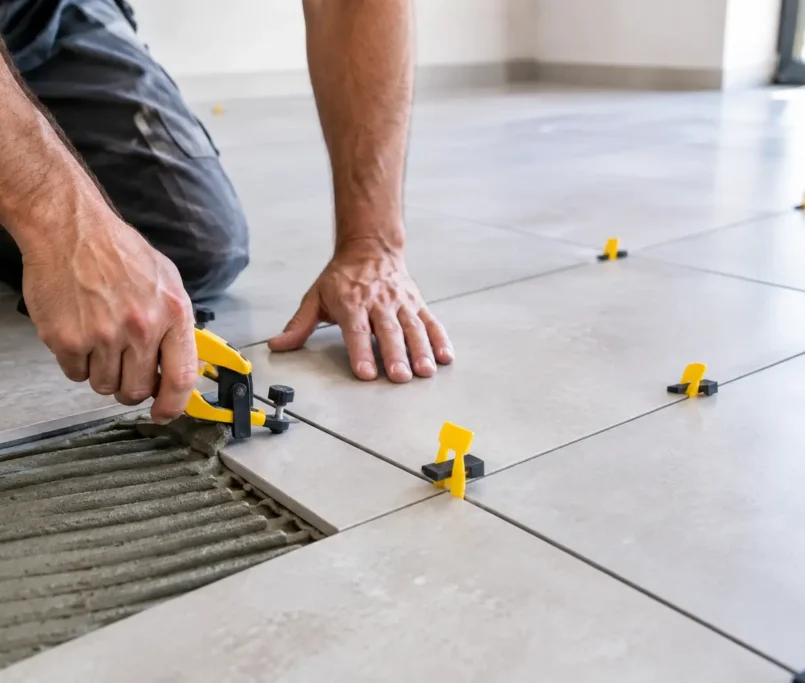
A trim is only as straight as the setting out behind it. A mitre is only as sharp as the cuts and substrate accuracy allow. Even the best tile edge finishing options guide cannot substitute for disciplined execution.
This is why edge decisions should not be left until the day of installation. They should be considered during planning, alongside tile thickness, substrate preparation, waterproofing build-up, adjoining materials and movement joints. On high-spec projects, mock-ups or sample corners can save a great deal of disappointment later.
For homeowners, this means asking to see how corners, niche edges and terminations will be handled before works begin. For builders and developers, it means ensuring the tiling scope covers finishing details clearly rather than treating them as incidental. Consistency across units, especially in bathrooms and kitchens, depends on these decisions being standardised early.
At Perfectly Laid, this is where craftsmanship and process meet. The finish at the edge is never separate from preparation, alignment and overall build quality. It is the visible proof that the job has been thought through properly.
Tile edge finishing options guide for premium results
If the goal is a premium result, choose with restraint. The strongest tile edge finish is usually the one that feels integrated with the design rather than added on at the last minute. Sometimes that means a slim, colour-matched trim that quietly protects an exposed edge. Sometimes it means investing in precise mitres to keep the tile face uninterrupted. Sometimes it means accepting that a certain tile, however attractive on the board, is not the right product if its edges cannot be finished to the required standard.
A well-finished edge does more than complete the tilework. It sharpens the whole room. It makes a bathroom feel calmer, a kitchen feel cleaner and a commercial fit-out feel more resolved. When every line lands as it should, the space carries a different level of confidence.
If you are selecting tile for a renovation or specifying finishes across a larger development, treat edge detailing as part of the design from the start. The right decision is rarely the loudest one. It is the one that still looks precise, durable and considered years after handover.