Outdoor Retiling Project Guide for Lasting Results
A beautiful patio can be let down by one detail most people only notice when it fails – cracked tiles, drummy spots underfoot, standing water after rain, or edges that already look tired. A proper outdoor retiling project guide is not really about swapping one tile for another. It is about protecting the surface beneath, controlling water, and delivering a finish that still looks sharp after seasons of weather, foot traffic, and daily use.
Outdoor tiling carries a higher performance burden than most internal spaces. Sun, rain, temperature swings, movement in the substrate, and drainage all place pressure on the installation. If the project is approached as a cosmetic refresh alone, the result can look polished for a short time and fail far too early. That is why the best outcomes start with disciplined preparation and a clear understanding of the site.
What an outdoor retiling project guide should prioritise
The first question is not which tile looks best. It is whether the existing surface is suitable to tile again, or whether the area needs demolition and rebuilding from the base up. That answer affects lifespan, appearance, programme, and budget.
In some cases, the substrate is fundamentally sound, levels are correct, and drainage works well. Retiling can then focus on removing the old finish, preparing the base, waterproofing where required, and installing the new tiles with precision. In other cases, the old tiled area has already revealed the real problem – poor falls, unstable screed, inadequate movement joints, or water getting where it should not. Covering that over simply transfers the issue into a more expensive finish.
For homeowners, this often means resisting the temptation to judge the job by surface appearance alone. For builders and developers, it means understanding that programme reliability comes from resolving hidden defects early, not patching around them later.
Start with the substrate, not the tile
Every successful external tiling project is built on preparation. Existing tiles may need to be removed completely so the condition of the slab or screed can be assessed properly. Hollow sections, cracking, lifting, or uneven levels usually point to a base that needs more than minor correction.
This stage often determines whether the project will perform over time. A substrate may need grinding, re-levelling, crack treatment, or fresh screeding to create consistent falls and a stable bed. If the outdoor area connects to internal floors, thresholds and set-downs also need careful review. The visual line between inside and outside matters, but so does keeping water where it belongs.
It depends on the location. A covered alfresco area has different demands from an exposed terrace, pool surround, balcony, or podium deck. The more exposed the setting, the less margin there is for compromise in the build-up.
Drainage and falls are not finishing details
One of the most common reasons outdoor tiled areas fail is simple: water is not being moved away efficiently. Even premium tiles and adhesives cannot compensate for poor falls.
A surface should be assessed for drainage before any finish is selected. Water needs direction, and that means falls must be correct and consistent. Ponding after rain is more than an annoyance. Over time, it can contribute to staining, slipping hazards, edge deterioration, and stress within the tiled system.
Good retiling work often involves adjusting levels rather than just replacing materials. This is especially important on larger entertaining areas, commercial entries, and high-use external spaces where appearance and safety are equally visible.
Tile selection for outdoor performance
Design matters outdoors, but performance matters first. The right tile should suit the setting visually while standing up to weather exposure and practical use. Slip resistance is a major consideration, particularly around pools, entry paths, and hospitality spaces. Texture, finish, and tile format all influence how the area feels underfoot and how it behaves in wet conditions.
Large-format tiles can look refined and contemporary, but they also require a flatter substrate and tighter installation control. On an outdoor base with inconsistent levels, they can expose imperfections quickly. Smaller formats can be more forgiving in some layouts and may provide better grip depending on the finish, though they introduce more grout lines and a different visual rhythm.
Natural stone and porcelain each have strengths. Porcelain is often favoured for its consistency and lower maintenance profile. Stone can deliver a premium, architectural result, but it needs appropriate sealing, careful selection, and a substrate prepared to suit the weight and tolerances of the material.
There is no universal best choice. The right specification depends on exposure, expected traffic, maintenance expectations, and the design intent of the space.
Waterproofing in an outdoor retiling project guide
Not every outdoor area is waterproofed in the same way, but many failures trace back to water management being treated too lightly. Balconies, podiums, terraces over occupied spaces, and certain transition zones need especially careful waterproofing design and execution.
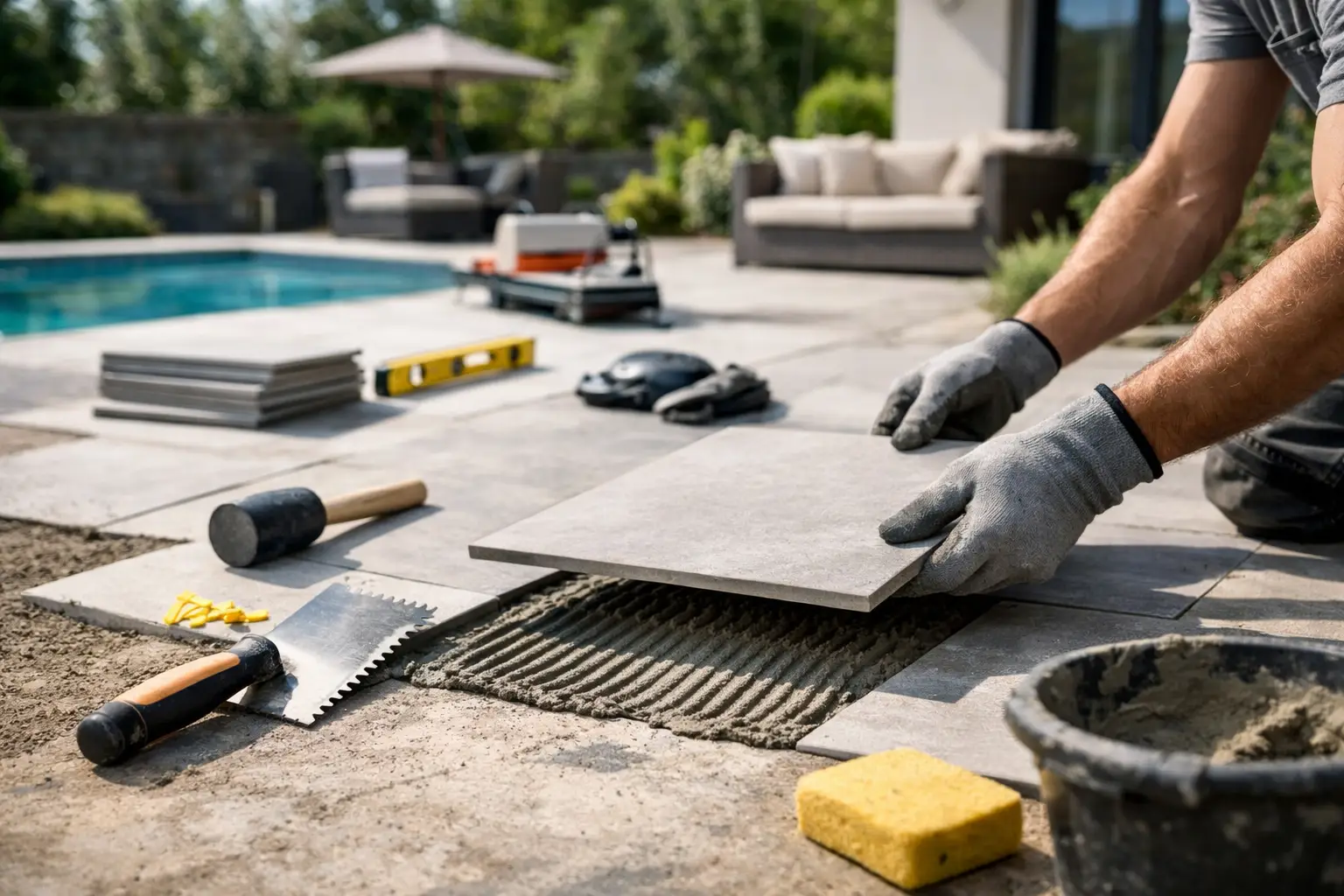
This is where process matters. Membranes, bond breakers, junction treatment, penetrations, and curing times all need to be handled correctly. If the installation is rushed or sequenced poorly, problems may stay hidden until they appear internally or begin to compromise the tile finish.
For clients, waterproofing is not the glamorous part of the project, but it is one of the most valuable. It protects structure, prevents disruption, and gives the finished surface a proper foundation. In quality-led projects, it is never an afterthought.
Adhesives, grout and movement joints matter more outdoors
External tiling systems move. Heat, shade, moisture, and structural conditions all create expansion and contraction. That is why suitable adhesives and properly planned movement joints are essential.
A neat tiled surface can still be technically wrong if movement has not been allowed for. Cracking, tenting, debonding, and grout failure are often signs that the system was installed too rigidly. Joints need to be placed where movement is expected and finished cleanly so they support both function and appearance.
The same applies to grout and sealant choices. Outdoor installations require products selected for external exposure, not simply whatever was used internally on a previous job. The finish should be elegant, but it also needs resilience.
Why workmanship shows faster outside
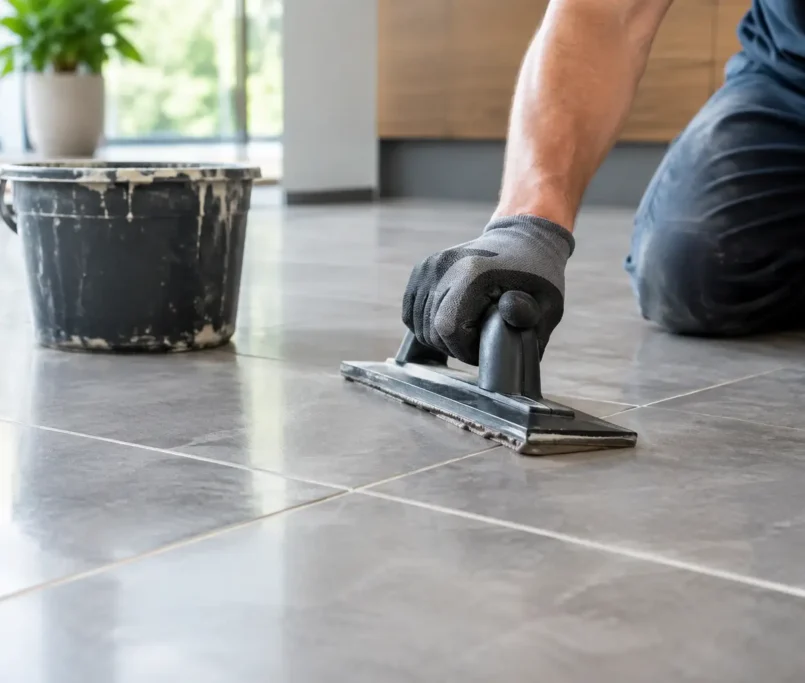
Outdoor tiling is unforgiving. Inconsistent lines, lippage, rough cuts, poorly aligned falls, and untidy finishing are all more obvious in natural light. Rainwater also acts as a test the moment the job is exposed.
That is why precision installation makes such a difference. Tile set-out should be considered carefully from the start so cuts, edges, and transitions feel intentional. Around drains, steps, columns, and doorways, experienced planning separates a premium finish from a merely acceptable one.
For commercial projects and multi-unit developments, consistency is just as important as quality on a single area. A contractor must be able to maintain standards across repeated spaces while still protecting programme and coordination with other trades. That balance of craftsmanship and delivery discipline is where specialist capability becomes valuable.
Budget, timing and where to avoid false savings
Retiling costs vary because site conditions vary. The biggest budget shifts usually come from what is discovered beneath the old finish, not the visible tile alone. If demolition reveals poor screed, structural cracking, failed waterproofing, or drainage issues, those items need to be addressed properly.
This can feel like scope growth, but often it is simply the real scope becoming visible. The false economy is spending on premium tiles while leaving a compromised base untouched.
Timing also depends on curing periods, weather exposure, access, and whether the area must remain partially operational. On occupied homes and active commercial sites, sequencing matters. A professional team will plan around access, protection, and clean handover rather than treating disruption as inevitable.
How to approach your outdoor retiling project guide with confidence
If you are planning an outdoor retiling project, ask early questions about substrate condition, drainage, waterproofing, tile suitability, and movement management. Those answers tell you far more about the likely quality of the result than a tile sample ever will.
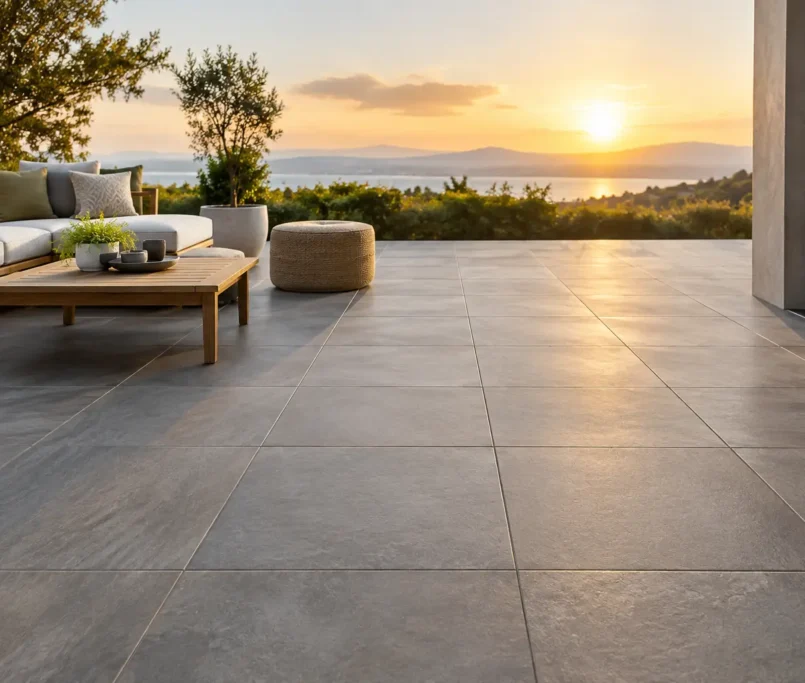
Look for a contractor who sees the work as a complete system, from demolition and re-levelling through to installation and finishing. That full-scope approach reduces risk because accountability sits in one place. It also protects design intent. A premium outdoor space should feel refined when viewed from the kitchen, comfortable underfoot in daily use, and dependable when the weather turns.
At Perfectly Laid, that is the standard the work is built around – precision in the hidden layers, clarity in delivery, and a finish that earns its place in the architecture.
The best outdoor tiled spaces do not just photograph well on handover day. They keep performing quietly, beautifully, and without fuss long after the furniture has been set back in place.