Caulk vs Grout Bathroom: What Goes Where?
A bathroom can look immaculate on day one and tired six months later for one simple reason – the wrong material was used in the wrong joint. When clients ask about caulk vs grout bathroom decisions, they are usually trying to solve more than a cosmetic issue. They want clean lines, long-term durability, and a finish that does not crack, stain or let water where it should never go.
This is one of those details that separates a basic tile job from a properly finished bathroom. Grout and caulk are not interchangeable, even if they can appear similar from a distance. Each has a specific role, and getting that role right protects the visual standard of the room as much as the performance behind it.
Caulk vs grout bathroom: the core difference
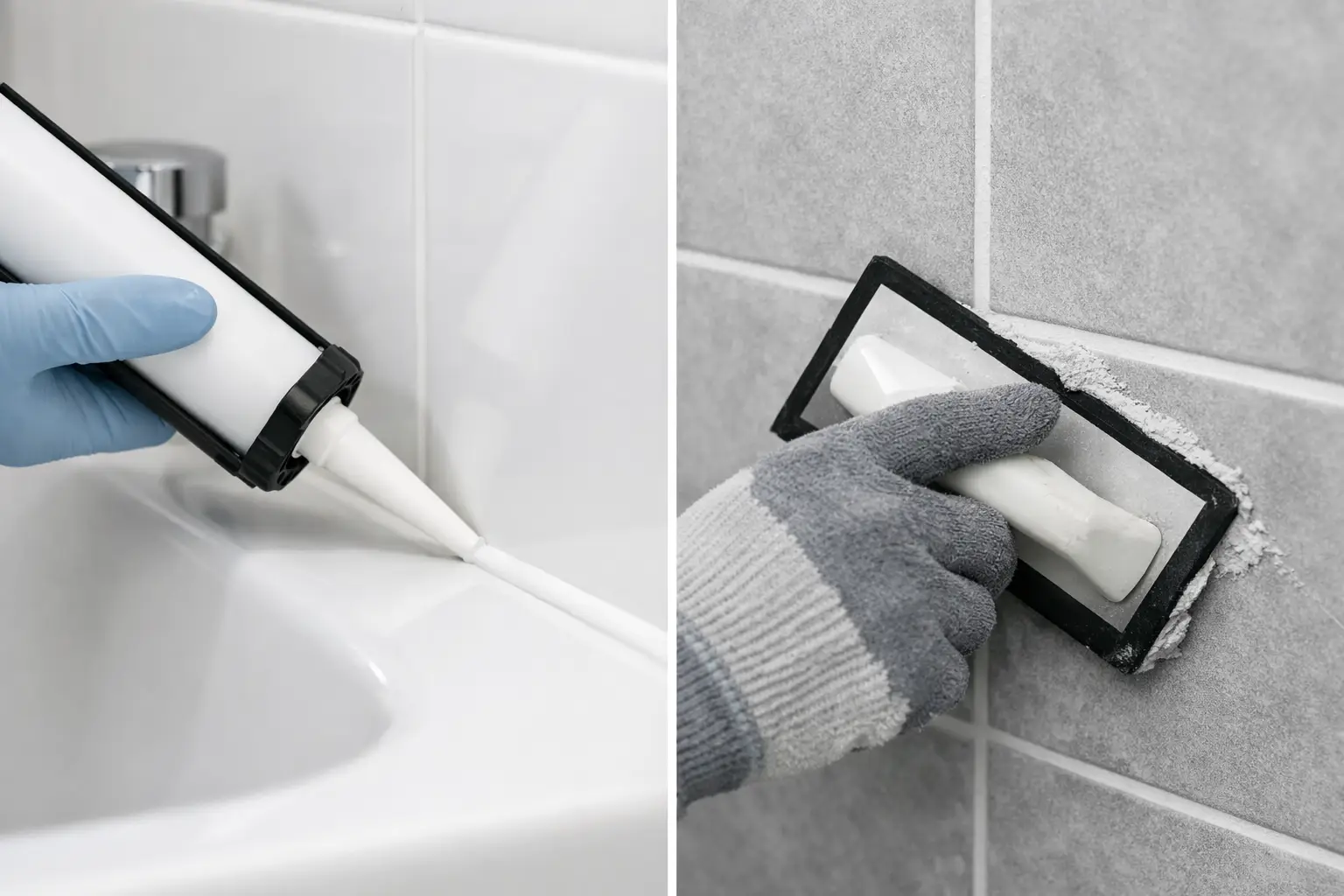
Grout is used to fill the joints between tiles across stable surfaces. It locks the tiled field together visually, supports the finished layout, and helps create that refined, even grid that makes quality tiling look precise. Once cured, grout is hard and relatively rigid.
Caulk is used where movement is expected. It stays flexible, which means it can absorb slight shifts caused by temperature change, building movement, moisture, and daily use. In a bathroom, those small movements are constant. A wall may expand slightly, a shower tray may settle a touch under load, and different materials will move at different rates.
That is the heart of the caulk vs grout bathroom question. Grout belongs in the tile joints. Caulk belongs in transitions, corners, and change-of-plane areas where a rigid product is more likely to fail.
Where grout should be used
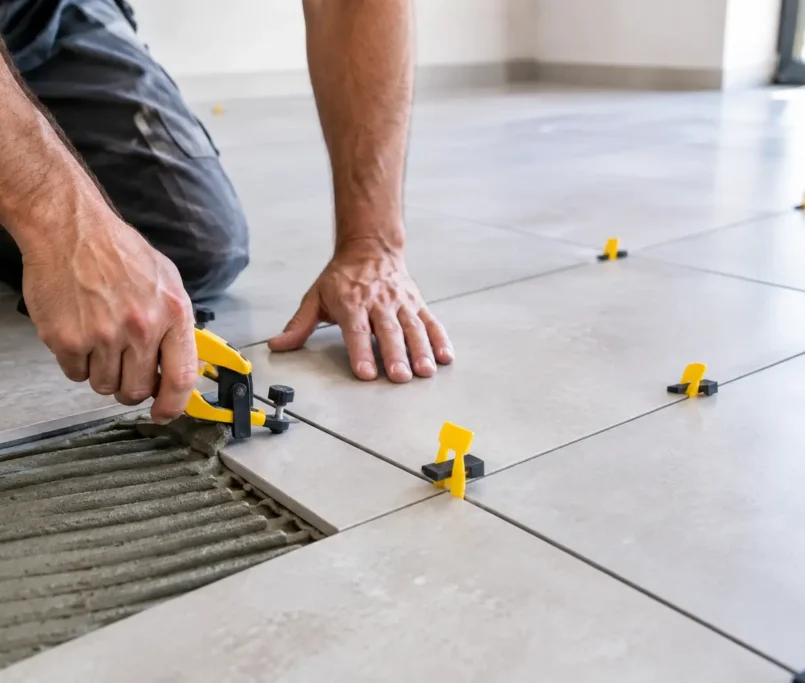
Grout is the right choice between tiles on walls and floors where the surface is flat and the spacing is consistent. It is what gives a tiled bathroom its finished structure. Without well-installed grout, even premium tiles can look unfinished or uneven.
In practical terms, grout is commonly used between wall tiles in shower recesses, between floor tiles, on splashbacks, and across tiled feature walls. It can also be matched carefully to the tile colour for a subtle, architectural look, or contrasted for a more graphic layout.
The trade-off is that grout is not designed to flex. If it is forced into a joint that moves, cracking is likely. That crack is rarely just a visual defect. It can hold moisture, collect grime, and become an early sign that the finishing stage was not handled with enough care.
Where caulk should be used in a bathroom
Caulk is the correct material for joints where two planes meet or where tile meets another surface. Think wall-to-wall internal corners, wall-to-floor junctions, around baths, along shower trays, and where vanity tops or benchtops meet tiled splashbacks.
These areas need flexibility because the materials around them expand and contract differently. A tiled wall meeting an acrylic bath, for example, is not a rigid, fixed joint in the same way that tile-to-tile spacing is. If grout is used there, it may look neat at first, but movement tends to expose the mistake quickly.
A properly colour-matched sanitary-grade caulk can be almost invisible when installed well. That matters in high-end bathrooms where the finish needs to feel crisp rather than patched together.
Why using grout in corners often fails
Corners are one of the most misunderstood parts of bathroom finishing. Many people assume that because the adjoining surfaces are tiled, grout should continue neatly into the corner. On paper, that sounds logical. On site, it usually creates a weak point.
Internal corners are classic change-of-plane joints. Even in a well-built home, those planes move independently by a small amount. Grout does not tolerate that movement well. Hairline cracks form, the joint loses its clean look, and moisture can begin to work into the opening.
That is why experienced tilers specify flexible sealant in corners instead of forcing a hard product to do a flexible job. It is not cutting corners. It is the correct technical finish.
The appearance question: does caulk look worse?
It depends on the product, the colour match, and the installation standard. Poorly applied caulk can look messy very quickly. Uneven lines, excess smearing, or the wrong sheen can cheapen the entire bathroom.
But that is an installation issue, not a material issue. When selected properly and tooled with precision, caulk gives a cleaner, more intentional finish in movement joints than grout ever could. In premium bathrooms, the goal is not to make every joint identical. The goal is to make every joint appropriate, neat, and durable.
This is where craftsmanship matters. A bathroom does not feel high-end simply because it uses expensive tiles. It feels high-end when every transition has been resolved with control.
Caulk vs grout bathroom maintenance
Grout and caulk age differently, so maintenance expectations should be different too. Grout can discolour over time, particularly in wet areas or on floors with heavy use. Cement-based grout may also need sealing, depending on the product and the environment.
Caulk, on the other hand, is more prone to eventual peeling, shrinking, or mould growth if the wrong product is used or if the joint was not prepared correctly. Bathroom caulk should be mould-resistant and suitable for wet areas. Cheap sealants tend to show their limits faster.
Neither product is maintenance-free. The point is that each should be used where its strengths outweigh its weaknesses. Good material selection gives you longer performance and a better-looking room between refreshes.
Why waterproofing still matters
One common misunderstanding is that grout or caulk is what makes a bathroom waterproof. It is not. The waterproofing system behind the tiles is what protects the structure. Grout and caulk are part of the finished surface and help manage water at the face of the installation, but they are not substitutes for proper substrate preparation and compliant waterproofing.
This matters because failed joints are often blamed for leaks that began much earlier in the build-up. A cracked corner joint may be the visible symptom, but the real issue could be poor movement detailing, inadequate preparation, or an incomplete waterproofing system underneath.
That is why finish quality should never be treated as a final decorative step only. It is tied to the entire installation sequence.
Choosing the right finish for a premium bathroom
For homeowners, the question is often aesthetic as much as practical. For builders and project managers, it is also about consistency, call-backs, and long-term performance. In both cases, the answer is the same: use grout where the tiled field needs a hard, uniform finish, and use caulk where movement must be accommodated.
In high-spec bathrooms, this decision is usually made alongside tile size, joint width, substrate condition, and waterproofing detail. Large-format tiles, for instance, can reduce grout lines overall, which makes every visible joint more noticeable. That puts even more pressure on caulking lines being sharp and well matched.
At Perfectly Laid, details like this are treated as part of the craft, not an afterthought. A bathroom should feel composed from base to ceiling, with every line doing its job quietly and properly.
When to repair and when to replace
If grout is cracked in a corner or where a bath meets tile, simply regrouting the same joint is rarely the best fix. It may tidy the area briefly, but if movement is the cause, the crack will often return. In those cases, removing the failed material and replacing it with the right flexible sealant is usually the more durable approach.
If the issue is within the tile joints on a stable surface, regrouting may be appropriate, especially where staining, surface wear or minor breakdown has affected the look. The key is identifying whether the joint is meant to be rigid or flexible before any repair begins.
A careful inspection matters here. What looks like a small cosmetic defect can reveal a larger finishing or movement issue.
The best bathrooms hold up because the details were respected from the start. If you are weighing up caulk vs grout bathroom choices, think beyond the immediate finish. The right material in the right place keeps the room sharper, cleaner and better protected long after the last tile is laid.