Tile Installation Defects and Fixes
A tiled surface can look impressive on handover day and still be heading for failure underneath. That is why tile installation defects and fixes matter long before cracked grout, drummy floors or stained corners become obvious to everyone in the room. In premium residential and commercial work alike, the finish is only as reliable as the preparation, substrate control, waterproofing and installation discipline behind it.
Most tile failures are not caused by the tile itself. They come from movement that was ignored, moisture that was allowed to travel, levels that were never corrected, or rushed workmanship that prioritised speed over precision. The visible issue is usually the final symptom, not the original fault. If you are a homeowner planning a renovation, a builder managing programme risk, or a developer protecting consistency across multiple units, that distinction matters. A cosmetic patch can hide a structural problem for a short while, but it rarely protects the long-term result.
Why tile installation defects happen
Tile and stone are unforgiving finishes. They do not disguise poor substrates, inadequate curing times or badly planned transitions. If the base is uneven, the tile line will show it. If movement joints are missing, the surface will respond with cracks or tenting. If waterproofing is incomplete, moisture will eventually announce itself through staining, swollen adjacent materials or loss of bond.
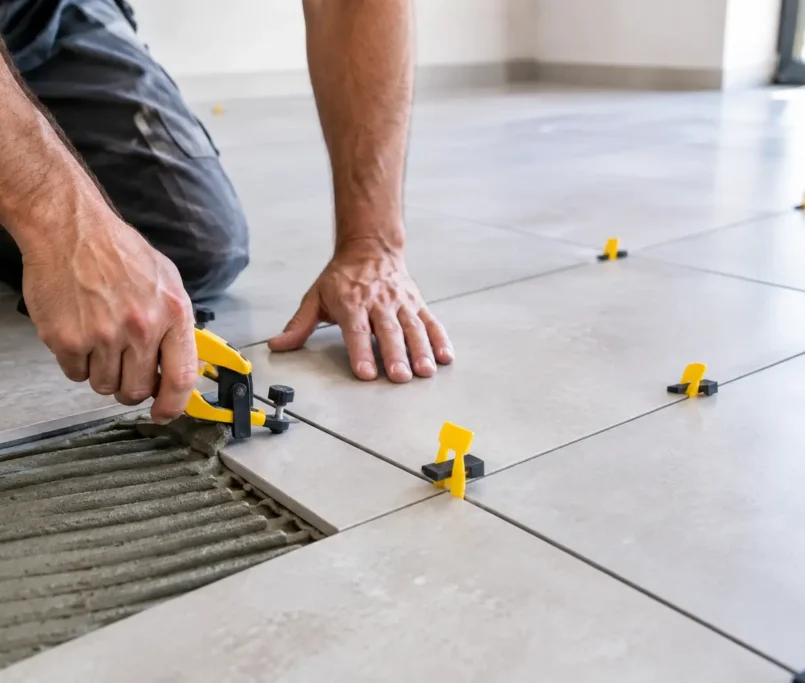
This is where high-end tiling differs from basic labour. Quality outcomes come from controlled sequencing. Demolition needs to be clean, substrates need to be assessed, falls need to be formed correctly, screeds need time, and wet areas need waterproofing installed to specification before the first tile is set. When any of those stages are shortened or skipped, the defect may not appear immediately, but it has already been built in.
The most common tile installation defects and fixes
Lippage and uneven tile edges
Lippage is one of the first defects clients notice because light catches it instantly. It happens when adjacent tiles sit at different heights, creating an uneven surface underfoot and a disrupted visual line across walls or floors. On large-format tiles, even minor variation becomes obvious.
The cause can be poor substrate preparation, inconsistent adhesive coverage, warped tiles, rushed levelling, or simply poor setting-out. The right fix depends on severity. Minor lippage in non-critical areas may sometimes be tolerated if it falls within acceptable limits for the tile type and layout. More visible or hazardous lippage usually requires lifting and relaying affected sections. Grinding edges down is rarely the answer on a premium finish because it can damage the tile surface and leave the result looking compromised.
Hollow or drummy tiles
A tile that sounds hollow when tapped often points to poor adhesive transfer or bond failure. Sometimes the issue is localised. Sometimes it indicates a wider installation problem. In floor areas, hollow spots can progress to cracked tiles, loose tiles or debonding under traffic.
This usually happens when adhesive is not applied correctly, the substrate is dusty, coverage is insufficient, or the installer lets the adhesive skin before bedding the tile. In external areas and commercial settings, the stakes are higher because temperature movement and loading accelerate failure. The fix may be as limited as replacing isolated tiles, but if large sections are drummy, a broader strip-out is often the only durable option.
Cracked grout and cracked tiles
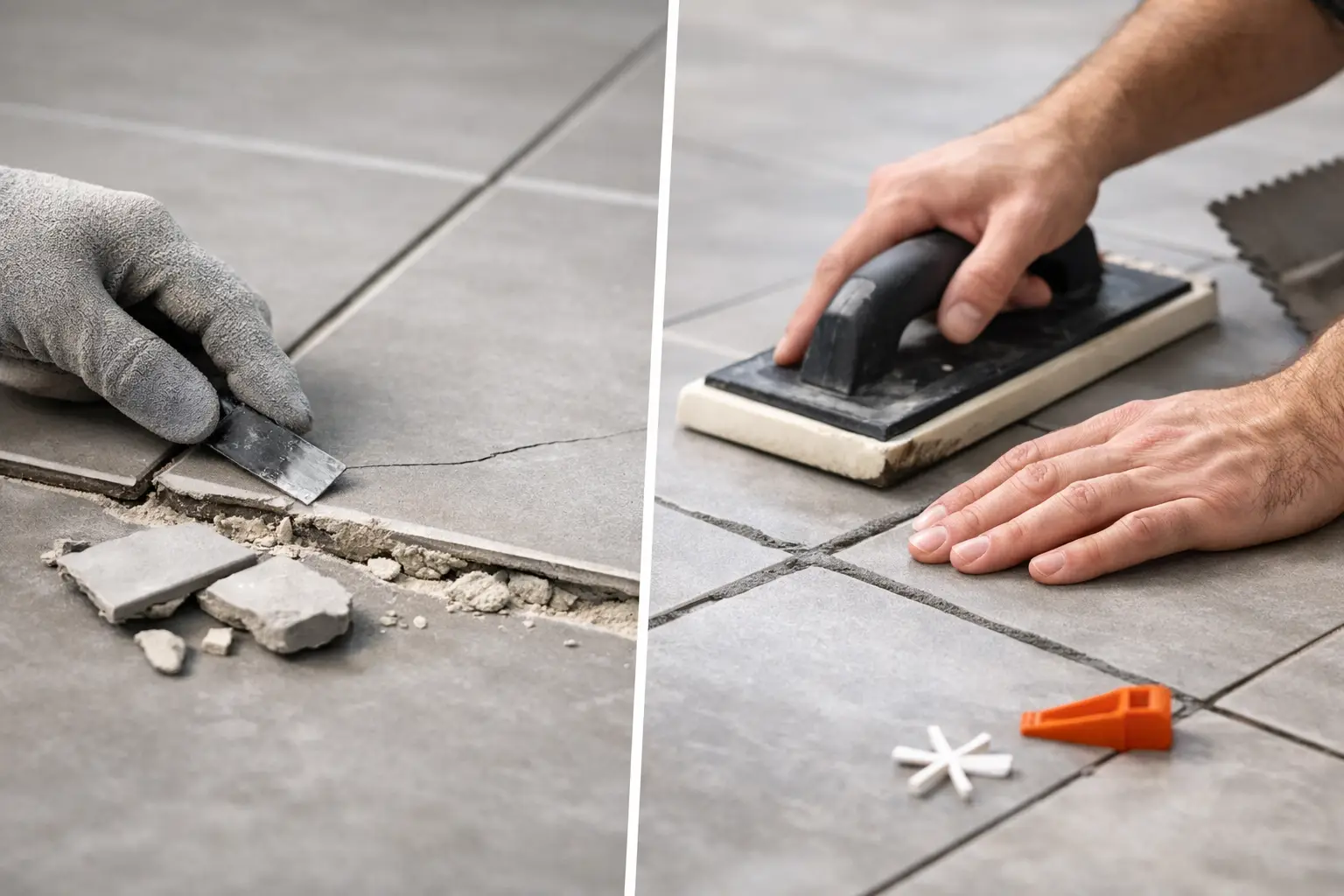
Cracks are often blamed on grout quality, but grout is usually reacting to movement rather than causing the issue. Substrate deflection, structural movement, shrinkage, missing movement joints and poor bed support can all show up as cracked grout lines or fractured tiles.
This is one of the clearest cases where the repair must match the cause. Regrouting without addressing movement is cosmetic and temporary. If the surface lacks movement accommodation, joints need to be introduced or corrected. If the substrate is unstable, sections may need to be removed so the base can be repaired properly. In wet areas, any crack that may compromise waterproofing deserves close inspection rather than a quick surface fix.
Poor falls and ponding water
A bathroom floor, shower base, balcony or alfresco area should guide water where it is meant to go. When falls are wrong, water ponds, edges stay wet, and deterioration begins quietly. In residential spaces that means slippery floors, persistent grime and staining. In commercial or multi-unit projects, it can also mean complaints, defects claims and remedial costs that multiply fast.
Poor falls are generally a preparation problem, not a tile problem. The substrate or screed was not formed accurately before tiling began. In some cases, isolated low spots can be corrected through localised rework. In many cases, especially in showers and external spaces, the proper fix is removal and reinstatement so the falls, drainage and finish all work together as intended.
Defects behind the surface that should never be ignored
Waterproofing failure
Waterproofing issues are among the most expensive defects because the visible tile finish can look acceptable while moisture is migrating underneath. Telltale signs include damp smells, staining at skirtings, swollen joinery, loose silicone, mould recurring at junctions, and water affecting adjoining rooms.
The difficult truth is that failed waterproofing is rarely solved from the surface alone. Replacing grout or resealing corners may buy time, but it does not restore a failed membrane. The reliable fix usually involves removing tiles and substrates as required, reinstating the waterproofing system correctly, and then rebuilding the tiled assembly. It is disruptive, but less disruptive than allowing water damage to spread.
Efflorescence and staining
That white, chalky residue on grout joints or tile surfaces is often efflorescence – salts carried to the surface by moisture movement. It is common in balconies, patios and wet zones where moisture is trapped or repeatedly entering the tile build-up.
Cleaning the residue can improve appearance temporarily, but if moisture ingress continues, the staining will return. The fix depends on the source. It may be failed waterproofing, poor drainage, saturated screeds or edge detailing that lets water in. Until moisture management is corrected, surface treatment is only part of the job.
Failed sealant and movement joints
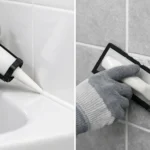
Corners, perimeters and transitions are meant to accommodate movement. When those joints are hard-grouted instead of sealed correctly, or when sealant is poorly installed, cracking and separation follow. This is especially common where tiled floors meet walls, around shower junctions, and at thresholds between materials.
The remedy is usually straightforward if caught early. Remove failed material, clean the joint properly and install the right flexible sealant or movement joint detail. But if adjacent tiles have already been stressed by restricted movement, additional rework may be needed.
When a repair is enough and when full rework is smarter
This is where experience matters. Not every defect justifies a full strip-out, and not every visible flaw can be fixed with a tidy patch. A small number of damaged tiles from impact can often be replaced cleanly if spare tiles are available and the surrounding installation is sound. By contrast, widespread bond failure, incorrect falls, systemic lippage or waterproofing defects usually point to problems in method, not isolated accidents.
For builders and developers, the temptation is often to choose the fastest remedy to protect programme. Sometimes that works. Often it simply delays a larger cost. For homeowners, the pressure is usually disruption. No one wants a bathroom or kitchen reopened after completion. Even so, living with a hidden defect is rarely the more economical choice.
A proper assessment looks at pattern, not just appearance. Is the defect isolated or repeated? Cosmetic or performance-related? Surface-level or substrate-driven? The more the issue repeats across the area, the more likely full remedial works will deliver the better outcome.
How to prevent tile installation defects and fixes becoming a project problem
The best repairs are the ones you never need. Prevention starts before tile selection and continues through every trade stage. Surfaces must be checked for level, plumb, strength and moisture condition. Wet area detailing must be planned, not improvised. Tile layouts should account for cuts, movement joints and transitions. Adhesives, grouts and sealants should suit the substrate and environment, whether that is a luxury bathroom, a retail fit-out or an external entertaining area.
Programme discipline matters too. Tiling is often pushed to make up lost time on site, but rushed sequencing creates defects that surface later. Screeds need curing time. Waterproofing needs inspection. Substrates need correction before tiles go down, not after complaints come in. A craftsmanship-led contractor protects the finish by being exacting at the stages clients do not always see.
That is especially true on multi-unit and high-end work, where repeatability matters as much as appearance. One defective bathroom may be a nuisance. Twenty defective bathrooms become a serious commercial problem. Precision, process and accountability are what keep quality consistent at scale.
Perfectly Laid approaches tiling this way because the visual result and the technical build-up are inseparable. A refined finish should look exceptional on day one and keep performing long after practical completion.
If you are dealing with suspect tiling, the smartest first step is not to ask how quickly it can be patched, but how accurately it can be diagnosed. The right fix protects the space, the schedule and the standard you were aiming for in the first place.