Residential Floor Tiling Services That Last
A tiled floor tells on the installer within minutes. You see it in the lines, the level, the way the cuts meet corners, and how the surface feels underfoot. That is why residential floor tiling services should never be treated as a simple lay-and-leave trade. In a home, every detail is visible, every finish is lived with, and every shortcut has a habit of showing up later.
For homeowners, renovators and builders alike, the real value of quality tiling is not just appearance. It is the confidence that the floor has been prepared correctly, set out with care and finished to suit the room, the traffic and the design intent. A beautiful tile can only perform as well as the workmanship beneath it.
What good residential floor tiling services actually include
The best results are built long before the first tile is laid. Floor tiling is a process, not a single stage, and the finished look depends on how well each part has been handled.
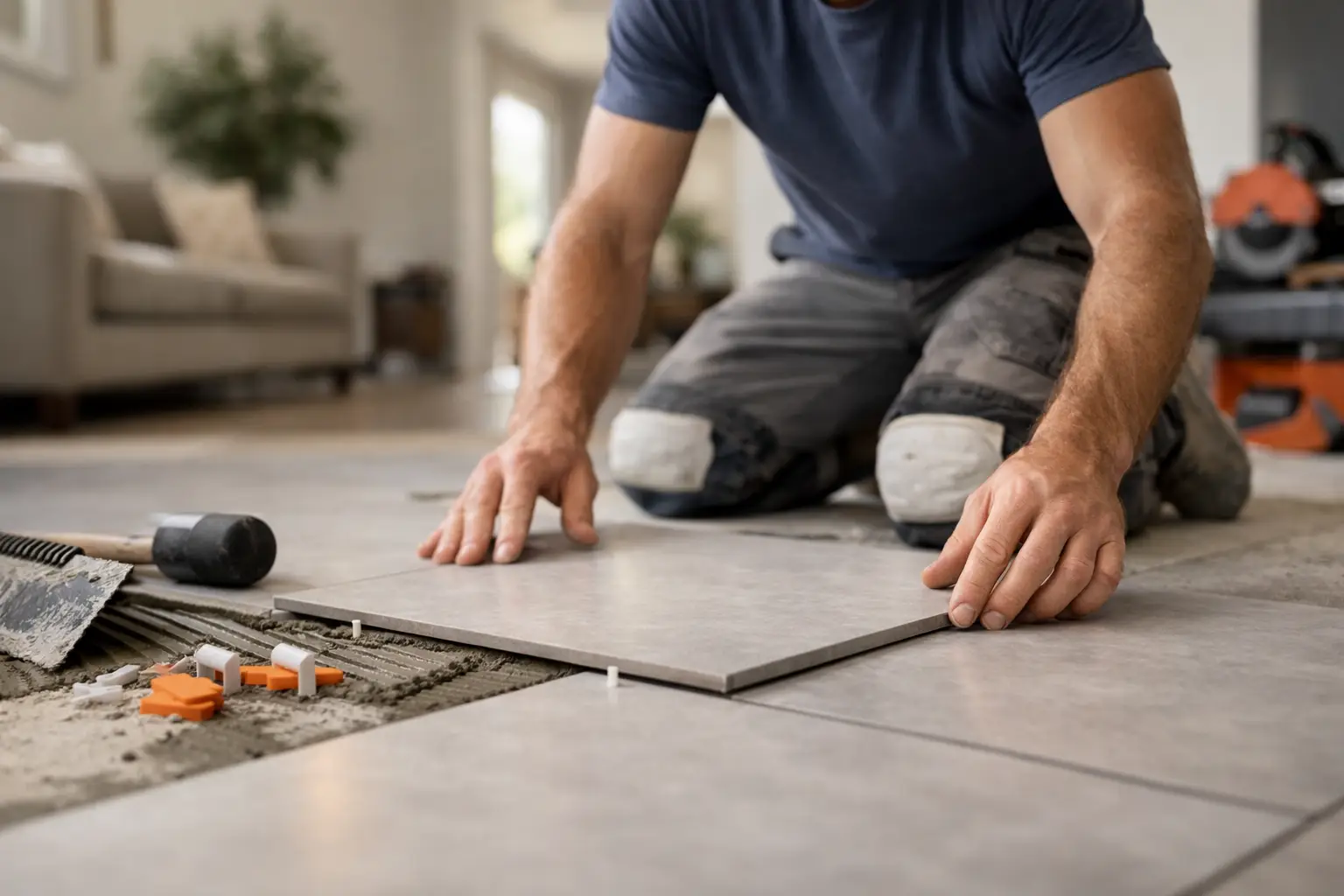
That usually starts with demolition or removal where needed, followed by assessment of the substrate. If the base is uneven, unstable or contaminated, the installation above it is already at risk. Re-levelling, screeding and surface preparation are not optional extras on a premium job. They are what allow the tile finish to look refined and stay that way.
In wet areas, waterproofing is equally critical. A bathroom floor may present as a design feature, but it is also part of a moisture-management system. If waterproofing is rushed or incomplete, the problem is not cosmetic. It can lead to movement, damage and expensive remedial work well beyond the tiled surface.
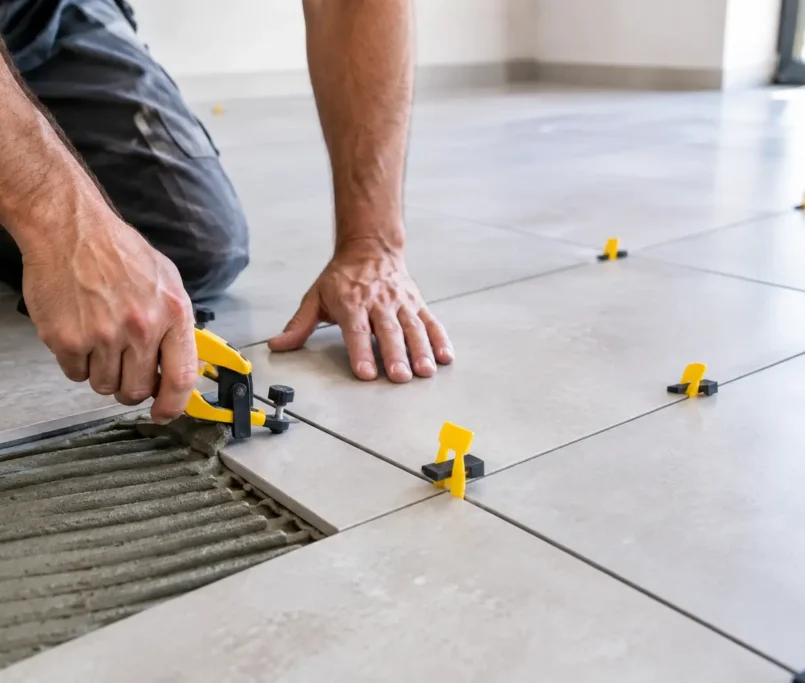
Then comes setting out. This is where craftsmanship becomes visible. A well-planned layout avoids awkward slivers at edges, keeps lines balanced through the room and ensures transitions into adjoining spaces feel intentional. Large-format porcelain, natural stone and decorative patterns all demand different handling, and the installer needs to understand the material as much as the visual outcome.
Why floor preparation matters more than most clients realise
Many flooring issues are blamed on tile quality when the real cause sits below. Hollow spots, lipping, cracked grout lines and movement are often signs that the substrate was not properly assessed or corrected.
A floor can look close enough to level to the eye and still be unsuitable for a precise tile installation. Large-format tiles are especially unforgiving because they highlight every rise and dip. Timber subfloors, older concrete slabs and renovated rooms with patched surfaces all need different preparation methods. There is no single formula, and that is exactly why experience matters.
This is where premium residential floor tiling services stand apart from budget-led installation. The goal is not simply to finish quickly. It is to create the right foundation so the floor performs well over time, whether it is in a kitchen, bathroom, laundry, hallway or alfresco area.
Choosing tiles is only part of the decision
Most clients begin with colour, size and finish. That makes sense. Tile is a major design feature and it shapes the character of the room. But specification should also respond to use.
A polished tile may look exceptional in a formal living area, yet be less suitable in a moisture-prone space where slip resistance matters more. Textured outdoor tiles can deliver the right performance for patios and pool surrounds, but they require careful installation and finishing to avoid a heavy or inconsistent look. Natural stone offers richness and variation, though it comes with different maintenance expectations than porcelain.
The point is not that one tile type is better than another. It depends on the room, the traffic, the desired finish and how much upkeep the client is comfortable with. A well-run tiling contractor helps guide that decision so the result is not only striking on day one, but practical months and years later.
Where homeowners most often notice the difference
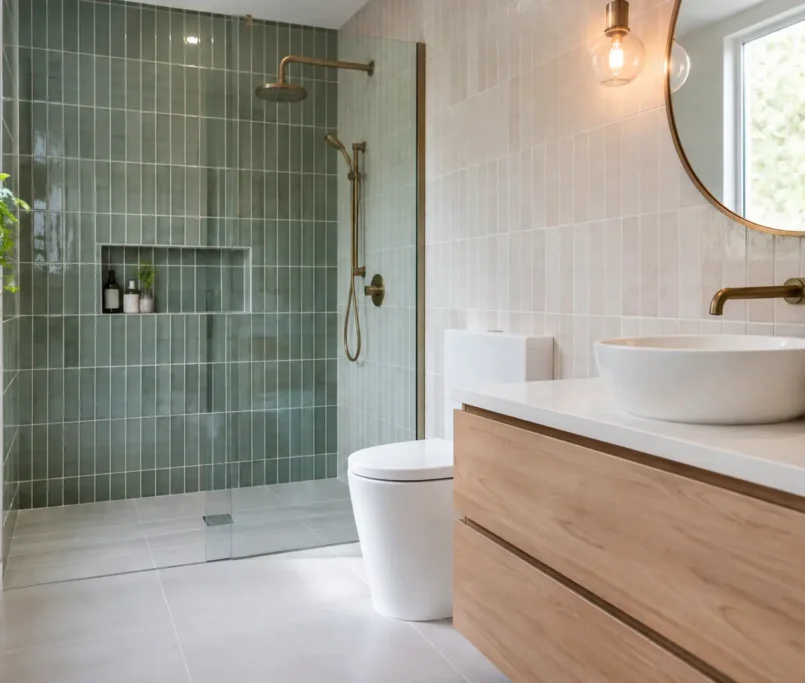
Bathrooms are the obvious test of quality because every line is exposed and every fall has to work properly. But floor tiling quality shows just as clearly in kitchens, laundries and open-plan living areas.
In kitchens, cabinetry and tiled floors need to sit comfortably together. Set-out matters because poor planning becomes highly visible once island benches, kickboards and appliance recesses are installed. In laundries, durability and moisture resistance need to work alongside clean finishing around thresholds and cabinetry. In living spaces, the challenge is often scale. Larger rooms demand consistency across longer lines, and any unevenness becomes more noticeable as the eye travels across the floor.
Outdoor residential spaces come with their own demands. An alfresco or patio floor has to handle weather exposure, drainage and movement, while still feeling integrated with the interior. That balance between performance and presentation is where precision matters most.
The trade-off between speed and quality
Clients understandably care about programme. Renovation schedules are tight, builders are coordinating multiple trades and homeowners want their spaces back. But there is a difference between efficient delivery and rushed work.
A responsive contractor will move with purpose, communicate clearly and keep the project progressing. What they should not do is compress critical stages that need proper curing or checking. Waterproofing, screeding and adhesive setting times exist for a reason. Ignoring them may save a day now and cost weeks later.
Good tiling work is not slow for the sake of it. It is disciplined. That means planning ahead, sequencing correctly and turning up ready to execute without compromising the finish. For project stakeholders, that reliability is often more valuable than a promise that sounds fast on paper.
What to look for in residential floor tiling services
If you are comparing contractors, look beyond the tile laying itself. Ask how they approach preparation, whether they handle waterproofing and screeding, and how they manage finishing details such as movement joints, sealants and edge transitions.
It is also worth asking about the types of projects they regularly deliver. A contractor used to premium residential work will typically have a sharper eye for layout, alignment and finishing quality. One experienced in larger multi-unit delivery should also understand consistency, scheduling and communication across more complex programmes. Those capabilities are not mutually exclusive, but they are worth confirming.
Presentation matters too. A quality-first tiling partner should be able to explain their process clearly, quote with precision and identify risks before work begins. That kind of professionalism protects the client as much as the floor itself.
Precision is what makes the space feel complete
The most impressive tiled floors rarely shout for attention. They simply make the room feel resolved. The proportions look right, the lines are calm, the cuts are clean and the transitions feel considered. You may not immediately name every detail, but you notice the standard.
That is the difference between installation as labour and installation as craft. One gets tile onto the floor. The other brings the design together, supports durability and gives the entire space a sense of finish.
For clients investing in a renovation, a new build or a design-led upgrade, that distinction matters. Floors carry the room. They influence how cabinetry, wall finishes and natural light all come together. If the tiling is off, the whole project feels slightly unsettled. If it is executed with precision, the space feels complete.
At Perfectly Laid, that is the benchmark – not just getting the job done, but delivering a floor that reflects the standard of the home around it.
When you are planning a tiled floor, it helps to think beyond the tile you have chosen and focus on the standard of installation that will support it. A carefully prepared, expertly finished floor does more than complete a room – it gives the space the confidence to last.