Balcony Waterproofing Methods That Protect Tilework
A tiled balcony should feel like an extension of the home: composed, durable and ready for daily use. Yet the tile is only the visible finish. The real protection sits beneath it, where carefully selected balcony waterproofing methods manage rainwater, movement and the vulnerable junctions that cause most leaks.
For homeowners, builders and developers, this is not a detail to leave until tiling day. Waterproofing must be designed around the substrate, drainage, door thresholds, balustrades and final tile build-up. Get those layers right and the finished balcony looks exceptional while performing quietly for years. Get them wrong and even premium porcelain can conceal a costly failure.
What a balcony waterproofing system must achieve
An external balcony is exposed to far more movement and moisture than an internal wet area. Sun, cold, rain and changing temperatures make substrates expand and contract. Water can sit on the surface after a storm, travel through grout joints, or find its way into small gaps around a drain or wall junction.
A dependable system needs to do three jobs together. It must shed water towards an effective outlet, create a continuous waterproof barrier below the finish, and accommodate movement without tearing or debonding. Treating these as separate tasks is where many balcony failures begin.
The finished fall is especially important. Tile adhesive and tile thickness cannot correct a poorly graded slab. If water ponds on a balcony, the surface stays wet longer, grout deteriorates faster and moisture pressure is repeatedly placed on the waterproofing below. Preparation, screeding and drainage geometry should therefore be resolved before the membrane is applied.
Balcony waterproofing methods: choosing the right system
There is no single membrane that suits every balcony. The appropriate method depends on whether the space will be tiled, left exposed, installed over concrete or timber, and how much movement the structure is likely to experience. The detail at thresholds and drains often determines the choice as much as the size of the balcony itself.
Liquid-applied membranes
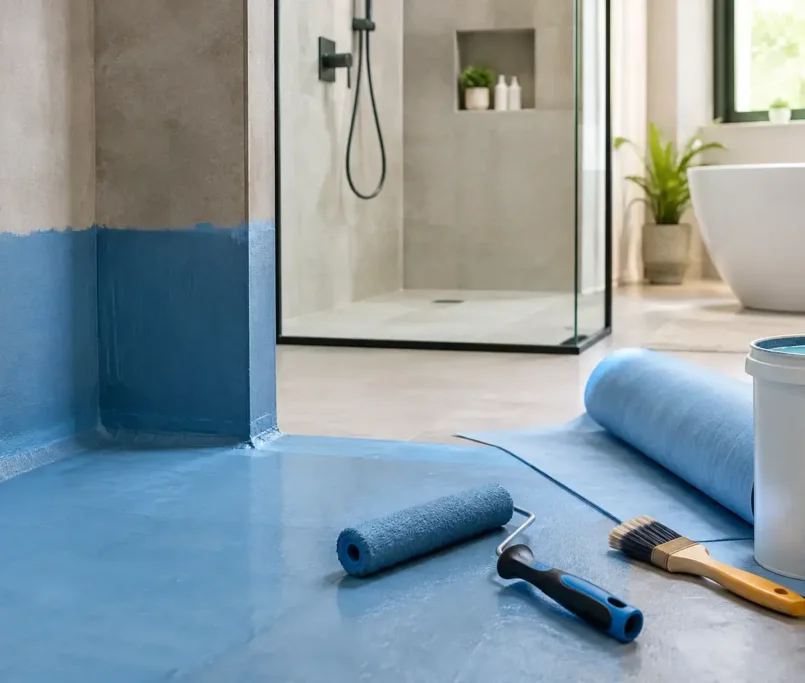
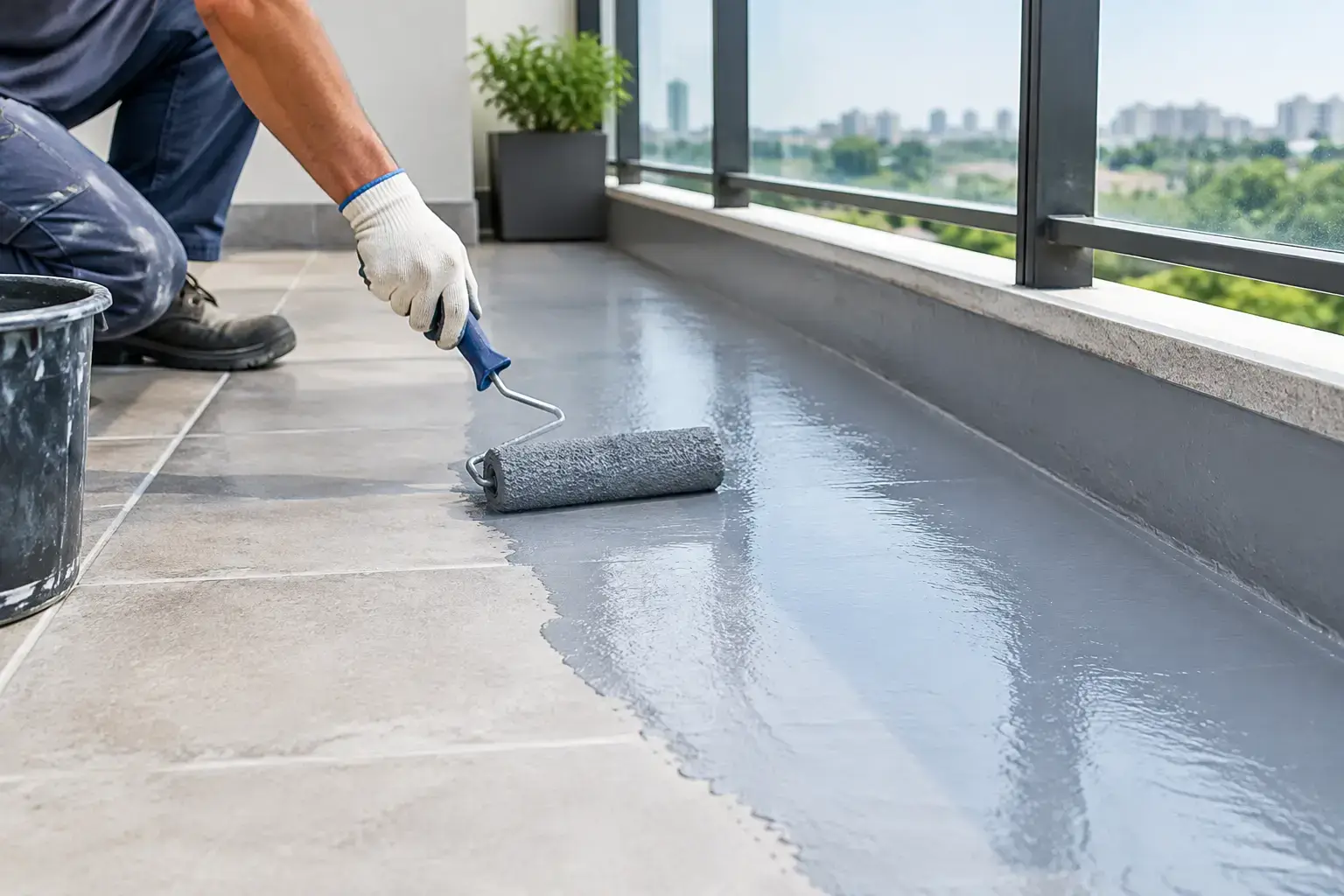
Liquid-applied waterproofing is widely used beneath tiled balconies because it can form a continuous coating across irregular shapes, corners and penetrations. It is applied in multiple coats, usually with reinforcing fabric at changes of plane, joints, outlets and other high-risk areas.
Its advantage is precision around complex details. A skilled installer can form clean, continuous upturns at walls and integrate the membrane into drainage points without relying on excessive seams. The trade-off is that thickness and cure times matter. Applying the product too thinly, rushing the next coat or tiling before it has cured can compromise the system before the balcony is finished.
Sheet membrane systems
Sheet membranes are installed in rolls or preformed sections, with carefully sealed laps and terminations. They can offer a controlled membrane thickness and are a strong option where the substrate is sound, the layout is relatively straightforward and the specified system is suited to the balcony build-up.
The quality of the seams is non-negotiable. Every overlap, corner and penetration must be installed precisely, particularly around drainage outlets and door openings. Sheet systems can be highly effective, but their success relies on disciplined preparation and exact detailing rather than simply laying a membrane over the surface.
Trafficable waterproofing membranes
Some balconies are designed as exposed surfaces rather than tiled areas. In these cases, a trafficable membrane may act as both the waterproof barrier and the final walking surface. This can reduce overall build-up where thresholds are tight and provide a clean, contemporary finish.
However, it is a different aesthetic and maintenance proposition from a tiled balcony. The coating must be selected for foot traffic, UV exposure and slip resistance, while the finished colour and texture become part of the design. It should never be treated as a shortcut when the project calls for a tiled, architectural finish.
Decoupling and drainage layers beneath tile
In some tiled balcony assemblies, a drainage or uncoupling layer is introduced above the primary waterproofing. This can help manage moisture beneath tiles and provide a degree of separation between the tile finish and substrate movement.
These layers are useful in the right system, but they are not a substitute for waterproofing. The primary membrane must still be continuous, correctly terminated and connected to the drainage outlet. Each layer has a job, and a premium result comes from making them work together rather than expecting one product to solve every risk.
The details that protect a tiled balcony
Most leaks do not begin in the middle of an open balcony floor. They begin at edges, interfaces and penetrations. This is why high-quality waterproofing is as much about detail work as it is about membrane selection.
At the perimeter, the membrane should turn up behind wall finishes or flashings to create a contained waterproof area. At door thresholds, the available height must be assessed early. A balcony may need a recessed slab, carefully considered drainage or a compatible threshold detail to prevent water tracking back towards the interior.
Drains need particular attention. The membrane must be properly integrated with the outlet so water reaching the waterproofing layer can escape rather than collecting beneath the tile bed. Balustrade posts, pipe penetrations, planter edges and outdoor kitchen fixtures also require deliberate treatment. Drilling through a finished waterproofed balcony without a designed sealing solution can undo otherwise excellent work.
Movement joints deserve the same respect. Balconies move, and tiles need appropriately positioned movement joints to relieve stress. These joints should be carried through the tile finish and sealed with a suitable flexible sealant. Hard grout is not the answer where controlled movement is expected.
Preparation comes before waterproofing
A membrane can only perform as well as the surface beneath it. Concrete must be clean, sound and appropriately cured. Loose material, old adhesive, contaminants, cracks and uneven areas need to be addressed before waterproofing begins.
Where falls are inadequate, re-levelling or screeding may be required to create a consistent route to the drain. This stage sets up every layer that follows: waterproofing, adhesive coverage, tile alignment and final water run-off. Skipping it to save time usually shifts the cost into repairs later.
Existing tiled balconies need a particularly careful assessment. Tiling over existing tiles can sometimes be considered where the substrate is stable and the system is engineered for it, but it raises the finished level and can create problems at doors, drainage points and balustrades. If the original waterproofing has failed, covering the symptom is not a repair. Removing the defective assembly and rebuilding the balcony properly is often the more accountable decision.
Quality control before tiles go down
Waterproofing is hidden once tiling begins, so inspection points matter. The membrane should be checked for full coverage, correct reinforcement, clean terminations and any damage caused by follow-on trades. Where appropriate, a flood test can identify failures before adhesives and tiles conceal the work.
Tile installation then needs to respect the waterproofed surface. Adhesive selection, full bedding coverage, drainage falls and movement-joint placement all influence long-term performance. Grout and sealant complete the finish, but they should be viewed as serviceable surface materials, not the balcony’s primary defence against water.
For multi-unit developments, consistent documentation and repeatable installation standards are equally valuable. A system that works beautifully on one balcony should be capable of being delivered with the same care across every level, unit and threshold detail. This is where a coordinated contractor brings clarity to a complex scope.
When professional installation is worth it
Balcony waterproofing is rarely a suitable place for guesswork. The visible finish may be small, but the consequences of failure can affect ceilings below, internal rooms, façades and neighbouring properties. A specialist tiling team can assess the full assembly, from substrate repair and falls through to membrane installation, tile setting and flexible finishing details.
At Perfectly Laid, that joined-up approach protects both the design intent and the build programme. Precision in the unseen layers gives the final tilework the foundation it deserves.
A well-waterproofed balcony should never draw attention to itself after handover. It should simply drain cleanly, feel solid underfoot and let the craftsmanship of the finished space take centre stage.