Wall Tiles vs Wall Panels for Lasting Style
A bathroom wall can look impressive on the day it is finished, then reveal its true quality years later at the corners, joints, shower recess and floor-to-wall transitions. That is why the decision around wall tiles vs wall panels should not begin with appearance alone. Both can create a refined result, but they behave very differently once daily moisture, cleaning, movement and wear enter the picture.
For homeowners planning a renovation, and for builders or project managers balancing programme certainty with a premium finish, the right choice depends on the room, the substrate and the standard expected long after handover. Tiles reward careful preparation and precise installation with exceptional longevity. Panels can offer speed, minimal joints and a contemporary look, particularly where disruption needs to be kept under control.
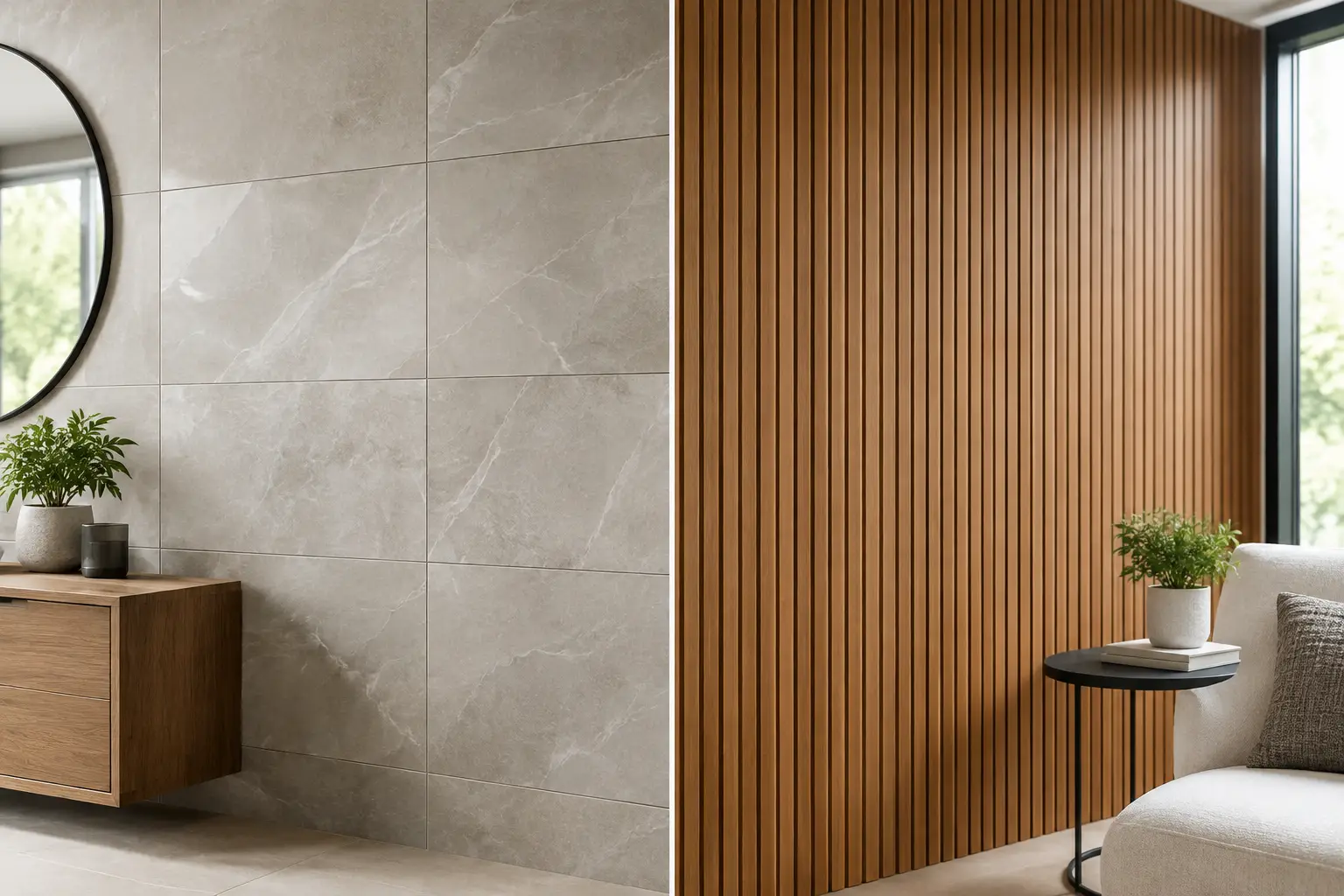
Wall tiles vs wall panels: the core difference
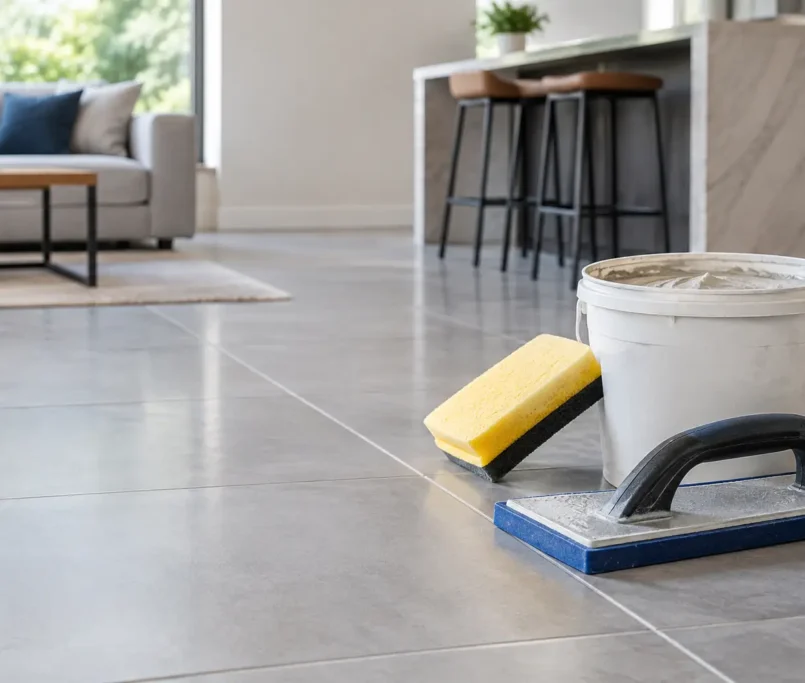
Wall tiles are individual pieces of ceramic, porcelain, natural stone or other finishes fixed to a prepared substrate. They are installed with adhesive, spaced with joints, grouted and finished with flexible sealant where surfaces meet or movement is expected. The result is a surface built in layers, where the quality of each stage matters.
Wall panels are larger sheets or boards designed to cover more area with fewer visible joins. Depending on the product, they may be acrylic, laminate-faced board, PVC, compact laminate or solid-surface material. They are generally bonded or mechanically fixed to the wall and sealed at edges, corners and penetrations.
Neither option is automatically better. A well-specified panel system can be practical and attractive. Equally, expensive tiles installed over an uneven wall or an inadequately waterproofed shower are not a premium outcome. The finish is only as reliable as the preparation beneath it.
When wall tiles are the stronger choice
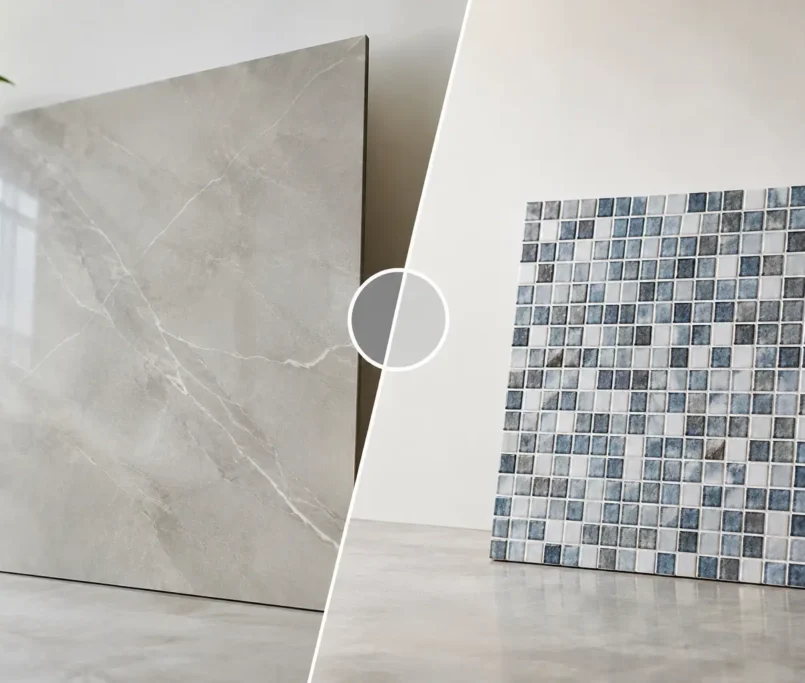
Tiles remain the benchmark for design flexibility and long-term performance in high-use wet areas. Porcelain tiles, in particular, are exceptionally hard-wearing, water-resistant and available in an enormous range of formats, textures and stone, concrete or timber-look finishes. From delicate mosaics to large-format slabs, tiles make it possible to create a room that feels genuinely tailored.
This flexibility matters in design-led bathrooms, kitchens, alfresco areas and hospitality settings. A carefully selected tile layout can frame a vanity, extend a feature wall, make a compact room feel more generous or introduce a level of detail that panels cannot always replicate. Grout colour, tile orientation, edge profiles and trims all contribute to the final composition.
Tiles are also well suited to spaces where the walls are not perfectly straightforward. Niches, boxed pipework, window reveals, curved details and unusual room proportions can all be resolved with a skilled tiling approach. Large-format tiles demand especially disciplined substrate preparation, but when installed with accurate set-out and clean cuts, they create a calm, luxurious surface with minimal visual interruption.
The trade-off is time and process. Tiled walls require assessment, levelling where necessary, suitable substrates, waterproofing in wet areas, curing time and careful finishing. Grout joints need maintenance, even when high-quality grout and sealants are used. In a shower, silicone joints should be inspected periodically and renewed when they show signs of deterioration. These are not flaws in tiling – they are part of maintaining a properly constructed wet area.
Where wall panels make sense
Wall panels are often chosen for their installation speed and ease of cleaning. With fewer joins than tile, there is less grout to maintain and a more continuous appearance can be achieved quickly. This can be valuable in a straightforward bathroom refresh, a utility room, a changing area or a commercial washroom where a short closure period matters.
A panel system can also be a sensible option where a client wants a clean, contemporary finish without the labour involved in setting out, cutting and grouting individual tiles. Certain panels can be fitted over sound existing wall finishes, subject to the manufacturer’s requirements and a proper assessment of the substrate. That may reduce demolition, dust and programme time.
However, the promise of a faster installation should not be confused with a shortcut around preparation. Walls still need to be stable, dry, flat enough for the selected product and free from hidden moisture issues. In shower areas, the panel system must be approved for wet use, with compatible trims, seals and adhesives installed exactly as specified. The weakest point is often not the panel face but the perimeter seal, internal corner or cut-out around a mixer, shower rail or basin.
Design choice can be more limited, too. Panels are available in convincing marble, stone and solid-colour effects, but repeat patterns, visible trims or a less convincing surface texture may be noticeable in a high-end scheme. Replacement can also be more complicated if a panel is damaged and the original range has been discontinued.
Waterproofing is not optional
One of the most costly misconceptions in bathroom work is that a water-resistant surface removes the need for waterproofing. It does not. Tile faces, grout and panels are all finish materials. They are not a substitute for a correctly designed wet-area system behind them.
A shower enclosure should be treated as a system: substrate, waterproof membrane, internal corners, junctions, penetrations, adhesive or panel fixing method, finish, grout or sealed joints, and final silicone detailing. Skipping any part of that sequence can allow water to travel behind the visible surface, where damage may remain hidden until it becomes extensive.
For tiled bathrooms, waterproofing creates the protective layer beneath the adhesive and tile. For panels, the requirement depends on the product and installation method, but the wall structure and junction details still need careful consideration. This is particularly important in multi-unit developments, where a single failed wet-area detail can affect adjoining properties, schedules and defect liability.
Comparing durability, maintenance and repair
Porcelain tiles are difficult to beat for lifespan. They cope well with everyday cleaning, humidity and impact, and a timeless tile can outlast several changes of paint, fittings and furniture. Natural stone requires more product-specific care, including appropriate sealing, but offers depth and character that manufactured finishes cannot fully duplicate.
Panels are easy to wipe down and avoid the regular cleaning associated with grout lines. Yet they are generally more vulnerable to scratching, heat exposure or impact than porcelain. Their long-term performance varies significantly by material quality and installation standard. A low-cost panel may be appealing at the quotation stage but less convincing after years of use.
Repair is a nuanced point. A cracked tile can often be removed and replaced if spare stock has been retained. A damaged panel may require a larger section to be replaced, particularly if the damage sits in the middle of the sheet. For either finish, keeping a small amount of matching material after installation is a sensible precaution.
Cost is about more than the first quotation
Panels may have a lower installed cost in simple rooms because they cover large areas quickly. They can also reduce downtime in commercial refurbishment work. But a panel is not always the cheaper option once trims, specialist adhesives, substrate repairs and wet-area detailing are included.
Tiling often carries higher labour costs because it is a slower, more detailed craft. Large-format tiles can add further complexity through handling, wall levelling, accurate cuts and the need for a near-perfect substrate. That investment is often justified where finish quality, design freedom and longevity are priorities.
The more useful question is not simply, “Which is cheaper?” It is, “Which finish delivers the right performance and appearance for this room over the next decade?” A guest cloakroom, rental refresh and luxury principal bathroom do not necessarily call for the same answer.
Choosing for your project
Choose wall tiles when you want a highly customised result, lasting material performance and the confidence of a finish suited to demanding wet areas. They are particularly compelling for premium bathrooms, kitchen splashbacks, feature walls and spaces where precise detailing will be noticed.
Choose wall panels when speed, easy cleaning and reduced grout lines are the priority, provided the chosen system is appropriate for the location and installed with disciplined edge sealing. They can be an effective practical solution, but product selection should never be separated from the condition of the wall behind it.
At Perfectly Laid, the focus is on the detail that protects the finished room: honest substrate assessment, accurate preparation, proper waterproofing and crisp final junctions. The best wall finish is the one that suits your brief, then performs exactly as it should once the room is lived in.