Cement Board vs Plasterboard for Tiling Projects
A beautiful tiled wall is only as dependable as the surface behind it. In the cement board vs plasterboard for tiling decision, the visible finish may look identical on day one, but the backing board determines how confidently that finish performs through moisture, movement and everyday use.
For a kitchen splashback, a well-prepared plasterboard wall can be entirely appropriate. For a shower enclosure, wet-room wall or heavily used commercial bathroom, choosing the wrong substrate can create a costly failure hidden beneath premium tiles. The right answer is not simply “use the strongest board everywhere”. It is about matching the board, waterproofing system, tile weight and installation method to the space.
Cement Board vs Plasterboard for Tiling in Wet Areas
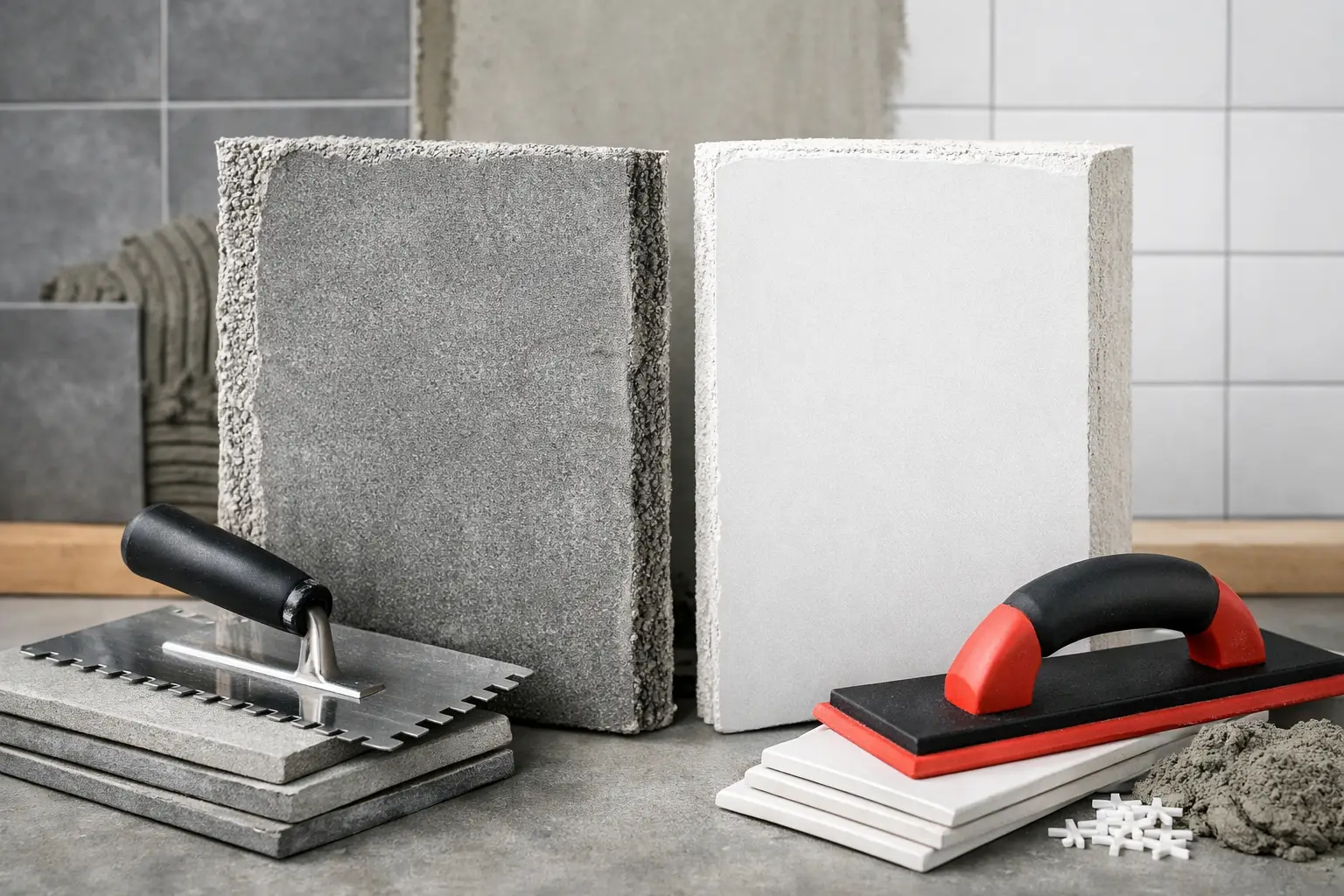
Cement board is a dense, stable tile backer made from cement-based materials, often reinforced with fibres. It is designed to tolerate moisture exposure without softening, swelling or losing its shape in the way gypsum-based plasterboard can. That makes it a strong choice for shower walls, wet areas and demanding installations where substrate performance matters as much as appearance.
Plasterboard has a gypsum core with paper faces. It is lighter, easier to cut and generally quicker to install, which makes it common on internal walls. Standard plasterboard should be kept out of wet zones. Even moisture-resistant plasterboard is not a waterproofing solution, and it should not be treated as one. Its purpose is to offer improved resistance to humid conditions, not to withstand ongoing water penetration.
This distinction matters because grout, tiles and adhesive are not a waterproof barrier. Water can work through small cracks, movement joints, penetrations and poorly sealed edges over time. Once moisture reaches an unsuitable board, it can compromise the wall behind the finish – often long before there is an obvious visual sign on the tiled face.
Cement board also has limits. It is water-resistant, not automatically waterproof. In a shower or other designated wet area, it still needs to be integrated into a properly specified waterproofing system, with careful treatment at junctions, corners, fastener heads and plumbing penetrations. The board is one layer in a disciplined installation process, not a substitute for it.
Where Plasterboard Makes Sense
Plasterboard remains a practical substrate in dry internal areas. A kitchen splashback away from the sink’s main splash zone, a feature wall, fireplace surround subject to suitable heat clearances, or a laundry wall outside wet-area requirements may all be suitable applications. Its smooth face can provide an excellent surface for tiling when it is sound, dry, flat and correctly primed.
The key is to assess the whole wall rather than only the planned tile area. If there is evidence of damp, loose paper facing, cracking, poor framing or previous water damage, tiling straight over plasterboard simply conceals a problem. Large-format porcelain tiles intensify that risk because they demand a flatter substrate and create a more unforgiving finish. Lippage, hollow spots and uneven joints become much more noticeable when preparation has been rushed.
Tile size and weight also affect the decision. Plasterboard may be suitable for lighter wall tiles in dry locations, but the adhesive manufacturer’s guidance and the board manufacturer’s loading limits must be observed. A decorative ceramic tile is very different from a full-height installation of heavy natural stone or oversized porcelain. For high-end finishes, a substrate that is technically acceptable is not always the substrate that will deliver the most precise result.
Why Cement Board Is Often Chosen for Showers
Shower walls face repeated water exposure, heat, cleaning products and movement around taps, mixers and niches. These are the areas where shortcuts tend to reveal themselves later. Cement board provides a more stable foundation than plasterboard when correctly fixed to suitable framing, with joints reinforced and waterproofing applied as part of the approved system.
It is particularly useful where a bathroom design includes full-height tiling, large-format tiles, recessed shelving or a frameless shower screen. These features are visually refined, but they require accuracy behind the scenes. Walls need to be plumb, square and properly supported before a single tile is installed. A niche that is out of level by a few millimetres, or a wall that bows across its width, can disrupt the entire tile layout.
For wet rooms and shower areas, the discussion should also extend beyond the wall board. Falls to drainage, floor substrate, membrane continuity, junction detailing and silicone movement joints are all part of a watertight outcome. Premium tiling is not achieved by selecting a good-looking tile and hoping the layers beneath it will cope.
Cement board needs correct installation
Cement board is heavier and more labour-intensive than plasterboard. It needs the right framing or solid backing, corrosion-resistant fixings at the required spacing, correctly treated joints and a clean, flat installation. Cutting can create dust, so it should be handled with appropriate equipment and care.
It can also be less forgiving if installed poorly. A board fixed over uneven framing will follow that unevenness. No adhesive bed should be expected to correct major wall defects. Where necessary, walls should be straightened and re-levelled before boarding so the tile installation begins on a true plane. This preparation protects grout lines, corners, mitres and the crisp alignment that distinguishes a considered finish from an ordinary one.
Moisture-resistant plasterboard is not a shower shortcut
Green-faced or moisture-resistant plasterboard is regularly misunderstood. It can be a useful material in areas with intermittent humidity, but it is not a universal shower backing board. The risk is not that it fails immediately. The risk is gradual moisture migration through an imperfect joint, fitting penetration or damaged seal, followed by deterioration that is difficult to access without removing tiles.
If the wall is inside a shower enclosure or another area exposed to direct, regular water, specify the backing and membrane system together. This creates clear accountability between the substrate, waterproofing and tile installation rather than leaving gaps between trades or assumptions in the scope.
Cost, Speed and Long-Term Value
Plasterboard is typically cheaper to buy, easier to transport and quicker to work with. On an appropriate dry wall, this can make it the sensible choice. Spending extra on cement board where moisture and loading are minimal may offer little practical benefit.
In wet areas, however, the upfront saving can be misleading. Tile removal, substrate replacement, waterproofing repair and reinstatement are disruptive and expensive, particularly once joinery, stone tops, shower screens and finished paintwork are in place. The cost of a better substrate is modest compared with rectifying a concealed failure behind a completed bathroom.
For builders and developers delivering multiple bathrooms, consistency is equally valuable. A clear substrate specification, repeatable waterproofing detail and quality checks before tiling reduce avoidable variation between units. This is how programme reliability and finish quality can work together, even on high-volume projects.
The Board Is Only One Part of the Tiling System
Whether you select cement board or plasterboard, the surface must be assessed before tiling begins. It should be clean, stable, flat and suitable for the selected adhesive. Dust, paint, weak render, loose fixings and unplanned wall movement all need to be addressed first.
Tile layout should also be resolved before installation, particularly around windows, niches, vanities, trims and floor-to-wall transitions. A well-chosen board cannot rescue awkward cuts or misaligned grout joints. Precision is built through setting out, substrate correction, waterproofing discipline and measured finishing details, including correctly placed movement joints and clean caulking.
For floors, plasterboard is not a tiling substrate. Floor preparation may involve cement-based levelling compounds, screeds, suitable tile backer boards or other specified systems, depending on the structure, existing surface and finished floor requirements. The goal is a stable, flat base that can support the chosen tile without excessive deflection or cracking.
Choosing the Right Backing for Your Project
Choose plasterboard for dry wall tiling where the existing wall is sound, the tile loading is within manufacturer limits and there is no ongoing exposure to water. Choose cement board where direct water exposure, higher tile loads or added substrate resilience call for a more capable backing. In a shower, wet room or performance-critical commercial washroom, pair the cement board with a complete waterproofing approach rather than relying on the board alone.
The most valuable decision is made before demolition ends and tiles arrive on site. Ask what the wall is made of, how flat it is, where water will travel, what tile is being installed and how every junction will be sealed. Get those answers right, and the finished surface has the quiet confidence of craftsmanship that lasts.