Anti Slip Tile Rating Explained Clearly
A tile can look flawless in a showroom and still be the wrong choice the moment water, cleaning product or foot traffic enters the picture. That is why anti slip tile rating explained properly matters so much. For homeowners, builders and project managers alike, the right rating protects safety, supports compliance and preserves the quality of the finished space.
The problem is that slip resistance is often treated as a simple tick-box. It is not. A bathroom floor, an alfresco entertaining area and a commercial entry all behave differently under use, and the tile that performs beautifully in one setting may be a poor specification in another. Good tile selection is never just about colour, format or price. It is about how the surface will perform once the project is handed over and lived in.
What anti slip tile rating explained actually means
When people ask for an anti-slip tile, they are usually asking one of two things. Either they want a tile that feels safer underfoot, or they need to meet a project requirement for slip resistance. Those are related, but not identical.
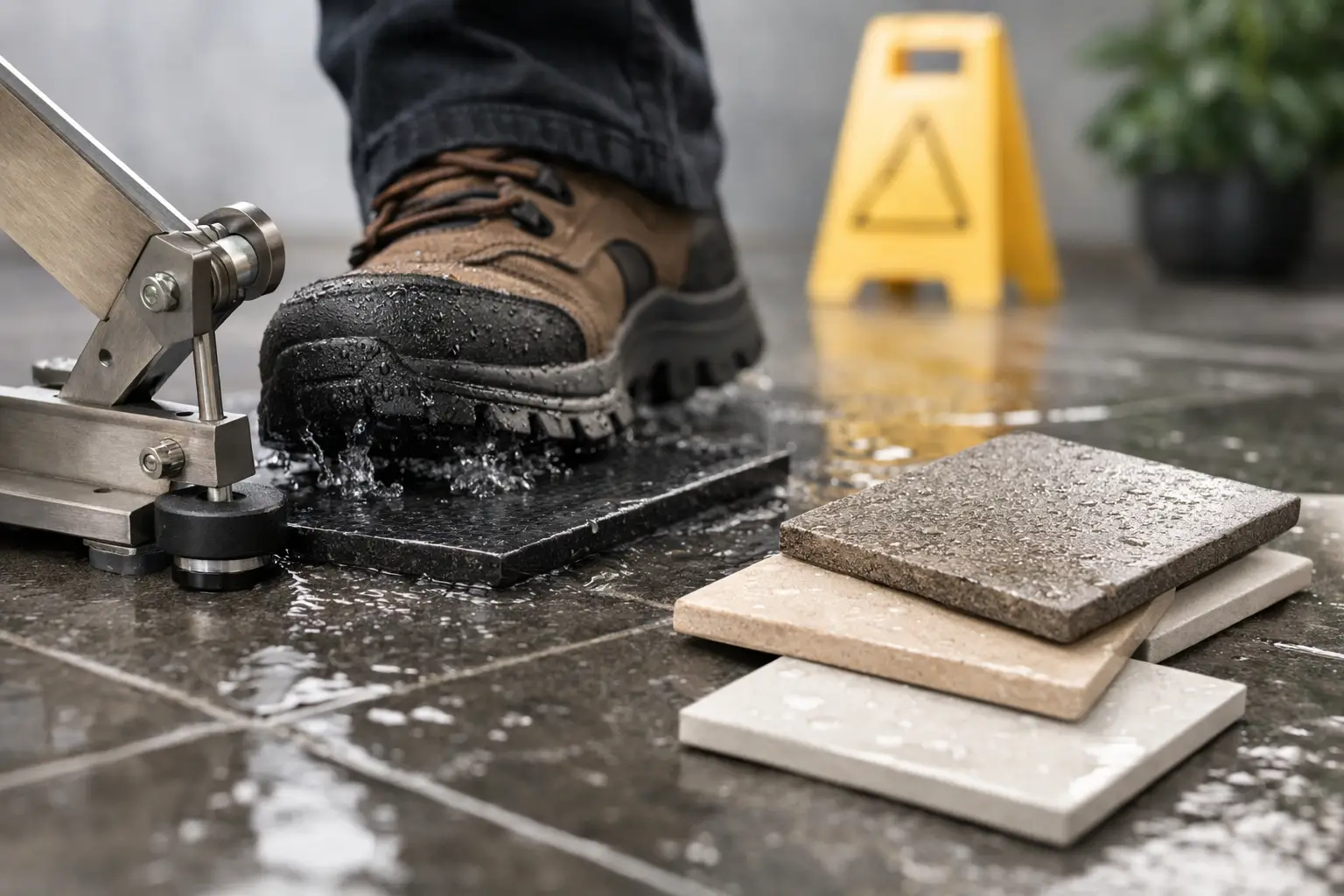
Slip resistance ratings are designed to measure how a tile surface performs under certain test conditions. In practical terms, the rating helps indicate how likely a surface is to contribute to slipping when it is dry, wet, barefoot or exposed to contaminants such as water, oil or soap. The key point is that ratings are not universal shorthand for every situation. A tile can score well in one test and still be unsuitable for another environment.
That is where many selections go wrong. A specifier sees a rating, assumes it covers every risk profile, and the tile gets approved without enough thought about actual use. On a premium project, that is a costly mistake. Surface performance should be considered as carefully as waterproofing, substrate preparation and finish alignment.
The main slip ratings you are likely to see
In UK-facing project discussions, you may still encounter ratings from international manufacturers, especially on imported porcelain and stone-look ranges. The most common systems include R ratings and P ratings, and sometimes barefoot classifications for wet areas.
R ratings
R ratings are commonly used for shod foot traffic and are often seen as R9 through to R13. As the number increases, the surface generally offers greater slip resistance under the test conditions.
R9 is typically a lower slip resistance finish, more suited to dry internal areas. R10 is a common step up for spaces where a bit more grip is desirable. R11 and above are often used where floors are more exposed to water or contaminants, such as commercial kitchens, external walkways or certain workplace environments.
That does not mean higher is always better. A heavily textured R12 or R13 tile can be harder to clean, harsher underfoot and visually wrong for a refined residential interior. The right result comes from balancing safety, maintenance and design intent.
P ratings
P ratings are also widely referenced, particularly in residential and light commercial conversations. These typically range from P0 to P5, with higher numbers indicating stronger slip resistance potential under wet pendulum testing.
P ratings can be especially useful because they are often easier for clients to relate to when comparing tiles for bathrooms, laundries, pool surrounds or patios. Even so, the same rule applies: the number alone is not the full story. The end use matters.
Barefoot ratings
For areas where people are likely to be barefoot and the floor may be wet, such as shower zones and pool surrounds, barefoot classifications may also appear. These tests focus on the specific slip risk created by wet bare feet rather than shoes.
This distinction is important. A tile that performs reasonably for a front entry in shoes may not be suitable inside a shower recess. The reverse can also be true if the finish has been selected for wet barefoot grip but is less practical elsewhere.
Why one rating does not suit every project
The best tile schedules are built around real use, not assumptions. A family bathroom has different demands from a restaurant washroom. An outdoor entertaining area under cover behaves differently from a fully exposed path that sees rain, leaf litter and shade.
Take a polished porcelain floor in a powder room. It may be entirely appropriate because water exposure is minimal and the design brief prioritises a sleek finish. Put that same tile on an external stair and the risk profile changes immediately.
Likewise, a rougher external porcelain with strong grip may be ideal around a pool or on a sloped garden path, but it can feel too aggressive in a high-end ensuite where comfort, cleanability and visual refinement matter just as much. Precision specification means understanding these trade-offs before installation begins.
How to choose the right anti-slip rating for each area
If you want anti slip tile rating explained in a practical way, start by looking at the space through three lenses: moisture, traffic and maintenance.
Bathrooms and ensuites
Bathrooms need careful judgement because not every zone has the same risk. The main floor, the shower floor and any transitions each deserve separate consideration. A larger bathroom floor outside the wet zone may not need the same level of grip as the shower base itself.
For shower floors, mosaic formats or smaller tiles can also improve safety because the extra grout joints create more underfoot traction. This is a good example of why performance is not just about the tile rating on a sample board. Tile size, layout and installation detail all influence the finished result.
Kitchens and laundries
Domestic kitchens and laundries sit in a middle ground. They are not constantly wet, but spills do happen. Here, clients often want a tile that looks refined and is easy to maintain, without becoming slippery during normal use. A balanced surface finish is usually the right direction rather than an aggressively textured product.
Patios, alfresco areas and pool surrounds
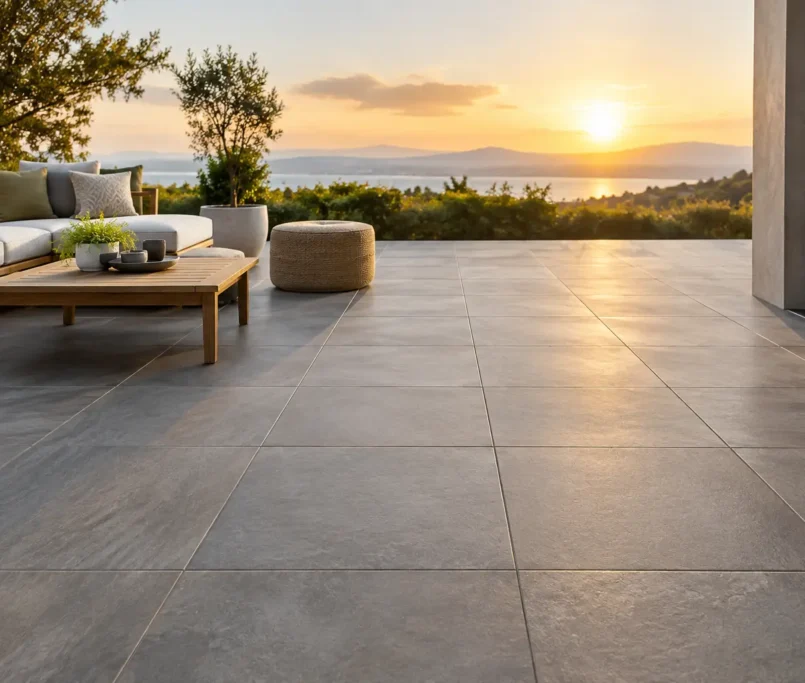
Outdoor areas generally need more grip because water, condensation and dirt are part of everyday use. Pool surrounds in particular need thoughtful selection, as bare feet, splashing and smooth surface finishes can create obvious hazards.
In these spaces, the visual brief still matters. The strongest slip-resistant surface is not automatically the best one if it traps grime, proves difficult to clean or undermines the overall architectural finish. The goal is a tile that performs without making the space feel overly commercial.
Commercial and multi-residential projects
For commercial fit-outs, flat developments and common areas, slip resistance should be considered alongside compliance, lifecycle maintenance and user behaviour. Entries, lift lobbies, amenities, walkways and back-of-house areas all have different performance demands.
This is where disciplined project planning makes a visible difference. A tile may need to satisfy not only aesthetic requirements but cleaning regimes, traffic volume and the expectations of builders, facility managers and future occupants. On larger developments, consistency across units and shared areas matters just as much as the tile itself.
The finish you feel is not the whole picture
Many clients judge slip resistance by touch. If a sample feels rough, they assume it is safer. If it feels smoother, they assume it is riskier. In reality, surface chemistry, micro-texture and test performance can make things less obvious than that.
Some modern porcelain tiles are engineered to offer strong slip resistance without the coarse, abrasive finish people expect. Others may feel textured in the hand yet not perform as well as assumed in the relevant test. That is why selection should never rely on touch alone.
A premium installation partner will also consider how that finish works once grouted, cleaned and exposed to daily wear. Safety, presentation and durability need to hold together, not compete with one another.
Installation quality still matters
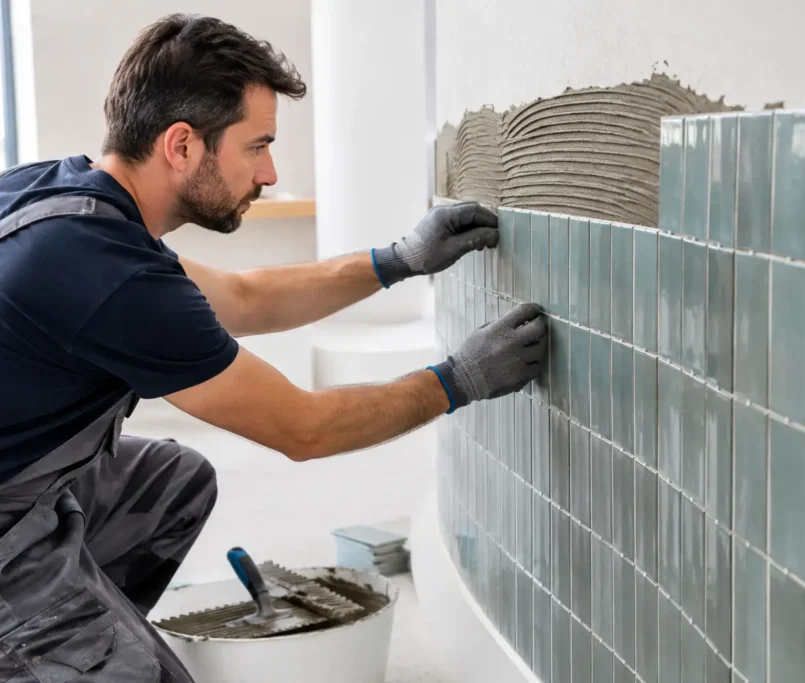
Even the correct rating can be undermined by poor execution. Uneven substrate preparation, excessive lippage, badly planned falls or inconsistent transitions can all create avoidable trip and slip risks.
This is especially true in wet areas and external works. A suitable anti-slip tile on a poorly drained surface is still a problem. Likewise, a well-rated commercial floor loses value if movement joints, edge details or stair nosings are treated as afterthoughts.
That is why slip resistance should be viewed as part of the whole flooring system. Preparation, waterproofing, screeding, set-out and finishing detail all protect the final outcome. At Perfectly Laid, that broader view is what turns a tile selection into a dependable surface rather than a specification gamble.
Questions worth asking before you approve a tile
Before signing off a tile, ask where it will be used, whether feet will be bare or shod, how often the floor will get wet, how it will be cleaned and what finish standard the project is aiming for. Also ask whether the chosen format supports safety in that area, especially in showers, ramps and stairs.
Those questions usually reveal whether the tile is genuinely right for the application or simply attractive on a sample board. On high-end projects, that distinction matters. The best floors do not force you to choose between elegance and performance. They are specified with enough care to deliver both.
The smartest tile choices are rarely the loudest ones. They are the surfaces that look right, feel right and keep doing their job long after handover.