Best Tiles for Bathroom Floors
A bathroom floor can look flawless on installation day and still disappoint six months later. The usual reason is not the colour, the pattern or even the grout line. It is choosing a tile that was never right for a wet, hard-working room in the first place.
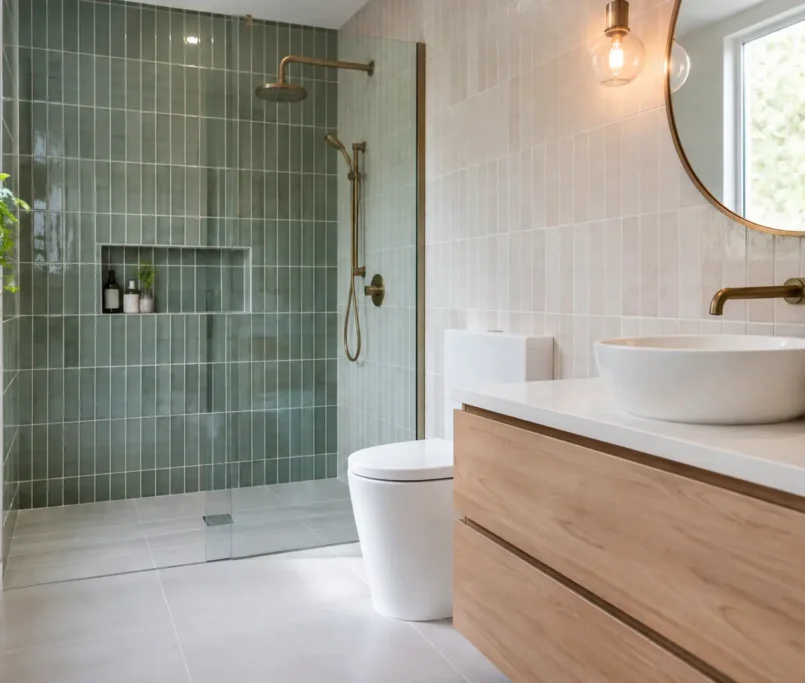
The best bathroom floors do two jobs at once. They need to hold up to daily moisture, cleaning products, heat changes and foot traffic, while still delivering a finish that feels considered and refined. If you are planning a renovation, specifying for a development, or trying to avoid costly rework, the best tiles for bathroom floors are the ones that suit both the design intent and the technical demands of the space.
What makes the best tiles for bathroom floors?
A bathroom floor tile needs more than good looks. Slip resistance matters, especially in family bathrooms, ensuites used in a rush, and commercial amenities where safety is non-negotiable. Porosity matters too. A highly absorbent tile can become a maintenance problem, while a dense tile will generally perform better in wet conditions.
Then there is scale. A large-format tile can create a calm, luxurious finish with fewer grout joints, but in a compact bathroom it also needs careful set-out and skilled falls to wastes. Smaller tiles offer more grip because there are more grout lines underfoot, but they can look busy if the palette and layout are not handled well.
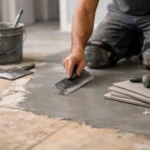
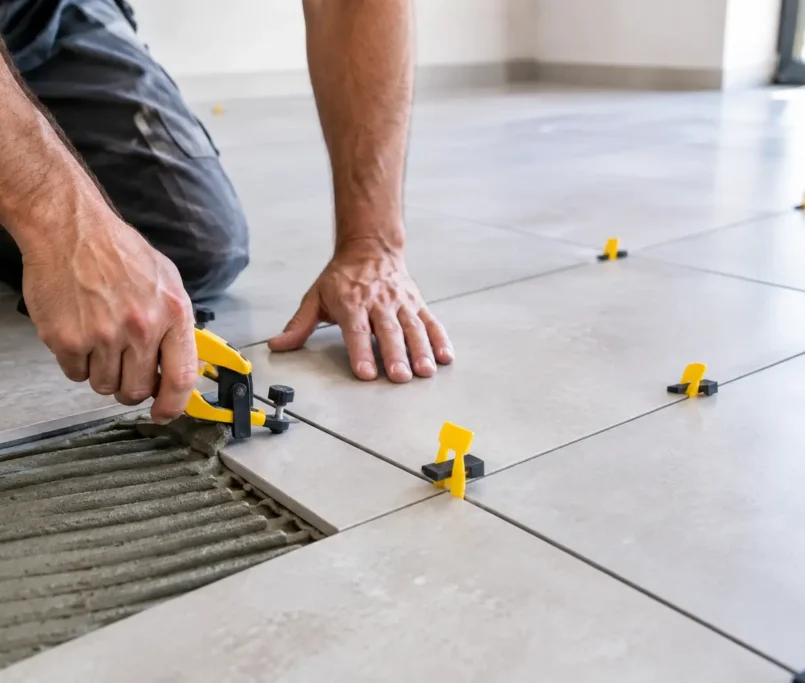
This is why tile selection should never be separated from installation quality. Surface preparation, substrate correction, waterproofing and precise laying all shape the final result just as much as the tile itself.
Porcelain is often the safest choice
If clients ask us for the most reliable all-round option, porcelain usually leads the conversation. It is dense, hard-wearing and less porous than standard ceramic, which makes it especially well suited to bathroom floors.
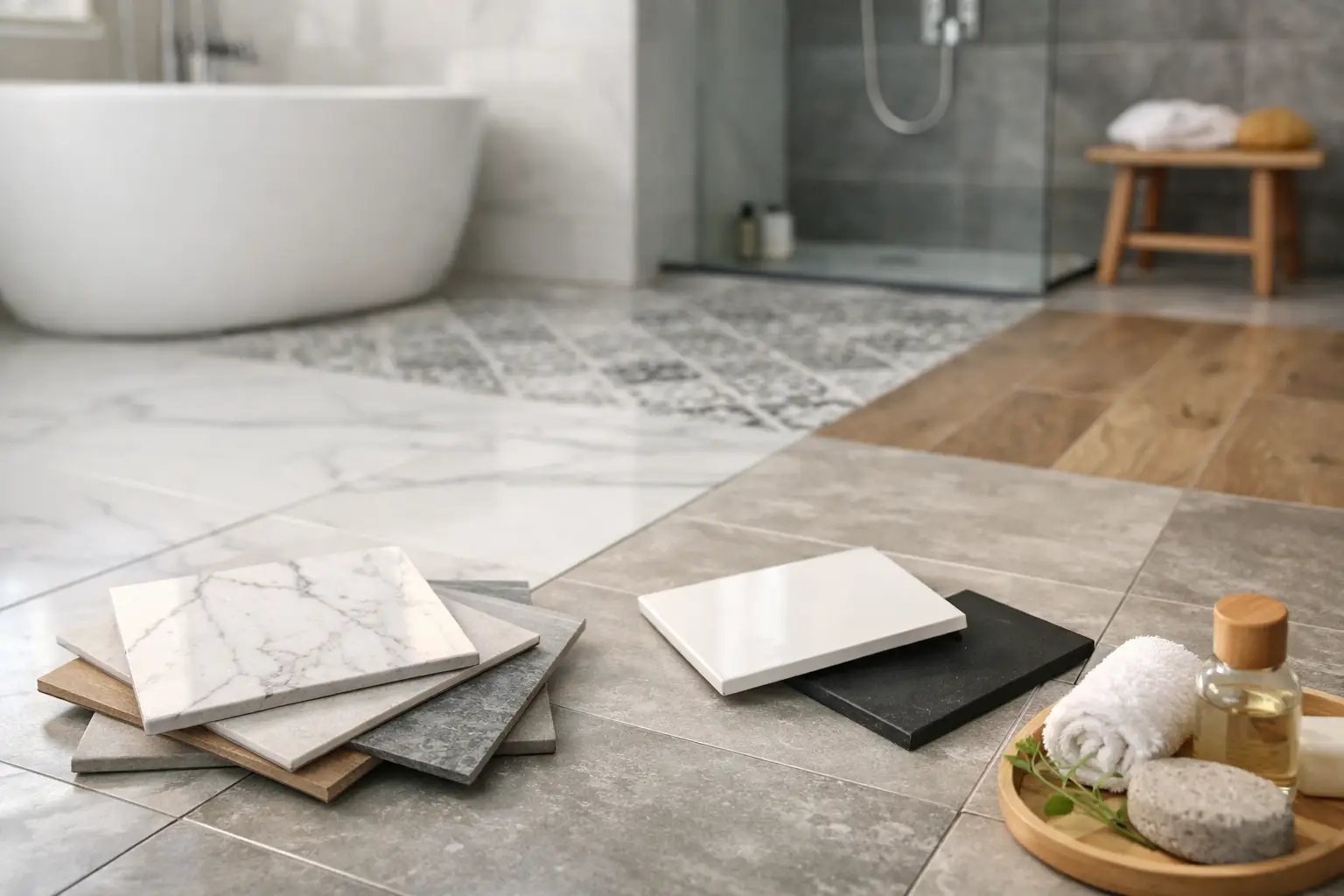
Porcelain performs well in high-use settings, whether that is a private home, a boutique development or a commercial fit-out. It is available in a huge range of finishes, from stone-look and concrete-look surfaces to refined matte neutrals and dramatic veining that mimics natural marble.
Its main strength is balance. You can achieve a premium aesthetic without sacrificing practicality. That said, not every porcelain tile is equally suitable. A polished porcelain may look striking, but on a bathroom floor it can be too slippery. In most cases, a matte or structured finish is the better specification.
When porcelain works best
Porcelain is ideal when durability, design flexibility and low maintenance are priorities. It is particularly strong in family bathrooms, investment properties and multi-unit developments where performance needs to be consistent from one room to the next.
Ceramic can work, but it has limits
Ceramic tiles are often more affordable and can still be a good option in lower-demand bathrooms. For a guest bathroom or cloakroom with lighter use, a quality ceramic floor tile may perform perfectly well.
The trade-off is durability. Ceramic is generally less dense than porcelain, so it can be more vulnerable to chipping and wear over time. That does not mean it should be ruled out, only that it needs to be chosen with clearer expectations.
If the bathroom sees constant traffic, frequent cleaning or the rough treatment that comes with family life, porcelain usually justifies the extra spend. When the room is used occasionally and budget is a stronger driver, ceramic can still be a sensible choice.
Natural stone brings character, but demands more care
There is no denying the visual depth of natural stone. Limestone, travertine, slate and marble each bring their own texture, movement and variation. In the right bathroom, stone can feel exceptional – rich, architectural and genuinely bespoke.
But stone is not a simple choice. It requires more maintenance, proper sealing and careful product selection. Some stones are more porous than others, and some finishes become slippery once wet. Marble, for example, delivers an unmistakably high-end look, but it can etch and mark more easily than many clients expect.
Stone also asks more of the installer. Variations in thickness, natural movement and pattern matching require a disciplined eye and a precise hand. For homeowners and developers pursuing a premium result, that can be worthwhile. For projects where ease of maintenance matters most, porcelain that replicates stone can offer a more practical path.
Best uses for natural stone
Natural stone is best reserved for bathrooms where aesthetic impact is a primary goal and the client is comfortable with ongoing care. It suits high-end residential projects particularly well, especially where the wider material palette is equally elevated.
Mosaic tiles are strong performers in wet areas
Mosaic tiles are often associated with shower floors, but they can also work beautifully across the full bathroom floor when used with intent. Their greatest practical advantage is grip. Because mosaics create many grout joints, they offer better traction underfoot and adapt more easily to floor falls.
This makes them particularly useful in compact bathrooms, wet rooms and areas with more complex drainage requirements. Visually, they can range from understated to feature-driven. A soft stone-look mosaic can feel elegant and restrained, while patterned mosaics can become the hero material in a smaller space.
The caution is maintenance. More grout joints mean more lines to keep clean, and poor grout selection or finishing will show quickly. In premium bathrooms, mosaics tend to work best as part of a deliberate scheme rather than a default option.
Slip resistance should never be an afterthought
A tile that looks beautiful in a showroom may behave very differently in a wet bathroom. This is where surface finish matters. Honed, matte and lightly textured finishes usually provide better footing than highly polished surfaces.
For households with children, older residents or anyone wanting stronger peace of mind, prioritising slip resistance is the right move. The same applies to hospitality, retail and institutional projects, where safety is tied directly to long-term performance and liability.
This does not mean every bathroom floor needs to look aggressively textured. Many of the best contemporary porcelain ranges now achieve an elegant finish while still offering practical slip resistance. The key is to assess the product honestly in the context of how the room will be used.
Tile size changes the feel of the room
Large-format tiles can make a bathroom feel calmer and more expansive. Fewer grout lines often create a cleaner, more architectural finish, which suits modern homes and design-led developments.
However, size must be matched to layout. In smaller bathrooms with multiple angles, fixtures and drainage points, very large tiles can lead to awkward cuts and a less resolved appearance unless the set-out is carefully planned. They also demand accuracy in substrate preparation, because any unevenness beneath them becomes harder to hide.
Smaller tiles and mosaics are more forgiving around floor wastes and detailed layouts. They can also suit traditional or character-led bathrooms where a more layered finish is desired. There is no single ideal size – only the right size for the room, the design and the installation method.
Style matters, but longevity matters more
Trends move quickly in bathrooms. Terrazzo looks, concrete finishes and soft stone-inspired surfaces have all had strong appeal, and many remain excellent choices. But a floor tile should still feel right years from now, not just in the first wave of a renovation.
In most cases, a restrained palette ages better. Warm greys, soft off-whites, taupes and natural stone tones tend to give bathrooms a more enduring quality. Pattern can work beautifully too, but usually with more impact in a smaller room or as a controlled feature rather than across every surface.
For developers and builders, this matters at scale. A tile that photographs well, wears well and appeals to a broad market usually delivers the strongest return over multiple units.
The tile is only part of the result
Even the best tiles for bathroom floors will underperform if the groundwork is poor. Falls need to be right. Waterproofing needs to be complete. The substrate needs to be properly prepared, levelled where required, and ready to receive the tile without compromise.
That is why experienced installation matters so much in bathrooms. Precision in the unseen layers protects the visible finish. It is also what prevents the familiar problems clients want to avoid – drummy tiles, pooling water, cracked grout, uneven edges and premature wear.
For projects where finish quality and accountability matter, working with a contractor that manages the process from preparation through to final detailing makes a measurable difference. At Perfectly Laid, that discipline sits behind every premium bathroom floor we install.
If you are choosing tiles for a bathroom floor, start with how the room needs to perform, then refine the aesthetic from there. The most successful bathrooms are not built on compromise between beauty and durability. They are built on the right material, specified well and laid with precision from the ground up.
A bathroom floor should feel quietly resolved every time you step into the room – safe, durable and beautifully finished without asking for attention.