Tile Demolition and Disposal Service
A beautiful tile finish is decided long before the first new tile is laid. If the removal stage is rushed, messy or too aggressive, the problems tend to show up later – cracked edges, uneven floors, damaged substrates, waterproofing failures and delays that ripple through the rest of the programme. That is why a professional tile demolition and disposal service matters more than many clients first expect.
For homeowners, it is the difference between a renovation that moves forward cleanly and one that turns into a chain of avoidable repairs. For builders, developers and commercial project managers, it is a matter of protecting programme, controlling site conditions and preparing the surface properly for the finish that will be judged at handover. Good demolition is not brute force. It is precision work.
What a tile demolition and disposal service should actually cover
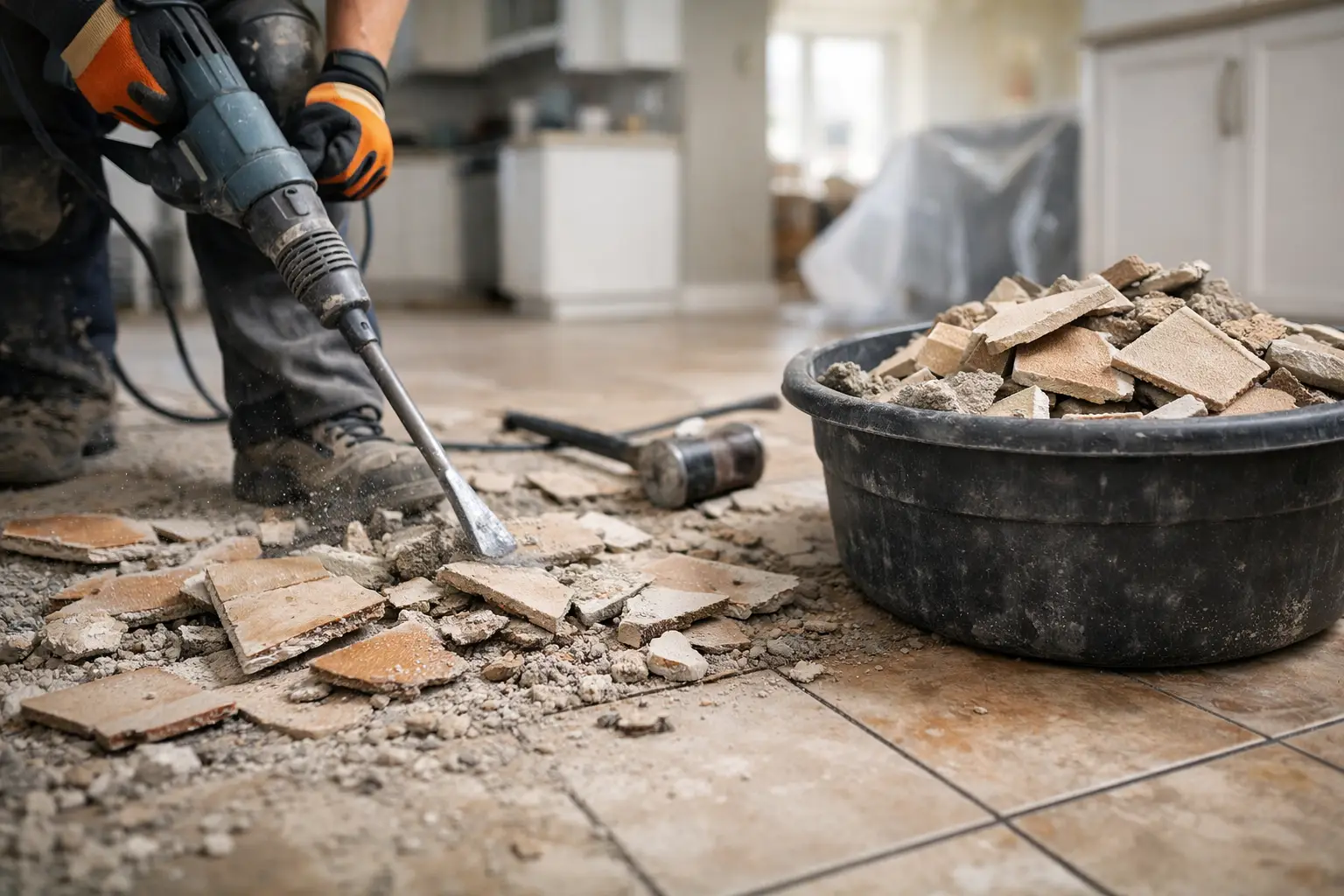
A proper scope goes well beyond simply breaking out old tiles and carrying away rubble. In quality-led projects, demolition is the first technical stage of the tiling package, not a separate afterthought. The goal is to remove existing finishes while preserving what should remain, identifying hidden issues early and leaving the area genuinely ready for the next step.
That usually starts with assessing the existing build-up. Wall tiles, floor tiles, stone, screed, bedding compounds and adhesives all come off differently. A bathroom renovation may involve old waterproofing, fragile plasterboard or cement sheeting behind tiled walls. A commercial fit-out may involve broad floor areas where speed matters, but so does controlling dust, noise and traffic around adjacent trades. An external area may have weathered substrates, movement cracks or drainage falls that need to be retained or corrected.
Disposal is also more than loading debris into a skip. Responsible waste handling means sorting material where appropriate, keeping the site safe and clear, and ensuring the removed material leaves the project without creating another problem elsewhere on site. Clients rarely want to manage that themselves, nor should they have to.
Why demolition quality affects the final tile finish
Every premium tile installation relies on the substrate beneath it. If that base is damaged during demolition, or left contaminated with adhesive ridges, loose bedding, dust or fractured sections, the new finish begins at a disadvantage. Even the finest tile and the most exact layout cannot compensate for poor preparation.
This is particularly important in bathrooms, laundries and other wet areas. Removing old tiled surfaces can expose failed waterproofing, moisture damage, deteriorated boards or movement in the structure. If these issues are not identified and addressed before re-tiling, the project may look complete but perform badly. In high-end residential work, that is frustrating. In multi-unit developments or commercial environments, it can become expensive very quickly.
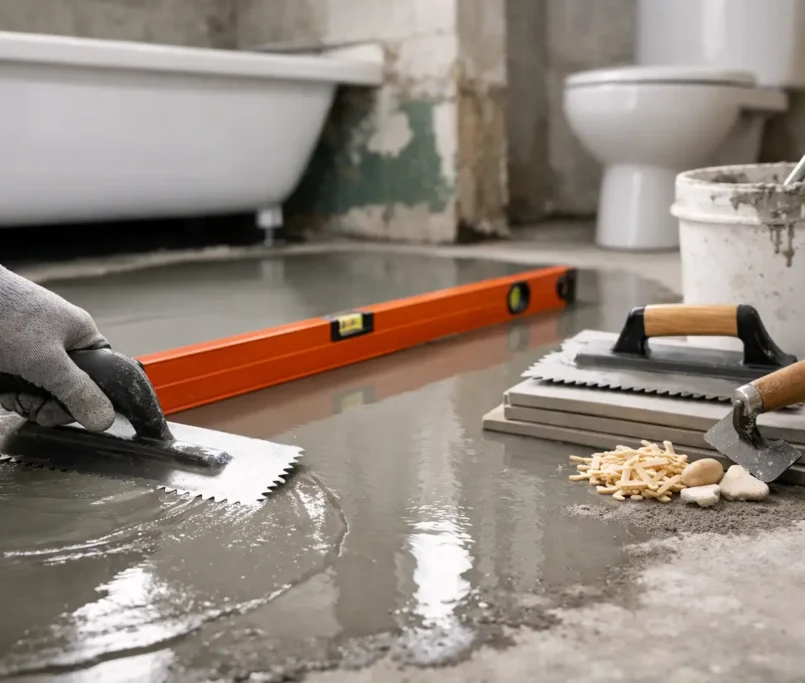
There is also a visual consequence. Large-format tiles, rectified edges and refined grout lines demand flatter, more consistent surfaces. Any remaining irregularity from a careless strip-out can telegraph through the finished work. The demolition phase sets the standard for everything that follows – re-levelling, screeding, waterproofing and installation included.
Tile demolition and disposal service for different project types
The right approach depends on the project. A heritage-style home renovation requires a different level of care from a fast-paced retail refurbishment, and both differ again from a high-rise multi-unit programme.
Residential renovations
In homes, clients are often living through the work or managing a renovation close to finished areas they want protected. Clean access, dust control and thoughtful handling of adjoining surfaces matter just as much as removal itself. Kitchens, bathrooms, laundries and alfresco areas often have hidden conditions behind the old tiles, so experience is essential when determining whether a substrate can be retained, repaired or needs replacement.
Commercial fit-outs
Commercial spaces usually place greater pressure on timing, coordination and cleanliness. There may be restricted working hours, shared access points and other trades depending on the area being released on schedule. In these settings, a tile demolition and disposal service must work as part of the broader delivery plan. Fast is useful, but controlled is what keeps the programme intact.
Multi-unit and high-rise developments
Scale changes the conversation. On larger residential developments, consistency becomes as important as speed. Demolition and removal need to be organised unit by unit, level by level, with clear sequencing and reliable waste management. A contractor handling this stage well reduces bottlenecks and makes it easier to maintain a repeatable standard across every unit.
What to expect from a premium contractor
A premium service does not simply arrive with breakers and bins. It starts with clarity. The contractor should understand the scope, inspect the conditions, identify likely risks and explain what will happen if hidden issues are uncovered once the tiles are removed.
Protection should be deliberate. That includes safeguarding adjacent finishes, containing debris, managing dust and maintaining a workable site. The best teams remove material with enough control to avoid unnecessary substrate damage, then follow through by cleaning and preparing the area for the next stage rather than leaving a rough shell behind.
Communication is another marker of quality. Clients and project teams should know whether the substrate is sound, whether levelling or screeding is now required, and whether waterproofing needs to be fully reinstated. This is where an end-to-end tiling contractor adds real value. Demolition is assessed not in isolation but in direct relation to the finish being built next.
The hidden risks of choosing on price alone
Tile removal can look deceptively simple when quoted on a square metre rate, but the cheapest price often assumes ideal conditions. Once work begins, old adhesives may prove stubborn, screeds may break away, boards may fail, and disposal volumes may exceed expectations. If the contractor is not equipped or experienced enough, those surprises can turn into variation disputes, programme slippage and compromised workmanship.
There is also the false economy of rough demolition. Saving money upfront means little if the substrate then requires extensive rectification, or if waterproofing and wall linings are damaged beyond what was necessary. In refined spaces, where stone, porcelain or feature tiles are selected for their finish quality, the cost of remedial work can far exceed any initial saving.
It depends, of course, on the project. In some straightforward strip-outs, a basic removal service may be sufficient. But where the outcome is premium, where waterproofing is involved, or where programme discipline matters, demolition should be treated as part of the craftsmanship, not a separate budget line to squeeze.
Why integrated scope matters
The strongest projects tend to come from continuity of responsibility. When the same specialist team can assess the existing tiled area, complete demolition, manage disposal, re-level the substrate, waterproof where required and install the new finish, there are fewer gaps for problems to hide in.
That integrated model creates accountability. If a floor needs correction after removal, it is identified immediately. If a bathroom wall substrate is no longer fit for a quality installation, that is dealt with before the finish stage is compromised. Clients gain a clearer line of communication and a more reliable sequence of works.
This is especially valuable for builders and developers who need confidence in both workmanship and responsiveness. A tiling contractor that sees the full picture can make better decisions at demolition stage because it understands the standard the final surface must achieve.
Choosing the right tile demolition and disposal service
The best question is not simply, “How quickly can you remove it?” It is, “What condition will the area be in when you are done, and how does that support the finish we want?” A contractor worth appointing should be able to answer that with confidence.
Look for evidence of complex project delivery, not just removal capability. Bathrooms and kitchens need technical care. Outdoor areas need an eye on falls and exposure. Commercial sites need coordination. Multi-unit projects need systems. Premium results come from disciplined process at every stage.
At Perfectly Laid, that philosophy carries through from demolition to finishing detail. The removal stage is treated as the foundation of the finished result, because perfection is rarely rescued at the end – it is built in from the beginning.
If you are planning a renovation, fit-out or development, treat tile removal with the same seriousness as tile selection. The surface you do not see for long is often the one that decides how well everything else lasts.