Silicone or Grout in Tile Corners?
Corners are where good tiling work gets judged hardest. A wall can look beautifully set and perfectly aligned, but if the internal corners crack, discolour or pull apart within months, the whole finish feels compromised.
That is why the question of silicone vs grout in corners matters more than many people expect. It is not just a finishing detail. It affects movement, durability, waterproofing performance and how refined the room looks once everything is complete.
In most cases, professional tilers will use silicone in corners rather than grout. But like most details in quality construction, the right answer depends on where the corner sits, how the substrate behaves and what level of finish the project calls for.
Silicone vs grout in corners: the short answer
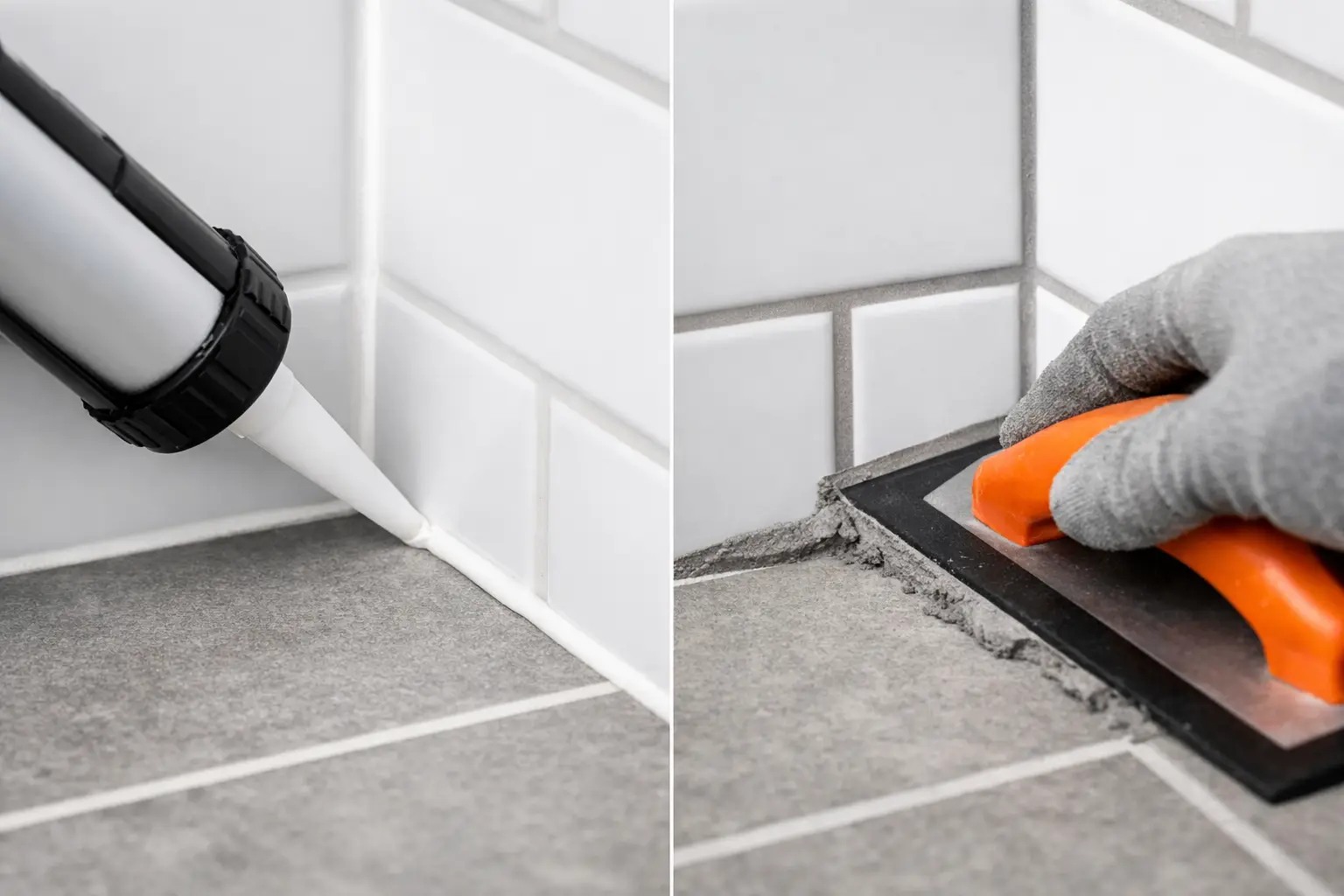
If you are deciding between silicone vs grout in corners, silicone is usually the correct choice for internal changes of plane. That means wall-to-wall corners, wall-to-floor junctions and the vertical corners inside showers, bathrooms, laundries and kitchens.
Grout is rigid once cured. Silicone remains flexible. Corners naturally move, even in well-built spaces. Buildings settle, framing shifts slightly with temperature changes, substrates expand and contract, and vibration from day-to-day use puts stress into tiled surfaces. When grout is forced into a joint that needs flexibility, cracking is not a surprise. It is the expected result.
Silicone is designed to absorb that movement. Used correctly, it creates a cleaner, more durable junction and helps preserve the finish over time.
Why corners behave differently from the rest of the tiled surface
A tiled field across one flat wall behaves differently from a junction where two surfaces meet. On a flat plane, tiles and grout work together as a continuous finish. In a corner, two separate planes come together, and each can move independently.
This is especially relevant in wet areas. A shower recess, for example, combines moisture, thermal change, cleaning products and regular use. The corner joints are under more stress than many clients realise. If those joints are treated as though they are no different from the rest of the grout lines, the finish often starts to fail early.
This is one of those details that separates basic installation from precision execution. The room may still look acceptable at handover, but long-term performance is won or lost in details like this.
Why silicone is usually the better choice
The main advantage of silicone is flexibility. It can accommodate slight movement without cracking, which makes it well suited to corners, perimeter joints and junctions between different materials.
In bathrooms and laundries, this matters both visually and practically. A cracked corner joint can trap dirt, hold moisture and make the installation look tired long before the tiles themselves have aged. A properly applied silicone bead keeps the corner neat and controlled.
There is also an aesthetic benefit when the work is done well. Colour-matched silicone can sit quietly within the design rather than drawing attention to the joint. In premium spaces, that restraint matters. The finish should feel intentional, not patched.
Silicone also performs well where tiles meet other elements such as benchtops, shower trays, baths or window frames. These are all areas where a flexible sealant is better suited than a rigid grout joint.
Where grout still belongs
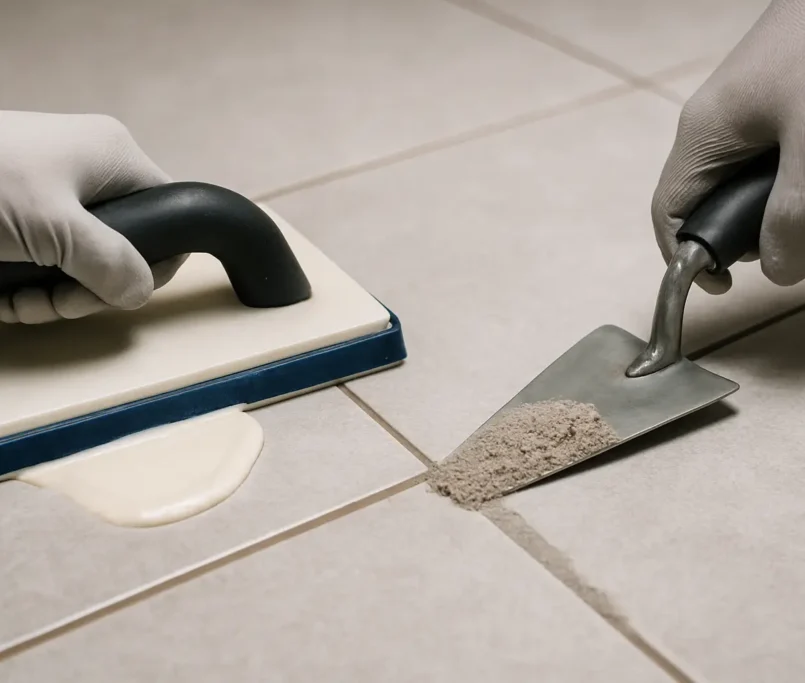
None of this means grout has become optional. Grout is still essential across the tiled surface. It locks the installation visually together, protects the edges of the tiles and supports the overall finish.
On the same plane, between tiles that are moving together, grout is the right material. It gives a crisp, defined appearance and can be selected to complement or contrast with the tile depending on the design intent.
The confusion usually comes when people assume the corner should simply be treated like another grout line. That is understandable from a distance, but technically it is a different kind of joint.
There are some installations where corners are grouted, particularly older work or projects where movement joints have not been prioritised. Sometimes it holds for a while. Sometimes it does not. In high-quality work, the goal is not to hope a corner joint survives. It is to specify the right material from the start.
The common argument for grouting corners
Some clients prefer grout in corners because they want an uninterrupted look. They do not like the softer appearance of silicone, or they have seen poorly applied silicone that looked messy, shiny or uneven.
That concern is fair. Bad silicone work can cheapen an otherwise excellent tiling job. If the bead is too thick, badly tooled or poorly colour matched, it stands out immediately.
But that is an application issue, not a material failure. High-standard silicone finishing should be clean, consistent and proportionate to the tile layout. In design-led bathrooms and kitchens, the joint should read as refined and deliberate.
If appearance is the concern, the answer is not to force grout into a movement joint. The answer is better finishing.
Wet areas, kitchens and commercial spaces
In showers, bathrooms and laundries, silicone in corners is the standard approach because these spaces experience repeated moisture and regular movement. The same applies to tiled kitchen splashbacks where tiled walls meet benchtops, and to many commercial settings where cleaning cycles and constant use place extra demand on finishes.
In larger developments and high-use fit-outs, this decision becomes even more important. Repetitive cracking across multiple bathrooms or wet areas creates maintenance issues quickly. For builders, developers and facilities teams, the better question is not what looks acceptable on day one. It is what continues to perform after occupancy.
This is where disciplined installation matters. Surface preparation, substrate condition, waterproofing integrity and finishing quality all influence how well the joint performs. Silicone is not a shortcut. Used properly, it is part of a more technically correct system.
What about mould and maintenance?
One reason some property owners hesitate over silicone is the fear of mould. They have seen blackened silicone joints in old showers and assume grout must be more hygienic.
Usually, that issue comes down to product choice, ventilation, cleaning habits and installation quality rather than the fact that silicone was used. In wet areas, a quality sanitary-grade silicone is designed to resist mould better than general-purpose sealants. If the joint is installed neatly, allowed to cure properly and the space is ventilated well, maintenance is far more manageable.
Grout, meanwhile, is not maintenance-free. It can stain, absorb residue and crack at corners. Once that happens, the joint can look worse than silicone ever did.
The detail that often gets overlooked
The best corner finish starts long before the sealant gun comes out. If the walls are out of square, the surfaces have not been prepared correctly or the tile cuts are inconsistent, no amount of silicone or grout will rescue the result.
That is why premium tiling contractors treat finishing details as part of the whole system. Precision set-out, proper substrate preparation, accurate cuts and controlled joint widths all affect how polished the corner looks at completion.
When a corner has been planned properly, silicone can be minimal, clean and almost understated. When the preparation is poor, the joint becomes a place where errors are hidden. Clients notice the difference, even if they cannot immediately name it.
So which should you choose?
For most internal tile corners, choose silicone. It is the more durable and technically appropriate option, particularly in bathrooms, showers, laundries and kitchens.
Choose grout for the main tile joints across the flat surface, where rigidity is useful and movement is less concentrated. If you are aiming for a high-end finish, insist on colour-matched silicone applied with the same care as the tile installation itself.
If you are working on a renovation, custom home or multi-unit development, this is one of those small decisions that influences whether the space still feels sharp after years of use. At Perfectly Laid, we see corner finishing as part of the craftsmanship, not an afterthought.
A beautiful tiled space is not only about the tile you choose. It is about how every junction is resolved when precision matters most.