Large Format Tile Installation Review
A large format tile wall can look extraordinary in a showroom and disappoint badly on site. The difference is rarely the tile itself. It is the installation standard behind it.
That is why any honest large format tile installation review has to look past appearance on day one. Big tiles create a cleaner, more architectural finish, but they also expose every weakness in the substrate, setting out, waterproofing and finishing. If the work is rushed or the preparation is treated as an afterthought, large format tiles do not hide mistakes. They magnify them.
For homeowners, builders and developers, that matters. A premium tile selection only delivers its value when the finished surface is flat, aligned, durable and consistent across the full space. Anything less can turn a design-led choice into an expensive defect.
What a large format tile installation review should actually assess
Many reviews focus too heavily on the visual impact, and that is only part of the picture. Large format tile installation should be judged on three things at once – technical accuracy, finish quality and long-term reliability.
The first question is flatness. Large format tiles do not tolerate uneven substrates well. Minor dips and rises that might be manageable with smaller formats become a serious issue when each tile spans more surface area. Lippage, hollow spots and misaligned joints often begin long before the first tile is laid.
The second is layout discipline. Bigger tiles mean fewer grout joints, so every line becomes more noticeable. Centring, symmetry, transitions at doorways, cuts around fixtures and the way the tile lands at corners all carry more visual weight. In premium spaces, these decisions are not cosmetic details. They define whether the room feels resolved or awkward.
The third is system performance. In wet areas and commercial settings especially, substrate preparation, waterproofing, adhesive selection, movement accommodation and finishing must work together. A beautiful result that cracks, lifts or leaks is not a successful installation.
Why large format tiles are harder than they look
Large format tiles offer a refined, expansive look that suits contemporary bathrooms, kitchens, living areas and commercial interiors. They can make compact rooms feel calmer and more open, and in high-end developments they often help create the clean, continuous aesthetic buyers expect.
But they are not forgiving. Handling is more difficult, cuts need greater precision and the bed beneath the tile must be far more controlled. On walls, weight and vertical alignment become part of the challenge. On floors, deflection and level variation can quickly compromise the finish.
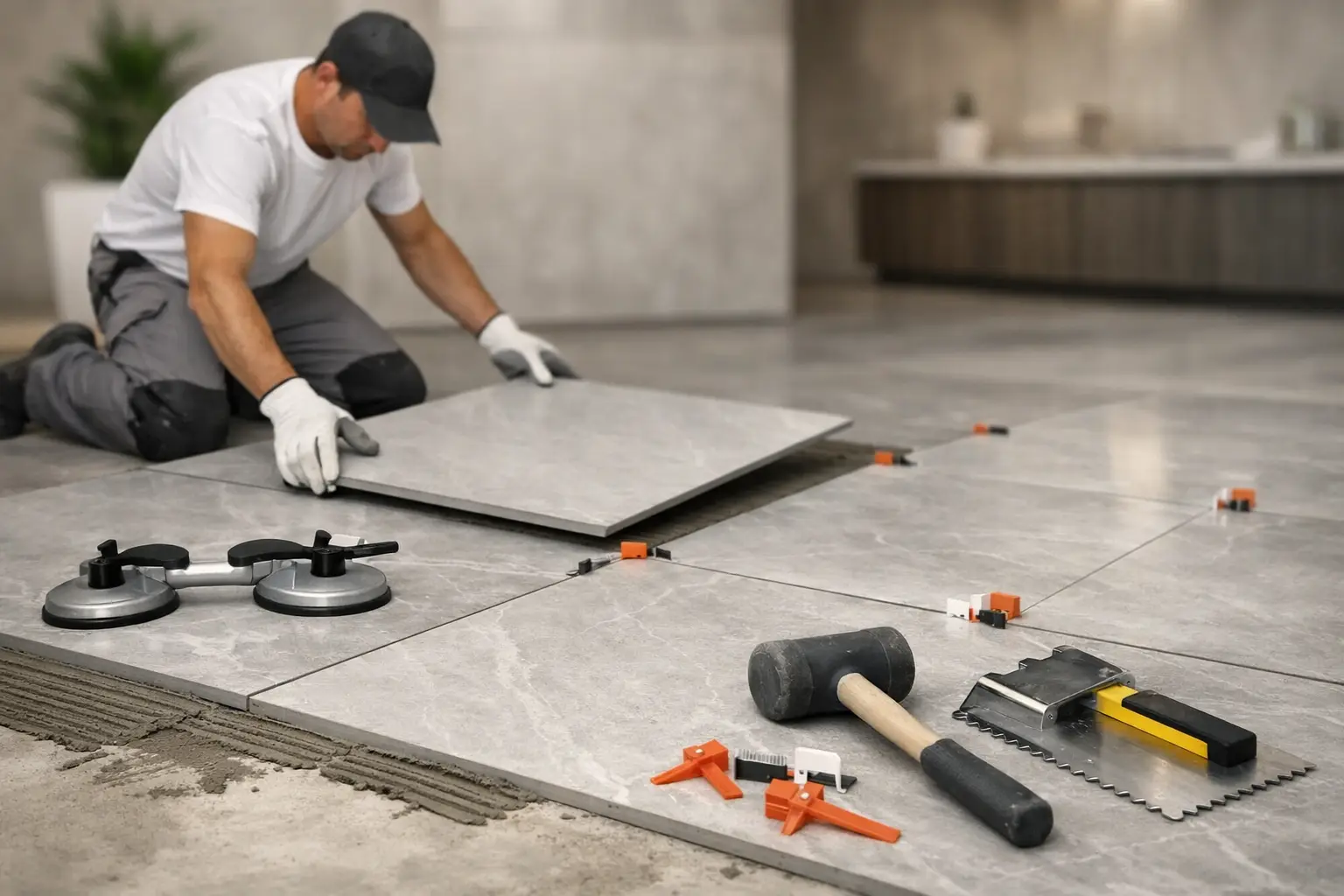
There is also the issue of tile warpage. Many porcelain tiles, particularly in elongated plank or slab-like formats, have a slight bow from manufacture. That does not mean the tile is faulty, but it does mean the installer needs to understand offset patterns, joint sizing and levelling methods. A poor pattern choice can make lippage worse even when the work is otherwise competent.
This is where installation quality separates experienced tilers from basic labour. Larger formats demand a measured approach and the confidence to correct problems before they become visible.
Surface preparation is where most outcomes are won or lost
If there is one point every large format tile installation review should stress, it is this: preparation is not a preliminary task. It is the foundation of the final result.
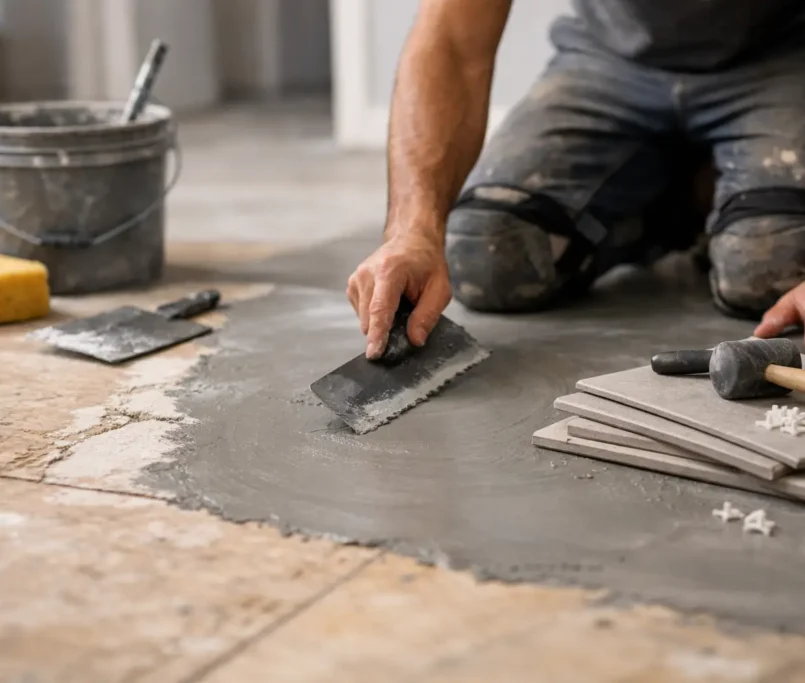
Floors may require demolition, grinding, re-levelling or screeding before tiling begins. Walls may need straightening or substrate replacement. In wet areas, waterproofing must be completed properly and allowed to cure as required. Skipping or compressing these steps to save time almost always shows up later.
A premium installation partner will inspect the substrate honestly and flag issues early. That can mean difficult conversations about additional rectification, but it protects the project. Builders and developers know this well. Small compromises at preparation stage often create disproportionate delays once the finish trades begin stacking behind each other.
For homeowners, the same principle applies. A bathroom renovation can look on schedule right up until tiles begin revealing that walls are out of plumb or falls are incorrect. Fixing it properly before installation is cheaper than chasing defects after handover.
Adhesion, coverage and movement matter more with bigger tiles
Large format tiles need proper adhesive coverage. Partial bedding increases the risk of hollow spots, weak bond strength and breakage under load. On floors, that can become a durability issue. On walls, it can become a safety issue.
Coverage is not just about using more adhesive. It is about selecting the right product for the tile type, format and substrate, then applying it correctly. Back-buttering is often necessary. Trowel selection, open time and bedding technique all affect the result.
Movement joints are another area often overlooked in surface-level reviews. Buildings move. Substrates expand and contract. Sun-exposed alfresco areas, commercial entries and large internal spans can all place stress on tiled surfaces. Without proper movement accommodation, even a visually excellent installation can fail over time.
This is one of those areas where the best work is not obvious to the eye. Clients notice straight lines and fine cuts, but long-term performance often depends on the technical decisions they never see.
Finish quality is not only about straight grout lines
A refined finish is made up of many small decisions executed consistently. Joint widths should be even. Cuts should feel deliberate, not improvised. Corners, nib walls, shower niches and floor wastes need to be resolved with control. Silicone and caulking should support the design rather than distract from it.
With large format tiles, these details matter more because the overall aesthetic is so pared back. There are fewer grout joints to break up the surface, so inconsistency stands out immediately. A chipped cut, a poorly balanced layout or untidy finishing around fixtures can pull down the entire room.
That does not mean every project needs to look minimal or severe. It means the finish should feel intentional. In residential spaces, that might mean preserving softness through balanced set-out and careful transitions. In hospitality, retail or fitness settings, it may mean producing a crisp, hard-wearing surface that still feels elevated.
Where reviews often miss the commercial reality
For commercial fit-outs and multi-unit developments, installation quality is only half the review. Programme reliability and consistency matter just as much.
A tiling contractor may produce a strong result in one display suite or one premium bathroom. The real test is whether that standard holds across repeated units, shared amenities and staged handovers. Large format tiles can slow inexperienced teams down, particularly where site access, sequencing and coordination are already tight.
That is why capability should be reviewed in context. Can the contractor manage preparation, waterproofing, installation and finishing under one accountable scope? Can they maintain workmanship across volume? Can they respond quickly when site conditions change?
For stakeholders running larger projects, these are not secondary concerns. They are part of quality. A finish that looks good but arrives late, requires rework or creates downstream trade conflict is not a premium outcome.
What a strong installation partner does differently
The best large format tile work is calm, methodical and exact. It starts with honest assessment, not assumptions. It continues with disciplined substrate preparation, accurate setting out and product choices suited to the environment. It ends with finishing that respects both the design intent and the realities of daily use.
That approach is especially valuable where the brief is demanding – high-end bathrooms, statement kitchen floors, outdoor entertaining areas, retail environments or multi-residential developments where consistency cannot slip. This is where a specialist contractor earns their place, not by simply laying tile, but by protecting the final standard from start to finish.
At Perfectly Laid, that standard sits at the centre of the work. The goal is not just to install large format tile, but to deliver a result that reads as precise, durable and complete.
Final thoughts on any large format tile installation review
If you are reviewing a large format tile installation, look past first impressions. Ask whether the substrate was corrected properly, whether the layout was resolved with care, whether waterproofing and movement were handled correctly, and whether the finish still looks deliberate when you study the details up close.
Large format tiles can transform a space into something genuinely striking. They can also expose every shortcut. The right installation does more than hold the tile in place – it protects the design, the programme and the investment for years after the project is handed over.