How to Choose Bathroom Tiles Without Regret
You can spot a bathroom that was tiled properly from the doorway. The lines feel calm, the falls work, the corners are crisp, and nothing looks like it was ‘made to fit’ at the last minute. That’s the standard worth aiming for – because tiles are one of the few finishes you’ll see and touch every day, and they also do a serious job behind the scenes: managing water.
Choosing tiles isn’t just picking a colour. It’s a set of decisions that affect safety, cleaning, durability and how high-end the room feels once the lighting is on and the shower has been running for six months.
How to choose bathroom tiles: start with the job, not the look
A bathroom isn’t one surface – it’s several environments. The shower floor is a wet zone with soap residue and regular temperature swings. The main floor gets tracked water and foot traffic. Walls are more forgiving, but they’re also where you’ll notice lippage, uneven lines, poor cuts and cheap trim.
Before you fall in love with a tile, decide where it’s going and what it must tolerate. A tile that’s perfect for a feature wall can be a liability underfoot. Likewise, a heavily textured anti-slip floor tile can feel visually busy on a full-height wall if you don’t balance it with calmer surfaces.
If you’re renovating, factor in the existing conditions too. Older bathrooms often hide movement, out-of-level floors, and patchy substrates. Tile choice and tile size should work with the preparation required, not fight it.
Pick your tile material with performance in mind
Porcelain is the premium all-rounder for bathrooms. It’s dense, low-porosity and hard-wearing, which makes it excellent for wet areas and high-traffic floors. It also gives you the broadest design range – stone looks, concretes, terrazzo and refined matt finishes that still read as luxurious.
Ceramic can be a smart choice for walls, particularly if you want a lighter tile that’s easy to cut cleanly around niches and fittings. It’s generally more porous than porcelain, which is why it’s less common for floors in wet zones.
Natural stone has unmatched character, but it comes with trade-offs: sealing, more sensitive cleaning requirements, and the reality that some stones don’t love acidic products or constant moisture. If you want the look without the maintenance, high-quality porcelain stone-look tiles can deliver the aesthetic with far fewer risks.
Glass and metallic mosaics can lift a niche or small feature, but in large areas they can highlight substrate imperfections and add grout lines to your cleaning workload. Use them deliberately, where they’ll look like jewellery rather than a full-time job.
Safety and slip resistance: the non-negotiable details
For floors, especially shower floors, slip resistance matters as much as style. A tile can look beautifully refined and still be dangerously slick when wet. The right choice depends on the bathroom’s users, the layout and how much water regularly reaches each area.
A common approach is a more slip-resistant tile on the shower floor, then a compatible (often calmer) tile through the main floor. This keeps the room cohesive without turning the entire bathroom into a heavily textured surface.
Remember that slip resistance isn’t just about the tile. Soap, shampoo and body oils change everything, as does the direction of falls to the drain. Even an excellent tile can feel unsafe if water is allowed to sheet across the floor because falls weren’t formed precisely.
Finish, texture and light: why samples lie
Bathroom lighting is unforgiving. Downlights can emphasise surface texture and make grout joints stand out; side lighting can reveal unevenness and highlight glossy imperfections.
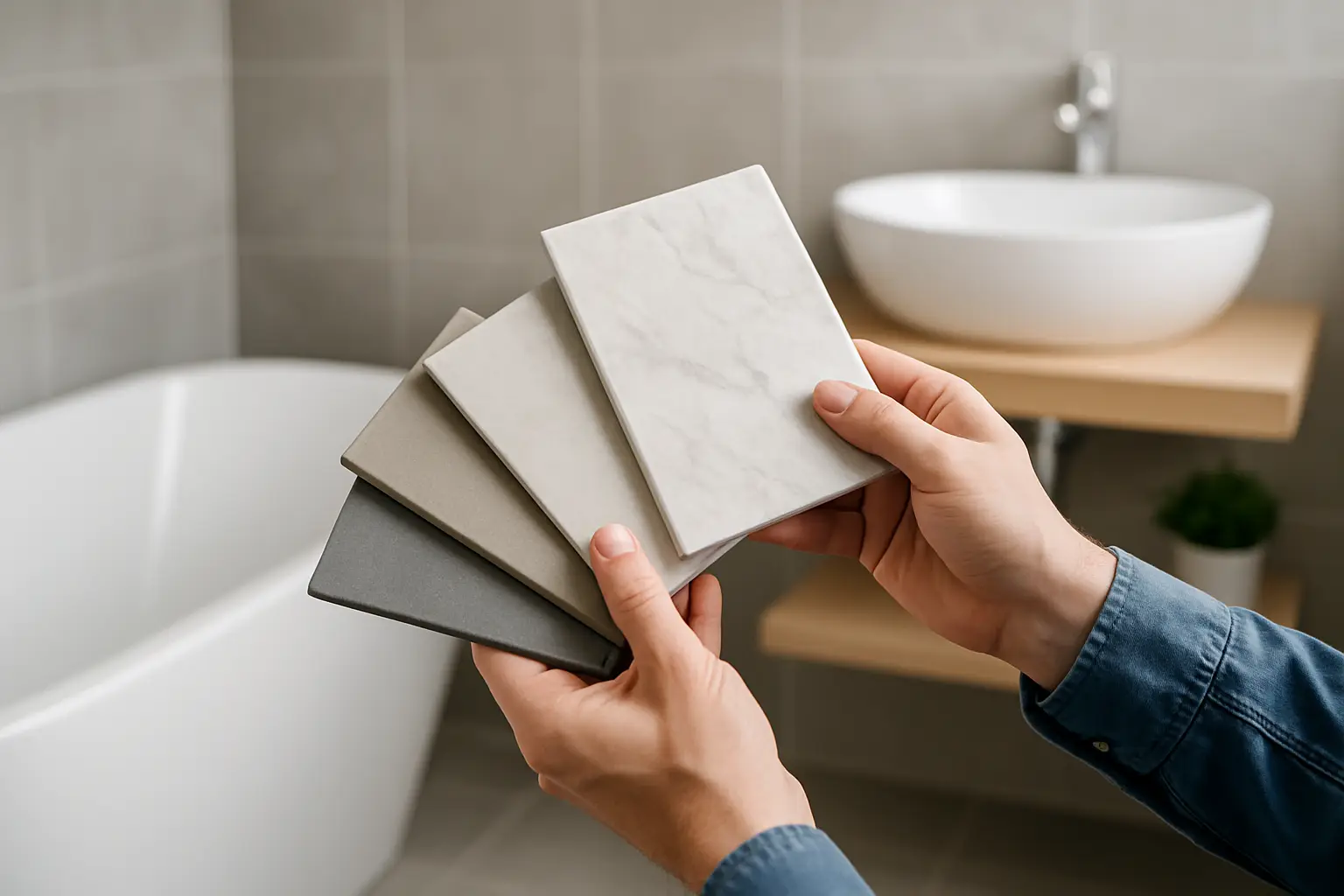
Always view tile samples in the bathroom’s lighting conditions if you can. A warm white light can soften greys and make beiges feel richer. Cool light can push some tiles sterile. Matt finishes tend to read more premium and hide water spots better than high gloss, but very flat matt tiles can show oily marks if not cleaned properly.
Texture also changes the room’s ‘noise level’. If you’re choosing a bold pattern or strong veining, pair it with simpler companion tiles and quieter grout. The goal is control, not chaos.
Size and layout: design impact meets installation reality
Large-format tiles can make a bathroom feel bigger and more architectural, largely because they reduce grout lines. But they ask more of the space: walls and floors need to be flatter to avoid lippage, and the layout needs proper planning around penetrations, niches and edges.
Small-format tiles and mosaics are practical in shower floors because they follow falls to the drain more easily. They also create more grout, which can improve slip resistance – but it increases cleaning and makes grout colour selection more critical.
Think about where you want full tiles to land. In premium bathrooms, the centre lines are often considered: a feature wall can be set out so cuts are balanced at edges, niches align with grout joints, and the tile grid feels intentional. That’s not just aesthetic – it avoids awkward slivers and reduces the likelihood of fragile, narrow cuts.
If you’re using a patterned tile, map the repeat. Some patterns look calm in a small sample and frenetic across a whole wall.
Grout: the quiet decision that defines the finish
Grout colour can elevate a tile choice or undermine it instantly. A close-match grout gives a seamless, high-end look and makes the tile surface feel like one material. A contrasting grout highlights the grid – sometimes that’s a design statement, but it also highlights any inconsistencies in spacing and alignment.
In bathrooms, stain resistance is a genuine concern. Lighter grout can look exquisite, but it may require more disciplined cleaning – especially on floors. Dark grout can be practical, yet it can show efflorescence or soap film if ventilation and cleaning aren’t consistent.
Your grout joint width is part of the design too. Rectified tiles often suit tighter joints for a refined feel, but the substrate must be prepared precisely to support that level of alignment.
Waterproofing and substrate: what you don’t see is what saves you
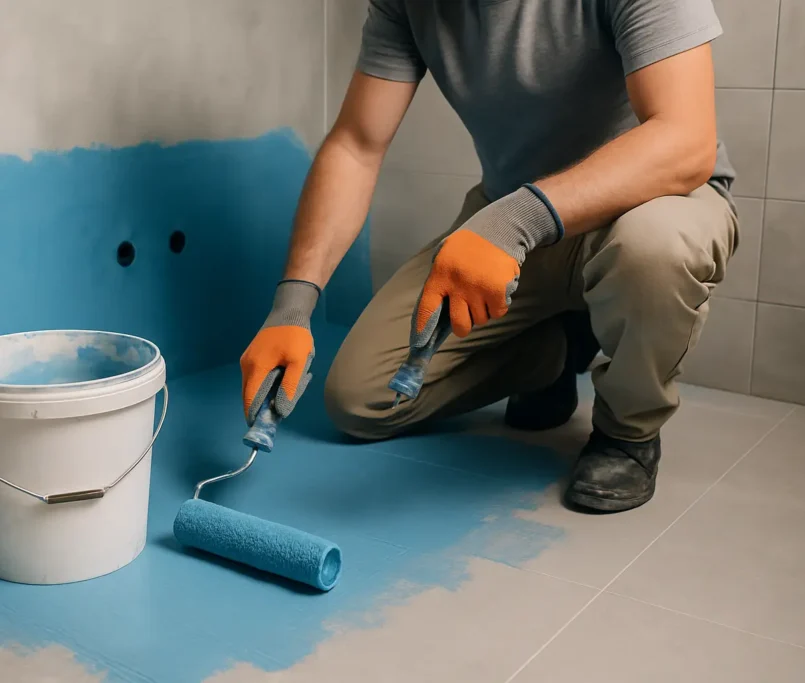
Tile is not waterproof. The waterproofing system and the preparation beneath the tile are what protect your home.
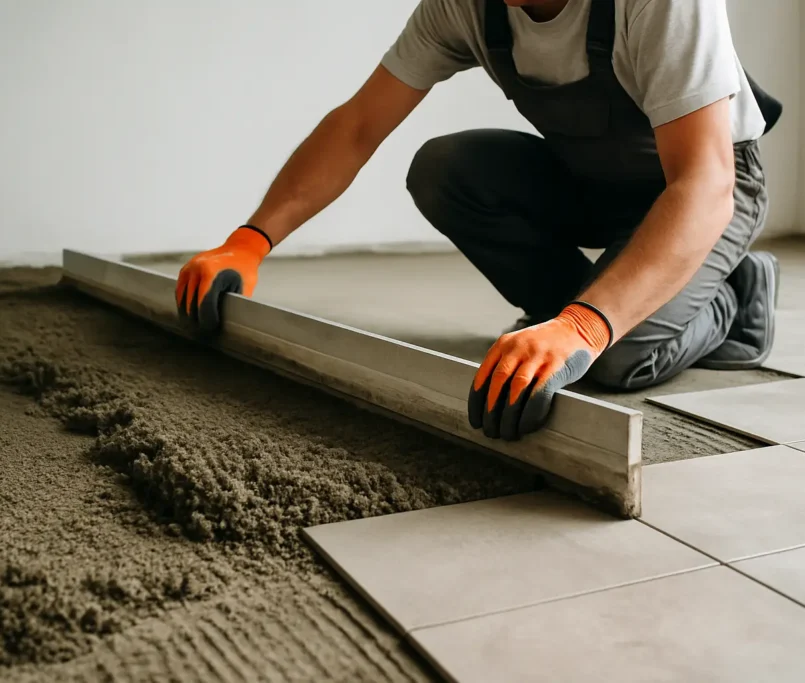
If you’re renovating, don’t assume the existing substrate is fit for re-tiling. Demolition, re-levelling, screeding and correct waterproofing are often where bathrooms either succeed quietly for years or fail expensively.
This is also where tile choice matters. Heavy large-format tiles need a stable, flat base. Natural stone can demand additional considerations. Feature details like niches, ledges, linear drains and floating vanities require the waterproofing and falls to be executed with discipline.
If you’re engaging a tiling contractor, ask about process, not just price. A premium finish is the result of preparation standards, adhesive selection, movement joints, and finishing details like silicone transitions that remain flexible and watertight.
Edges, trims and transitions: the details that read ‘expensive’
Corners and edges are where tiling shows its true quality. Mitred corners can look exceptionally sharp on large-format tiles, but they need skilled cutting and careful handling to avoid chipping and weak edges. Metal trims can be clean and modern when selected thoughtfully, but the finish (brushed, polished, matte black) should match the rest of the bathroom hardware.
Transitions matter too: how the bathroom floor meets the hallway, how wall tiles die into painted plaster, how the tile meets a window reveal. Plan these junctions early. Leaving them to chance is how bathrooms end up with mismatched beads of silicone and odd steps that catch your eye every day.
Cost, lead times and wastage: keep the project smooth
Tile budgets aren’t only about the per-square-metre price. Factor in wastage (especially with patterns, large formats and diagonal layouts), delivery lead times, and whether all trims, feature pieces and grout colours are available in time.
Cheaper tiles can cost more to install if they vary in size (calibration issues) or have inconsistent surface quality. Premium tiles often come with better consistency, which supports tighter joints and a cleaner overall finish.
If you’re coordinating a build or multi-unit project, consistency of supply becomes a performance issue, not a styling issue. Batch variation between production runs can be noticeable, so ordering correctly and early protects the outcome.
A practical way to narrow your choices
If you’re overwhelmed by options, decide the ‘hero’ first. That might be the shower wall, a feature tile behind the vanity, or a statement floor. Then choose the supporting tiles to make the hero look intentional, not accidental.
A calm formula that works in high-end bathrooms is one strong surface (pattern, veining or colour) paired with one quiet surface and a considered grout. Add interest through format (stack bond, kitkat, or a refined mosaic in a niche) rather than competing patterns.
When you’re ready to lock it in, it helps to have an installer’s eye on the set-out and details. A precision-first tiling partner will spot where a chosen size creates awkward cuts, where a trim finish fights the tapware, or where a glossy tile will punish imperfect walls. That’s the difference between ‘nice on a mood board’ and perfection achieved in real life.
If you want that level of execution – preparation, waterproofing, precise installation and finishing – Perfectly Laid approaches tiling as a craft, not a commodity.
The closing thought
Pick tiles the way you’d pick a tailored suit: for the occasion, the way it will wear, and the way it will look when you’re not trying. The best bathrooms feel effortless, because every choice was made with intent – and every millimetre was laid with care.